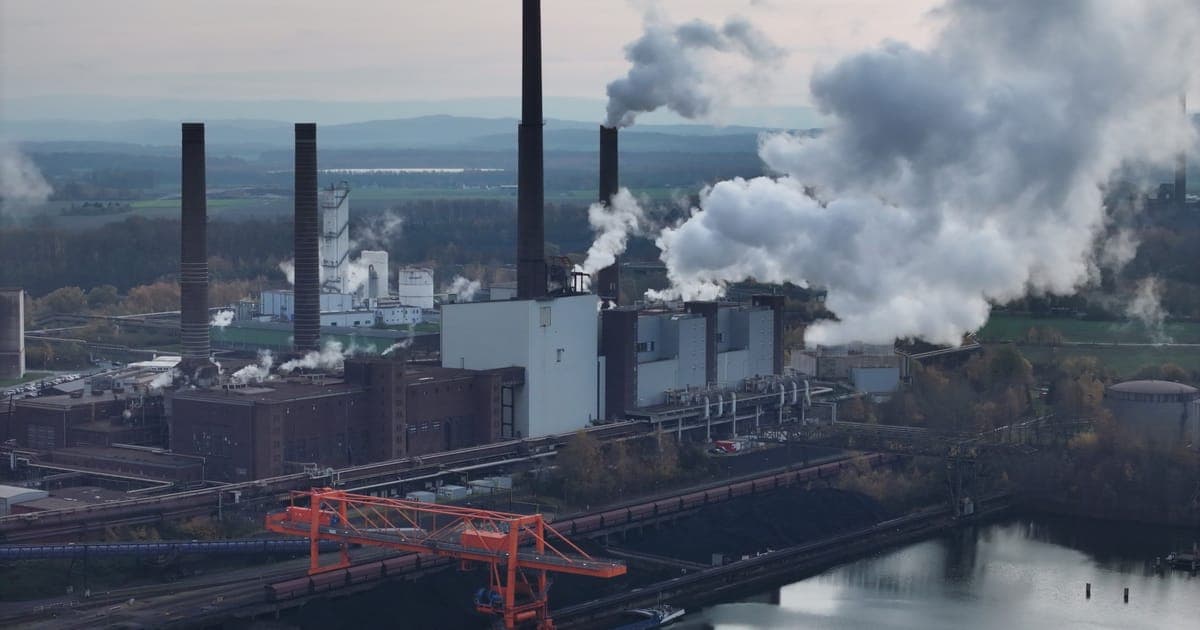
The call would allow businesses to pollute for free, undermining the blocs longstanding emissions trading scheme.
- Copy Link Copied
- Share via email
- Share on WhatsApp
- Share on LinkedIn
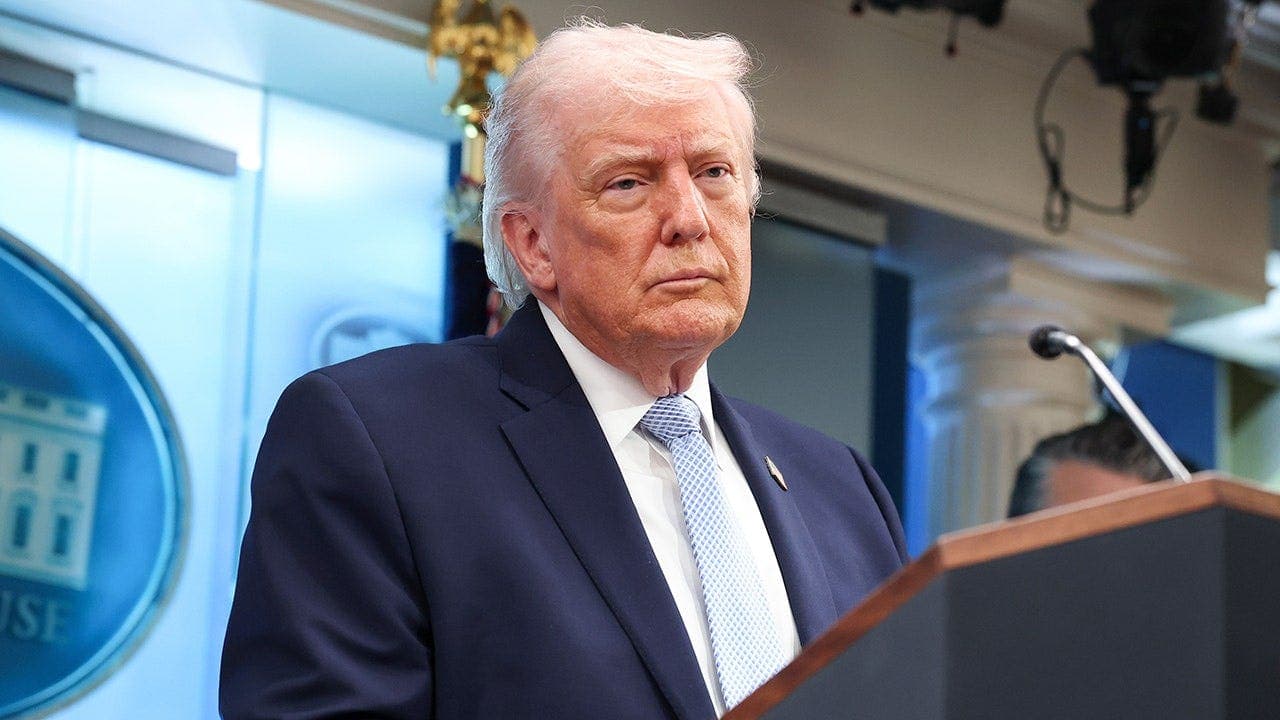
Free article usually reserved for subscribers Minister for Enterprises Adolfo Urso said the ETS, “as currently designed, represents an additional tax on European companies,” raising costs and undermining competitiveness. | Sean Gallup/Getty Images February 26, 2026 3:56 pm CET By Ben Munster, Zia Weise and Elena Giordano ROME — The Italian government wants the European Union to hit pause on its flagship climate law, the 20-year-old Emissions Trading System, in the latest in a flurry of attacks on the bloc's efforts to slow global warming.
Italy had already announced plans to subsidize power companies in a way that would undermine the core idea of the ETS: Making polluters pay for their planet-warming emissions. But on Thursday it went further, demanding Brussels suspend the mechanism entirely ahead of a broader review of the policy later this year.
"The ETS mechanism, as currently designed, is nothing more than a tax, a levy on energy-intensive companies," Italian Industry Minister Adolfo Urso told reporters upon arriving at Thursday’s meeting of economy and industry ministers in Brussels.
"It is necessary to revise it substantially … To do this properly, the ETS mechanism must be suspended pending a reform," he added.
It was an extraordinary attack on the EU's most powerful weapon for tackling climate change, and suggests the consensus that has made the bloc among the world’s most climate-friendly jurisdictions is fraying.
Other countries have also signaled waning support for the carbon price in recent weeks, but Italy’s position is the most aggressive assault yet from one of Europe’s largest economies.
Earlier this month, a deluge of industry criticism and a suggestion from German Chancellor Friedrich Merz to weaken the ETS — which has required power plants and factories to purchase pollution permits for every ton of CO2 they emit since 2005 — crashed the EU’s carbon price from €81 to €72 within the span of a week.
On Thursday, it slid further to just above €70 following Urso’s comments. The market is facing enormous volatility as countries are ramping up the pressure ahead of this year’s much-anticipated ETS revision.
Besides calling for the suspension of the law, Italy has also announced plans to compensate operators of gas-fired power plants for the money they spend on ETS permits — effectively cancelling out the system’s decarbonization incentive.
“We are facing the collapse of the European chemical industry; we are facing a crisis in European steelmaking. We cannot wait for the timing of EU negotiations to find solutions,” Urso said in Brussels on Thursday.
The Italian government argues that compensating gas-fired power plants for carbon costs will reduce the cost of energy generated by renewables, since under the existing system the most expensive sources of energy — generally fossil gas — set the price for the whole market.
Critics, however, say targeting the ETS will only have a marginal effect on household bills — if any — and that the measure would disproportionately reward Italy’s powerful gas producers.
Italians face the fourth-highest power bills in Europe, in part thanks to a heavy reliance on gas-burning power plants — amounting to some 44 percent of Italy’s energy mix — which set a higher price for the whole market.
Allies of Italian Prime Minister Giorgia Meloni support the bill, deriding the ETS as a tax, and insisting that acting unilaterally is necessary to force the EU’s hand as the revision of the law gets underway.
The move to reimburse gas power plants is intended to "open a dialogue" with the European Commission and act as a "catalyst" for a swift reform of the carbon market, Raffaele Nevi, a senior lawmaker on the center right of Meloni's coalition and prominent proponent of the bill, told POLITICO at a press event in Rome on Wednesday.
Yet the carbon market’s defenders say the ETS — which governs around half the bloc’s emissions — is the cornerstone of the EU’s green transition and that subsidizing carbon costs as Meloni has promised risks encouraging investment in fossil fuels.
"Italy’s excessive electricity prices are the direct consequence of its overreliance on gas for power generation — the highest in the EU,” said Chiara di Mambro, Europe director at Italian climate think tank ECCO.
“Suspending the ETS as proposed today or subsidizing gas, as envisaged in the government’s recent energy decree, would move Italy in the opposite direction: Weakening the price signal, increasing market uncertainty, and ultimately delaying the transition away from expensive fossil fuels,” she added.
Others believe Rome is simply pulling the wrong lever.
Instead of lowering charges for renewables, Italy has effectively socialized the carbon costs typically borne by gas-fired plants.
“You are removing a tax on energy generated through fossil fuel, and you are distributing that cost also on the energy generated with renewables,” said a former senior Italian energy executive, granted anonymity to discuss the measure candidly.
On top of that, Rome may have overestimated the effect the measure will have on household bills, the former executive said. Renewable energy prices are largely determined outside the market through fixed, bilateral contracts — meaning bills are only marginally exposed to the ETS price.
Renewable energy producers, on the other hand, base their long-term investment strategies on those higher, ETS-linked prices, and the new law could derail those plans, while favoring gas, the person added. The CEO of energy company Edison, for example, said last week that the government's plans could slow down the green transition.