AFA WARFARE SYMPOSIUM — The Space Force is holding off on launching further national security payloads aboard United Launch Alliance’s Vulcan rocket until an anomaly observed during a recent military mission is resolved, according to a top service official.
“We are going to work through this anomaly until we launch again on Vulcan,” Col. Eric Zarybnisky, the Space Force’s portfolio acquisition executive for assured access to space, said in a media roundtable here in Colorado at the Air Force Association’s Warfare Symposium. “Until this anomaly is solved we will not be launching Vulcan missions.”
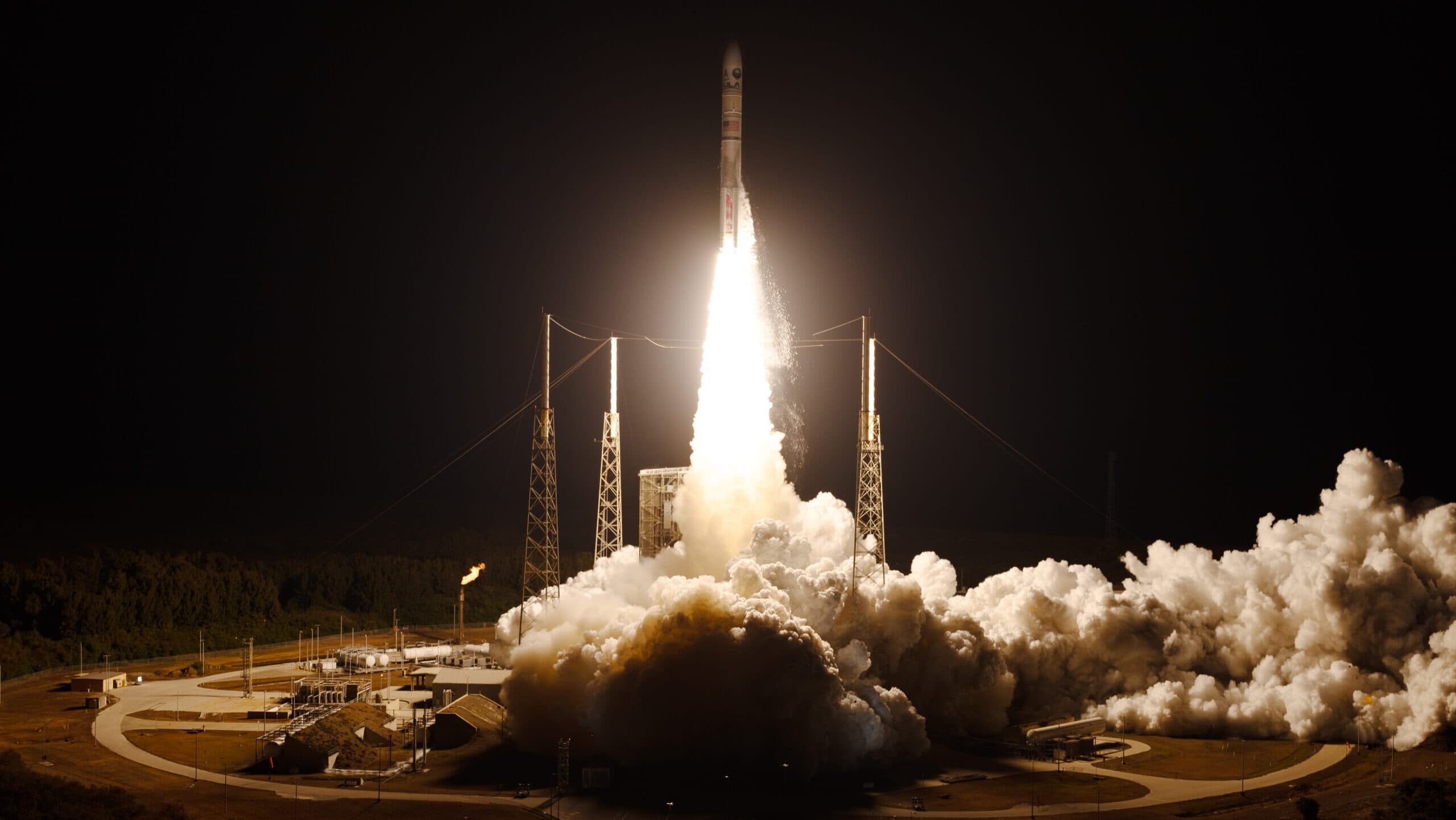
On Feb, 12, ULA launched a national security mission dubbed USSF-87 carrying two Geosynchronous Space Situational Awareness Program (GSSAP) neighborhood watch satellites.
Lt. Gen. Greg Gagnon, head of Space Force Combat Forces Command, disclosed today that the mission also included a first: a prototype of a highly maneuverable satellite to be operated by his delta responsible for orbital warfare, Mission Delta 9.
“Their job is working on their maneuvers … so that they can deliver offensive and defensive capabilities that are precise and not imprecise. So, they’re working on driving that spacecraft in a way that we couldn’t drive spacecraft before.”
Although the Vulcan successfully delivered its cargo to orbit, an anomaly was observed with one of its solid-rocket boosters. The problem had been observed on a previous launch as well, raising Space Force concerns.
“We’re still in the initial phases of that investigation, so we’ll continue to to work with the United Launch Alliance and their suppliers to make sure we’ve got the right level of insight and understand where that investigation is headed. I don’t have any details at this point,” Zarybnisky said.
Streamcaster Nexus: Empowering the connected soldier at the tactical edge
On today’s battlefield, mobility isn’t optional - it’s mission-critical.