President proposes congressional stock trading ban and new retirement options while avoiding details on $38.56 trillion national debt and slowing job growth
Video 'OUR NATION IS BACK': President Trump addresses State of the Union President Donald Trump touts American success during the State of the Union address live from the nation's capital.
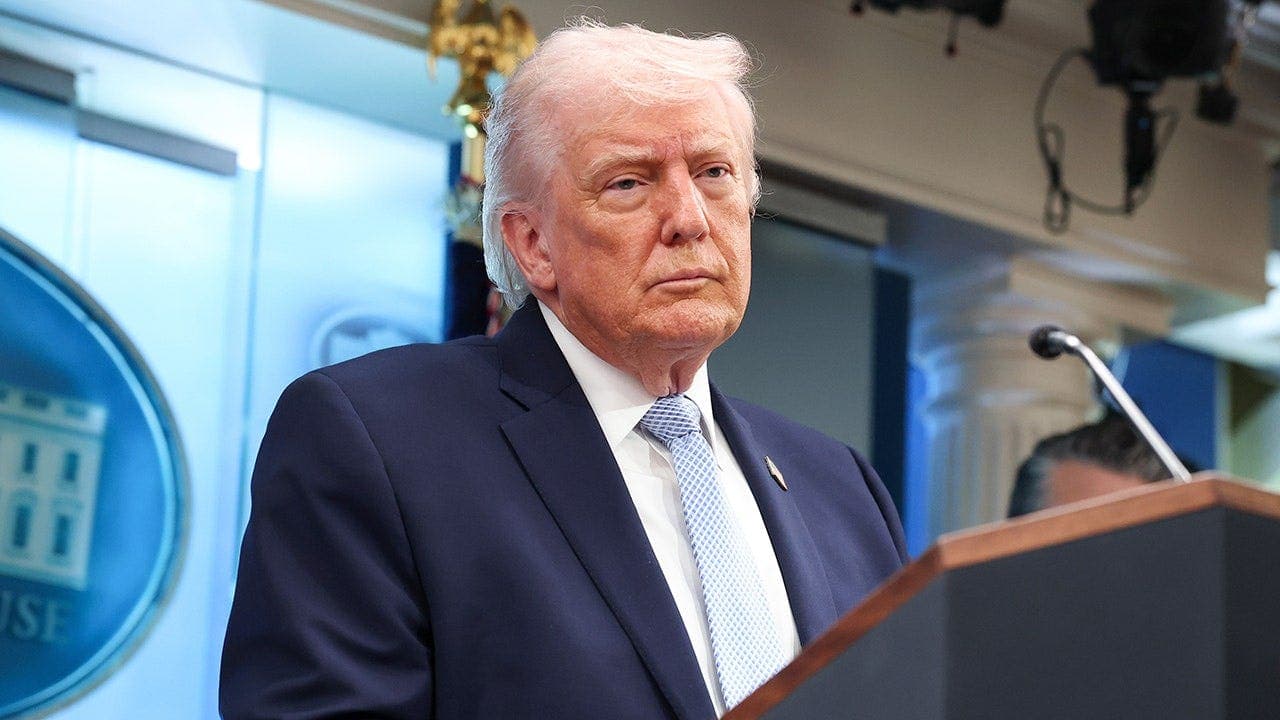
President Donald Trump delivered a sweeping State of the Union address Tuesday night, promoting new policy proposals on retirement savings, energy infrastructure and congressional ethics while touting his administration’s record on border security, the economy and global military operations.
But despite the wide-ranging speech — which included calls for a congressional stock trading ban, a new 401(k)-style retirement option and ongoing nuclear negotiations with Iran — several areas were notably absent or only briefly addressed.
The omissions matter in 2026 as the administration heads into a pivotal year marked by record federal debt levels, cooling job growth, intensifying great-power competition with China and ongoing global instability.
With Congress narrowly divided and international tensions high, the State of the Union offered a key opportunity for the president to outline how his second-term agenda will address long-term fiscal sustainability, labor market momentum and U.S. strategy abroad — questions that remain central to lawmakers, markets and U.S. allies.
Despite emphasizing economic growth and vowing to root out fraud, the president did not lay out a detailed plan to address the nation’s $38.56 trillion debt or the long-term solvency of Social Security and Medicare.
Trump’s "big, beautiful Bill," 2025 tax and spending legislation, is projected by the Congressional Budget Office to add another $4.2 trillion to the deficit throughout the next decade.
The Supreme Court’s recent ruling striking down his universal tariffs creates a $2 trillion revenue gap that the president didn’t address. He claimed "alternative statutes" would fill it, but there’s potential for courts to strike down those as well.
The issue also has prompted concern within Trump’s own party.
Rep. Lloyd Smucker, R-Pa., while praising the president’s address, warned afterward that the national debt poses an "existential threat" that must be addressed to preserve economic stability for the next 250 years.
Outside fiscal watchdogs echoed that concern.
"The state of our Union is more indebted than ever," said Maya MacGuineas, president of the Committee for a Responsible Federal Budget. "The Supreme Court has opened a massive revenue hole of nearly $2 trillion (with the tariff ruling) that the Administration and Congress must fill."
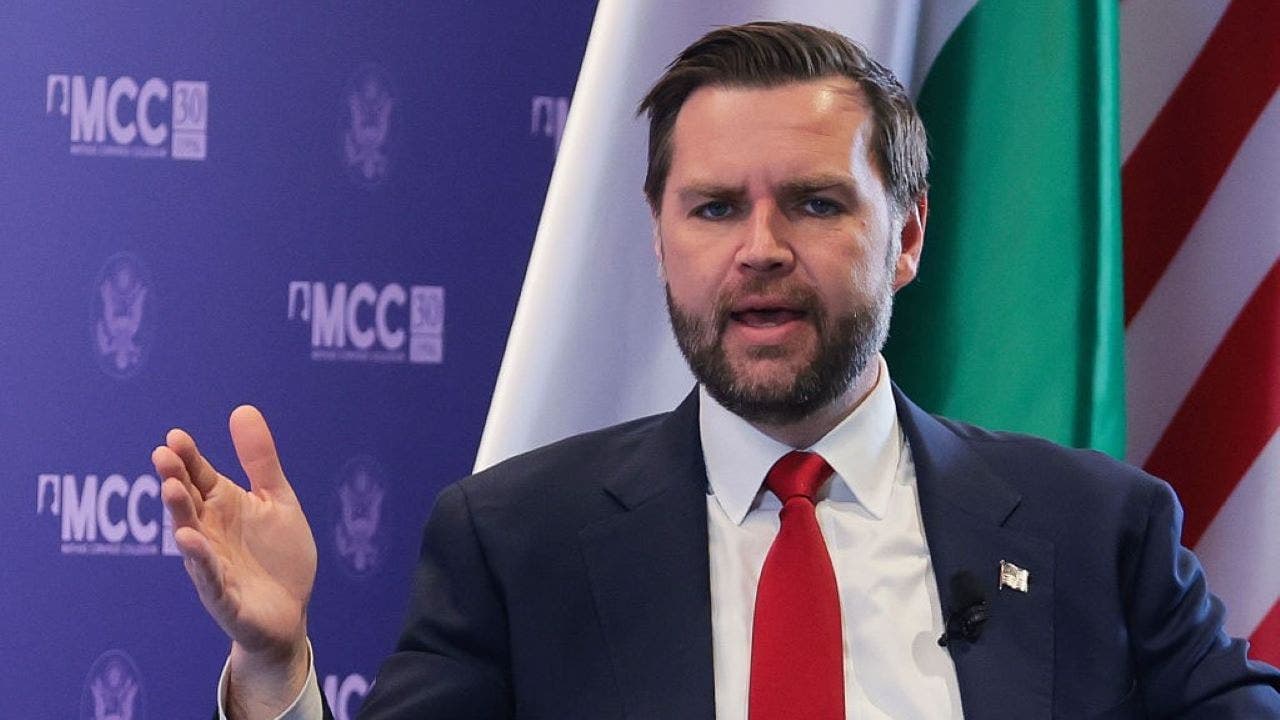
Trump proposed a new "war on fraud" task force Tuesday night, to be led by Vice President JD Vance, claiming that rooting out corruption —specifically targeting the Somali community in Minnesota — could recoup enough stolen taxpayer funds to "balance the budget overnight."
The debt carries heightened urgency in 2026 as interest payments approach $1 trillion annually and lawmakers face looming deadlines on entitlement trust fund solvency and future budget negotiations.
President Donald Trump delivered a sweeping State of the Union address Tuesday night, promoting new policy proposals on retirement savings, energy infrastructure and congressional ethics while touting his administration’s record on border security, the economy and national security. (Kenny Holston /Pool via Reuters)
"The roaring economy is roaring like never before," Trump boasted during the speech. "More Americans are working today than at any time in the history of our country."
But the president failed to touch on 2025’s lagging job growth: the labor market added 181,000 jobs in all of 2025, much fewer than the 1.46 million jobs that were added in 2024.
Economists note that while headline job totals can mask fluctuations, the sharp deceleration in hiring relative to 2024 highlights a labor market that has softened even as other economic indicators remain positive.
Senate Minority Leader Chuck Schumer claimed Trump "mocked" affordability issues and failed to note weak job numbers.
"Trump didn't simply ignore the affordability crisis. He mocked it yet again. The average Americans sitting at their table trying to figure out how they're going to pay that damn bill, was furious that he said, 'it doesn't matter.'"
"He bragged last night about job creation," Schumer said. "Well, job creation is is at its lowest point in over 20 years outside of a recession, its lowest point in 20 years. And he brags about it."
While Trump used his address to declare a "Golden Age" of security, the world’s most significant geopolitical theater — the Indo-Pacific — hardly was mentioned.
Despite a record-breaking $11 billion arms sale to Taiwan just two months ago and a planned high-stakes visit to Beijing in April, the President did not once mention Taiwan, the South China Sea or a broader regional strategy by name.
While Trump mocked "Chinese technology" in the context of the Venezuelan raid, he offered no public reassurance to allies in Tokyo, Canberra, Australia, or Taipei, Taiwan, which are navigating Beijing’s expanding military reach.