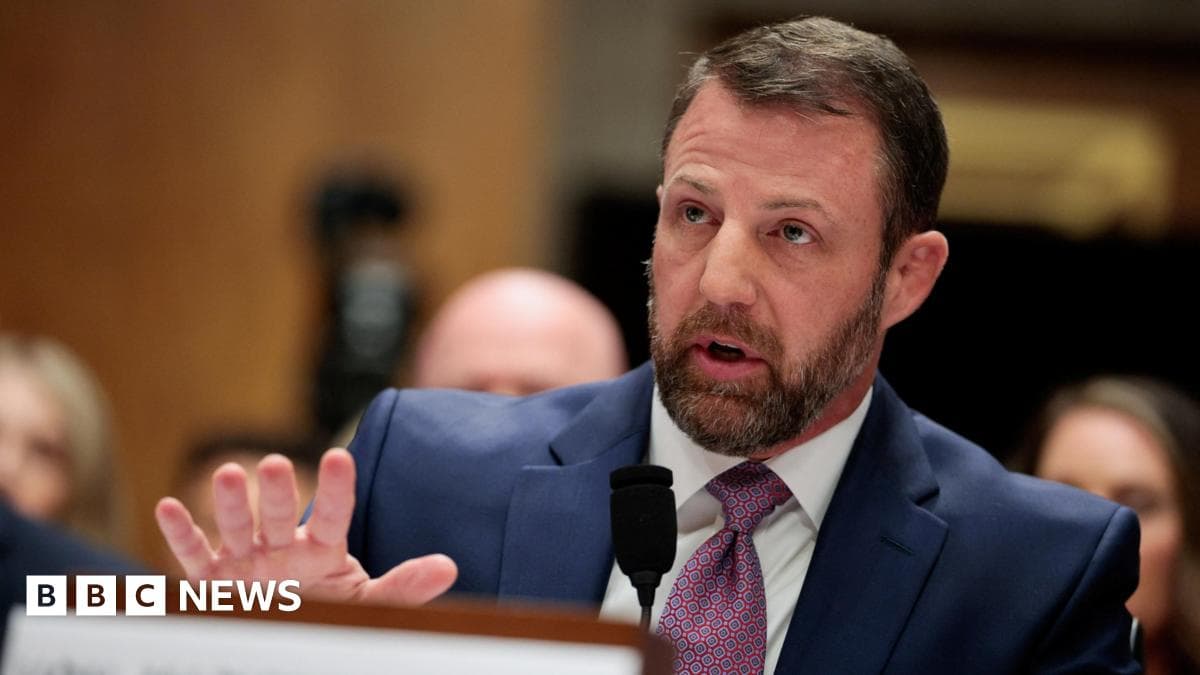
Republican Senator Markwayne Mullin, President Donald Trump’s nominee to lead the Department of Homeland Security (DHS), on Wednesday outlined his vision for reshaping the agency’s immigration enforcement and emergency management operations during a tense Senate confirmation hearing in Washington. If confirmed by the Senate—where a vote is scheduled for Thursday—Mullin, a former mixed martial arts fighter and Oklahoma senator, pledged to overhaul ICE priorities, reduce bureaucratic hurdles at FEMA, and engage constructively with local leaders in sanctuary cities. His testimony came amid a prolonged partial government shutdown, scrutiny over ICE’s use of force, and mounting concerns about the U.S. readiness to secure the upcoming Fifa World Cup.
Key Takeaways from Markwayne Mullin’s DHS Confirmation Hearing
- Mullin vowed to transform ICE into a ‘transport’ agency focused on moving detainees rather than frontline enforcement raids, requiring judicial warrants for property entries.
- He pledged to end the DHS secretary’s personal approval requirement for FEMA grants over $100,000, calling the policy ‘micromanaging’ and promising a hands-off approach to emergency funding.
- Mullin expressed willingness to work with sanctuary cities—municipalities limiting cooperation with federal immigration enforcement—rather than immediately defunding them, framing it as a collaborative effort.
- The DHS is ‘behind’ on preparations for the Fifa World Cup, scheduled for June across the U.S., Mexico, and Canada, due to ongoing funding delays from the partial government shutdown.
- Senator Rand Paul and Mullin engaged in sharp exchanges, while Democrats questioned the agency’s trustworthiness following recent ICE-related fatalities and controversial spending under former Secretary Kristi Noem.
Mullin’s Vision for ICE: Warrants, Not Raids, and a Shift to Transportation
A central pillar of Mullin’s testimony was his plan to redefine the role of Immigration and Customs Enforcement (ICE) by shifting its focus from aggressive frontline operations to logistical support. He told senators he wants ICE to function more like a ‘transport’ agency—ferrying undocumented immigrants to detention facilities or deportation proceedings—rather than conducting large-scale raids. ‘I would love to see ICE become a transport more than the front line,’ Mullin stated, emphasizing that this could be achieved without legislative changes. This approach aligns with Trump’s mass deportation agenda but aims to reduce the visible intensity of enforcement that has drawn criticism in cases like the January shooting of Alex Pretti, an ICU nurse in Minneapolis, by border patrol agents.
Judicial Warrants and the Pretti Case: A Question of Accountability
Mullin’s comments on ICE’s use of force were closely scrutinized, particularly regarding the killing of Alex Pretti during protests in Minneapolis. Mullin admitted he had previously called Pretti ‘deranged’ in a social media post but now stated he regretted the remark. However, he refused to apologize to Pretti’s family unless an official investigation determines the agents acted improperly. Democrats pressed Mullin on whether ICE’s actions had eroded public trust, with Senator Elissa Slotkin of Michigan declaring, ‘The trust is gone from DHS and ICE.’ Mullin responded by defending ICE’s mission but acknowledged the need for a ‘better approach’ to everyday enforcement activities.
‘I will always support my law enforcement doing their job if they are pursuing a felon, but for everyday enforcement activities, there is a better approach.’ — Senator Markwayne Mullin, responding to concerns about ICE operations in sensitive locations
FEMA Reforms and the End of ‘Micromanagement’
One of the most contentious policies inherited from former DHS Secretary Kristi Noem is the requirement for the secretary to personally approve FEMA grants exceeding $100,000. Initially implemented under Noem, this rule has been blamed for delaying over 1,000 FEMA grants, stalling disaster relief efforts nationwide. During the hearing, Democratic Senator Andy Kim of New Jersey asked Mullin directly whether he would reverse the policy. Mullin’s reply was unequivocal: ‘Absolutely.’ He framed the policy as an example of unnecessary bureaucratic overreach, declaring, ‘That’s called micromanaging… I’m not a micromanager.’ His stance reflects Trump’s broader push to streamline federal agencies, including plans to downsize FEMA.
FEMA Without a Leader: The Search for a New Administrator
FEMA has operated without a confirmed administrator for the entirety of Trump’s second term, leaving the agency in a state of limbo as it faces increasing natural disasters and emergency funding demands. Mullin acknowledged the urgency of the situation, telling senators, ‘We’re already looking at some [candidates] in the case we do get confirmed,’ and urged lawmakers to ‘give them a fair shake.’ His comments came as Democrats highlighted delays in disaster relief disbursements under Noem’s tenure, with Kim noting that more than 1,000 grants were held up due to the micromanagement policy.
Sanctuary Cities and the Limits of Federal Enforcement
Mullin’s approach to sanctuary cities—municipalities that limit local law enforcement’s cooperation with federal immigration authorities—marked a notable departure from the hardline stance of his predecessor. Florida Republican Senator Rick Scott questioned Mullin about how he would engage with these cities, which have become a flashpoint in Trump’s deportation push. Mullin responded by emphasizing collaboration over confrontation, stating he would ‘get in touch with sheriffs and police chiefs’ to understand their concerns. While he suggested that defunding such cities could be a ‘last resort,’ he also expressed skepticism about claims that law enforcement in these communities refuse to enforce immigration laws, calling it a ‘misunderstanding.’ This approach contrasts with Trump’s previous threats to cut funding to sanctuary jurisdictions.
Clashes Over Election Security, World Cup Readiness, and the Partial Government Shutdown
The hearing was punctuated by sharp partisan exchanges, particularly on the role of DHS in federal elections. Michigan Democrat Senator Slotkin pressed Mullin on whether federal law enforcement officers would be deployed to polling sites in 2026, as Trump has previously suggested. Mullin demurred, stating that such actions would only occur in response to a ‘specific threat,’ not routine enforcement. Slotkin, visibly frustrated, warned that the presence of DHS personnel at polls would signal a breakdown in democratic norms. The exchange underscored broader Democratic concerns about the politicization of DHS under Trump.
Fifa World Cup Security: A DHS ‘Behind’ on Preparations
Perhaps most alarmingly, Mullin revealed that the DHS is ‘behind’ in its preparations for the Fifa World Cup, set to kick off in June across 16 cities in the U.S., Mexico, and Canada. The warning came as the agency grapples with a partial government shutdown that has left critical functions unfunded for more than a month. DHS officials have stated it would take four months to adequately prepare for the event, leaving little margin for error. The revelation raised questions about whether the U.S. will be able to meet international security standards for one of the world’s largest sporting events.
The Partial Shutdown’s Toll: FEMA, TSA, and Border Security Paralyzed
The ongoing partial government shutdown—now in its fifth week—has paralyzed key functions within DHS, from FEMA’s disaster relief to TSA’s airport security operations. Republican Senator Josh Hawley of Missouri highlighted the shutdown’s impact, citing missing children cases, FEMA funding delays, and TSA backlogs as critical issues left unaddressed. While Hawley and other Republicans blamed Democrats for the impasse, Mullin repeatedly stated that shutting down DHS further would be a mistake, noting that ‘there are lots of people working without pay.’ Democrats, including Senator Gary Peters of Michigan, countered that Republican opposition to funding ICE and border security measures—without negotiated accountability—was prolonging the crisis.
Why Kristi Noem Was Replaced: Spending Scandals and ICE Controversies
Mullin’s nomination followed the abrupt removal of former DHS Secretary Kristi Noem, announced by Trump on March 5 after just over a year in the role. While Trump praised Noem’s ‘spectacular results (especially on the Border!)’ on Truth Social, her tenure was marred by controversies, including ICE’s fatal shootings of Alex Pretti and Renee Good in Minneapolis during immigration protests. Noem defended the agents and labeled the victims as ‘domestic terrorists,’ a stance that drew widespread condemnation. Additionally, Democrats accused Noem of misusing taxpayer funds, including a $220 million self-promotional ad campaign and nearly $200 million spent on two luxury jets for official travel. Trump later disavowed knowledge of the spending, telling Reuters, ‘I never knew anything about it.’ Noem was reassigned as special envoy for the ‘Shield of the Americas,’ a U.S.-led security initiative in the Western Hemisphere.
Mullin’s Path to Confirmation: Senate Politics and Historical Significance
Mullin’s confirmation process hinges on a Senate vote scheduled for Thursday, where Republicans hold a narrow majority. While GOP leadership appears poised to support him, dissenting voices like Kentucky Senator Rand Paul have raised concerns, including over Mullin’s past remarks about a physical altercation with Teamsters Union President Sean O’Brien. Mullin acknowledged the history but noted their relationship had since evolved into friendship. Paul’s skepticism could complicate the vote, though Pennsylvania Democrat Senator John Fetterman’s apparent support for Mullin signals bipartisan openness to his nomination. If confirmed, Mullin would make history as only the second Native American cabinet member in U.S. history, following Deb Haaland, who served as Secretary of the Interior under President Biden.
What’s Next for DHS Under Mullin? Policy Shifts and Public Trust Challenges
As Mullin awaits the Senate’s decision, the DHS faces a critical juncture. His proposed reforms—particularly the shift in ICE’s role and the end of FEMA micromanagement—could reshape the agency’s priorities, though they may not fully address Democratic concerns about civil liberties and accountability. Meanwhile, the partial shutdown’s fallout, the Fifa World Cup security gap, and lingering questions about ICE’s use of force will demand immediate attention. Mullin’s ability to navigate these challenges will determine whether he can restore public confidence in an agency that has seen its reputation battered under Noem’s leadership. For now, the Senate’s vote looms large, with the future of DHS—and Trump’s immigration agenda—hanging in the balance.
Frequently Asked Questions About Markwayne Mullin’s DHS Nomination
Frequently Asked Questions
- Why did Trump replace former DHS Secretary Kristi Noem?
- Trump removed Noem in March 2024 after her tenure faced criticism over ICE’s fatal shootings of immigrants, controversial self-promotional spending ($220M on ads, $200M on jets), and plummeting public approval for immigration enforcement. Noem was reassigned to a diplomatic role.
- What changes would Markwayne Mullin make to ICE if confirmed?
- Mullin proposes shifting ICE from frontline raids to a ‘transport’ agency focused on moving detainees, requiring judicial warrants for property entries, and working more closely with jails to arrest undocumented immigrants rather than conducting large-scale operations.
- How would Mullin address FEMA delays caused by micromanagement?
- Mullin plans to reverse the policy requiring the DHS secretary to personally approve FEMA grants over $100,000, calling it ‘micromanaging.’ He also pledged to quickly appoint a qualified FEMA administrator to address funding backlogs.