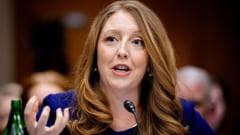
ShareSaveGrace Eliza GoodwinandMadeline HalpertShareSaveGetty ImagesDemocratic and Republican lawmakers peppered US President Donald Trump's nominee for surgeon general with hours of questions at a confirmation hearing on Wednesday, asking Casey Means about her stands on vaccines and more.
Means - a doctor, entrepreneur, and health influencer - was also questioned heavily about her qualifications and possible conflicts of interest.
Unlike past surgeons general, who lead the 6,000-person US Public Health Service, the 38-year-old Stanford-trained doctor does not have an active medical licence.
She currently is considered a leader in the Make America Healthy Again (Maha) movement championed by Health Secretary Robert F Kennedy Jr, and has published the book Good Energy that advocates natural foods, exercise, and lifestyle changes to achieve strong health.
The committee is expected to vote on her nomination soon, and, if it is approved, send it to the full chamber.
Here are our key takeaways from Wednesday's hearing.
Means denied past conflicts of interest
A few senators pressed Means on the kinds of products she has promoted as a health influencer.
Senator Chris Murphy, a Democrat of Connecticut, accused her of violating Federal Trade Commission policies dozens of times, by allegedly failing to disclose she received compensation from companies while promoting their products.
Murphy cited financial data outlining her corporate sponsorships that was provided to the committee ahead of the hearing, and argued Means was undermining Americans' trust in the medical profession and raising ethical concerns over conflicts of interest.
Means responded by saying Murphy's documentation was "incorrect" and a "false representation", and accused his staff of gathering data "intentionally to create these claims".
She repeatedly told the hearing that, after a months-long process, she was fully cleared by the Office of Government Ethics and signed a letter committing to divest from her business interests while in office.
Means graduated from Stanford University's medical school and completed most of her residency training to be a surgeon, but quit before she was finished.
"I walked out of the hospital and embarked on a journey to understand the real reasons why people get sick," she wrote in Good Energy.
Since then, she has promoted some controversial health views, including scepticism of the childhood vaccination schedule. She also co-founded a company to help people monitor their blood glucose, and has sold other products - including teas and dietary supplements - on social media.
At the hearing, Means was pressed about lacking an active medical licence and said she had only allowed her licence to lapse into "inactive" status because she was not currently seeing patients. She added she wouldn't see patients as surgeon general and does not have plans to re-activiate it.
An active medical licence is not required to become surgeon general. However, in the role Means would oversee public health officers who must maintain "active and unrestricted" licences.
Trump nominates doctor and influencer for US surgeon general
Trump's surgeon general pick goes into labour before confirmation hearing
Means supports vaccines, but also patient autonomy
If confirmed, Means would be responsible for issuing national health advisories and would report to Kennedy.
Since taking office, Kennedy has made sweeping changes to the nation's health agencies as well as vaccine recommendations. Most recently, the Centers for Disease Control and Prevention (CDC) slashed the longstanding number of vaccines recommended for children by about a third - from 17 to 11.
When asked many times if, as surgeon general, she would advocate for everyone in the US to be immunised against a number of illnesses, including measles, Hepatitis B, and the flu, Means often would not commit.
At one point, she did not directly answer a question about whether she would encourage mothers to vaccinate their children against measles, saying instead: "I believe vaccines save lives. I believe that vaccines are a key part of every public - of any infectious disease public health strategy."
When pressed further, Means added: "I do believe that each patient, mother, parent, needs to have a conversation with their pediatrician about any medication they're putting in their body or their children's body."