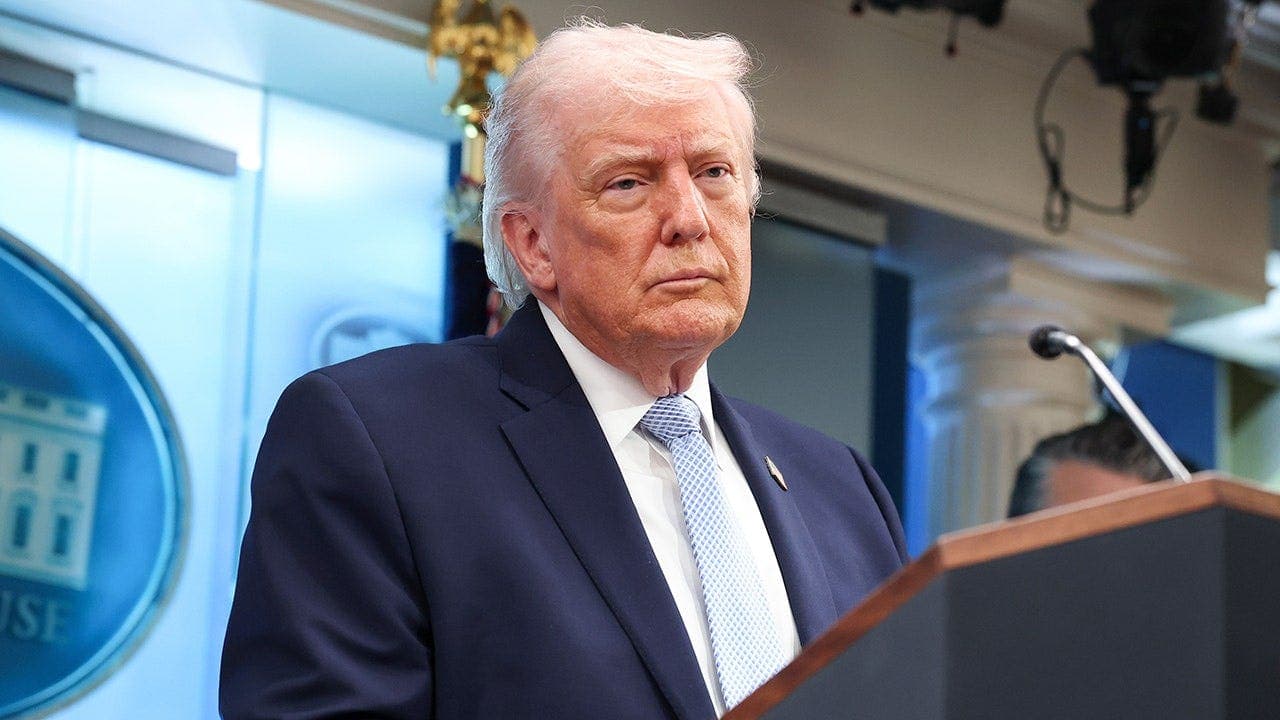
The U.S. military launched an intensive, round-the-clock search-and-rescue operation Saturday after an American F-15 fighter jet was shot down over Iran, leaving one crew member missing and prompting Tehran to offer a cash reward for their capture. The incident unfolded amid a rapidly deteriorating security environment in the Middle East, where Washington and Tehran exchanged apocalyptic warnings over Iran’s deadline to reopen the Strait of Hormuz by Monday—while regional allies Israel and Lebanon faced widening military confrontations. With gas prices in the U.S. surging above $4.10 per gallon and oil markets roiled, the crisis threatens to spill beyond the battlefield into global economic stability.
Why the Strait of Hormuz Deadline Is Raising the Stakes in an Already Volatile Region
At the heart of the escalating crisis is a 48-hour ultimatum set by former President Donald Trump, who on Saturday reiterated his threat to unleash 'all Hell' on Iran if it does not reopen the Strait of Hormuz—a critical chokepoint through which roughly 20% of the world’s seaborne oil passes—by Monday. The deadline, framed as a national security imperative, has elevated tensions to a level unseen since the 1980s Tanker War during the Iran-Iraq conflict.
A Strategic Chokepoint With a History of Conflict
The Strait of Hormuz is not just a maritime route; it is the world’s most important oil transit corridor. According to the U.S. Energy Information Administration, about 21 million barrels of oil pass through the strait daily—nearly one-third of the world’s seaborne crude. Iran has repeatedly threatened to close the strait in past decades, most notably in 2012 during tensions over its nuclear program. The strait’s closure would trigger an immediate spike in global oil prices and disrupt energy markets, with ripple effects on gasoline prices, inflation, and consumer costs in the U.S. and Europe.
Trump’s threat to 'open all Hell' reflects a broader U.S. strategy of deterrence through overwhelming force—a doctrine echoed by Iranian military leaders who warned that any expansion of hostilities would unleash 'the gates of hell' upon the U.S. and Israel. Maj. Gen. Ali Abdollahi Aliabadi, commander of Iran’s Khatam al-Anbiya Central Headquarters, declared on Saturday: 'Do not forget: if hostilities expand, the entire region will become hell for you.'
The F-15 Incident: Search and Rescue Under Fire
The downing of the F-15 Eagle on Friday marked one of the most serious direct military confrontations between the U.S. and Iran in decades. The jet, part of the U.S. Air Force’s 4th Fighter Wing based at Seymour Johnson Air Force Base in North Carolina, was conducting a routine training mission when it was reportedly intercepted and shot down by Iranian air defenses over the Persian Gulf. Two crew members ejected, but one remains missing as U.S. helicopters conducting search-and-rescue operations came under fire from Iranian tribesmen, according to state media reports.
“Our crews have specific techniques to achieve contact at the right moment, and so you don’t want to be detected by adversaries that are out looking for you in any number of ways.”
Ravi Chaudhary, a retired U.S. Air Force C-17 pilot and former director of the Personnel Recovery Center in Iraq, told CNN that the search operation is a '24/7' effort that will continue 'in perpetuity until we get that person back.' Chaudhary, who served as an assistant secretary in the Air Force, explained that the missing crew member is likely using evasion techniques taught during survival training, including minimizing detectable signals and timing movements to avoid detection. He added that the F-15’s ejection sequence—just 1.5 seconds between the front and rear seats—could explain why the two crew members ended up in different locations.
Tehran’s Carrot-and-Stick Strategy: Rewards and Threats
Iranian officials have adopted a dual approach, offering both incentives and deterrence. The Revolutionary Guard-affiliated Tasnim News Agency announced a cash reward for anyone who captures the missing American service member, framing it as part of a broader 'resistance' narrative against U.S. aggression. At the same time, Iranian military spokespersons have repeatedly warned of catastrophic consequences should Israel or the U.S. escalate military actions. Ebrahim Zolfaghari, spokesperson for Iran’s central headquarters, stated: 'The illusion of defeating the Islamic Republic of Iran has turned into a swamp that will engulf you.'
Regional Fallout: Israel’s Expanding Campaign Against Iran and Hezbollah
The crisis has spilled across borders, with Israel intensifying its military actions against Iranian-backed forces. On Saturday, Israeli Prime Minister Benjamin Netanyahu confirmed that Israel had conducted airstrikes targeting Iran’s petrochemical plants, describing the attacks as retaliation for Iran’s support of militant groups. Tehran reported that multiple petrochemical facilities in the country’s west were damaged in the strikes. The Israeli military also issued an evacuation order for the Masnaa crossing on the Syrian-Lebanese border, warning that Hezbollah was using the civilian route for military purposes.
Lebanon Slides Into Humanitarian Crisis
The humanitarian toll in Lebanon has deepened as Israel expands its campaign against Hezbollah. Displaced civilians in southern Lebanon told international aid groups that they are struggling to access food, water, and medical supplies amid ongoing airstrikes. The United Nations Office for the Coordination of Humanitarian Affairs (OCHA) reported that more than 100,000 people have been displaced since the escalation began, with over 30% of hospitals in affected areas either damaged or non-functional. The World Food Programme has warned of rising malnutrition rates, particularly among children.
Tel Aviv Protests Crushed as Anti-War Sentiment Grows
In Israel, the government moved swiftly to suppress dissent. Israeli police broke up an anti-war protest in Tel Aviv on Saturday night, dispersing hundreds of demonstrators and arresting at least 17 people. The crackdown reflects broader efforts by Prime Minister Netanyahu’s government to control public narrative amid the escalating conflict, even as opinion polls show growing public unease over the country’s military engagements. Similar protests have emerged in cities like Haifa and Jerusalem, though they remain smaller and more localized.
Global Energy Markets React to Rising Geopolitical Risk
The geopolitical shockwaves have already reached global energy markets. AAA reported that the national average for U.S. gas prices had climbed to $4.10 per gallon as of Saturday—a 12-cent increase from the previous week and the highest level since October 2023. Analysts at Goldman Sachs warned that a prolonged closure of the Strait of Hormuz could push oil prices above $120 per barrel, triggering inflationary pressures worldwide.
India Resumes Iranian Oil Imports Amid Market Turmoil
In a surprising turn, India’s oil ministry confirmed that the country had made its first purchase of Iranian oil in more than two years. The move, driven by India’s need to diversify its energy sources amid volatile global prices, underscores the complex calculus facing nations caught between geopolitical alliances. While India has maintained strategic ties with the U.S., its energy security concerns have led it to engage with Iran—a country under heavy U.S. sanctions.
The U.S. Labor Market Holds Steady—But for How Long?
Amid the chaos, the latest U.S. jobs report released Saturday offered a rare moment of stability. The Labor Department reported that the economy added 240,000 jobs in March, defying expectations of a slowdown. However, economists cautioned that the report did not capture the potential economic fallout from a prolonged Middle East conflict, which could disrupt supply chains, increase fuel costs, and dampen consumer spending—the backbone of U.S. economic growth.
Key Takeaways: What You Need to Know
- A U.S. Air Force F-15 fighter jet was shot down over Iran on Friday, leaving one crew member missing as U.S. forces conduct a 24/7 search-and-rescue operation under fire.
- Iran has offered a cash reward for the capture of the missing American service member and warned of 'the gates of hell' opening if U.S. or Israeli strikes continue.
- Donald Trump’s deadline for Iran to reopen the Strait of Hormuz by Monday has raised the risk of a broader military confrontation in the Persian Gulf.
- Israel has expanded strikes on Iranian petrochemical plants and Hezbollah positions, deepening humanitarian crises in Lebanon and Syria.
- Global oil prices and U.S. gasoline costs are rising, with AAA reporting an average of $4.10 per gallon amid fears of a Strait of Hormuz blockade.
What Happens Next? Three Possible Scenarios
The coming days will hinge on whether diplomacy can de-escalate tensions or if military actions spiral into a wider conflict. Three potential trajectories are emerging:
Scenario 1: Diplomatic Breakthrough Before the Deadline
If Iran agrees to reopen the Strait of Hormuz by Monday’s deadline, the immediate crisis may defuse. However, trust between Washington and Tehran is nearly nonexistent, and any deal would likely be temporary. European diplomats have floated proposals for de-escalation talks, but neither side has signaled willingness to compromise on core demands: Iran’s demand for sanctions relief and the U.S. insistence on regional stability.
Scenario 2: Limited Military Strikes and Retaliation
Should the deadline pass without a resolution, limited airstrikes or cyberattacks could be deployed by either side. Israel may intensify its campaign against Hezbollah in Lebanon, while Iran could target U.S. bases in Iraq or Syria. Such actions risk miscalculation and escalation, particularly given the presence of U.S. carrier strike groups in the region.
Scenario 3: Full-Blown Regional Conflict
The least likely but most catastrophic scenario would involve Iran closing the Strait of Hormuz through mining or direct military action, prompting a U.S.-led naval response. Israel’s strikes on Iranian soil could trigger retaliatory attacks on Israeli and Gulf targets, drawing in Hezbollah and possibly even direct Iranian involvement. Such a conflict would send oil prices soaring, trigger global supply chain disruptions, and plunge the U.S. and Europe into recession.
Frequently Asked Questions
Frequently Asked Questions
- Why was the F-15 jet shot down over Iran?
- The U.S. has not provided a full explanation, but Iranian state media claimed the jet was intercepted after violating Iranian airspace during a training mission. The Pentagon has not confirmed whether the aircraft was on a combat mission at the time of the incident.
- What is the Strait of Hormuz, and why is it so important?
- The Strait of Hormuz is a narrow waterway connecting the Persian Gulf to the Gulf of Oman. It is the world’s most critical oil transit route, handling about 21 million barrels of crude daily—nearly one-third of global seaborne oil trade. A closure would disrupt global energy markets and spike fuel prices worldwide.
- How is the search for the missing crew member being conducted?
- U.S. Central Command has deployed helicopters and search teams operating 24/7 to locate the missing airman. Iranian tribesmen have reportedly fired on American helicopters, complicating the rescue effort. The Pentagon has not released details on the crew member’s identity or rank.