NVIDIA is preparing for its most transformative GTC conference in years, with plans to abandon its long-standing 'one GPU does everything' philosophy in favor of hybrid architectures and specialized AI solutions. At the March 16, 2026 event, the company is expected to unveil Groq LPU integration, next-generation Feynman AI chips, and massive rack-scale computing systems like the NVL576. These developments come as AI workloads evolve beyond traditional GPU-centric models, forcing NVIDIA to adapt its hardware strategy.
NVIDIA's Strategic Shift: Moving Beyond GPU-Centric AI Computing
For years, NVIDIA has dominated the AI hardware market with its GPU-first approach, but evolving workloads are forcing a paradigm shift. The rise of agentic AI systems—autonomous, goal-oriented applications that require specialized processing—has exposed the limitations of monolithic GPU architectures. NVIDIA's CEO Jensen Huang has hinted at this transition, stating that 'the future of computing is heterogeneous.'
The Groq Acquisition and LPU Integration
NVIDIA's 2023 acquisition of Groq, a pioneer in tensor processing units (TPUs), represents a strategic pivot toward specialized AI acceleration. At GTC 2026, the company is expected to reveal concrete products combining Groq's LPUs with NVIDIA's Vera Rubin GPUs. These hybrid systems will target specific AI workloads, such as inference decoding, where LPUs excel at low-latency, high-throughput tasks.
This is a platform shift. We're moving from a 'one-size-fits-all' GPU approach to a modular architecture where different components handle different stages of AI processing.
Feynman Chips: NVIDIA's Next-Generation AI Accelerators
Following the Vera Rubin architecture, NVIDIA's Feynman chips will push the boundaries of AI acceleration with TSMC's 1.6nm A16 process and 3D stacking technologies. Early reports suggest Feynman will integrate Groq LPUs directly onto the compute die, leveraging TSMC's hybrid bonding techniques. This marks NVIDIA's first major reliance on Moore's Law scaling in years, signaling a new era of performance density.
Rack-Scale Innovations: From NVL72 to NVL576
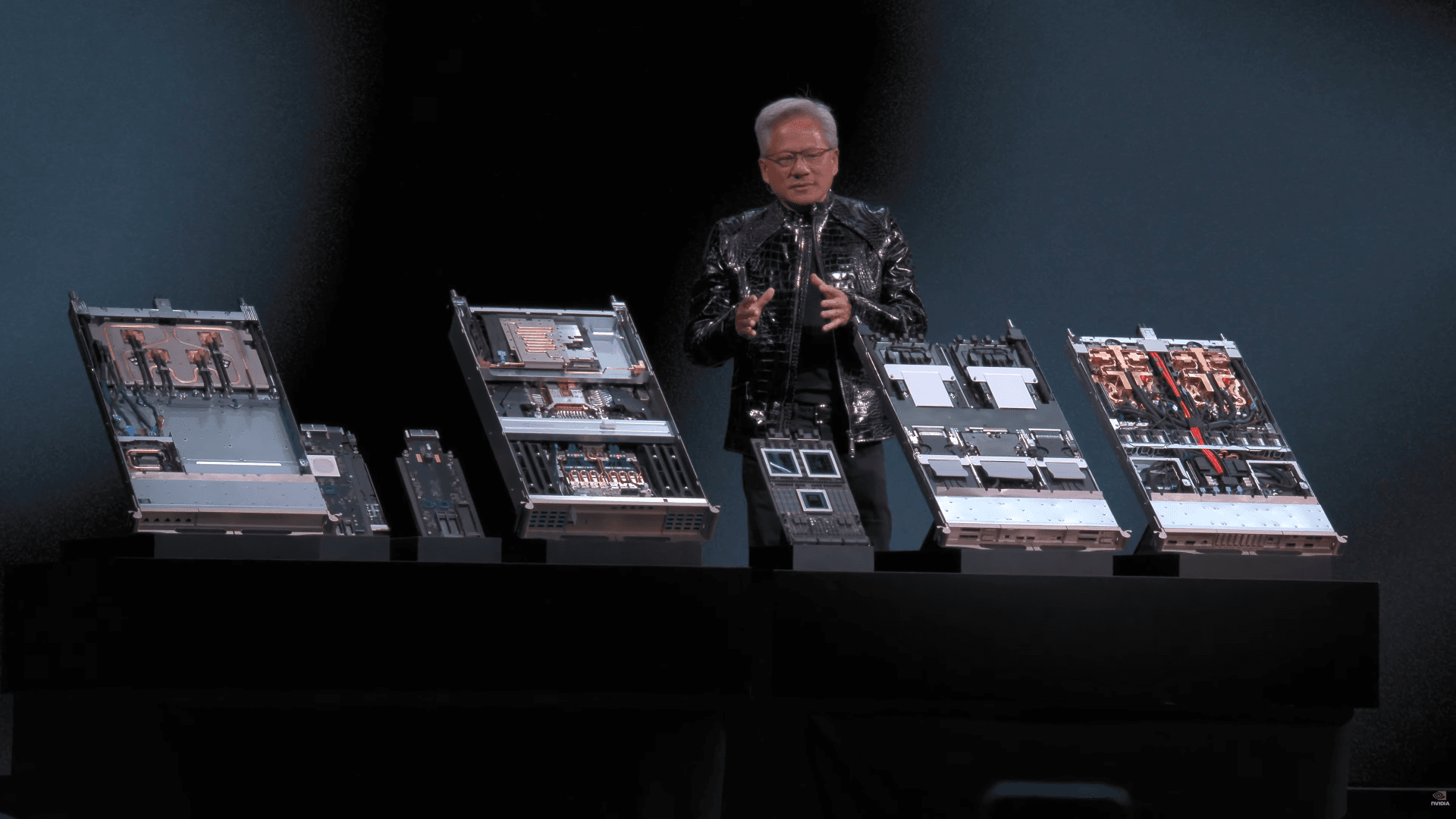
NVIDIA's Vera Rubin lineup includes the NVL72 (72-GPU configuration) and the upcoming NVL576 mega-rack system. The latter represents a radical departure from traditional computing architectures, featuring vertical blade stacking and 800V direct-current power delivery. Co-packaged optics (CPO) will replace copper interconnects, addressing thermal and bandwidth limitations at this scale.
Broader Implications for AI Infrastructure
This shift has profound implications for cloud providers, data centers, and AI startups. As NVIDia moves toward heterogeneous computing, competitors like AMD and Intel will face pressure to adapt their strategies. The transition also raises questions about software compatibility, as developers must optimize for these new hybrid architectures.
- NVIDIA is abandoning its 'one GPU does everything' philosophy in favor of hybrid architectures at GTC 2026
- Groq LPUs will be integrated with Vera Rubin GPUs to create specialized AI processing systems
- Feynman chips will feature TSMC's 1.6nm process and 3D stacking for unprecedented performance
- The NVL576 mega-rack system represents a radical leap in data center-scale AI computing
- This shift will reshape the AI hardware landscape and force competitors to adapt
Frequently Asked Questions
- What is the significance of NVIDIA's Groq acquisition?
- NVIDIA's acquisition of Groq represents a strategic shift toward specialized AI acceleration. Groq's LPUs will complement NVIDIA's GPUs in handling specific AI workloads, particularly inference tasks that require low latency and high throughput.
- How will Feynman chips differ from previous NVIDIA architectures?
- Feynman chips will leverage TSMC's 1.6nm A16 process and 3D stacking technologies, integrating Groq LPUs directly onto the compute die. This represents NVIDIA's first major reliance on Moore's Law scaling in years, enabling unprecedented performance density.
- What is the NVL576 system and why is it important?
- The NVL576 is a mega-rack system featuring 576 GPUs in a vertical blade architecture. It represents a radical departure from traditional computing designs, using co-packaged optics to overcome thermal and bandwidth limitations at this scale.