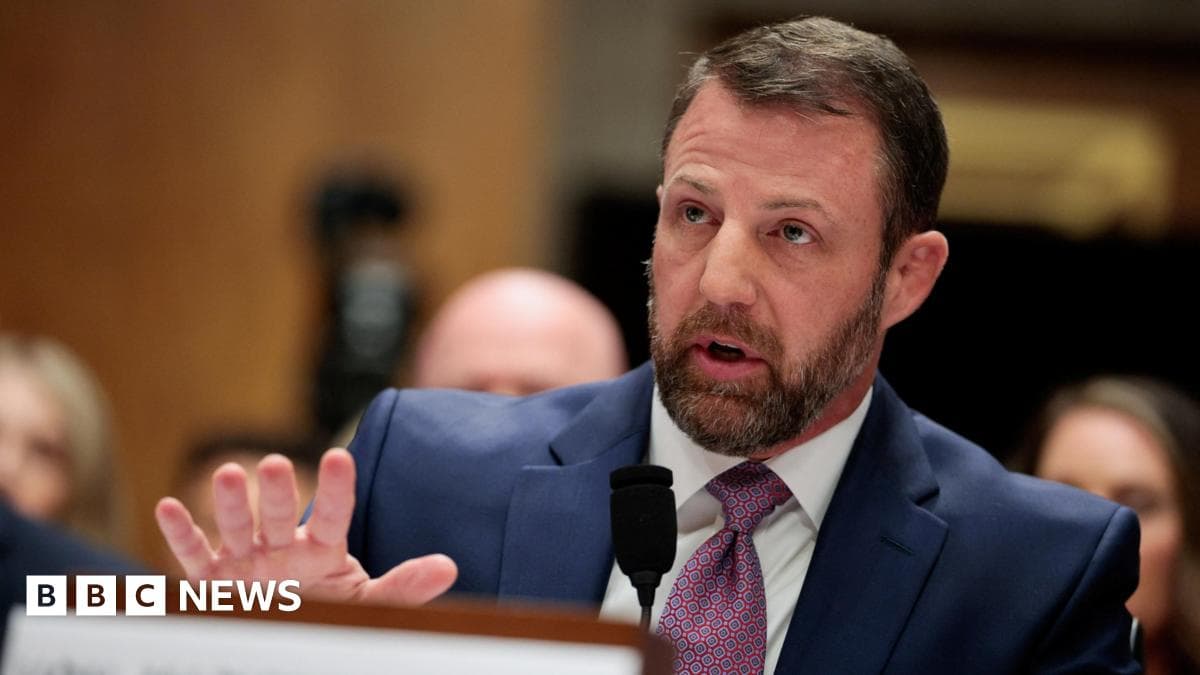
The Senate on Monday confirmed Sen. Markwayne Mullin's nomination to lead the Department of Homeland Security, a decision that comes as the agency grapples with a funding crisis and political controversy. The confirmation, which followed a 54-45 vote, marks a pivotal moment in the Trump administration's effort to restructure the Department of Homeland Security (DHS) amid growing concerns about immigration enforcement and national security. Mullin, a Republican from Oklahoma, was selected by President Donald Trump to replace Kristi Noem, the former secretary who faced intense scrutiny for her leadership and use of taxpayer funds. The confirmation comes as the DHS remains in a shutdown state, with federal funding lapsed in February, the month after a controversial enforcement surge in Minneapolis that left two U.S. citizens dead.
The Context of the DHS Shutdown and Funding Crisis
A Department in Limbo
The Department of Homeland Security has been in a partial shutdown since February, with federal funding lapsed just months after a controversial enforcement operation in Minneapolis that resulted in the deaths of two U.S. citizens. The agency, which is responsible for border security, immigration enforcement, and domestic security, has been under pressure to address both the funding gap and the political challenges of its leadership. The current crisis is exacerbated by a broader political battle over immigration policy, with Democrats withholding support for a funding package over concerns about the use of taxpayer dollars. The Trump administration has been trying to push through an unrelated voter-ID bill, further complicating the situation.
A Department in the Crosshairs
The funding lapsed in February has left the DHS in a state of limbo, with critical operations on hold. The agency's leadership has been a flashpoint in the political battles over immigration, with Kristi Noem, the previous secretary, facing a wave of criticism for her management of the department. The new secretary, Markwayne Mullin, is expected to address these challenges, but his confirmation has been a contentious process, with some Democrats raising concerns about his close ties to the Trump administration and his hard-line stances on immigration.
The Political Dynamics and Partisan Tensions
A Fractured Senate
The Senate confirmation of Mullin was a rare instance of bipartisan support, with two Democrats, Sen. John Fetterman of Pennsylvania and Sen. Martin Heinrich of New Mexico, voting in favor. However, the process was not without tension, as Sen. Rand Paul, a Republican from Kentucky, voted no, citing concerns about Mullin's close association with the Trump administration. Paul, who had publicly feuded with Mullin during the confirmation hearing, called the nominee a 'freaking snake' and raised questions about his ability to lead the agency. Despite the political friction, the confirmation was a significant step in the Trump administration's effort to reassert control over the DHS.
A Leader in the Making
Mullin, a long-time Republican, has been a figure of both controversy and support. His confirmation comes as he signals a shift in the direction of the agency, with his stated goal of reducing the agency's profile in the news and focusing on its role in protecting the public. He has also expressed a desire to reframe the role of Immigration and Customs Enforcement (ICE) as a 'transport more than the front line' in immigration enforcement, a move that has raised concerns among some Democrats. His approach to the agency is expected to be a key factor in the coming months, as the department faces the challenge of balancing national security with the political and legal constraints of the current administration.
Mullin's Vision for the Department and National Security
A New Direction for the Department
Mullin's confirmation is expected to bring a new direction to the Department of Homeland Security, with a focus on both national security and the use of force. He has stated that he would require immigration agents to obtain judicial warrants to enter private property, a move that could be seen as a step away from the more aggressive enforcement practices of the previous administration. His approach to the agency is also expected to be a key factor in the ongoing debate over the use of taxpayer funds, as the department continues to face scrutiny over its operations and the impact of its policies on the American public.
The Broader Implications for Immigration Policy and National Security
The confirmation of Mullin as the new secretary of the Department of Homeland Security is a significant step in the Trump administration's effort to reassert control over the agency. The new leader is expected to have a major impact on the future of immigration policy, as the department continues to face political and legal challenges. The confirmation also comes as the administration is working to pass the Save America Act, a bill that is expected to be a key part of the political strategy in the coming months. The new secretary is expected to play a key role in the implementation of this bill, as the administration continues to push for a more aggressive approach to immigration enforcement.
Key Takeaways from the Confirmation Process
- The Senate confirmed Sen. Markwayne Mullin as the next Secretary of Homeland Security, a move that comes as the agency faces a funding crisis and political controversy.
- Mullin's confirmation was a rare instance of bipartisan support, with two Democrats voting in favor and a Republican, Sen. Rand Paul, voting no.
- The new secretary has signaled a shift in the direction of the agency, with a focus on reducing the agency's profile in the news and focusing on its role in protecting the public.
Frequently Asked Questions
- What is the significance of Mullin's confirmation as the new DHS secretary?
- Mullin's confirmation marks a key step in the Trump administration's effort to reassert control over the Department of Homeland Security, which has been in a partial shutdown since February. The new leader is expected to have a major impact on the future of immigration policy and the use of taxpayer funds.
- What are the challenges facing the DHS as a result of this confirmation?
- The DHS is currently in a partial shutdown, with federal funding lapsed in February. The agency is also facing political and legal challenges, with Democrats withholding support for a funding package over concerns about the use of taxpayer funds. The new secretary is expected to play a key role in the implementation of the Save America Act.
- How does this decision impact immigration policy and national security?
- Mullin's confirmation is expected to have a major impact on the future of immigration policy, as the department continues to face political and legal challenges. The new leader is expected to play a key role in the implementation of the Save America Act, which is a key part of the Trump administration's political strategy.