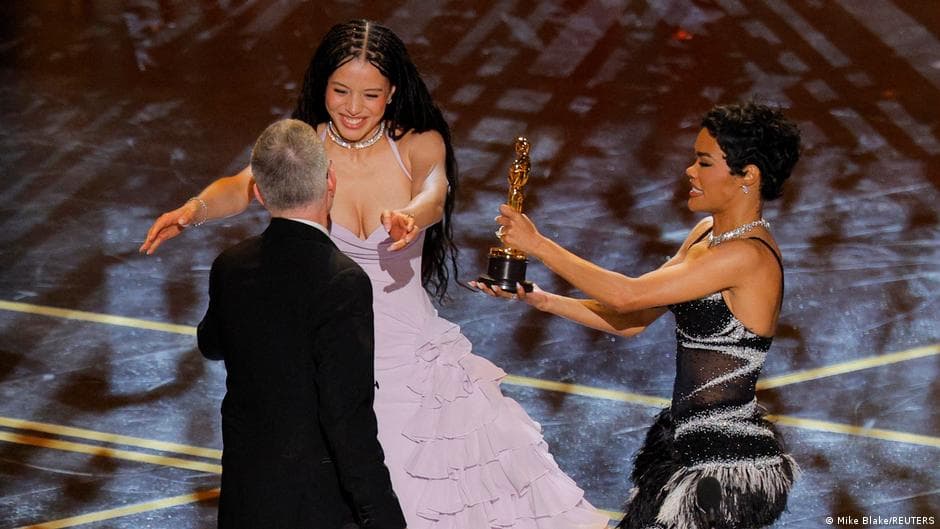
On the heels of a historic night at the 96th Academy Awards—where Paul Thomas Anderson’s action-dramedy *One Battle After Another* dominated with six wins, including Best Picture, Best Director, and Best Adapted Screenplay—the acclaimed filmmaker finally broke his silence on the contentious discourse surrounding the film’s depiction of Black women. Speaking to reporters during a packed post-ceremony press conference, Anderson acknowledged the longstanding criticism leveled against his movie, particularly regarding Teyana Taylor’s character, Perfidia Beverly Hills, whose arc has sparked a year-long debate about racial representation in cinema. His remarks came as audiences, critics, and industry insiders continue to dissect the film’s artistic choices and their broader implications for how marginalized communities are portrayed on screen.
The Oscars 2024 Moment That Changed the Conversation About 'One Battle After Another'
Despite the euphoria of his Oscar triumph, Anderson’s post-awards comments underscored the unresolved tensions that have dogged *One Battle After Another* since its premiere at the Venice Film Festival in September 2023. The film, a sprawling, satirical epic set against the backdrop of a fictionalized 1970s revolutionary movement, follows the Beverly Hills dynasty of Perfidia (Taylor), a charismatic but deeply flawed activist whose personal demons threaten the collective struggle for change. While the movie’s technical prowess and bold visual style drew widespread acclaim—garnering 14 Oscar nominations—its treatment of race and gender dynamics has remained a flashpoint, with some viewers arguing that Perfidia’s character arc reinforces harmful stereotypes while others defend it as a nuanced exploration of flawed humanity.
Why Perfidia Beverly Hills Became a Symbol of the Film’s Broader Debates
Teyana Taylor’s portrayal of Perfidia has been at the heart of the controversy, with critics and audiences alike dissecting her character’s motivations, struggles, and ultimate fate. In interviews leading up to the Oscars, Taylor herself addressed the backlash, emphasizing that Perfidia was never intended to be a one-dimensional heroine. ‘She’s a woman who is fighting for something greater, but she’s also fighting her own internal battles,’ Taylor told *Variety* in a November 2023 interview. ‘That complexity is what makes her real.’ The debate intensified after the film’s release, with some viewers arguing that scenes depicting Perfidia in sexualized contexts—particularly in a pivotal sequence set in a Beverly Hills nightclub—overshadowed her political agency, reducing her to a trope rather than a fully realized character.
Anderson’s acknowledgment of the critique during the Oscars press conference marked the first time he had publicly engaged with the discourse, as he had previously declined to address questions about race and politics in the film throughout awards season. ‘I know that Teyana has talked about it a lot,’ Anderson said, referencing Taylor’s interviews. ‘I know that we have the portrayal of many different characters—in particular, her character, who is so flawed and, unfortunately, makes decisions that are detrimental to the revolution that she’s trying to fight.’ His comments suggested a recognition of the film’s tonal imbalance, where Perfidia’s personal struggles—including her postpartum depression—are sometimes framed as secondary to her perceived shortcomings as a revolutionary.
Anderson Defends the Film’s ‘Complicated’ Approach to Storytelling
In his post-Oscars remarks, Anderson framed *One Battle After Another* as a deliberate attempt to avoid simplistic heroism, instead embracing the messiness of its characters’ motivations. ‘We always knew that we were trying to make something complicated,’ he said. ‘We knew that we weren’t making something that was heroic, and we needed to lean into that. And we needed to own the fact that this woman was suffering not only from postpartum depression, but she had issues of her own that she hadn’t really reconciled with.’ This defense aligns with the film’s broader themes, which juxtapose the idealism of revolutionary rhetoric with the raw, often unglamorous realities of personal trauma. However, critics have argued that the film’s failure to fully contextualize Perfidia’s postpartum depression—particularly in a way that feels authentic rather than exploitative—undermines its claims to complexity.
The Generational Shift: How Willa Beverly Hills Became the Film’s Redemptive Arc
Anderson pivoted in his remarks to highlight the film’s generational narrative, positioning Perfidia’s daughter, Willa (played by newcomer Chase Infiniti), as the emotional core of the story. ‘The point of it is to set up a story of Willa, the next generation,’ he explained. ‘What happens when your parents, who are damaged and have handed quite a difficult history to you, how do you manage that?’ This generational lens is central to the film’s structure, with Willa’s journey from a sheltered Beverly Hills teenager to a revolutionary activist framed as a response to her mother’s failures. While some critics have praised this arc as a bold exploration of inherited trauma, others have questioned whether the film adequately explores the systemic forces—racism, classism, misogyny—that shape both Perfidia’s and Willa’s experiences.
The Academy’s Stance: How the Oscars Voted Amidst the Controversy
The Academy’s embrace of *One Battle After Another*—despite the ongoing debates—reflects the institution’s evolving relationship with films that provoke strong reactions. The movie’s six wins, including Best Picture, signal a willingness among voters to reward ambition and technical craft even when a film’s thematic execution is divisive. Yet the absence of nominations for Taylor (Best Supporting Actress) and Infiniti (Best Actress) has fueled further criticism, with some arguing that the Academy’s recognition of the film’s broader themes came at the expense of individual performances that grappled directly with its racial and gender dynamics. ‘The Oscars have a history of rewarding films that push boundaries but also sideline the very artists whose work sparks those conversations,’ said film historian Dr. Maya Chen, author of *Reel Representation: Race and Gender in Modern Cinema*. ‘In this case, the film’s success may have overshadowed the contributions of the Black women at its center.’
The Broader Context: How 'One Battle After Another' Fits Into a Decade of Racial Representation Debates
The discourse surrounding *One Battle After Another* is part of a larger reckoning in Hollywood over how Black women are portrayed in film. Over the past decade, movies like *The Woman King*, *Nappily Ever After*, and *The Hate U Give* have sparked similar conversations, with critics and audiences increasingly demanding nuanced, three-dimensional representations of Black women beyond the tropes of the ‘strong Black woman’ or the ‘sassy sidekick.’ Anderson’s film enters this conversation at a time when the industry faces pressure to move beyond performative allyship and toward substantive change. ‘Films like *One Battle After Another* force us to confront the fact that representation isn’t just about who is on screen, but how they are framed,’ said Dr. Chen. ‘Are we seeing these characters as fully human, or are we reducing them to caricatures that serve a narrative agenda?’
What’s Next for Paul Thomas Anderson and the Legacy of His Oscar-Winning Film
With *One Battle After Another* now cemented as one of the most awarded films of the 2023–2024 awards season, the question remains: How will its legacy be shaped by the debates it has ignited? Anderson, known for his reclusive public persona, has shown little interest in engaging with criticism during the film’s promotional cycle, a strategy that has both frustrated and intrigued observers. His post-Oscars comments suggest a new openness to dialogue, but whether this will lead to deeper reflection—or simply more controversy—remains to be seen. Meanwhile, the film’s box office performance, which exceeded $200 million worldwide, indicates that audiences are more than willing to engage with its provocative themes, even if they don’t all agree on its execution.
Key Takeaways: What We Learned from Paul Thomas Anderson’s Post-Oscars Remarks
- Paul Thomas Anderson publicly acknowledged the criticism of *One Battle After Another*’s portrayal of Black women, particularly Teyana Taylor’s character Perfidia Beverly Hills, for the first time during the Oscars post-ceremony press conference.
- The director defended the film’s ‘complicated’ approach to storytelling, arguing that Perfidia’s flaws were intentional but acknowledged the character’s personal struggles, including postpartum depression, as central to her arc.
- Anderson emphasized the generational narrative of the film, framing Willa Beverly Hills (Chase Infiniti) as the redemptive figure who must navigate the legacy of her mother’s trauma.
- The Oscars’ recognition of the film—despite ongoing debates—highlights the Academy’s willingness to reward technical ambition even when a film’s thematic execution is divisive.
- The controversy surrounding *One Battle After Another* reflects broader industry conversations about racial representation in Hollywood and the pressure to move beyond stereotypes.
Why This Debate Matters Beyond the Film: A Hollywood Reckoning
The discourse around *One Battle After Another* extends far beyond cinema, touching on the systemic issues that have long plagued Hollywood’s approach to race and gender. For decades, Black women in film have been confined to narrow roles—either as symbols of resilience in the face of oppression or as objects of male fantasy. Anderson’s film, with its ambitious but uneven execution, has inadvertently become a case study in how difficult it is to break free from these constraints. ‘The problem isn’t just about representation; it’s about power,’ said cultural critic Jamilah Lemieux, author of *Black Women, Hollywood, and the Illusion of Progress*. ‘Who gets to decide what stories are told, and how those stories are received?’ The film’s mixed reception underscores the ongoing tension between artistic intent and audience interpretation, a dynamic that will likely shape discussions about racial representation in Hollywood for years to come.
Frequently Asked Questions About 'One Battle After Another' and Its Controversies
Frequently Asked Questions
- What specific criticisms have been leveled against 'One Battle After Another' regarding its portrayal of Black women?
- Critics have argued that Teyana Taylor’s character, Perfidia Beverly Hills, is reduced to a flawed antiheroine whose struggles with postpartum depression and personal demons are overshadowed by sexualized or stereotypical depictions. Some viewers feel her revolutionary fervor is undermined by her personal failures, framing her as a cautionary tale rather than a fully realized character.
- Did Paul Thomas Anderson respond directly to the criticism of Perfidia’s character before the Oscars?
- No, Anderson had not publicly addressed the debate surrounding Perfidia’s portrayal until the post-Oscars press conference on Sunday, marking the first time he engaged with the discourse during the film’s awards season.
- How did the Academy Awards voters react to the film’s treatment of race and gender despite the controversy?
- The Academy awarded *One Battle After Another* six Oscars, including Best Picture, Best Director, and Best Adapted Screenplay, signaling a willingness to reward technical ambition and bold storytelling even as thematic execution remained divisive.