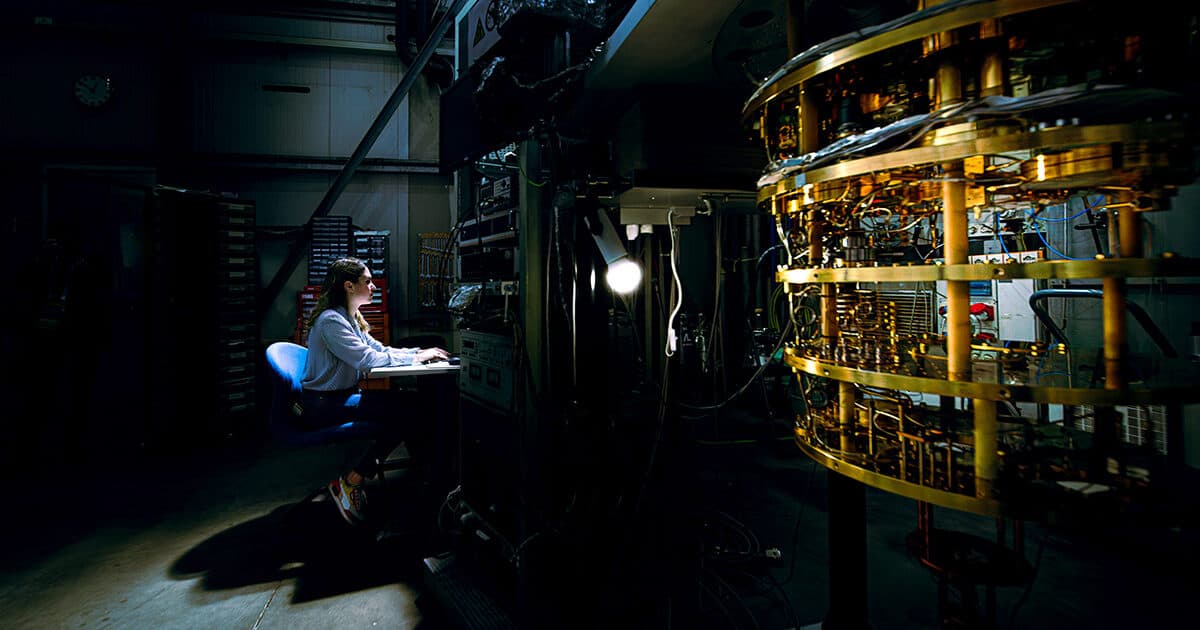
In a celebration of the unseen forces shaping our universe, the 2025 Global Physics Photowalk contest has revealed its winning images, blending the precision of particle physics with the artistry of photography. The competition, organized by a collaboration of 16 leading particle physics laboratories spanning the U.S., Europe, and Asia, invited photographers to transform the often-intimidating environments of cutting-edge research facilities into visual narratives of discovery. Among the standout entries is a hauntingly beautiful image of a cryogenic detector at Italy’s INFN Frascati lab, where temperatures plummet to within thousandths of a degree above absolute zero to hunt for dark matter—the elusive cosmic glue holding galaxies together.
Why the Global Physics Photowalk Matters: Bridging Science and Art to Inspire the Public
Particle physics often exists in a realm beyond everyday experience, hidden in underground tunnels, beneath ocean floors, or within cavernous detectors cooled to near-absolute zero. The Global Physics Photowalk, now in its second iteration, challenges the misconception that scientific research is cold or inaccessible. By inviting photographers—both amateur and professional—to frame these environments through an artistic lens, the contest democratizes complex research, making it relatable to a broader audience. "Photography is one of many ways of communicating to the public about the excitement of science," said Dmitri Denisov, an experimental particle physicist at Brookhaven National Laboratory and a judge for the 2025 contest. "It’s not just about the data we collect; it’s about the human endeavor behind it—why we do what we do."
A Contest Born from Serendipity and Sisterhood
The winning photo by Marco Donghia, a wedding photographer with no prior experience in scientific imaging, emerged from an unlikely collaboration with his sister, Raffaella Donghia, a researcher at Italy’s National Institute for Nuclear Physics (INFN). Last summer, Marco was brought into the lab to participate in the contest, initially feeling uninspired by the lab’s industrial machinery. "I wanted to create a world that was a bit more intimate," he recalled. Using artificial lights, he arranged Raffaella at a desk across from a golden cryostat—a device that cools detectors to temperatures colder than the vacuum of space to search for fleeting subatomic particles. The resulting image, which captured the delicate interplay between human curiosity and technological marvel, won first place in the global competition.
“I tried to capture the relationship that exists between humans and technology. I tell love stories, so for me it’s natural.” — Marco Donghia, winning photographer of the 2025 Global Physics Photowalk
The Science Behind the Winning Images: A Glimpse into the Invisible
The Global Physics Photowalk isn’t just an art competition; it’s a window into the frontiers of physics research. The 2025 winners span a spectrum of experiments, each pushing the boundaries of our understanding of the universe. From the KM3NeT neutrino telescope buried 2,500 meters underwater off the coast of France to the Advanced Gamma Tracking Array (AGATA) at Italy’s INFN National Laboratories, the images reveal the intricate tools scientists use to probe the cosmos.
Hunting Ghost Particles: Neutrinos and Dark Matter
Neutrinos, often called "ghost particles" for their ability to pass through matter almost undetected, are the focus of several featured images. The KM3NeT telescope, anchored under 2,500 meters of Mediterranean water, uses thousands of optical sensor modules to capture flashes of light produced when neutrinos interact with water molecules. One of the contest’s third-place winners showcases a Cherenkov light sensor with a spiderweb-like filter, designed to focus faint signals from these elusive particles. "It’s scientists using in their equipment ideas that nature developed over billions of years," Denisov noted.
Dark matter, the invisible substance theorized to make up 27% of the universe, is another major theme. At the CryOgenic Laboratory for Detectors (COLD) in INFN’s Frascati lab, researchers cool materials to near-absolute zero to detect weakly interacting massive particles (WIMPs), a leading dark matter candidate. The winning photo from this lab captures the stark beauty of human ambition in the face of cosmic mystery.
Recreating the Early Universe: Quark-Gluon Plasma and Exotic Nuclei
Other images highlight experiments that recreate conditions from the dawn of time. At CERN’s Super Proton Synchrotron, the NA50 experiment provided evidence for the existence of quark-gluon plasma—a state of matter that existed microseconds after the Big Bang. The silicon strip detector used in this experiment was among the contest’s featured images. Meanwhile, the Advanced Gamma Tracking Array (AGATA) and PRISMA magnetic spectrometer at INFN’s Legnaro lab explore the structure of exotic nuclei, produced by colliding heavy ions to mimic the conditions of stellar explosions.
Underground and Underwater: The Extreme Environments of Particle Physics
Many of the contest’s most striking images come from the extreme—and often hidden—settings where physics research unfolds. Deep underground, at the Sanford Underground Research Facility (SURF) in South Dakota, a newly excavated drift tunnel represents the first phase of an expansion to house next-generation neutrino and dark matter experiments. Similarly, at Japan’s Proton Accelerator Research Complex (J-PARC), a 33.5-meter-deep cavity houses an off-axis neutrino detector for the T2K experiment, which beams particles from Tokai to the Super-Kamiokande detector 295 kilometers away.
Beneath the waves, the KM3NeT telescope’s optical modules are deployed in a three-dimensional grid, transforming the ocean floor into a particle detector. The image of a single module, with its intricate spiderweb filter, underscores the scale and ingenuity required to capture neutrinos—particles that interact so rarely with matter that trillions pass through our bodies every second without a trace.
The Human Element: How Photographers Translate Science into Art
While the science behind these images is groundbreaking, the photographers’ perspectives are what make them accessible. Yannig Van De Wouwer, a Belgian photographer, won second place for his close-up of a vacuum pipe casing at France’s Large Heavy Ion National Accelerator (GANIL). His image transformed an industrial service corridor—a maze of cooling circuits, vacuum pumps, and status monitors—into a study of geometric patterns and industrial rhythm. "His artistic eye turned a functional component into a visual masterpiece," said a contest spokesperson.
The public vote, a new addition to the 2025 contest, highlighted the democratic appeal of the entries. The winning image in this category came from GANIL’s SPIRAL2 linear accelerator, showcasing a service corridor that runs the length of the facility. The photo’s stark lines and industrial aesthetic resonated with viewers, illustrating how science can inspire art—and vice versa.
Key Takeaways: What the 2025 Global Physics Photowalk Reveals
- The 2025 Global Physics Photowalk contest highlights the intersection of art and science by showcasing stunning images from 16 particle physics laboratories worldwide.
- Winning entries include intimate portraits of cryogenic detectors hunting dark matter, neutrino telescopes buried underwater, and industrial corridors transformed into visual art.
- The competition, judged by scientists and artists, emphasizes the human element in scientific discovery, making complex research more accessible to the public.
- Featured experiments span the frontiers of physics, from recreating the early universe’s quark-gluon plasma to detecting ghostly neutrinos and dark matter particles.
- The contest’s public vote and diverse judging panel (including a particle physicist) underscore the universal appeal of scientific beauty.
The Broader Impact: Why Science Photography Matters
In an era where scientific literacy is increasingly vital, initiatives like the Global Physics Photowalk play a crucial role in bridging the gap between researchers and the public. The contest’s success in 2025 reflects a growing recognition that science is not just a collection of data points but a human endeavor driven by curiosity, collaboration, and creativity. As Denisov noted, "The process of considering both visual aesthetics and scientific accuracy helped me appreciate the connection between science and art." For educators, policymakers, and science communicators, such imagery can be a powerful tool to spark interest in STEM fields, particularly among younger generations.
How to View the Winning Images: Where to Explore
The full list of shortlisted entries from the 2025 Global Physics Photowalk is available on the contest’s official website, where visitors can explore the images in high resolution. The contest organizers—a collaboration of 16 leading particle physics labs—encourage viewers to delve into the stories behind each photo, from the KM3NeT neutrino telescope’s underwater deployment to the cryogenic detectors at INFN’s Frascati lab. For those interested in the science itself, many of the featured facilities offer public tours, virtual visits, and educational resources that complement the visual appeal of the photowalk.
Frequently Asked Questions
Frequently Asked Questions
- What is the Global Physics Photowalk contest?
- The Global Physics Photowalk is an international photography competition organized by a collaboration of 16 particle physics laboratories worldwide. It invites photographers to capture the beauty and intrigue of scientific research environments, blending art with the frontiers of physics.
- Who judges the Global Physics Photowalk entries?
- The 2025 contest was judged by a panel that included both artists and scientists, such as Dmitri Denisov, a particle physicist at Brookhaven National Laboratory. The judges evaluated entries based on visual aesthetics, scientific relevance, and the ability to communicate the excitement of research.
- Where can I see the winning images from the 2025 contest?
- The winning images and shortlisted entries from the 2025 Global Physics Photowalk are available on the contest’s official website. The images highlight experiments in dark matter detection, neutrino research, and particle acceleration from labs across the U.S., Europe, and Asia.