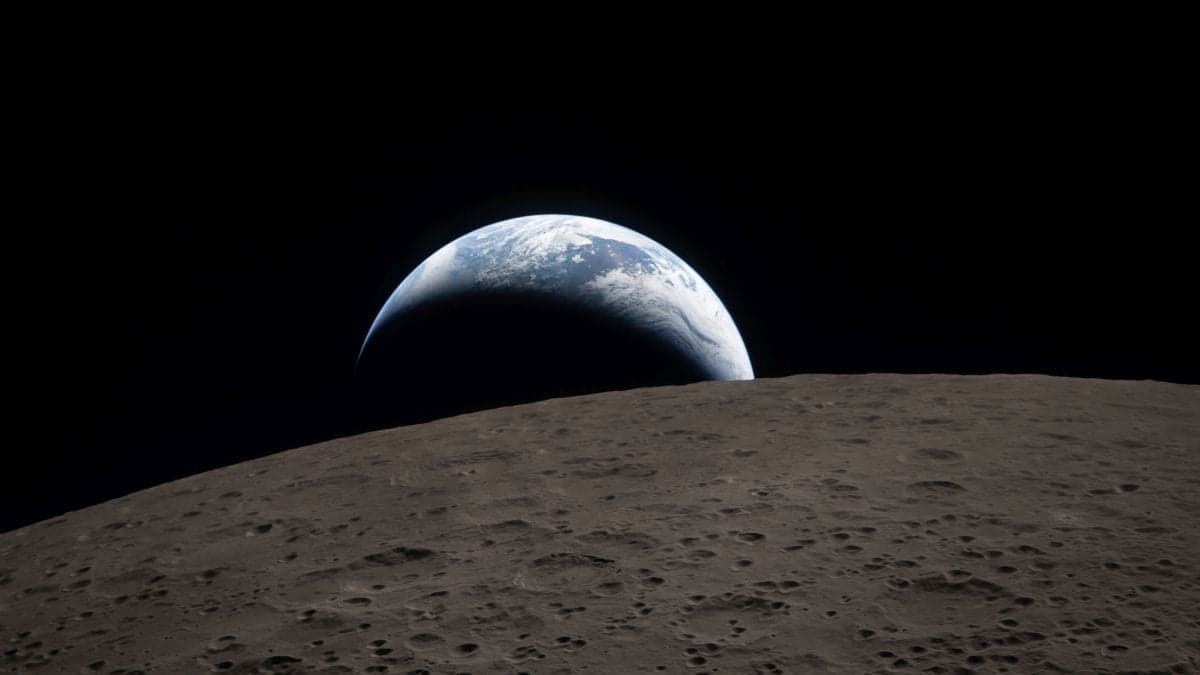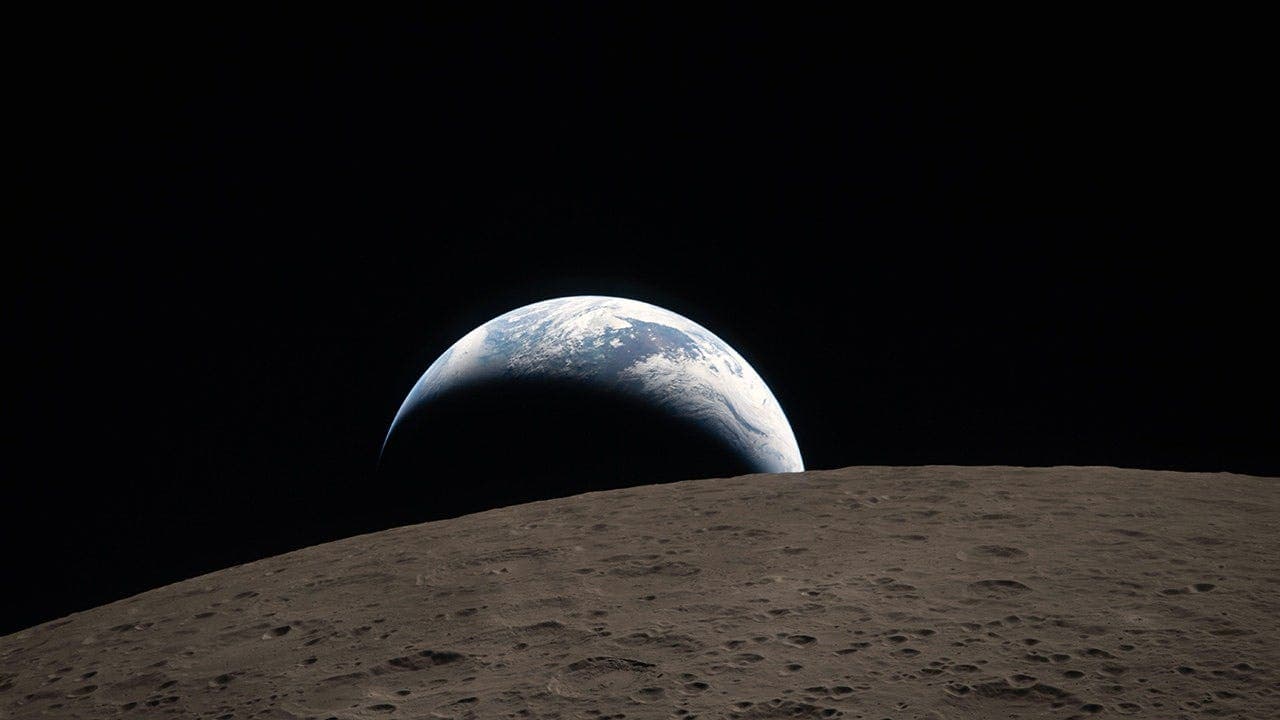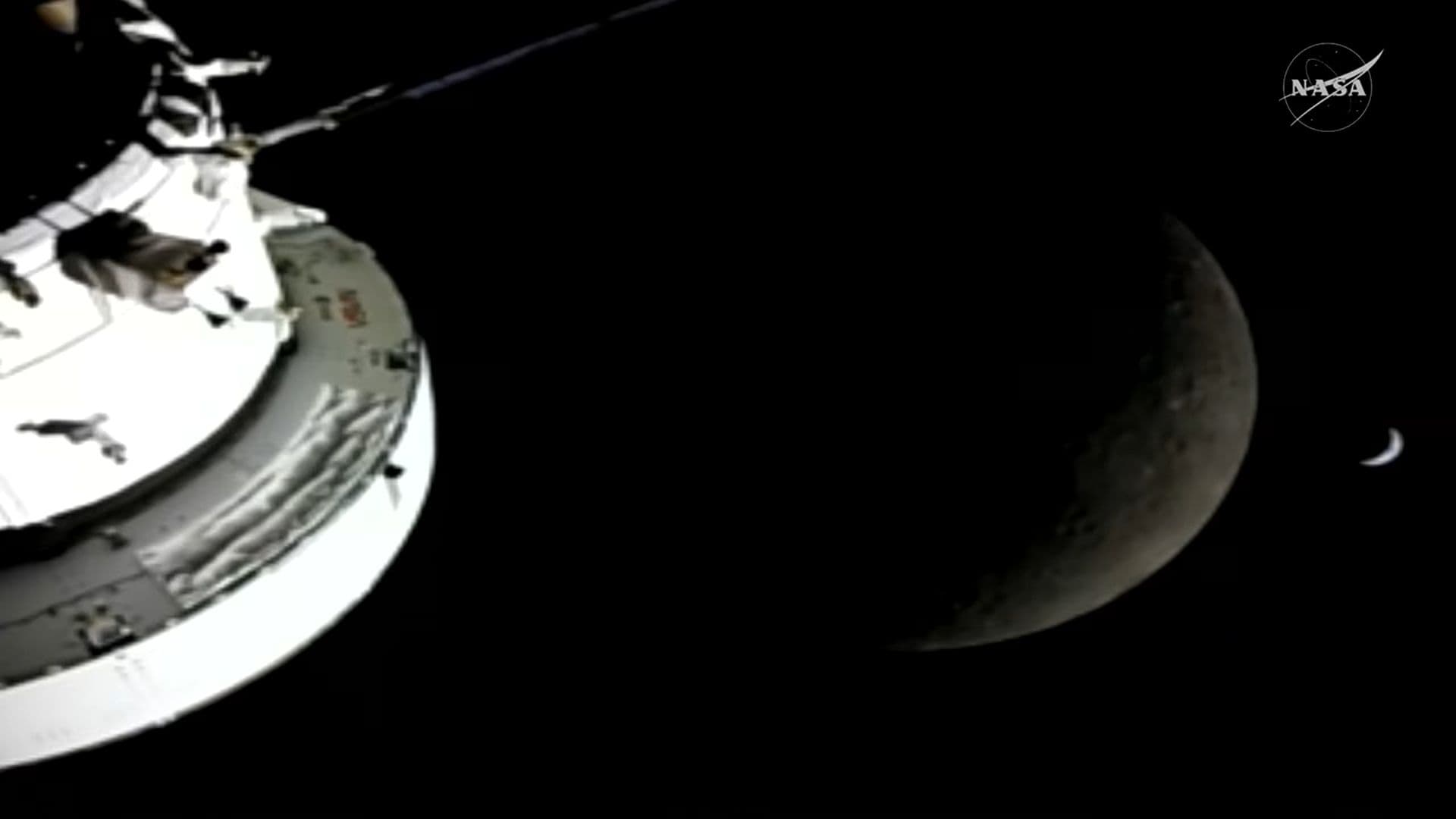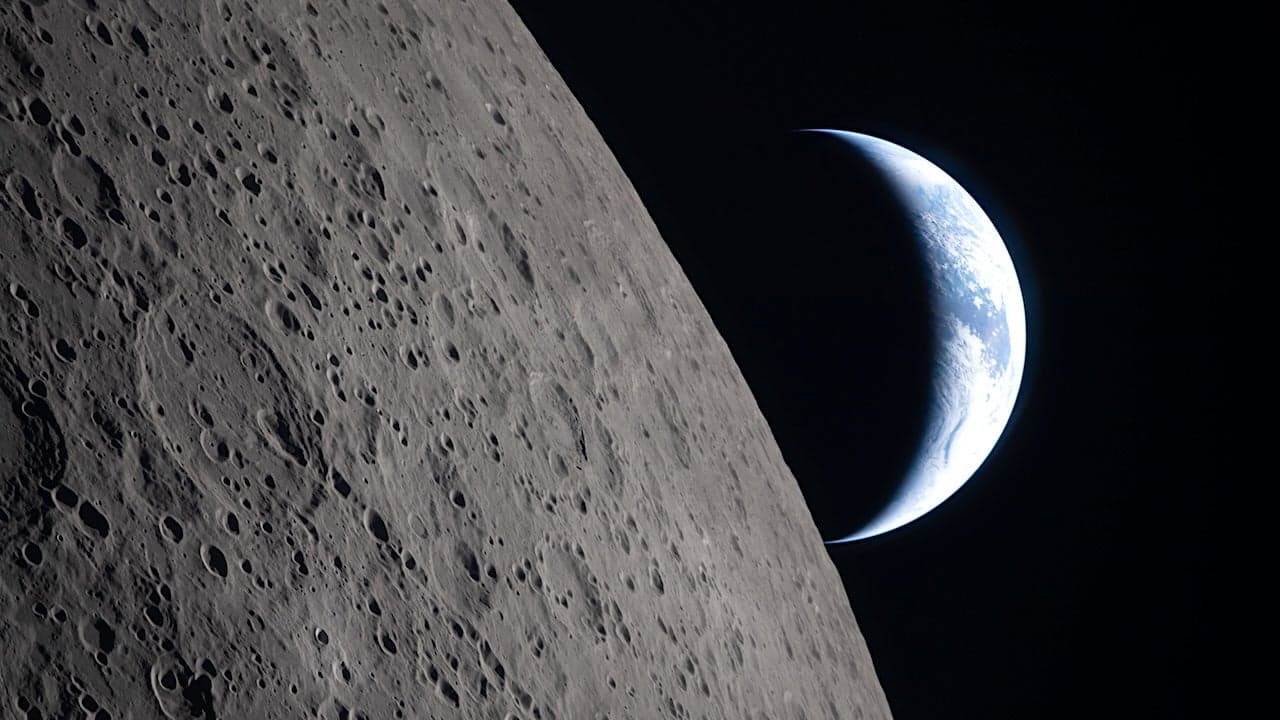
NASA’s Artemis II mission reached a pivotal moment on Flight Day 8 as the Orion spacecraft carrying four astronauts exited the Moon’s gravitational influence, hurtling toward Earth under the planet’s dominant pull. The crew—comprising NASA’s Reid Wiseman, Victor Glover, Christina Koch, and the Canadian Space Agency’s Jeremy Hansen—is now on a high-speed trajectory for a scheduled Friday splashdown in the Pacific Ocean near San Diego, capping off a historic lunar flyby that carried humans farther from Earth than any mission in over 50 years. The 10-day journey, already hailed as a landmark in human spaceflight, is now focused entirely on a safe re-entry, with mission controllers monitoring weather, spacecraft systems, and crew readiness as Earth’s gravity pulls the capsule home at velocities approaching 35,000 feet per second.
- Artemis II astronauts exited the Moon’s gravitational sphere on Flight Day 8, marking a critical phase in their return to Earth.
- Splashdown is scheduled for Friday off San Diego, with re-entry speeds predicted to reach 34,965 feet per second—just shy of the Apollo 10 record.
- NASA officials confirmed the mission has ample fuel reserves (4,285 pounds remaining) and is conducting final system checks before re-entry.
- Canadian Prime Minister Mark Carney praised astronaut Jeremy Hansen during a call, highlighting Canada’s role in the deep-space mission.
- Weather conditions at the splashdown site are forecasted as favorable, with light winds and minimal wave activity expected.
Why the Artemis II Lunar Flyby Matters: A Mission of Firsts and Lasting Impact
The Artemis II mission represents more than just a technological triumph; it is a strategic stepping stone in NASA’s broader ambitions to return humans to the Moon and eventually send astronauts to Mars. By flying 6,400 miles beyond the far side of the Moon—a region untouched by human explorers since Apollo 17 in 1972—the crew demonstrated the Orion spacecraft’s capability to operate in deep space, a critical test for the Artemis program’s goal of establishing a sustainable lunar presence. Unlike the uncrewed Artemis I mission in 2022, Artemis II carries astronauts, making this the first crewed lunar flyby in over half a century. The mission also showcases international collaboration, with Hansen becoming the first non-American to venture beyond low Earth orbit. Historically, deep-space missions like Apollo 8 in 1968 and the Space Shuttle program have paved the way for scientific discovery and geopolitical cooperation, and Artemis II carries that legacy forward amid a new era of lunar exploration.
The Science and Systems Behind a Safe Earth Return: Velocity, Weather, and Fuel Margins
As the Orion capsule accelerates toward Earth, its re-entry speed of 34,965 feet per second—equivalent to roughly 23,800 miles per hour—will subject the spacecraft to temperatures exceeding 5,000 degrees Fahrenheit, a critical test for its heat shield. Flight Director Rick Henfling emphasized the precision required during this phase, noting that the crew will be positioned "heads down" to maintain visibility of the horizon, a reference point that ensures the capsule’s guidance system remains aligned. The re-entry trajectory is designed to minimize stress on the crew and spacecraft, with NASA’s "safe haven" protocols allowing for contingencies such as shortened entry profiles if conditions warrant. Weather monitoring has become a focal point, particularly in the Pacific splashdown zone, where wind speeds of 10 knots, wave heights under four feet, and a 17-second wave period are forecasted—conditions Henfling described as "favorable." The mission’s fuel efficiency has also exceeded expectations; despite consuming nearly 3,000 pounds of propellant, the Orion still retains 4,285 pounds, providing ample margin for adjustments during re-entry and landing.
How NASA’s Orion Spacecraft Handles the Most Dangerous Part of the Mission
The Orion’s re-entry is one of the most perilous phases of the Artemis II mission, relying on a combination of pre-programmed guidance and real-time adjustments to navigate Earth’s atmosphere. Unlike the Space Shuttle, which could glide to a runway landing, Orion is designed for a parachute-assisted ocean splashdown. The capsule’s heat shield, made of an ablative material called Avcoat, is tested to withstand the extreme heat generated during re-entry. NASA’s Entry Flight Director Rick Hensarling explained that the crew will conduct manual piloting demonstrations in the final hours before splashdown, including using the docking camera to point the spacecraft toward a celestial body—a test of their ability to manually orient Orion if needed. These maneuvers are not just for redundancy; they ensure the crew can generate power by positioning the spacecraft’s solar panels toward the sun, a critical function for maintaining life support systems during the return journey.
International Pride and Canadian Leadership: Jeremy Hansen’s Role in Artemis II
Jeremy Hansen’s inclusion on the Artemis II crew marks a historic milestone for Canada, which has invested over $2.5 billion in the Artemis program through its partnership with NASA. During a Wednesday evening call with Canadian Prime Minister Mark Carney, Hansen reflected on the importance of perseverance in space exploration, stating that failures are inevitable but must be met with resilience. Carney praised the crew’s achievements, telling Hansen, "The examples you’re showing of how to reach literally for the stars... you’re setting a platform for the world to go even farther." Canada’s contributions extend beyond Hansen’s presence; the country is building a lunar rover for future Artemis missions and supplying advanced robotics for the Lunar Gateway, a planned space station orbiting the Moon. Hansen’s participation also underscores the mission’s diplomatic significance, as it strengthens ties between NASA and international partners amid rising global interest in lunar and deep-space exploration.
From Flywheel Workouts to Suit Checks: The Final Preparations Before Splashdown
As the Artemis II crew enters the final phase of their mission, their daily routines have shifted from lunar observations to critical health and system checks. On Wednesday, the astronauts completed a flywheel exercise session, a compact workout system that simulates resistance training and aerobic activity in microgravity. This regimen is essential to counteract muscle atrophy and bone density loss, two of the most significant health risks for astronauts during long-duration spaceflight. Additionally, the crew tested orthostatic intolerance garments—specialized undergarments designed to prevent blood pooling in the lower body as they transition back to Earth’s gravity. These garments, which apply gentle pressure to the legs and abdomen, help stabilize circulation and reduce the risk of fainting during re-entry and landing. NASA’s emphasis on these preparations reflects lessons learned from earlier missions, where astronauts experienced dizziness or lightheadedness upon return to gravity.
What’s Next for NASA After Artemis II? Data Collection and the Path to Artemis III
While the primary focus of Artemis II is the safe return of its crew, NASA is also prioritizing data collection from the mission’s final days to inform future expeditions. Deputy Associate Administrator Lakiesha Hawkins noted that the agency is analyzing performance metrics from the Orion’s life support systems, guidance navigation, and thermal protection—all of which will be critical for Artemis III, the mission slated to land astronauts near the lunar south pole in 2026. Hawkins highlighted the mission’s broader goals, stating, "We’re thinking about what we can still learn in the remaining days to better understand the systems and to inform future missions." The Artemis program’s long-term vision includes establishing the Lunar Gateway, a small space station orbiting the Moon, and using it as a staging point for crewed missions to Mars. Success in Artemis II, therefore, is not just about bringing four astronauts home safely; it’s about validating the systems that will enable humanity’s next giant leap into deep space.
The Challenges of Splashdown: Why Location, Weather, and Timing Matter
The Pacific Ocean off San Diego was chosen as the splashdown site for Artemis II due to its proximity to U.S. Navy recovery forces and its relatively calm waters, which minimize risks during the capsule’s descent. However, even this carefully selected location presents challenges. Flight Director Henfling noted that a slow-moving cold front, though forecasted to be more than 60 miles away from the splashdown zone, is being monitored for potential wind and wave changes. NASA’s recovery teams, including the USS San Diego and specialized personnel, must be prepared to retrieve the crew within hours of splashdown to ensure their safety and to minimize exposure to the ocean environment. The timing of the splashdown is also critical; a Friday landing aligns with optimal daylight and weather conditions, but delays could necessitate adjustments to the entry profile or even a shift to a secondary landing site in the Pacific. Each of these factors underscores the meticulous planning required for a mission that, while historic, remains high-stakes and unpredictable.
The Broader Implications of Artemis II: A New Era of Space Exploration
Artemis II is more than a technical achievement; it is a cultural reset for human spaceflight, signaling a shift from the low Earth orbit focus of the Space Shuttle era to a renewed commitment to lunar and interplanetary exploration. The mission’s success could reignite public interest in space exploration, much like the Apollo program did in the 1960s, while also inspiring a new generation of scientists, engineers, and astronauts. For Canada, Hansen’s participation is a point of national pride, demonstrating the country’s growing role in global space endeavors. Meanwhile, the Artemis program’s focus on sustainability—unlike the Apollo missions, which were short-term expeditions—aligns with modern priorities of long-term lunar habitation and resource utilization. As the Orion spacecraft speeds toward Earth, the mission’s legacy is already being written, not just in the history books, but in the future of human exploration beyond our planet.
Frequently Asked Questions About Artemis II’s Return to Earth
Frequently Asked Questions
- How fast will the Orion spacecraft be traveling when it re-enters Earth’s atmosphere?
- NASA predicts the Orion capsule will reach a maximum velocity of 34,965 feet per second (about 23,800 miles per hour) during re-entry, just shy of the Apollo 10 record of 36,397 feet per second.
- What are the main risks during the Artemis II splashdown?
- The primary risks include extreme heat during re-entry, unpredictable ocean conditions at the splashdown site, and the physical stress on the crew as they transition from microgravity to Earth’s gravity. NASA’s recovery teams are trained to mitigate these risks with precise timing and contingency plans.
- How will the Artemis II mission contribute to future Moon landings?
- Data collected from Artemis II—including the performance of the Orion’s heat shield, life support systems, and crew health—will be critical for planning Artemis III, which aims to land astronauts near the lunar south pole in 2026.