The Assumption That Just Fell
For years, scientists believed cynodonts probably laid eggs. It was a reasonable bet. Egg-laying is common among reptiles, and it survives even in the most ancient lineage of living mammals, the monotremes, which include platypuses and echidnas.
Efforts to settle the question had always come up inconclusive. Then a graduate student looked at the wrong slide at the right time.
An Accidental Discovery
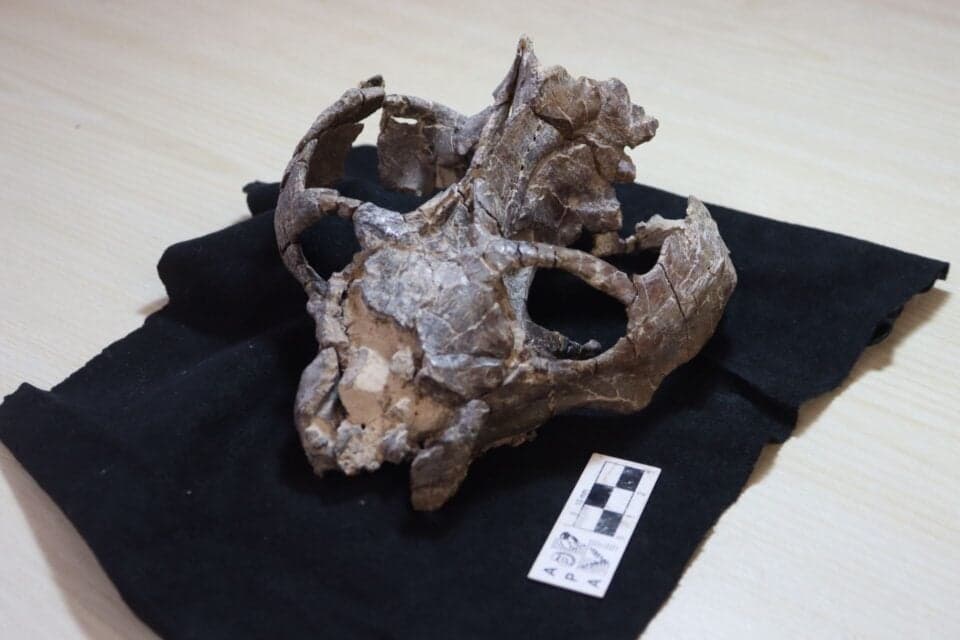
Maria Miceli Baro, a graduate student at the University of Buenos Aires in Argentina, was examining the bone microstructure of a fully grown Chiniquodon theotonicus, a cynodont that lived roughly 236 million years ago, when something unexpected showed up under the microscope.
"She came with her samples, and we were looking at them, and we said, 'Hey, look, you have embryonic tissue. This is very weird, I have never seen this,'" said lead author Leandro Gaetano, a paleontologist at Argentina's National Scientific and Technical Research Council, based at the University of Buenos Aires.
Using data from living species, the team identified a neonatal line, a distinct growth ring in bones or teeth left by the sharp growth acceleration that happens right after birth. That single feature gave them a way to test the egg-laying hypothesis for the first time.
"We started trying to figure out how we could use this new information to test the working hypothesis, and we came up with this idea about using body size as a proxy," Gaetano explained.
The Body-Mass Math
The logic is elegant. Egg-layers and live-bearers produce very differently sized newborns relative to the adult, so the ratio between birth weight and adult weight points to the reproductive mode.
The researchers measured the neonatal line and the specimen's outer surface to estimate its weight at birth and at death. The animal weighed roughly 3.7 pounds (1.7 kilograms) as a newborn and 26.5 pounds (12 kilograms) when it died. That means the newborn carried 14% of its final body mass.
Then they compared that ratio across living animal groups:
- Reptiles like turtles, snakes and crocodiles in a similar adult weight range produce hatchlings of just 9 to 53 grams, a newborn-adult ratio of roughly 0.1% to 0.6%
- Larger birds such as cranes, pelicans and vultures come in around 1.3% to 4.5%
- Placental mammals of comparable size can have ratios as high as 18.77%
Only one group matched. The cynodont's 14% sits squarely in placental mammal territory. The bay duiker, an African antelope, gives birth to young weighing about the same as a newborn C. theotonicus.
Why It Matters
"In cynodonts, embryonic tissues were never observed before, let alone a neonatal line," Miceli Baro said in a statement. "Through its analysis, we found that a trait that is generally linked to evolutionary success was present in animals long before true mammals originated."
The finding fits a broader pattern. Earlier research has shown that hallmarks of modern placental mammals, including lactation, body hair and brain size, were already emerging in relatives of C. theotonicus. Those traits share genetic underpinnings with live birth, suggesting the whole package may have evolved together.
"It is very probable that there was a general shift from egg laying to live birth in these cynodonts," Gaetano said.
What Comes Next
The evidence so far rests on a single species, and the researchers know it. The team plans to hunt for embryonic tissues in other cynodont specimens to replicate the result. If they succeed, they could map out exactly when and how mammalian reproduction as we know it first emerged, a story that apparently started tens of millions of years earlier than anyone believed.
FAQ
What did scientists discover in the 236-million-year-old fossil?
Evidence that Chiniquodon theotonicus, a cynodont from the late Triassic, gave birth to live young instead of laying eggs, based on embryonic tissue and a neonatal line found in its bones.
Why is this discovery important?
Cynodonts are the ancestors of all modern mammals, and they were long assumed to lay eggs. The finding pushes the origin of live birth back by up to 95 million years.
How did researchers determine it gave live birth?
They estimated the animal's weight at birth (3.7 pounds) and death (26.5 pounds). Its 14% newborn-adult body mass ratio matches placental mammals, not egg-laying reptiles or birds.
What is a neonatal line?
A distinct growth ring in bones or teeth caused by the rapid growth acceleration that occurs just after birth.
Does this apply to all cynodonts?
The study covers one species so far. Researchers plan to examine other specimens to see whether the finding holds across the group.