- A 215-million-year-old crocodile ancestor found in Gloucestershire, England, is a new species capable of outpacing modern dogs.
- Named Galahadosuchus jonesi, the creature had a unique upright posture adapted for speed rather than swimming.
- The fossil had been misidentified for decades until advanced anatomical analysis revealed it as a distinct species.
In a groundbreaking discovery, scientists have identified a new species of ancient crocodile relative that once roamed what is now southwestern England over 215 million years ago—and its anatomy suggests it was built more for speed than for aquatic ambush. Named *Galahadosuchus jonesi*, this agile reptile represents one of the earliest known examples of terrestrial crocodylomorphs, a group that includes modern crocodiles but whose ancient members exhibited strikingly different lifestyles. The finding, detailed in a recent study published in *The Anatomical Record*, not only challenges historical assumptions about early crocodile evolution but also offers fresh clues into how life responded to environmental stress just before Earth's largest mass extinction event in the past 500 million years.
Paleontological Breakthrough: How Scientists Identified a New Prehistoric Predator
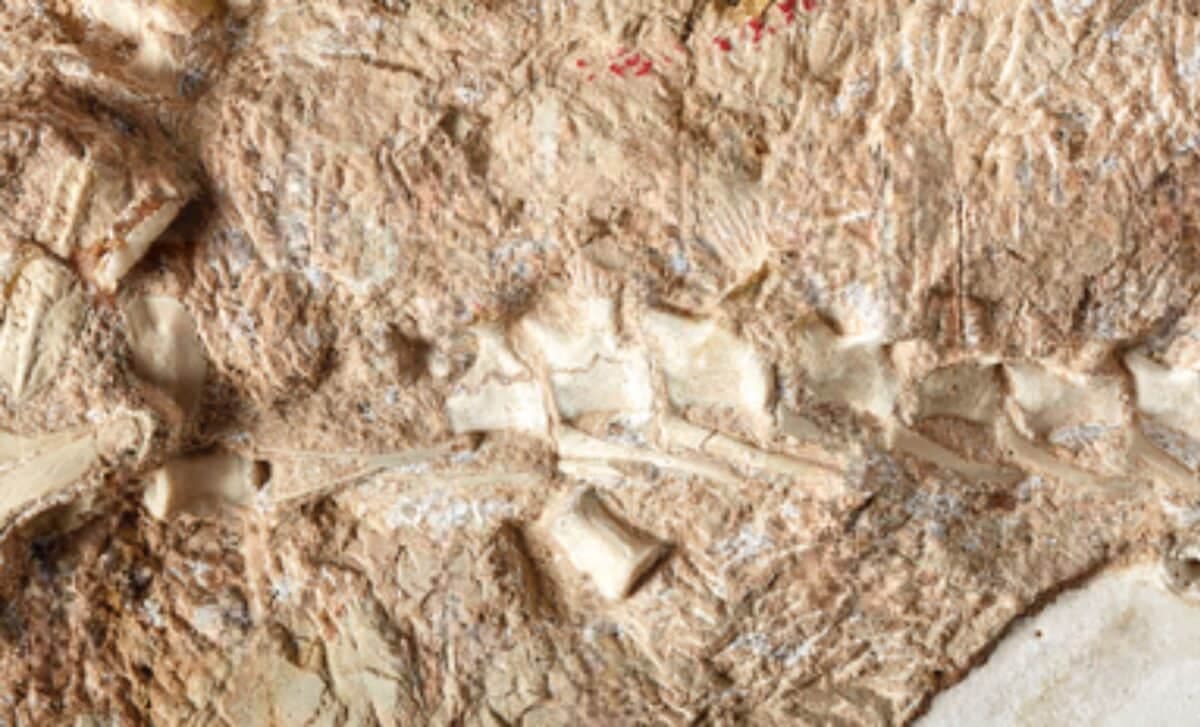
The identification of *Galahadosuchus jonesi* came after years of meticulous research conducted by Ewan Bodenham, a PhD candidate at University College London (UCL), working alongside experts from the Natural History Museum in London. The specimen—a partial skeleton catalogued as NHMUK PV R 10002—had resided in museum collections since its recovery from Cromhall Quarry in Gloucestershire back in 1969. For decades, it was mistakenly classified as belonging to another species, *Terrestrisuchus gracilis*. That changed when Bodenham undertook a comprehensive anatomical comparison during his doctoral work, uncovering significant skeletal differences that warranted formal designation as a separate genus and species.
Finding Hidden Clues in Old Collections
What makes this discovery particularly notable is that the crucial fossil wasn't unearthed recently—it had already been collected nearly six decades ago by amateur palaeontologist Ron Croucher. Stored among thousands of specimens in the archives of the Natural History Museum, the bone remained overlooked until modern analytical methods allowed scientists to compare minute structural features such as vertebrae shape, limb proportions, and ankle joints. These comparisons revealed thirteen distinct characteristics separating *Galahadosuchus* from *Terrestrisuchus*, including elongated wrist bones and a uniquely oriented hip socket—all indicators of an animal adapted for rapid movement on land.
Anatomy Reveals Speed-Optimized Design of Ancient Crocodilian Lineage
Unlike today’s familiar semi-aquatic crocodiles—with their sprawling limbs and barrel-shaped bodies—*Galahadosuchus jonesi* displayed several adaptations associated with high-speed locomotion. Its leg structure featured longer lower arm and leg bones than upper ones, enabling greater stride efficiency. Additionally, the arrangement of its ankle joint strongly supported an erect posture, similar to mammals and some dinosaurs. The study noted that its metatarsal-to-femur ratio reached 0.40, surpassing even *Terrestrisuchus*'s score of 0.35—an indicator commonly used to estimate running ability among extinct archosaurs.
Comparative Morphology Supports Fast-Locomotion Hypothesis
Further evidence lies in the proportions of forearm elements. Researchers observed that the radius and ulna (lower arm bones) of *Galahadosuchus* were at least 15% longer relative to the humerus compared to those of *Terrestrisuchus*. These physiological traits align with those seen in cursorial animals—those specialized for running—including certain mammalian carnivores and swift avian predators. Although growth-related variations cannot entirely be ruled out, the cumulative weight of these osteological markers supports the conclusion that this species was among the fastest reptilian runners of its era.
“This animal moved nothing like any crocodile alive today. It had an upright stance, long legs, and a build closer to something like a sighthound—capable of chasing down prey on land, not lurking in water.” – Ewan Bodenham, UCL PhD Candidate
Scientific Impact: Unlocking Secrets About Biodiversity Before Mass Extinction
The revelation adds new perspective to our understanding of biodiversity during the Late Triassic Period, approximately 215 million years ago, shortly before the end-Triassic extinction event around 201 million years ago. Triggered by massive volcanic eruptions and dramatic climate shifts, this extinction wiped out vast swaths of terrestrial and marine species globally. By studying which organisms thrived immediately prior to such cataclysms, scientists gain insight into evolutionary resilience and ecological dynamics under extreme environmental pressure.
Saltoposuchids as Models of Adaptive Diversification
*Galahadosuchus jonesi* belongs to the saltoposuchid family, a lineage of small-bodied, terrestrial pseudosuchians distantly related to true crocodiles. Within this group, members like *Saltopus elginensis* and *Terrestrisuchus* have long intrigued paleontologists due to their departure from typical crocodile morphology. Phylogenetic analysis places *Galahadosuchus* as a close relative of *Terrestrisuchus*, yet distinct enough to suggest niche partitioning within shared environments—an idea bolstered by subtle variations in limb mechanics and presumed gait patterns. Such specialization underscores the remarkable adaptive plasticity present in early crocodylomorph evolution.
Honoring Legacy Through Scientific Naming
In recognition of a formative influence in his academic journey, Bodenham named the species *jonesi* after David Rhys Jones, his former physics teacher at Ysgol Uwchradd Aberteifi in Wales. Known for motivating students toward intellectual excellence, Mr. Jones inspired many of his pupils to pursue scientific careers. Meanwhile, the genus name *Galahadosuchus* cleverly combines 'Galáhad,' the legendary knight famed for integrity and nobility, with the Greek suffix *suchus*, denoting crocodile. This dual reference honors both the upright biology of the creature and the moral character of the individual commemorated.
“Mr. Jones was just such a good teacher,” said Bodenham in an interview. “He also didn’t let me settle. He was very good at challenging people and helping students be the best they can be.”
Broader Implications for Vertebrate Evolution Studies
Beyond expanding knowledge of early crocodylomorph diversity, this finding contributes valuable context to ongoing debates concerning the evolutionary pathways taken by various groups of vertebrates during pivotal transitions in Earth’s history. As rising global temperatures, sea levels, and atmospheric CO₂ levels push modern ecosystems into uncharted territory, reconstructions of ancient responses become increasingly vital.
Preserving Fossils for Future Discoveries
Crucially, discoveries like *Galahadosuchus jonesi* highlight the importance of museum repositories where seemingly mundane specimens continue to yield transformative insights using advancing research tools. With technological innovations in imaging, scanning, and data processing, future generations will be able to revisit existing collections and unlock further revelations about life millions of years past.
Frequently Asked Questions
- Why is Galahadosuchus jonesi considered a significant discovery?
- Because it demonstrates how early crocodile relatives could evolve for speed and agility on land, challenging traditional views of crocodylomorph lifestyles. It also enhances our understanding of biodiversity before the Triassic-Jurassic extinction.
- Where was the fossil found, and who originally discovered it?
- The fossil was found in Cromhall Quarry, Gloucestershire, England, in 1969 by collector Ron Croucher. It was later re-examined and recognized as a new species by researcher Ewan Bodenham.
- How does Galahadosuchus differ from modern crocodiles?
- Modern crocodiles are semi-aquatic with low-slung bodies and sprawling limbs, whereas Galahadosuchus walked upright on slender legs designed for speed—more akin to dog-like runners than aquatic stalkers.