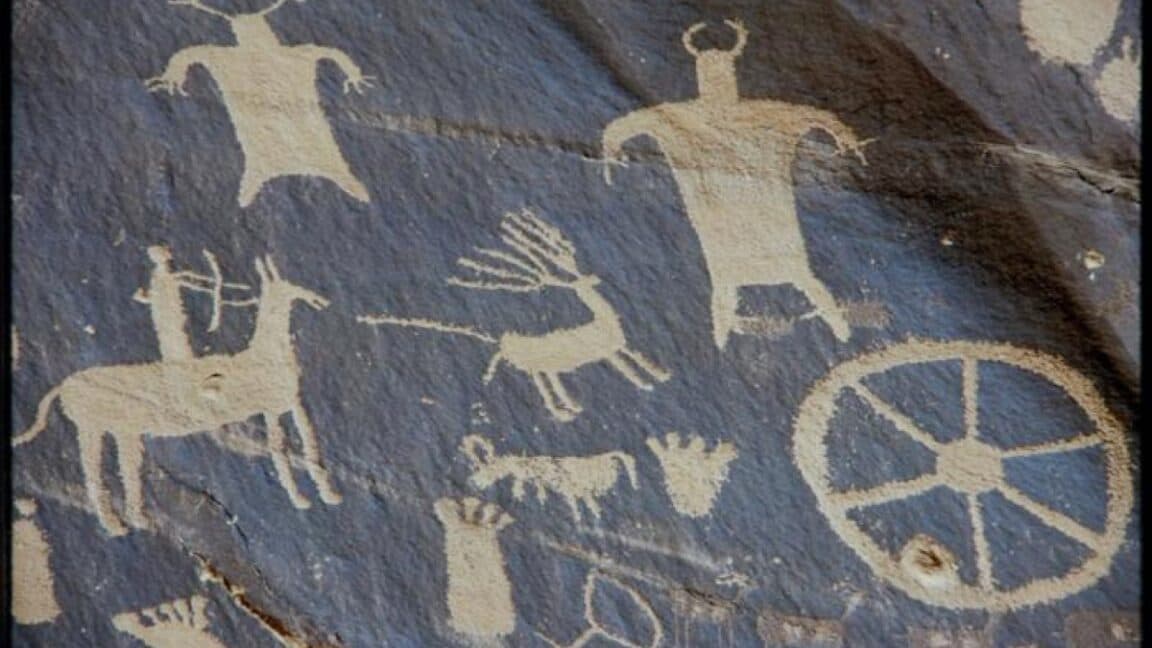
Around 570 CE—1,400 years ago—the bow and arrow swept across western North America in a cultural revolution that reshaped hunting and warfare for Indigenous societies. A groundbreaking study published in PNAS Nexus by archaeologist Briggs Buchanan of the University of Tulsa and colleagues reveals that this advanced weaponry was adopted nearly simultaneously across diverse cultures, rather than spreading gradually from a single origin as previously theorized. Using 136 radiocarbon-dated artifacts, including atlatls (spear-throwers) and arrowheads recovered from archaeological sites spanning Alaska to Mexico, the team reconstructed the timeline of this pivotal technological transition with unprecedented precision. The findings not only correct decades-old assumptions about the diffusion of warfare technology but also illuminate how Indigenous communities adapted to changing ecological and social pressures during the late prehistoric period.
- The bow and arrow replaced the atlatl as the dominant hunting weapon in western North America around 570 CE, not over centuries or millennia.
- Radiocarbon dating of 136 weapons shows the transition occurred rapidly and simultaneously across diverse cultures, challenging prior "wave of advance" models.
- In southern regions, the bow quickly displaced the atlatl, while in northern areas, both technologies coexisted for over 1,000 years.
- The study, led by Briggs Buchanan at the University of Tulsa, was published in PNAS Nexus and funded by the National Science Foundation.
How the Bow and Arrow Revolutionized Prehistoric North America
For over 10,000 years, the atlatl—a spear-throwing device that extended the hunter’s arm and propelled darts at high velocity—dominated Indigenous hunting technology in North America. Capable of launching projectiles up to 100 mph, the atlatl was highly effective for big-game hunting, particularly against large mammals like mammoths and bison. However, by the 6th century CE, a new technology began to emerge across western North America: the bow and arrow. Unlike the atlatl, which required significant space to operate, the bow offered greater precision, portability, and the ability to be used from horseback—a feature that would later prove critical for equestrian cultures like the Comanche and Apache.
The Superiority of the Bow in Warfare and Hunting
The bow and arrow’s advantages were manifold. While an expert atlatl user could launch a dart up to 100 yards, a bow could achieve comparable distances with far greater accuracy, especially at shorter ranges. The bow also enabled rapid successive shots, a crucial advantage in both hunting and combat. Archaeological evidence from sites like the Great Basin and the Southwest indicates that the transition coincided with shifts in subsistence strategies, as Indigenous groups began focusing more on smaller game, such as rabbits, birds, and deer—animals that were more efficiently taken with arrows than atlatl-propelled darts. Additionally, the bow’s compact design made it far easier to carry during seasonal migrations or while traveling, a practical benefit for mobile hunter-gatherer societies.
The Study’s Groundbreaking Methodology: Radiocarbon Dating 136 Weapons
To reconstruct the timeline of the bow and arrow’s spread, Buchanan and his team compiled and analyzed 140 radiocarbon dates from 136 well-preserved organic weapons recovered from archaeological sites across western North America. These artifacts included wooden atlatls, bone arrowheads, and composite bows, many of which had been preserved in dry cave environments or waterlogged bogs. The researchers cross-referenced these dates with stratigraphic layers—soil deposits containing cultural remains—to establish the relative ages of the weapons. The oldest confirmed bow fragments dated to approximately 570 CE, while the latest atlatl fragments were found in contexts dating to the early 18th century in Alaska, where the technology persisted among certain Arctic cultures.
Why the Results Challenge Previous Theories
Prior to this study, archaeologists had proposed several competing models for the bow’s introduction to North America. Some suggested it arrived via migrations from Asia as early as 2,000 years ago, while others argued it diffused gradually through trade networks or cultural exchange. The 2024 PNAS Nexus study decisively rejects these hypotheses. Instead, the data supports a "simultaneous rapid adoption" model, where the bow’s benefits were so immediately apparent that multiple Indigenous groups across thousands of miles independently embraced it within a few generations. This pattern aligns with other technological revolutions in human history, such as the adoption of agriculture or metalworking, where innovations spread rapidly once their utility was demonstrated.
A Tale of Two Regions: Northern Coexistence vs. Southern Replacement
The study’s most striking finding is the stark contrast between northern and southern regions of western North America. In the arid Southwest and Great Basin—where Indigenous groups like the Ancestral Puebloans and Hohokam were adapting to increasingly scarce water resources—the bow and arrow replaced the atlatl almost instantly. By contrast, in the cooler, resource-rich environments of the Pacific Northwest and Alaska, the atlatl and bow coexisted for over a millennium. Archaeologists speculate that the atlatl’s continued relevance in northern regions may have been tied to the hunting of large marine mammals, such as seals and sea lions, which were more effectively taken with spear-throwing technology. Meanwhile, the bow’s precision made it ideal for hunting smaller, agile animals like waterfowl and rabbits in the densely vegetated southern landscapes.
The Broader Implications: Ecology, Conflict, and Cultural Exchange
The rapid adoption of the bow and arrow had profound implications beyond hunting. Warfare between Indigenous groups intensified as the bow’s lethal range (up to 200 yards with composite bows) and rate of fire made it a superior weapon in conflicts. Ethnohistoric accounts from early European explorers, such as those describing the Comanche of the Southern Plains, note the devastating effectiveness of mounted archers in battle. Additionally, the bow’s portability facilitated long-distance trade and communication networks, as it could be carried alongside other essential tools without impeding mobility. Some researchers also link the technology’s spread to shifts in social organization, as groups that mastered the bow may have gained competitive advantages in both subsistence and defense, potentially leading to population movements or alliances.
Debunking Myths: The Bow’s Indigenous Origins
One persistent myth in popular culture is that the bow and arrow was introduced to North America by Europeans or other outside groups during the colonial era. The PNAS Nexus study firmly refutes this notion. Radiocarbon evidence places the bow’s origins in western North America firmly within the prehistoric period, with no connection to later European contact. In fact, the earliest known bow fragments in the Americas predate the arrival of Columbus by nearly a thousand years. This aligns with genetic and linguistic evidence suggesting that many Indigenous weapon technologies, including the atlatl, were developed independently in the Americas rather than borrowed from Old World cultures.
The Legacy of the Bow and Arrow in Modern Indigenous Cultures
While the bow and arrow fell out of widespread use after European contact—replaced by firearms—its cultural significance persists in many Indigenous communities today. Modern revivals of traditional archery are seen among groups such as the Navajo, who incorporate bow-making into cultural education programs, and the Yup’ik of Alaska, where the atlatl remains a symbol of ancestral resilience. Museums across the U.S. and Canada, including the Smithsonian’s National Museum of the American Indian and the Canadian Museum of History, feature exhibits on the technological prowess of Indigenous archers. The 2024 study underscores the importance of recognizing these innovations not as marginal footnotes in history but as foundational achievements of Indigenous ingenuity.
What’s Next: Further Research and Unanswered Questions
The PNAS Nexus study opens new avenues for research into the bow and arrow’s spread. Buchanan and his team plan to expand their dataset to include more artifacts from the northern Great Plains and the Arctic, where the atlatl’s late persistence remains puzzling. They also aim to collaborate with Indigenous communities to incorporate traditional knowledge into archaeological interpretations—a practice known as community-based participatory research . Other unanswered questions include how the bow’s adoption varied among different language families or ecological zones, and whether its spread was influenced by climate change, such as the Medieval Warm Period (900–1300 CE), which altered game availability in certain regions.
Expert Reactions: Archaeologists Weigh in on the Findings
‘This study is a game-changer for understanding technological diffusion in prehistory. The idea that the bow spread so rapidly across such a vast and culturally diverse region challenges our assumptions about how innovations move through human societies. It suggests that the benefits of the bow were immediately obvious to Indigenous groups, leading to a kind of ‘cultural consensus’ that transcended local traditions.’ — Dr. Jennifer Raff, archaeologist and geneticist at the University of Kansas
‘The coexistence of the bow and atlatl in the north for over a thousand years is fascinating. It shows that technological change isn’t always a story of replacement but of adaptation. Indigenous peoples were making deliberate choices about which tools best suited their environments.’ — Dr. Michael Smith, archaeologist at Arizona State University
Key Takeaways
- The bow and arrow replaced the atlatl as the dominant hunting technology in western North America around **570 CE**, not over centuries or millennia, according to radiocarbon dating of 136 weapons.
- The transition occurred **simultaneously across diverse cultures**, debunking prior theories of gradual spread from a single origin.
- In **southern regions**, the bow quickly displaced the atlatl, while in **northern areas**, both technologies coexisted for over 1,000 years, likely due to ecological factors.
- The study, led by **Briggs Buchanan at the University of Tulsa**, was published in **PNAS Nexus** and funded by the **National Science Foundation**.
- The findings highlight the **indigenous innovation** behind the bow and arrow, correcting myths about its European introduction.
Frequently Asked Questions
Frequently Asked Questions
- How did the bow and arrow compare to the atlatl in terms of hunting effectiveness?
- The bow offered greater accuracy, rapid successive shots, and portability, making it superior for hunting smaller, agile animals like rabbits and birds. The atlatl, however, remained effective for big-game hunting and in environments where large marine mammals were targeted.
- Why did the atlatl persist in northern regions for so long?
- In cooler, resource-rich northern environments like the Pacific Northwest and Alaska, the atlatl continued to be used for hunting large marine mammals such as seals and sea lions. Its long-range capabilities and power made it better suited than the bow for these prey.
- Did the bow and arrow spread through trade or migration?
- No. The study found that the bow’s adoption was driven by rapid cultural diffusion, where its benefits were immediately apparent to multiple Indigenous groups across western North America, leading to a simultaneous transition rather than gradual trade or migration.