A startup in greater Los Angeles has big dreams.
Imagine a night sky where satellites, saddled with huge mirrors reflecting sunlight, shine like artificial moons.
A startup in Los Angeles County is awaiting regulatory clearance to make that dream a reality, with plans to sell the light to illuminate areas on Earth at night. These locations could include solar farms, industrial worksites, agricultural fields, city streets, defense operations and even public events.
Reflect Orbital’s proposal to deliver “a spot of sunlight on-demand” has sparked significant disapproval among some scientists, who fear disruptions for all living things.
“From our perspective, this is clearly an unprecedented assault on the nighttime environment,” Ruskin Hartley, the CEO of DarkSky International, told SFGATE. “Everything we know about the impact of light at night shows that it has a tremendous impact on ecology, on wildlife, plants, animals, fish, and, of course, on humans as well. We’re extremely concerned that this [will] go forward.”
The Federal Communications Commission is deliberating whether to license the first test satellite after a public comment period closed on Monday.
Make SFGATE a preferred source so your search results prioritize writing by actual people, not AI.
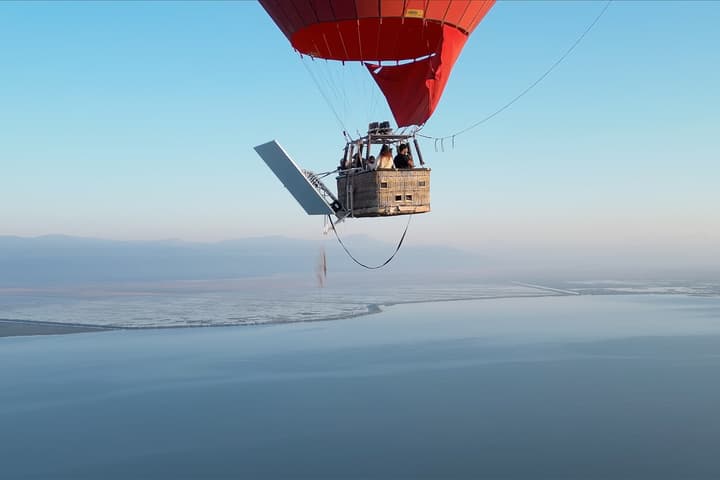
The prototype would bear a 60-foot-wide mirror, capable of lighting up a 3-mile-wide circle on Earth, according to Reflect Orbital. By 2029, the startup is aiming to deploy 1,000 satellites, and by 2035, 50,000. An hour of light could cost a minimum of $5,000.
“I’m really excited to bring the most powerful resource in the entire solar system into everybody’s daily life in all the ways that matter the most to people,” Ben Nowack, the founder and CEO of Reflect Orbital, told SFGATE. “The sun powers 99% of life on Earth. It grows all the plants. We use a ton of sunlight in solar power, but we can’t use it at night. So I’m really excited to bring solar energy to nighttime.”
A large solar farm glistens in Arizona on Feb. 1, 2026.
Public concerns have included that the reflection could scramble astronomy, aviation and the natural light rhythms on Earth — and also that the light could leak out from the intended locations. But regulators aren’t necessarily considering all those potential impacts: The FCC typically considers satellites in space exempt from the National Environmental Policy Act, according to Hartley.
Joanna Fong-Isariyawongse, a neurologist at the University of Pittsburgh who focuses on sleep and circadian rhythms, highlighted implications of Reflect Orbital’s proposal for human health.
“This sounds appealing, but in reality, it comes at a real cost to our health,” she wrote in an email to SFGATE. “The parallel to [daylight saving time] is striking: both represent deliberate interventions that misalign human (and animal) biology with the natural light-dark cycle. We have spent decades documenting the cardiovascular, metabolic, and cognitive harms that follow even a one-hour clock shift each spring.”
Jamie Zeitzer, Ph.D., a Stanford psychiatry and behavioral sciences professor who has studied daylight saving time, was primarily concerned about indirect impacts on humans. “Insects and plants can be very sensitive to such light and it could be extraordinarily disruptive to the food webs on the planet,” he wrote to SFGATE. “I also agree that it can, as current levels of artificial light already do, disrupt migration patterns. So, from a biology perspective, this seems like a truly terrible idea.”
Reflect Orbital’s website lists three main safety measures baked into the design of the technology, highlighting that it can contain and quickly turn off the light — and also avoid research observatories or protected habitats. The light cannot start fires, it says.
“They’re missing a lot of nuance in the technology,” Nowack said of the company’s critics. “When a customer requests sunlight, we can rotate the satellite, light up that spot and provide that service,” he added. “And I think a lot of folks just completely missed that. They’re like, ‘Oh, wow, these satellites are going to be lighting everything up. It must be all the time. It must be all night.’ That’s not the case at all. They’re nominally off.”
Anna FitzGerald Guth is a science and climate reporter with SFGATE. She grew up in Berkeley and previously worked as a staff reporter and editor for the Point Reyes Light. Her work has also appeared in in Science, KQED, Mongabay, Eos and Civil Eats. She holds an M.S. in science communication from UC Santa Cruz and a B.A. in English and environmental studies from Wesleyan University. She is currently a California Local News Fellow through UC Berkeley's School of Journalism.