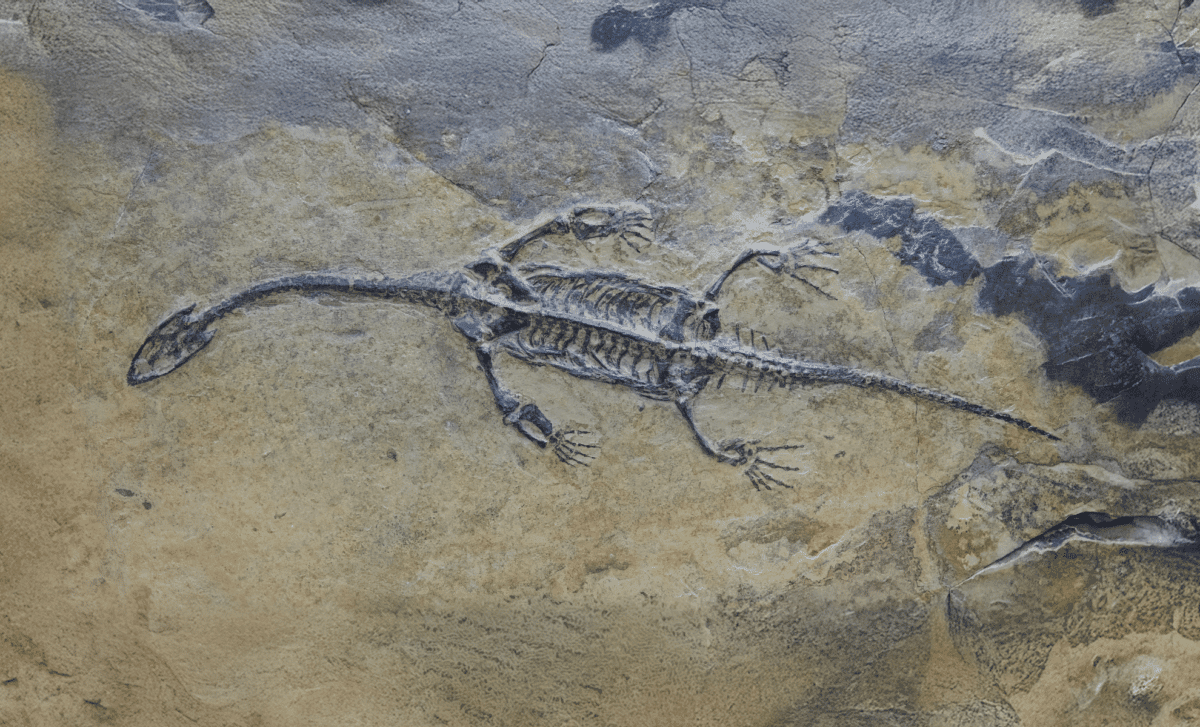
The first plesiosaur fossil found in Algeria provides new insights into ancient marine ecosystems and fills an important gap in the study of Cretaceous life.
In northeastern Algeria, a significant fossil discovery is offering new insights into ancient marine life. For years, scientists have studied the Cretaceous period, a time when the oceans were filled with diverse marine reptiles. However, plesiosaurs, one of the most iconic groups of these creatures, have been notably absent from fossil records in North Africa. In 2025, a team of researchers uncovered the first-ever plesiosaur fossil in Algeria, filling an important gap in the study of marine life from that era.
The Discovery of the Plesiosaur Specimen in Djebel Essen
According to Dr. Mohammed Naimi, The specimen was discovered in 2025 at Djebel Essen, located in the Tébessa region of northeastern Algeria, during fieldwork conducted by our team. It was recovered during a targeted paleontological survey related to the doctoral research of PhD student Sakina Nemouchi, a co-author of the paper, focusing on the Upper Coniacian Essen Formation, rather than as an incidental find. This carefully planned expedition marks the culmination of years of field research in the region, aiming to uncover significant fossils that could provide further understanding of the marine life that existed during the Cretaceous period.
Djebel Essen, part of the Upper Coniacian Essen Formation, is known for its rich geological history and the fossilized remains of various marine species. However, plesiosaur fossils have been extremely rare in this part of the world, making this discovery all the more significant. Plesiosaurs, which were marine reptiles with long necks and small heads, thrived during the Mesozoic era, but their remains are largely absent in many regions, including North Africa.
The discovery at Djebel Essen not only provides a new specimen to study, but it also highlights the importance of targeted research in uncovering fossils that would otherwise remain hidden. This find opens the door for future research in the region and could lead to additional discoveries of ancient marine life in Algeria.
The Significance of the Plesiosaur Fossil in Understanding Cretaceous Marine Life
The discovery of this plesiosaur fossil in Algeria is crucial for expanding our knowledge of the marine ecosystems that existed during the Cretaceous period. While plesiosaurs are well-known from fossils found in other parts of the world, their presence in North Africa provides new insights into their distribution and diversity. The Cretaceous period, which spanned from approximately 145 to 66 million years ago, was a time of great ecological change. Oceans were home to a variety of marine reptiles, and the plesiosaur, with its distinctive long neck and flippers, was one of the most iconic creatures of this era.
The fossil found in Algeria has already provided researchers with valuable information about the structure of plesiosaurs. According to the study,
The studied specimen was referred to Plesiosauria based on the presence of ventral foramina on the vertebral centrum. Additional features, such as the flat articular faces, are consistent with this attribution, as these surfaces are also present in some plesiosaur groups, including elasmosaurids.
This finding helps to further confirm the identification of the fossil and strengthens the evidence of plesiosaur presence in the ancient seas of North Africa.
The study of this fossil is not only important for understanding the plesiosaur itself but also for shedding light on the broader marine ecosystem of the time. It provides researchers with a snapshot of the types of creatures that once inhabited the oceans and how they may have interacted with one another. As more fossils are discovered and studied, they will help paleontologists reconstruct the complex web of life that existed millions of years ago.
Rania is a biology engineer and versatile computer scientist with strong proficiency in digital tools. She holds a Master’s degree in Biology from Mouloud Mammeri University and a BTS in Computer Science, both obtained in 2022. Positioned at the intersection of life sciences and technology, she explores the connections between nature, the environment, and innovation. Since 2023, she has been dedicated to writing web content and has been collaborating with The Indian Defense Review since October 2024.
Indian Defence Review is an independent media. Support us by adding us to your Google News favorites:
- Egypt’s Old Kingdom Secrets Unearthed: A Tomb Complex that’s 4,000 Years OldFebruary 25, 2026
- 40,000-Year-Old Symbols Found in German Cave May Be the First Form of WritingFebruary 24, 2026
- Paleontologists Uncover Fossil of Ancient Reptile Butthole from 290 Million Years AgoFebruary 24, 2026
- Scientists Unearth a Massive 40-Foot Hell Heron Dinosaur That Hunted in Sahara Shallows Far from the SeaFebruary 24, 2026
- Archaeologists Discover Mysterious Collections of Animal Skulls in Neanderthal CaveFebruary 23, 2026
- 5,000-Year-Old Seals Found in Iran Reveal Complex Trade Networks in Prehistoric Western AsiaFebruary 23, 2026