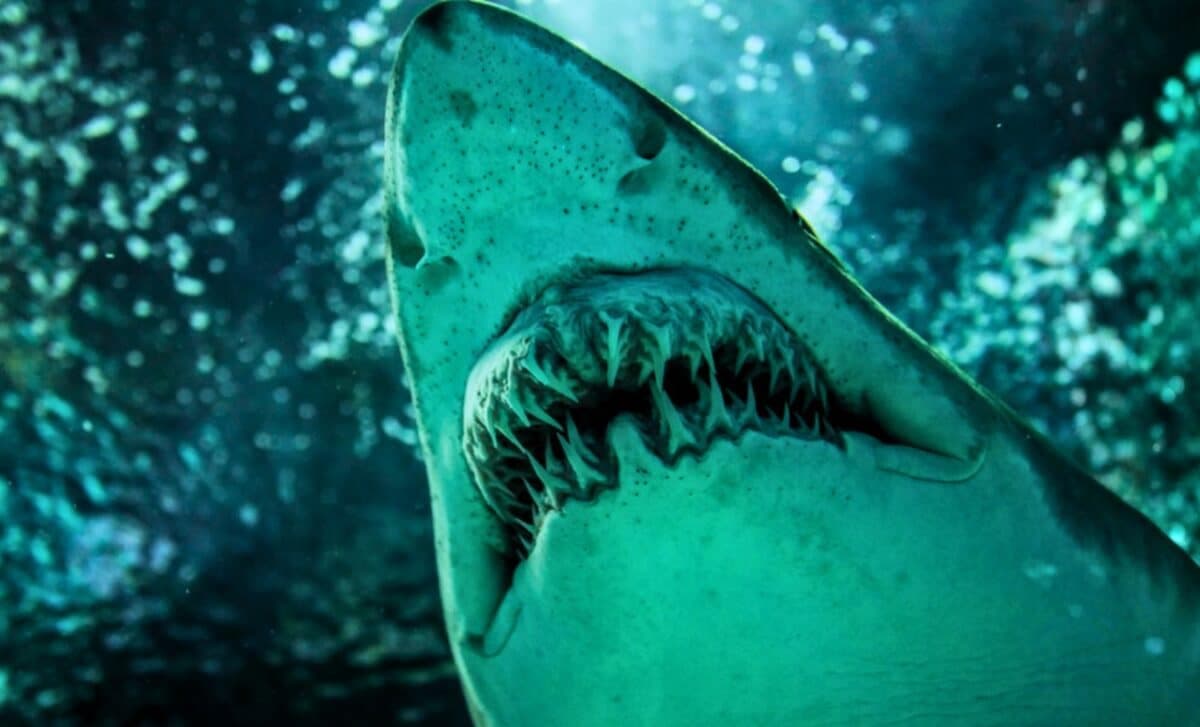
In the arid expanse of Peru’s Pisco Basin, where the Atacama Desert meets the Pacific Ocean, paleontologists have unearthed a fossil that could forever alter our understanding of one of the ocean’s most fearsome predators. In January 2025, researchers in Lima unveiled a nearly complete specimen of *Cosmopolitodus hastalis*, a prehistoric shark that prowled the southern Pacific roughly 9 million years ago. The discovery—complete with a massive jaw lined with blade-like teeth up to 8.9 centimeters (3.5 inches) long and stomach contents preserved as sardine remains—marks a rare breakthrough in shark paleontology, where complete fossils are rarer than the proverbial needle in a haystack.
- The 9-million-year-old *Cosmopolitodus hastalis* fossil from Peru’s Pisco Basin includes a nearly complete jaw, razor-sharp teeth, and preserved stomach contents, offering unprecedented insight into ancient shark anatomy.
- Paleontologists debate whether modern great white sharks descended from *Carcharodon megalodon* or the broad-toothed mako lineage, with Peru’s fossils providing critical transitional evidence.
- Complete shark fossils are exceptionally rare because cartilage decays quickly; most ancient shark species are reconstructed from isolated teeth alone.
- The Pisco Basin has emerged as a global hotspot for marine fossils, yielding discoveries like a 10-million-year-old juvenile crocodile and a 16-million-year-old river dolphin skull.
- The 2009 discovery of a 4–5-million-year-old shark fossil in Peru helped shift the consensus toward the mako lineage as the great white’s closest ancestor.
Why the Great White Shark’s Ancestry Remains One of Paleontology’s Greatest Debates
The great white shark (*Carcharodon carcharias*) is a global icon of marine predation, yet its evolutionary origins have long been shrouded in controversy. For decades, paleontologists have clashed over two primary theories: one suggesting the great white descended from the colossal *Carcharodon megalodon*—a shark that could grow up to 18 meters (60 feet) long—and another proposing it evolved from the broad-toothed mako shark, historically labeled *Isurus hastalis*. The debate hinges on subtle but critical differences in tooth morphology, body size, and ecological adaptations. While isolated teeth have fueled these arguments, complete fossils that bridge the gap between ancient and modern sharks have been conspicuously absent—until now.
The Megalodon vs. Mako Hypothesis: A Century of Conflicting Evidence
The megalodon hypothesis gained prominence in the early 20th century, when scientists noted striking similarities between the teeth of megalodon and great whites, including serrated edges designed for slicing prey. However, subsequent research highlighted key disparities: megalodon teeth were far larger and thicker, and its body proportions suggested a slower, ambush predator, whereas great whites are built for speed and agility. The mako hypothesis, by contrast, aligns with modern great whites’ streamlined bodies and fast-swimming lifestyles. Proponents of this view point to transitional fossils like Peru’s *C. hastalis* as evidence that great whites evolved from mako-like ancestors, gradually developing the serrated teeth and robust jaws of today’s apex predators.
The lack of complete fossils has been the Achilles’ heel of both theories. Cartilaginous skeletons, like those of sharks, rarely fossilize intact; most ancient sharks are known only from scattered teeth or partial vertebrae. This fragmentary record has forced paleontologists to rely on indirect evidence—such as tooth serrations or enamel thickness—to reconstruct evolutionary pathways. The result is a scientific stalemate, with each new discovery capable of tipping the scales in favor of one hypothesis over the other.
Peru’s Pisco Basin: A Fossil Goldmine Rewriting Marine Evolution
The Pisco Basin, a 235-kilometer stretch of Peru’s southern coast, has become one of the world’s most prolific sources of marine fossils, despite being one of Earth’s driest deserts today. The region’s geological history tells a tale of dramatic change: during the Miocene epoch (23 to 5 million years ago), the Pisco Basin was submerged under a shallow sea teeming with life, from sardine schools to massive river dolphins. Over millions of years, tectonic shifts uplifted these ancient seabeds, preserving a time capsule of marine biodiversity.
Peruvian researchers have made headlines in recent years with discoveries that challenge long-held assumptions about marine evolution. In 2023, a team announced the fossilized skull of *Piscobalaena nana*, a river dolphin that lived 16 million years ago and measured over 3 meters in length. Earlier, in 2021, a juvenile crocodile fossil dated to 10 million years ago was unearthed, offering clues about the region’s prehistoric ecosystems. These finds underscore the Pisco Basin’s status as a paleontological treasure trove, where the arid landscape belies a submerged past rich with evolutionary secrets.
The 2025 *Cosmopolitodus hastalis* Discovery: A Nearly Intact Window into the Past
The January 2025 fossil, described by Mario Urbina—Peru’s renowned paleontologist and a researcher at Lima’s National University of San Marcos—is a game-changer. Unlike most shark fossils, which consist of a single tooth or a handful of vertebrae, this specimen includes a near-complete lower jaw, multiple rows of teeth, and even stomach contents. The preservation is so exceptional that researchers can see the sardine remains inside the shark’s gut, providing direct evidence of its diet.
“There are not many complete shark [fossils] in the world.” — Mario Urbina, National University of San Marcos, speaking at the Lima fossil unveiling
According to Cesar Augusto Chacaltana of Peru’s Geological and Mining Institute (INGEMMET), the fossilization is “exceptional,” with the cartilage and soft tissue preserved in rare detail. The shark, identified as an adult *Cosmopolitodus hastalis*, measured nearly 7 meters (23 feet) in length—comparable to modern great whites—and its teeth, up to 8.9 centimeters long, were blade-like and serrated, ideal for piercing and slicing prey. Most intriguingly, the teeth show a mix of characteristics: coarse serrations similar to great whites, but with structural traits linked to broad-toothed makos. This transitional morphology suggests the species occupied a pivotal position in the great white’s evolutionary lineage.
The 2009 Breakthrough: How a Peruvian Fossil Shifted the Consensus Toward the Mako Lineage
The 2025 discovery isn’t the first from Peru to shake up shark paleontology. In 2009, the Florida Museum of Natural History published a groundbreaking study on a 4–5-million-year-old shark fossil also from the Pisco Basin. The specimen, described by lead author Dana Ehret, was a near-complete skull with 222 teeth still embedded in its jaw and 45 vertebrae preserved in sequence—an extraordinary find in a field where most species are known only from isolated teeth.
Evidence from the 2009 Fossil: Teeth, Growth Rings, and Evolutionary Clues
Analyzing the 2009 fossil, Ehret and his team estimated the shark was around 20 years old and measured 5.49 meters (17–18 feet) in length—placing it in the size range of modern great whites. But the true significance lay in its teeth. While the serrations resembled those of great whites, the overall tooth shape and jaw structure aligned more closely with broad-toothed makos. Growth rings in the vertebrae further revealed the shark’s development over time, offering a rare glimpse into its lifespan and growth patterns.
“Here we have a shark that’s gaining serrations. It’s becoming a white shark, but it’s not quite there yet.” — Dana Ehret, Florida Museum of Natural History, 2009
The 2009 study was pivotal in shifting scientific consensus toward the mako hypothesis. It demonstrated that great whites likely evolved from mako-like ancestors, with *C. hastalis* serving as an intermediary. The fossil’s juvenile-to-adult transition also suggested a gradual evolutionary process, where serrations developed over time, and body size stabilized into the modern great white’s proportions.
Why Complete Fossils Are the Key to Unlocking Shark Evolution
The rarity of complete shark fossils cannot be overstated. Unlike bone, cartilage—the primary structural material in sharks—does not fossilize easily. When sharks die, their skeletons typically disintegrate within days or weeks, leaving behind only teeth, which are composed of harder materials like dentine and enamel. This means paleontologists often rely on a handful of teeth to reconstruct entire species, leading to debates over whether variations in tooth shape represent different species, sexes, or growth stages of the same animal.
The Challenges of Shark Taxonomy: Names, Genera, and Evolving Classifications
Adding to the complexity is the shifting taxonomy of ancient sharks. The species *Cosmopolitodus hastalis* has been classified under various genera over the years, including *Isurus* and *Carcharodon*, reflecting the uncertainty in its evolutionary relationships. Some researchers argue that *C. hastalis* is a direct ancestor of great whites, while others suggest it represents a side branch of the mako lineage. The 2025 fossil, with its exceptional preservation, may help clarify these classifications—but it won’t resolve every dispute. As Urbina noted, “There are not many complete shark [fossils] in the world,” and each new discovery must be weighed against the broader, fragmentary fossil record.
What the 2025 Fossil Tells Us About Ancient Shark Behavior and Ecology
Beyond its evolutionary implications, the 2025 *Cosmopolitodus hastalis* fossil offers a rare snapshot of prehistoric marine life. The presence of sardine remains in its stomach provides direct evidence of its diet, suggesting it was an opportunistic predator that hunted in schools of small fish. This ecological role aligns with modern great whites, which often target sardines, anchovies, and other schooling prey. The shark’s size and tooth morphology further indicate it was an open-water hunter, capable of ambushing fast-moving schools.
The Broader Implications: How Peru’s Fossils Are Reshaping Marine Science
The Pisco Basin’s fossil record is more than a collection of curiosities—it’s a critical archive of Earth’s marine history. By piecing together the evolutionary pathways of sharks, paleontologists can infer broader trends in ocean ecosystems, such as the rise and fall of dominant predator lineages or shifts in prey availability. The great white’s story, in particular, offers insights into how apex predators adapt to changing climates and food webs.
For example, the transition from mako-like ancestors to great whites coincides with periods of cooling oceans and changing prey distributions. Great whites’ serrated teeth and robust jaws suggest an evolutionary response to hunting larger, tougher prey—possibly including marine mammals like seals and sea lions, which became more abundant as coastal ecosystems evolved. The 2025 fossil, with its sardine diet, also hints at the shark’s versatility, allowing it to thrive in a variety of marine environments.
What’s Next for Shark Paleontology? The Search for More Complete Fossils
While the 2025 *Cosmopolitodus hastalis* fossil is a monumental find, it’s unlikely to be the last word on great white ancestry. Paleontologists are already planning new expeditions to the Pisco Basin, where erosion and ongoing research continue to expose new layers of the Miocene seabed. Other regions, such as California’s Sharktooth Hill Bonebed and Morocco’s phosphate deposits, have also yielded significant shark fossils, but none match the completeness of Peru’s recent discoveries.
The ultimate goal is to find a fossil that captures the *direct* transition from *C. hastalis* to *Carcharodon carcharias*—a species-level ancestor that definitively bridges the gap between ancient and modern sharks. Until then, each new specimen, like the 2009 and 2025 Peruvian fossils, serves as a piece of a puzzle that may never be fully solved but is gradually coming into focus.
Frequently Asked Questions About the Great White Shark Fossil Discovery
Frequently Asked Questions
- Did this fossil prove the great white shark evolved from a mako shark?
- The fossil supports the mako hypothesis, showing transitional traits like serrated teeth and jaw structure that align with great white ancestors. However, it doesn’t ‘prove’ the lineage outright—more fossils are needed to confirm the direct evolutionary path.
- How rare are complete shark fossils like this one?
- Extremely rare. Cartilage decays quickly, so most ancient sharks are known only from isolated teeth. Complete fossils, like Peru’s 2025 specimen, are among the rarest finds in paleontology.
- What does the stomach contents tell us about the shark’s diet?
- The preserved sardine remains confirm the shark hunted schooling fish, similar to modern great whites. This suggests it was an opportunistic predator that adapted to available prey in the Miocene-era Pacific.