In the rugged highlands of the Himalayas, the frigid waters of the Sulu Sea, and the oxygen-thin peaks of the Andes, humans have carved out lives that defy the odds. These remarkable feats of survival are not the result of modern technology or advanced medicine, but of millennia of evolutionary tinkering—adaptations honed by relentless environmental pressures. Evolutionary anthropologist Herman Pontzer, in his critically acclaimed book *Adaptable* (Penguin Random House, 2025), explores how Homo sapiens have developed biological solutions to thrive in some of Earth’s most unforgiving landscapes. From the choking hazards of speech to the life-saving genes inherited from ancient hominins like the Denisovans, human biology is a patchwork of trade-offs where survival often comes at a cost.
The High Cost of Human Speech: Why Our Throats Are Built for Words—and Choking
The human larynx, or voice box, is a marvel of evolutionary engineering—but one that comes with a deadly trade-off. Unlike nearly every other mammal, which tucks its larynx high in the throat to keep the airway separate from the food passage, humans have evolved a uniquely low-positioned larynx. This anatomical quirk enables the complex vocalizations that underpin human language, allowing us to shape sounds into consonants and vowels with precision. Yet, this adaptation also makes us uniquely vulnerable to choking. According to the National Safety Council, over 5,000 Americans die from choking annually, a hazard directly tied to our larynx’s precarious placement. When we swallow, the epiglottis—a flap of tissue—must seal the airway to prevent food or liquid from entering the lungs. A misstep, and the airway becomes obstructed, cutting off oxygen. For comparison, dogs, chimpanzees, and other primates have their larynxes positioned high enough to avoid this risk entirely, though their vocal ranges are correspondingly limited.
The Evolutionary Trade-Off: Language vs. Survival
Why did evolution favor such a dangerous arrangement? The answer lies in the extraordinary social and cooperative nature of humans. Pontzer argues that the ability to communicate complex ideas—whether through spoken language or, later, written words—provided a survival advantage that outweighed the risks of choking. Our ancestors’ success in group hunting, toolmaking, and passing knowledge across generations hinged on this vocal flexibility. Even Jimi Hendrix, the legendary guitarist whose life was cut short in 1970 after overdosing on sleeping pills, fell victim to this same vulnerability. While drugs were a factor, Hendrix ultimately choked on his own vomit, a grim reminder of how evolution’s compromises can manifest in the most tragic ways.
Surviving Thin Air: How High-Altitude Populations Beat the Odds
For humans who call Earth’s highest peaks home, the challenge is not just staying warm or finding footing on treacherous terrain—it’s extracting enough oxygen from the thin air. At elevations above 8,000 feet, the air contains roughly 30% less oxygen than at sea level, forcing the body to adapt or perish. The primary solution? Producing more red blood cells. When the kidneys and liver detect low oxygen levels, they release erythropoietin (EPO), a hormone that signals the bone marrow to generate additional red blood cells. This adaptation is so effective that endurance athletes have been known to exploit it, using synthetic EPO injections to boost oxygen-carrying capacity—a practice that has reshaped sports like cycling and long-distance running.
The Andean Struggle: Genetic and Environmental Adaptations
Native populations in the Andes, such as the Aymara and Quechua, have lived at elevations exceeding 13,000 feet for thousands of years. Their bodies have adapted in remarkable ways: larger lungs, expanded rib cages, and elevated red blood cell counts that help them thrive where others would suffocate. However, these adaptations come with a steep price. Approximately 15% of Andean adults suffer from chronic mountain sickness, a condition marked by severe headaches, nausea, and, in extreme cases, fatal fluid buildup in the lungs and brain. The physiological solution to low oxygen—thicker blood—also increases the risk of clotting and cardiovascular strain.
The Himalayan Advantage: Denisovan Genes and the EPAS1 Allele
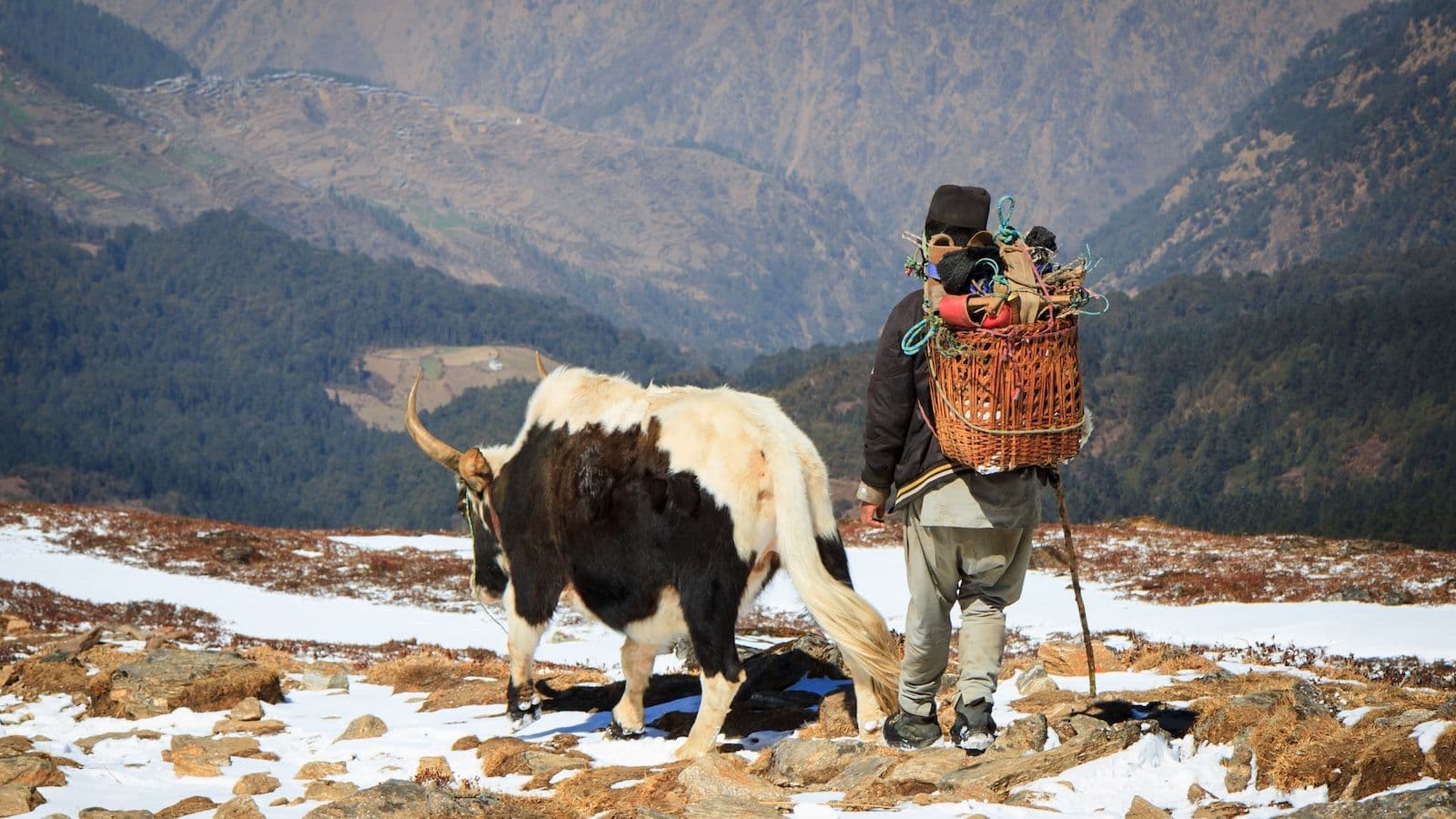
In the Himalayas, where some communities live at elevations up to 16,000 feet, the story of adaptation takes a fascinating twist. Unlike the Andeans, Himalayan populations carry a specific allele of the EPAS1 gene, which regulates red blood cell production. This allele, inherited from Denisovans—a now-extinct human relative—keeps EPO levels and red blood cell counts low, preventing the dangerous thickening of blood that plagues Andean populations. Instead, Himalayan groups rely on other physiological adaptations, such as increased lung capacity and vascular efficiency, to deliver oxygen effectively. The EPAS1 allele’s journey into the human genome is a tale of ancient interbreeding. Around 50,000 years ago, early humans mated with Denisovans in Asia, introducing this neutral genetic fragment into the human gene pool. It wasn’t until roughly 9,000 years ago, as populations migrated into the high mountains, that the allele became advantageous. Today, nearly every Himalayan native carries this Denisovan-derived gene, a testament to the power of natural selection.
Beneath the Waves: The Sama People and the Evolution of the Diving Response
For the Sama people, also known as the Bajau, survival depends on their ability to spend hours underwater. These seafaring hunter-gatherers, who live on houseboats across the Philippines, Indonesia, and Malaysia, have evolved biological traits that allow them to dive to depths of over 200 feet without modern equipment. Their lifestyle, which has persisted for millennia, demands extreme physiological adaptations. One of the most critical is the spleen’s role in oxygen management. When submerged in cold water, the spleen contracts, releasing a reserve of red blood cells to oxygenate the body—a response shared by many diving mammals. Research has shown that the Sama have a genetic adaptation in the PDE10A gene, which increases spleen size by nearly double in those carrying two copies of the allele. This genetic tweak, combined with years of breath-holding training, gives them an unparalleled ability to withstand prolonged submersion.
The Genetic Legacy of Ancient Hominins: Neanderthals, Denisovans, and Modern Humans
The story of human adaptation is not just one of gradual, isolated evolution—it’s also a story of genetic mingling with other hominins. When Homo sapiens migrated out of Africa and encountered Neanderthals in Europe and Asia, the two groups interbred, leaving behind a genetic footprint in modern humans. Today, many people of European or Asian descent carry traces of Neanderthal DNA, though the functional significance of these genes varies. Pontzer notes that some Neanderthal-derived genes may have helped early humans adapt to colder climates or resist pathogens, while others remain neutral or even maladaptive. The Denisovan legacy, however, is more dramatic. Beyond the EPAS1 allele, Denisovan genes have been linked to adaptations in high-altitude Tibetans and immune responses in modern Melanesians. These ancient encounters underscore a critical truth: human evolution is not a linear path but a web of genetic exchanges, where survival often depended on borrowing traits from our cousins.
Evolution’s Tinkering: Why Trade-Offs Are Inevitable
Pontzer’s work highlights a fundamental truth about evolution: it is a tinkerer, not an engineer. Biological adaptations are constrained by the materials at hand, often resulting in compromises where benefits come with hidden costs. The human larynx’s vulnerability to choking is one such trade-off, as is the Andean strategy of producing excess red blood cells, which increases the risk of mountain sickness. Even the Sama people’s diving prowess comes with trade-offs, such as the potential for decompression sickness or the energetic costs of maintaining enlarged spleens. These adaptations are not perfect, but they are the best solutions evolution could cobble together given the constraints of our ancestors’ environments and genetic toolkits.
The Broader Implications: What Human Adaptations Tell Us About Our Future
Understanding these adaptations is not just an academic exercise—it has real-world implications for modern medicine, sports science, and even space exploration. For instance, studying how Himalayan populations avoid altitude sickness could inform treatments for conditions like pulmonary edema or chronic obstructive pulmonary disease (COPD). Similarly, the Sama people’s diving adaptations offer insights into human breath-holding limits, which could benefit freedivers or even astronauts preparing for extravehicular activities. Pontzer’s research also underscores the importance of preserving Indigenous knowledge and genetic diversity. As climate change and globalization reshape environments, many of these unique adaptations face threats from cultural assimilation and environmental degradation. Losing these populations could mean losing irreplaceable windows into the plasticity of human biology.
- The human larynx’s low position enables complex speech but increases choking risks—a classic example of evolution’s trade-offs.
- High-altitude populations like the Andeans and Himalayans have evolved distinct genetic adaptations to survive thin air, with the latter inheriting the EPAS1 allele from Denisovans.
- The Sama people’s ability to dive for hours stems from genetic and physiological adaptations, including enlarged spleens linked to the PDE10A gene.
- Ancient interbreeding with Neanderthals and Denisovans left lasting genetic legacies in modern humans, influencing everything from immune responses to high-altitude survival.
- Evolutionary adaptations are often imperfect, reflecting the constraints of biology rather than optimal engineering.
Meet the Scientist: Herman Pontzer and the Study of Human Energetics
Herman Pontzer is a professor of evolutionary anthropology and global health at Duke University, where his research focuses on human energetics—the study of how energy is used, stored, and allocated in the body. Over two decades, Pontzer has conducted fieldwork with hunter-gatherer communities like the Hadza in Tanzania, studied chimpanzees in Uganda’s rainforests, and measured metabolism in great apes across zoos and sanctuaries worldwide. His work challenges conventional wisdom about metabolism, showing, for example, that hunter-gatherers like the Hadza burn the same number of calories per day as sedentary Westerners despite their active lifestyles—a finding that has reshaped our understanding of human energy expenditure. Pontzer’s research has been featured in major outlets like *The New York Times*, *BBC*, *The Atlantic*, and *NPR*, and his previous book, *BURN* (Avery, 2021), explored human metabolism in depth. *Adaptable* extends this work, offering a sweeping look at how human biology has been shaped by the environments our ancestors inhabited.
Frequently Asked Questions
Frequently Asked Questions
- Why do humans choke more often than other animals?
- Humans have a uniquely low-positioned larynx, which enables complex speech but also increases the risk of choking. Most mammals have their larynx positioned higher in the throat, separating the airway from the food passage. Our adaptation prioritizes vocal flexibility over airway safety.
- How did the Denisovan EPAS1 gene help Himalayan populations survive at high altitudes?
- The EPAS1 allele, inherited from Denisovans, helps regulate red blood cell production by keeping EPO levels low. This prevents the dangerous thickening of blood seen in Andean populations, reducing the risk of altitude sickness while still ensuring adequate oxygen delivery. Nearly all modern Himalayan natives carry this gene.
- What can modern medicine learn from the Sama people’s diving adaptations?
- The Sama’s enlarged spleens and genetic adaptations in the PDE10A gene offer insights into breath-holding capacity and oxygen management. These adaptations could inform treatments for conditions like decompression sickness or COPD, as well as strategies for improving human endurance in low-oxygen environments.