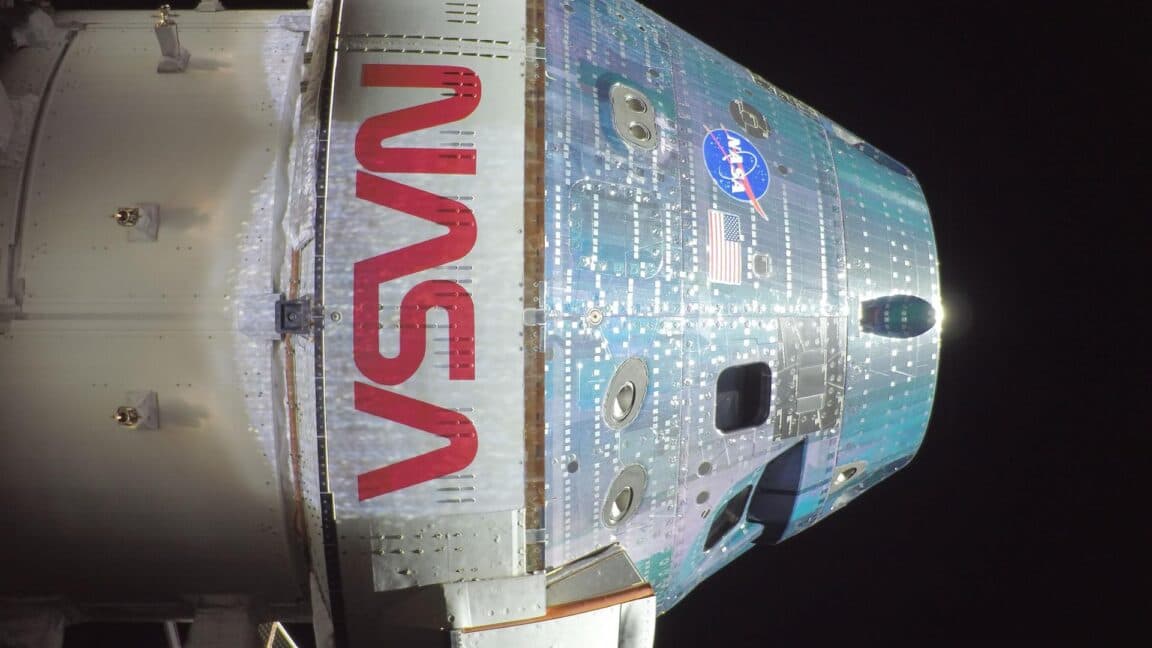
As NASA’s Artemis II mission continues to perform beyond expectations, the spotlight has unexpectedly shifted to one of the most human of all necessities: the toilet. During a Saturday news conference, John Honeycutt, chair of NASA’s Mission Management Team, addressed the public’s fascination with the Orion spacecraft’s waste management system, acknowledging that such curiosity is only natural. ‘I think the fixation on the toilet is kind of human nature,’ he said, while emphasizing that the current setup, though functional, leaves room for improvement. With the mission now deep into its shakedown cruise around the Moon, the attention to this seemingly mundane detail serves as a reminder of the extraordinary challenges posed by long-duration spaceflight—where even the most basic biological functions become engineering puzzles.
- Artemis II’s Orion spacecraft is performing exceptionally well, with life support systems like toilets under scrutiny.
- Space toilets are far more complex than terrestrial versions due to microgravity and resource constraints.
- The toilet system’s performance directly impacts future Mars missions, where failures could be catastrophic.
- NASA engineers view Artemis II as a critical testbed for refining deep space life support technologies.
Why Space Toilets Are a Make-or-Break Technology for Deep Space Missions
Toilets may seem like an afterthought in the grand scheme of space exploration, but NASA’s Artemis program has thrust them into the spotlight. Unlike Earth, where gravity and abundant water facilitate waste disposal, space presents a uniquely hostile environment. Microgravity turns even the simplest act of using the restroom into a logistical nightmare. The Apollo astronauts relied on sealed bags—a solution that was functional but far from ideal. The space shuttle’s toilet system, while more sophisticated, was notorious for malfunctions, requiring significant crew time to repair. Today, the International Space Station (ISS) operates with four toilets, leveraging recycled water and advanced filtration to manage waste, but even these systems demand constant maintenance.
The Evolution of Space Sanitation: From Apollo to Artemis
The Apollo missions of the 1960s and 1970s treated waste management with a ‘duct tape and ingenuity’ approach. Astronauts used plastic bags with adhesive rings, a system that was simple but unsanitary and prone to leaks. By the time the Space Shuttle program launched in 1981, NASA had developed a more advanced system with a suction-based toilet, though it was still prone to clogs and mechanical failures. The ISS, a permanent human outpost in low Earth orbit, now hosts four toilets, including the Russian-built system in the Zvezda module and the U.S. Universal Waste Management System (UWMS), which was installed in 2020. The UWMS recycles urine into drinkable water, a critical innovation for long-duration missions.
The Orion Spacecraft’s Toilet: A Test Case for Future Mars Missions
The Orion spacecraft, designed to carry humans to the Moon and beyond, features a toilet system that is a hybrid of shuttle and ISS technologies. Unlike the ISS, Orion lacks the luxury of abundant space and multiple redundant systems. Its toilet is a compact, all-in-one unit that must operate flawlessly for up to 21 days—a duration that, while short by Mars mission standards, is long enough to reveal critical flaws. ‘I know we’re in a good state, but I would really like it to be in the best state it can be,’ Honeycutt admitted during the news conference, reflecting the mission’s dual role as both a test flight and a proving ground for future deep space habitats. The system’s performance is being scrutinized not just for its immediate functionality but for the lessons it can provide for Artemis III and missions to Mars.
The Problem with Frozen Urine: A Harbinger of Deeper Challenges
One of the quirks of Artemis II’s mission that has captured public imagination is the phenomenon of frozen urine. In microgravity, urine doesn’t simply fall into a toilet bowl; it must be vacuumed away and processed. On Orion, excess urine that isn’t recycled into water can freeze in the system’s pipes or waste tanks, creating blockages or mechanical issues. This issue, while not a mission risk for Artemis II, highlights a broader challenge: the need for closed-loop life support systems that can sustain crews for months without resupply. ‘If the toilet breaks on the way to Mars, there is a non-zero chance the crew is dying,’ one engineer told Ars Technica, underscoring the life-or-death stakes of these systems.
If the toilet breaks on the way to Mars, there is a non-zero chance the crew is dying.
How Life Support Systems Dictate the Future of Human Spaceflight
The Artemis program represents NASA’s most ambitious effort to return humans to the Moon since the Apollo era, but its true objective is to serve as a stepping stone for Mars. The Moon is a proving ground; Mars is the ultimate destination. For a crewed mission to the Red Planet, which could last two to three years, life support systems must be entirely self-sufficient. Water must be recycled at near-100% efficiency. Oxygen must be generated and scrubbed of carbon dioxide. And waste—both human and otherwise—must be managed without failure. The toilet system is just one component of this ecosystem, but its failure could compromise an entire mission.
The Role of the Universal Waste Management System (UWMS)
The UWMS, installed on the ISS and slated for use in Orion, is a leap forward in space sanitation. Developed by Collins Aerospace, the system uses a rotating fan separator to pull waste away from the user, then processes urine into water through a distillation system. The recovered water is then purified and used for drinking, hygiene, or oxygen generation. This closed-loop approach is essential for deep space missions, where resupply from Earth is impossible. However, the UWMS is not without its challenges. It requires precise calibration, and its mechanical components are susceptible to wear and tear in the harsh environment of space.
Why the Orion Toilet Is a Microcosm of Deep Space Challenges
Orion’s toilet system is a scaled-down version of the UWMS, tailored for the spacecraft’s limited interior space. It must function in a vehicle that is not only smaller than the ISS but also subjected to more extreme thermal variations. During Artemis II, engineers are monitoring how the system handles these conditions, as well as the psychological impact on the crew. ‘Going to Mars, requiring months in space, is a different matter,’ Honeycutt noted, emphasizing that the lessons from Artemis II will be critical for designing habitats for longer journeys. The toilet’s performance is a litmus test for the broader life support systems that will keep astronauts alive on the journey to Mars.
NASA’s Artemis II Mission: A Resounding Success with Room for Improvement
Beyond the toilet discussions, Artemis II is proving to be a resounding success. According to Debbie Korth, deputy manager of NASA’s Orion program, the spacecraft is performing ‘remarkably well’ and has ‘pleasantly surprised’ engineers. The mission, launched on November 16, 2024, is the first crewed flight of the Orion spacecraft and the first time humans have ventured beyond low Earth orbit since 1972. The crew—NASA astronauts Reid Wiseman, Victor Glover, Christina Koch, and Canadian Space Agency astronaut Jeremy Hansen—has conducted a series of tests, including a close flyby of the Moon, to validate the spacecraft’s systems. The mission is slated to last 10 days, but its real value lies in the data it will provide for future Artemis missions.
The Broader Implications for Commercial Spaceflight and International Collaboration
The challenges of space toilets are not unique to NASA. Commercial spaceflight companies like SpaceX and Blue Origin are also grappling with life support systems for their own deep space ambitions. SpaceX’s Starship, for example, is being designed to carry humans to Mars, and its toilet system will need to be as reliable as Orion’s. Meanwhile, international partners like the European Space Agency (ESA) and the Japan Aerospace Exploration Agency (JAXA) are contributing to Artemis through technology and expertise, including life support innovations. The collaboration underscores a global recognition that solving the toilet problem is a shared necessity for the future of human spaceflight.
What’s Next for Space Toilets? The Path to Mars and Beyond
NASA’s Artemis program is just the beginning. The lessons learned from Orion’s toilet system will inform the design of the Lunar Gateway, a small space station orbiting the Moon that will serve as a staging point for Mars missions. The Gateway’s life support systems, including toilets, will need to be even more robust, as crews will live aboard for months at a time. Longer-term, the technology developed for Artemis could be adapted for habitats on the Moon or Mars, where sustainability is paramount. ‘This really is the purpose of this test flight,’ Honeycutt said, ‘to make sure life support systems work for the crew, to identify problems, and to implement fixes in the future.’
Key Takeaways: Why the Artemis II Toilet Story Matters
- The Orion spacecraft’s toilet system, while functional, is a critical test case for future deep space missions, including trips to Mars.
- Space toilets are far more complex than terrestrial versions due to microgravity, resource constraints, and the need for closed-loop systems.
- The phenomenon of frozen urine highlights the engineering challenges of managing waste in space, a problem that could become life-threatening on long-duration missions.
- Artemis II’s success underscores NASA’s progress in life support technology, but also reveals areas needing improvement before Mars missions.
- International collaboration and commercial spaceflight efforts are also focused on solving the toilet problem, making it a shared priority for the future of human spaceflight.
Frequently Asked Questions About Space Toilets and Artemis II
Frequently Asked Questions
- How does the Orion spacecraft’s toilet work?
- The Orion toilet uses a suction-based system similar to the UWMS on the ISS. It vacuum-separates waste from the user and processes urine into water through distillation, while solid waste is stored in containers. The system is designed to operate in microgravity, where traditional plumbing is ineffective.
- Why is frozen urine a problem during Artemis II?
- Frozen urine can block pipes or create mechanical issues in the toilet system. While not a mission risk for Artemis II, it highlights the challenges of managing waste in the extreme thermal environment of deep space, where temperatures can swing dramatically.
- How will space toilets evolve for Mars missions?
- For Mars missions, toilets will need to be part of a fully closed-loop life support system, recycling 100% of water and managing waste without failure for months or years. NASA and commercial partners are developing next-generation systems to meet these demands, including advanced filtration and waste-to-energy technologies.