What Is Happening on August 12, 2026
A total solar eclipse occurs when the moon moves between Earth and the sun, blocking the sun's disk entirely for observers within a narrow corridor on the Earth's surface. Anyone outside that corridor sees a partial eclipse, where the sun appears partly covered.
According to NASA, the path of totality on August 12 will sweep through parts of Greenland, Iceland, mainland Spain, a sliver of Portugal, and northern Russia. People in those locations will experience a brief period of complete darkness, with the sun's corona visible to the naked eye.
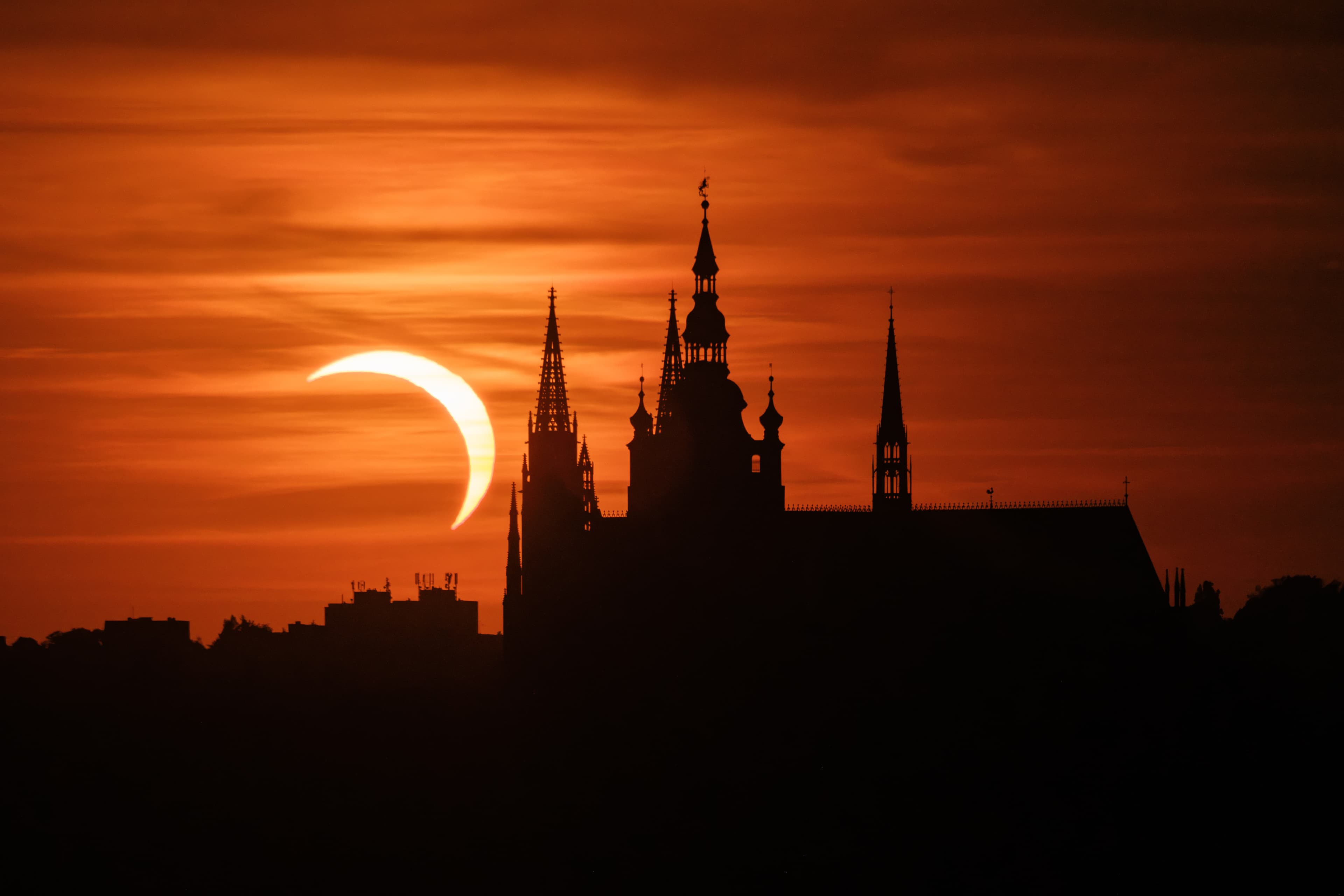
The rest of Europe, including the entire United Kingdom, will see a partial eclipse. The UK is expected to have up to 96% of the sun covered at peak, making it the deepest partial eclipse the country has seen since 1999. The next eclipse of comparable depth for British observers will not arrive until 2081, which puts the scale of this event in perspective.
Globally, an estimated 980 million people will be able to see at least some portion of the eclipse on the day.
When to Watch: Timing by Region
The eclipse begins in the mid-afternoon UTC and moves eastward. UK observers can expect the partial eclipse to start in the early evening, with maximum coverage falling roughly between 6pm and 7:20pm local time, depending on where in the country you are.
If you are in Spain or Iceland and within the path of totality, totality itself lasts only a few minutes, so you will want to be in position well before the peak. For precise local timings, check a reliable astronomy resource or your national space agency's website.
Eye Safety: The Most Important Part
This point deserves more than a passing mention. Looking directly at the sun during a partial eclipse, even when 96% of it is blocked, will damage your retinas. The remaining sliver of exposed sun is still intense enough to cause serious, irreversible harm, and you will not feel it happening until it is too late.
Use ISO 12312-2 Certified Eclipse Glasses
The only safe way to look directly at the sun during any phase of a partial eclipse is through glasses certified to the ISO 12312-2 international safety standard. These filter out the vast majority of the sun's light and harmful radiation.
When buying eclipse glasses, check that the ISO 12312-2 certification is printed on the glasses themselves, not just on the packaging. Avoid cheap, unverified products from unknown sellers. Before you use them, inspect the lenses carefully. If they are scratched, punctured, or damaged in any way, do not use them.
What You Must Never Use
Sunglasses, even very dark ones
Stacked sunglasses or multiple layers of film
Smoked glass, CDs, or DVDs
Exposed camera film or X-ray film
Any homemade filter not certified to the ISO standard
None of these offer adequate protection. Standard sunglasses, for example, block only a small fraction of the light that needs to be filtered out.
Cameras, Binoculars, and Telescopes
Never look through a camera viewfinder, binoculars, or a telescope during the eclipse unless a proper solar filter is fitted to the front lens. These instruments concentrate sunlight and can cause injury far faster than looking with the naked eye. Solar filters for optical equipment are available from astronomy retailers and must be attached to the front of the instrument, not the eyepiece.
Indirect Viewing: The Pinhole Method
No eclipse glasses? Pinhole projection is a safe, simple alternative. Poke a small hole in a piece of card, hold it up so sunlight passes through, and project the image onto a flat surface behind it. You will see a small, inverted image of the partially eclipsed sun. You are watching the projection, not the sun itself. A colander, a leafy tree, or any object with small gaps will produce the same effect naturally, casting multiple crescent-shaped images of the sun onto the ground beneath it.
During Totality: The One Exception
For those within the path of totality in Greenland, Iceland, Spain, Portugal, or northern Russia, there is one brief window when it is safe to look without glasses: the moments of complete totality, when the sun's disk is fully covered. The corona becomes visible, the sky darkens, and the effect is unlike anything else.
That said, the moment the first sliver of sun reappears, known as the diamond ring effect, you need to look away or put your glasses back on immediately. The transition is fast. If you are not confident about the timing, keep your glasses on throughout.
A Moment Worth Preparing For
Some of the most remarkable things in the world happen on a schedule that does not wait for you. Whether you are standing in the path of totality or watching a 96% partial eclipse from your garden in the UK, a few minutes of preparation will make the difference between a memorable experience and a dangerous one.
Get certified glasses early, find a clear sightline to the western sky, and be in position before 6pm local time if you are in the UK.