- Archaeology
- Human Evolution
- Neanderthals
A preference for pairings between male Neanderthals and female Homo sapiens may answer the question of why there are "Neanderthal deserts" in human chromosomes.
When you purchase through links on our site, we may earn an affiliate commission. Here’s how it works.
Unlock instant access to exclusive member features.
By submitting your information you agree to the Terms & Conditions and Privacy Policy and are aged 16 or over. You are now subscribed
Feed your curiosity with an exclusive mystery every week, solved with science and delivered direct to your inbox before it's seen anywhere else.
Breaking space news, the latest updates on rocket launches, skywatching events and more!
Get full access to premium articles, exclusive features and a growing list of member rewards.
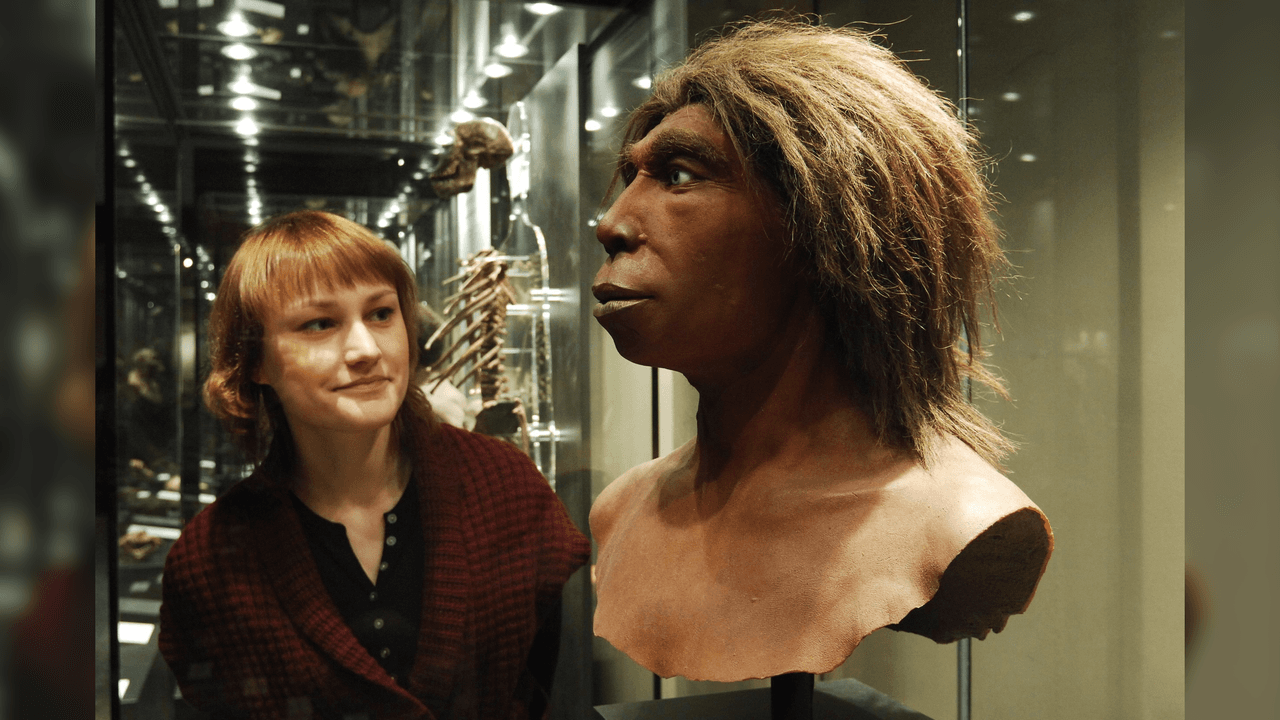
When Neanderthals and modern humans first got together, they preferred pairings between Neanderthal men and human women, a new study of ancient and modern genomes suggests. The finding helps to explain why modern humans (Homo sapiens) have a relatively low level of Neanderthal genes and why those genes are found in some populations today and not in others.
Ever since the first modern-human and Neanderthal genomes were sequenced over 20 years ago, scientists have puzzled over "Neanderthal deserts," or places in the modern-human genome where Neanderthal genes are rare. The two groups interbred during a few periods after their ancestors split around 600,000 years ago. The result is that most non-African people on the planet today carry an average of 2% Neanderthal DNA, while some African groups have up to 1.5%, which was inherited from H. sapiens who mixed with Neanderthals in Eurasia and then moved to Africa.
But what has stymied experts is that the genes we inherited from Neanderthals are found only in tiny patches on our X chromosome, even though those genes appear in greater numbers across our other chromosomes. There are regions on the X chromosome — the sex chromosome that every human has at least one copy of — where no living humans have any Neanderthal ancestry.
- Did modern humans wipe out the Neanderthals? New evidence may finally provide answers.
- 'More Neanderthal than human': How DNA from our long-lost ancestors affects our health today
- 10 things we learned about Neanderthals in 2025
"For years, we just assumed these deserts existed because certain Neanderthal genes were biologically 'toxic' to humans — as tends to be the case when species diverge — so we thought the genes may have caused health problems and were likely purged by natural selection," Alexander Platt, a population geneticist at the University of Pennsylvania, said in a statement.
But in a study published Thursday (Feb. 26) in the journal Science, Platt and colleagues concluded that the most plausible explanation for these "Neanderthal deserts" is actually mate preference, an evolutionary mechanism that is a major part of sexual selection. Biologists commonly illustrate the evolutionary result of mate preference with the large, colorful tail of the male peacock. Early humans and Neanderthals likely chose their mates for specific reasons as well.
The researchers analyzed the genomes of 73 women from three modern-day African populations that have no Neanderthal ancestry, including the !Xoo, Ju|'hoansi and Khoisan, and compared them with the genomes of a few Neanderthals. First, they looked at the Neanderthals' X chromosomes and found significantly higher amounts of modern-human ancestry there than on the other Neanderthal chromosomes. This result revealed that the lack of Neanderthal genes in the human X chromosome is not the result of incompatibility, which would have suggested Neanderthal genes caused modern humans problems and were eliminated through natural selection.
Rather, the surprisingly high amount of modern human DNA chunks found in Neanderthals can be explained by mate preference, the researchers concluded. Because females carry two X chromosomes and males carry only one, a preference for mating between female H. sapiens and male Neanderthals would mean fewer Neanderthal X chromosomes would enter the human gene pool, producing the pattern the researchers identified in the genomes.
Get the world’s most fascinating discoveries delivered straight to your inbox.
But the reasons for the mate preference — and the direction of it — remain elusive.
"I have no idea whose preference is being expressed here," Platt told Live Science in an email.
Previous research into the Neanderthal Y chromosome — one of the two sex chromosomes of male individuals — indicates there was interbreeding between male H. sapiens and female Neanderthals. But it is apparent from the new study that, in effect, male Neanderthals and female H. sapiens liked each other more than female Neanderthals and male H. sapiens did.
- 'More Neanderthal than human': How DNA from our long-lost ancestors affects our health today
- 10 things we learned about Neanderthals in 2025
- Last common ancestor of modern humans and Neanderthals possibly found in Casablanca, Morocco
"We simply don't have a genetic signature to discern beyond that at the moment," Platt said.
The researchers did not rule out more complicated evolutionary scenarios that might have combined natural selection, sex biases, mate preference and sex-specific migration to contribute to the "Neanderthal deserts" in the human genome.
—Research group claims preeclampsia doomed the Neanderthals, but experts say it's just a 'thought experiment'
—'Perfectly preserved' Neanderthal skull bones suggest their noses didn't evolve to warm air