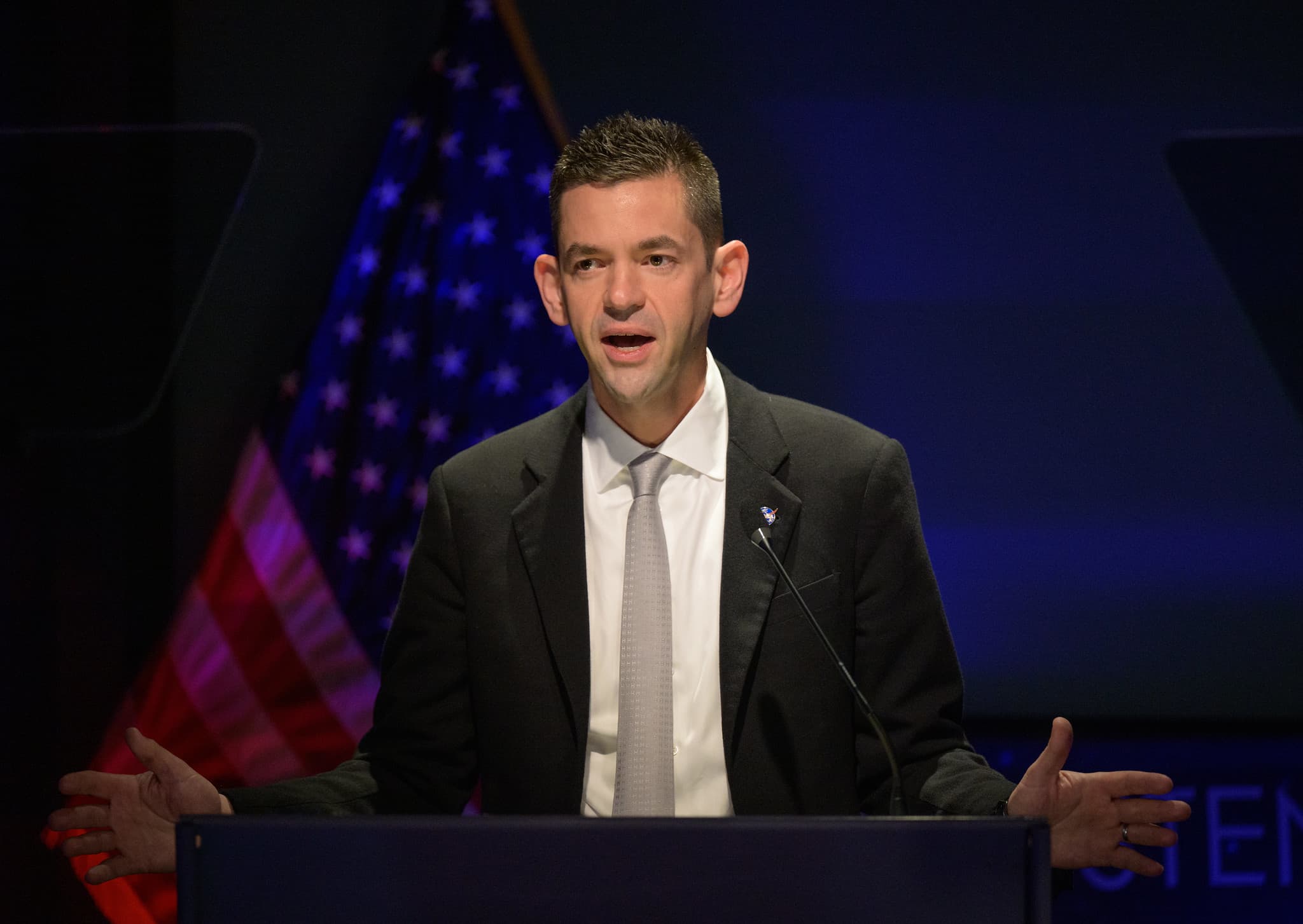
WASHINGTON — NASA Administrator Jared Isaacman forcefully defended the agency’s fiscal year 2027 budget proposal on April 5, countering criticism of a 23% funding cut by emphasizing the plan’s ability to sustain the agency’s top exploration priorities, including accelerated lunar missions and the construction of a permanent moon base. Speaking on CBS News’ *Face the Nation* and CNN’s *State of the Union*, Isaacman argued that recent supplemental funding—including $10 billion from last July’s budget reconciliation bill—provides the financial stability needed to meet ambitious goals like Artemis 3, despite deep reductions in science and space technology programs.
Why the 2027 NASA Budget Cuts Are Sparking Controversy
The fiscal year 2027 budget proposal, released by the White House on April 3, outlines a $18.8 billion allocation for NASA—a 23% decrease from the $24.5 billion Congress approved for 2026. This reduction comes amid broader federal austerity measures under President Trump’s administration, which has prioritized deficit reduction while maintaining funding for high-profile national priorities like space exploration. The proposed cuts target several key areas: NASA’s science budget would face a 47% slash, space operations would see a 30% reduction, and space technology would lose nearly one-third of its funding. However, exploration programs—including the Artemis campaign and lunar base development—would receive sufficient resources to proceed on schedule.
The Role of the 2026 Supplemental Funding Boost
Isaacman repeatedly highlighted the $10 billion in supplemental funding provided by the 2025 budget reconciliation bill, enacted in July 2024. This influx of capital, he argued, is the linchpin enabling NASA to accelerate its Artemis timeline. The additional funds allow the agency to maintain critical milestones, such as the Artemis 3 mission—currently slated for 2027—which aims to return astronauts to the lunar surface. The budget reconciliation bill also earmarked resources for developing lunar infrastructure, including habitats and power systems, which are essential for establishing a sustainable human presence on the moon by the end of the decade.
Critics, however, point out that the supplemental funding is temporary and does not address the structural funding gaps in NASA’s science and technology divisions. Projects like the Roman Space Telescope and the Dragonfly mission to Saturn’s moon Titan remain funded in the 2027 proposal, but hundreds of other missions—including those in early development or extended operations—are at risk of cancellation or delay. For example, the Mars Sample Return mission, a cornerstone of NASA’s planetary science portfolio, could face significant downsizing without additional funding.
Isaacman’s Defense: Outcomes Over Spending Speed
“I think the American public and the taxpayers should be judging NASA based on outcomes, and not how quickly we can spend money every year.”
Isaacman’s public remarks reflect a strategic pivot in NASA’s messaging, emphasizing efficiency and deliverables over raw spending. During his appearances, he underscored that the agency’s $18.8 billion budget still exceeds the combined annual funding of all other space agencies worldwide—a talking point he repeated on both *Face the Nation* and CNN’s *State of the Union*. His argument hinges on the idea that NASA’s historical dominance in space exploration justifies its outsized budget, even amid cuts. “NASA’s science budget is greater than every other space agency combined across the world,” he stated, framing the reductions as a necessary trade-off to prioritize high-impact exploration over broader scientific endeavors.
The Political and Practical Implications of NASA’s Budget Shift
The 2027 budget proposal arrives at a pivotal moment for NASA, as the agency balances the demands of the Artemis program with long-standing commitments to scientific research and technological innovation. The Trump administration’s push for fiscal restraint reflects a broader trend in federal spending, where discretionary budgets face increasing scrutiny. However, the proposed cuts to NASA’s science and technology divisions raise concerns about the agency’s ability to maintain its global leadership in fields like astrophysics, planetary science, and aeronautics research.
Congressional Response and Future Negotiations
Historically, NASA’s budget is subject to intense debate on Capitol Hill, where lawmakers from both parties often advocate for increased funding for specific programs. For instance, the Mars Sample Return mission has bipartisan support, with lawmakers from states like California and Maryland—home to NASA’s Jet Propulsion Laboratory and Goddard Space Flight Center—lobbying to protect the project. The 2027 proposal’s fate will likely hinge on negotiations between the White House and Congress, with potential adjustments to restore funding for threatened programs.
NASA’s Internal Response: A Call for Focus
In an April 3 memo to NASA employees, Isaacman framed the budget cuts as a mandate to “find efficiencies” and “focus resources” in alignment with the administration’s fiscal policies. “As we saw in last year’s budget request, it calls on agencies to find efficiencies, focus resources, and do more to meet the moment,” he wrote. The memo urged NASA’s workforce to “leave the politics for the politicians” and concentrate on executing missions, despite the financial constraints. This approach reflects a broader strategy to maintain morale and productivity amid budgetary uncertainty.
Key Takeaways: What the 2027 NASA Budget Means for Space Exploration
- NASA’s 2027 budget proposal cuts the agency’s funding by 23%, to $18.8 billion, with deep reductions in science (47%) and space technology (30%).
- Administrator Jared Isaacman argues the cuts are justified by $10 billion in 2026 supplemental funding, which accelerates Artemis 3 and moon base development.
- Exploration programs like Artemis remain funded, but science missions—including Mars Sample Return and extended operations—face cancellation or delays.
- The proposal reflects broader federal austerity measures but risks undermining NASA’s global leadership in scientific research and technology.
- Congressional negotiations and bipartisan support for key projects could reshape the final budget before its October 1 implementation.
Historical Context: How NASA’s Budget Has Evolved
NASA’s budget has fluctuated significantly over the decades, often reflecting shifting national priorities. During the Apollo era, the agency’s funding peaked at over 4% of the federal budget, enabling the moon landings. In recent years, NASA’s budget has hovered around $20 billion annually, accounting for roughly 0.3% to 0.4% of federal spending. The 2027 proposal marks one of the most substantial cuts in decades, surpassing the reductions seen during the post-Apollo retrenchment or the post-Cold War era. Comparatively, the European Space Agency’s annual budget is around €7.8 billion ($8.5 billion), while China’s space program operates with an estimated $12 billion annually—highlighting the scale of NASA’s proposed reduction.
The Broader Impact on the U.S. Space Industry
The proposed budget cuts extend beyond NASA’s walls, affecting the broader U.S. space industry, which relies on agency contracts for research, development, and missions. Companies like SpaceX, Boeing, and Lockheed Martin—key contractors for the Artemis program and International Space Station operations—could face delays or reallocations of work. Smaller firms and academic institutions that partner with NASA on science missions may also see funding disruptions, potentially stifling innovation in fields like astrobiology, exoplanet research, and next-generation propulsion systems. The cuts could also impact the commercial space sector, where NASA’s contracts often serve as a catalyst for private investment and technological advancement.
What’s Next for NASA’s Budget and Exploration Goals?
With the 2027 proposal now in the hands of Congress, the coming months will be critical in determining its final shape. Lawmakers are expected to hold hearings and markups to assess the proposal’s implications, with potential adjustments to restore funding for science and technology programs. Meanwhile, NASA’s exploration timeline remains aggressive: Artemis 3 is slated for 2027, with Artemis 4 and 5 following in subsequent years, alongside the development of the Lunar Gateway—a critical component of the moon base infrastructure. The agency’s ability to meet these goals will depend not only on the final budget but also on the efficiency of its contractors and the resolution of ongoing technical challenges, such as the delayed Space Launch System and Orion spacecraft.
Public and Scientific Community Reactions
The scientific community has reacted with concern to the proposed cuts, particularly to NASA’s science budget. Organizations like the American Astronomical Society and the Planetary Society have issued statements warning that the reductions could set back decades of progress in understanding the universe and our solar system. Public opinion is more divided: while supporters of space exploration applaud the focus on Artemis, critics argue that the cuts disproportionately target scientific research in favor of politically popular lunar missions. Isaacman’s emphasis on “outcomes” over spending speed reflects an attempt to address these concerns by framing the budget as a pragmatic allocation of limited resources.
Frequently Asked Questions
Frequently Asked Questions
- How much is NASA’s budget being cut in 2027?
- NASA’s fiscal year 2027 budget proposal cuts the agency’s funding by 23%, reducing it to $18.8 billion from the $24.5 billion approved for 2026. The proposal includes significant reductions in science (47%) and space technology (30%).
- What programs are protected under the 2027 budget proposal?
- Exploration programs like Artemis 3 and lunar base development are protected, with sufficient funding to proceed as scheduled. However, science missions such as Mars Sample Return and extended operations face cancellation or delays.
- How does the 2026 supplemental funding factor into NASA’s 2027 budget?
- The $10 billion in supplemental funding from the 2025 budget reconciliation bill enables NASA to accelerate Artemis 3 and moon base development. Isaacman argues this temporary boost provides stability despite the 2027 budget cuts.