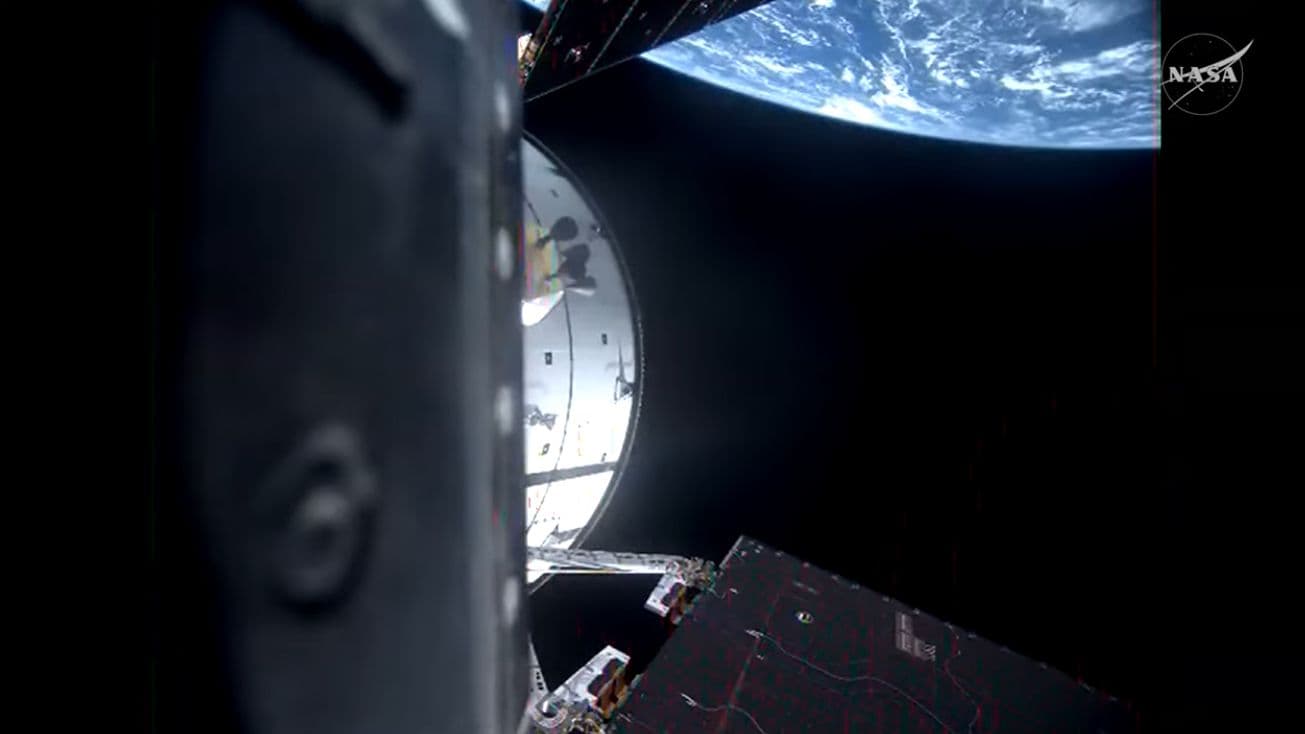
CAPE CANAVERAL, Fla. — Within hours of launching four astronauts on NASA’s historic Artemis 2 mission—the first crewed voyage around the moon in over 50 years—a critical system aboard the Orion spacecraft encountered a mechanical hiccup that quickly became the talk of Mission Control: the $23 million space toilet had jammed.
Key Takeaways: What Went Wrong With Artemis 2’s Moon Toilet and How It Was Fixed
- NASA’s Orion capsule experienced a fan jam in its Universal Waste Management System—its $23 million space toilet—just hours after the Artemis 2 launch on November 15, 2024, forcing astronauts to temporarily rely on backup urine collection bags.
- Mission specialist Christina Koch reported the glitch, and flight controllers walked the crew through a remote repair procedure that restored the toilet to near-full functionality within hours—just in time for the crew to use it comfortably.
- The Artemis 2 toilet was designed to collect both urine and solid waste using airflow and personal funnels, a major upgrade over Apollo-era plastic bags, but it still requires precise engineering due to the challenges of zero gravity and confined space.
- While the malfunction was minor and quickly resolved, it highlighted the ongoing engineering challenges of human spaceflight, especially as NASA prepares for longer-duration lunar missions and eventual Artemis base camps.
- The incident also sparked public interest in the often-overlooked but essential systems required to keep astronauts alive and comfortable during deep-space voyages.
The trouble began shortly after the four Artemis 2 astronauts—Commander Reid Wiseman, Pilot Victor Glover, Mission Specialist Christina Koch, and Canadian astronaut Jeremy Hansen—settled into their seats aboard the Orion spacecraft, which was perched atop NASA’s Space Launch System rocket for a flawless liftoff from Kennedy Space Center’s Launch Complex 39B.
The Universal Waste Management System: A $23 Million Space Bathroom With High Stakes
NASA’s $23 million Universal Waste Management System (UWMS)—dubbed the ‘hygiene bay’—was installed in the Orion capsule specifically to support crew comfort and hygiene during the 10-day Artemis 2 mission. Unlike the Apollo program’s plastic bags, which astronauts used in the 1960s and 1970s, the UWMS is a compact, automated system built into the floor of the Orion cabin. It uses suction and airflow to draw urine and solid waste away from the body into separate collection devices, ensuring hygiene and containment in microgravity.
Why a Functional Space Toilet Is Mission-Critical for Deep-Space Travel
The toilet’s primary purpose extends beyond comfort—it is essential for maintaining crew health and morale during multi-day missions. Prolonged exposure to waste can lead to contamination, odors, and even health risks, such as bacterial growth. NASA engineers have emphasized that reliable waste management systems are just as vital as oxygen supply or temperature control in deep-space habitats.
Blaine Brown, Lockheed Martin’s director of Orion spacecraft mechanical systems, told Space.com in a pre-launch interview, *'That's absolutely an important component on this ship. You can call it a luxury. Some call it a necessity.'* The UWMS was first tested on the International Space Station (ISS) before being adapted for Orion’s smaller interior, which, despite being larger than Apollo capsules, has been compared in size to two SUVs—hardly spacious when considering the needs of four adults.
How the Toilet Malfunction Unfolded: From Fan Jam to Quick Fix
Just hours into the Artemis 2 flight, mission specialist Christina Koch reported an issue with the toilet’s fan, which is responsible for moving air and waste into the collection system. According to NASA spokesperson Gary Jordan, the malfunction appeared to stem from a controller issue. Jordan explained during live mission commentary, *'The toilet fan is reported to be jammed.'*
Contingency Measures: Backup Bags and Urine Dumping
With the toilet’s urine collection temporarily offline, the crew had to rely on Collapsible Contingency Urinals (CCUs)—small, portable bags with personal funnels that astronauts use to collect urine. Koch reported during the flight that one of these CCUs had already filled up and needed to be emptied overboard at the optimal time to avoid contamination. Mission Control provided precise timing instructions to minimize risks associated with venting waste into space.
NASA’s Capcom Amy Dill radioed Koch with guidance: *'We do recommend letting the system get to operating speed before donating fluid, and then letting it run a little bit after donation.'* Koch responded with relief: *'We are cheers all around, and we will do that.'*
“The one place that we can go on our mission where we can feel like we're alone for a moment.” — Jeremy Hansen, Artemis 2 mission specialist, Canadian Space Agency, describing the Orion hygiene bay in a pre-flight video overview.
From Apollo’s Plastic Bags to Artemis’s Space Toilet: A Giant Leap in Space Hygiene
The Artemis 2 toilet represents a significant technological leap from the Apollo era, when astronauts had no dedicated bathroom. During the Apollo 11 mission in 1969, astronauts Neil Armstrong and Buzz Aldrin used plastic bags taped to their buttocks to collect waste, then stored solid waste onboard and vented urine overboard—a process that was uncomfortable, unhygienic, and psychologically taxing. Apollo 16 astronaut John Young famously quipped, *'We had a urine collection device, but it didn’t work very well. It leaked.'*
NASA’s shift to the UWMS system reflects broader advancements in human spaceflight, including the need for long-duration missions under the Artemis program, which aims to return astronauts to the moon by 2026 and establish a sustainable lunar base by 2032. The UWMS is also being tested on the ISS, where astronauts have praised its improved suction and odor control compared to earlier systems.
Engineering Challenges of Zero Gravity: Why Space Toilets Are So Complex
Designing a toilet for space is no small feat. In microgravity, fluids and solids do not fall—they float. The UWMS uses a fan-driven suction system to pull waste away from the body and into collection containers. Urine is routed to a tank, while solid waste is compacted and stored. The system also includes foot restraints to help astronauts stay in place, as even small movements can disrupt the process.
Privacy in a Crowded Spacecraft
Despite its compact size—comparable to a commercial airplane bathroom—the Orion hygiene bay offers a rare moment of solitude for astronauts on a mission where every second is accounted for. Hansen, of the Canadian Space Agency, described it as *'the one place that we can go on our mission where we can feel like we're alone for a moment.'* This psychological benefit is critical for maintaining crew morale during the stress of deep-space travel.
Mission Status: Artemis 2’s Path to the Moon and Beyond
Artemis 2, launched on November 15, 2024, is the first crewed mission of NASA’s Space Launch System (SLS) rocket and the Orion spacecraft. The 10-day flight will take the crew on a lunar flyby, reaching a distance of approximately 4,600 miles from the moon’s surface before returning to Earth. This mission is a precursor to Artemis 3, which aims to land astronauts near the lunar south pole in 2026, and ultimately to the establishment of a permanent Artemis Base Camp by 2032.
NASA’s Artemis program represents a new era of lunar exploration, emphasizing international collaboration (with partners like the Canadian Space Agency), commercial partnerships (e.g., SpaceX’s Starship HLS for the lunar lander), and the goal of sustainable human presence on the moon. The successful resolution of the toilet issue underscores the program’s emphasis on addressing even the smallest but most critical systems before pushing further into the solar system.
What’s Next for Orion’s Hygiene Systems?
While the Artemis 2 toilet malfunction was minor and quickly resolved, it serves as a reminder of the engineering challenges that remain as NASA prepares for longer missions. Future iterations of the UWMS are expected to include improvements in durability, ease of repair, and even potential upgrades for lunar surface habitats. NASA is also exploring advanced concepts like closed-loop systems that recycle urine into drinking water—a critical innovation for missions beyond low Earth orbit.
Lockheed Martin, the prime contractor for Orion, has indicated that data from Artemis 2 will inform improvements for future missions. Brown noted that every component, including the hygiene bay, undergoes rigorous testing. *'We’re learning from every flight,'* he said. *'Even the smallest systems have to work perfectly when you’re millions of miles from home.'*
Public Reaction and the Cultural Significance of Space Toilets
The Artemis 2 toilet glitch quickly became a viral topic, sparking humor and curiosity on social media. Memes about ‘lunar logistics’ and ‘space plumbing’ proliferated, reflecting the public’s fascination with the human side of space exploration. This reaction highlights how even mundane aspects of spaceflight—like using a bathroom—can captivate global audiences when tied to historic missions.
NASA has long recognized the importance of normalizing discussions about life in space. In 2023, the agency released a lighthearted video featuring astronauts demonstrating how to use the ISS toilet, aiming to demystify the process and reduce anxiety for future crews. The Artemis 2 incident, while minor, inadvertently reinforced the message: spaceflight is both extraordinary and deeply human.
Frequently Asked Questions About the Artemis 2 Toilet Glitch
Frequently Asked Questions
- Why does NASA’s Orion spacecraft have a toilet?
- The Universal Waste Management System (UWMS) is essential for maintaining crew hygiene, health, and comfort during multi-day missions. Without a functional toilet, waste could contaminate the spacecraft, create odors, and pose health risks—especially in the confined space of the Orion capsule.
- How did NASA fix the toilet fan jam on Artemis 2?
- Flight controllers at Mission Control walked astronaut Christina Koch through a remote repair procedure, including clearing the jammed fan. The fix was successful within hours, allowing the crew to resume normal usage of the toilet.
- What happens if the toilet fails again on later Artemis missions?
- NASA has multiple backup systems, including Collapsible Contingency Urinals (CCUs) and solid waste collection bags. Engineers are also analyzing data from Artemis 2 to improve the toilet’s reliability for future lunar landings and long-duration missions.