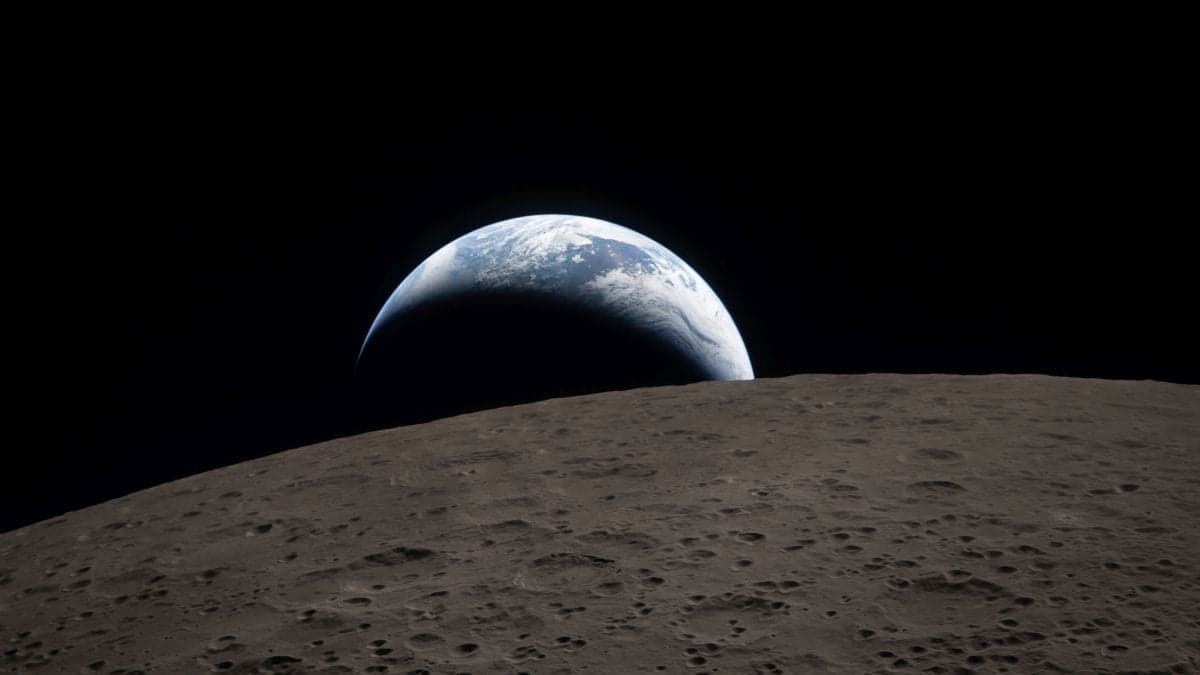
NASA’s landmark Artemis 2 mission, which launched last week carrying the first astronauts bound for the Moon since 1972, has faced an unexpected and deeply human challenge aboard the Orion spacecraft: a malfunctioning space toilet that has forced the crew to improvise waste management solutions in the confined quarters of deep space. Within hours of liftoff, the $23 billion mission’s new Universal Waste Management System (UWMS)—a sophisticated $23 million toilet designed to handle both urine and solid waste in microgravity—began exhibiting critical failures that triggered a cascade of odor-related and mechanical issues. Despite these setbacks, the four-person crew, including NASA astronauts Reid Wiseman, Victor Glover, Christina Koch, and Canadian Space Agency astronaut Jeremy Hansen, demonstrated remarkable resilience as NASA’s Mission Control orchestrated real-time solutions to restore partial functionality to the life-support system.
Why the Artemis 2 Space Toilet Is Mission-Critical and What Went Wrong
The Artemis 2 mission represents humanity’s return to lunar orbit after a 52-year hiatus, marking a pivotal step toward NASA’s goal of establishing a sustainable human presence on the Moon by the end of the decade. At the heart of this ambitious endeavor is the Orion spacecraft, a state-of-the-art crew capsule equipped with advanced life-support systems, including the UWMS—NASA’s latest innovation in space sanitation. Unlike the Apollo-era toilets, which were rudimentary bags that often resulted in waste floating freely inside the cabin, the UWMS is designed to manage waste through a vacuum-assisted system that vents urine into space while collecting solid waste in leak-proof containers for return to Earth. However, just hours into the 10-day journey, the system’s complexity became apparent when it initially accepted only solid waste before suffering a secondary failure involving frozen urine in the vent line. These malfunctions underscore the unforgiving nature of space travel, where even a minor failure in a life-support system can have immediate and potentially hazardous consequences.
The Burning Odor Incident: A Close Call in a Closed Environment
On the third day of the mission, Canadian astronaut Jeremy Hansen reported a disturbing burning odor emanating from the toilet’s hygiene bay—a compact area designed for personal hygiene and waste disposal. Hansen, a former Royal Canadian Air Force fighter pilot making his first spaceflight, described the smell as reminiscent of an overheated heater, a sensation that alarmed the entire crew. 'For me, it was some sort of burning odor, and then it was definitely in the hygiene bay,' Hansen told reporters during a live update. 'And when I opened up the hygiene bay, the rest of the crew could smell it pretty much immediately.' Ground controllers later attributed the odor to insulation around the toilet door overheating, a rare but documented issue in spacecraft systems where temperature fluctuations can cause materials to emit volatile organic compounds.
The Mechanical Failures: From Jams to Frozen Waste Lines
The UWMS’s troubles began shortly after launch when flight director Judd Frieling announced that the toilet was only accepting solid waste due to a pump that hadn’t been primed with sufficient liquid—a critical step to prevent clogs in microgravity. NASA astronaut Christina Koch, serving as the mission’s flight engineer, quickly identified and corrected the issue, temporarily restoring functionality. However, the system failed again over the weekend when urine froze in the vent line, preventing waste from being expelled into space. Mission controllers initially attempted to resolve the issue by rotating the entire Orion capsule to expose the frozen urine to solar radiation, a technique known as 'passive thermal control.' This unconventional approach, reminiscent of Apollo-era troubleshooting, successfully thawed the blockage and allowed the toilet to resume limited operation—though only for solid waste disposal. It wasn’t until several hours later that ground control gave the crew the green light to use the toilet for all intended purposes, prompting Koch’s exuberant response: 'And the crew rejoices!'
How NASA’s Space Toilets Have Evolved—and Why Reliability Is Non-Negotiable
The challenges faced by the Artemis 2 crew highlight the evolution of space toilets since the Apollo missions, when astronauts relied on simple plastic bags with adhesive rings—a system that often resulted in messy and psychologically distressing experiences. The Apollo 10 mission famously documented a 'fecal event' in which waste escaped its bag and floated through the cabin, a moment captured in the crew’s transcripts. Subsequent missions introduced more sophisticated systems, including the Waste Collection System (WCS) used on the Space Shuttle, which combined airflow and suction to manage waste. The International Space Station (ISS) later adopted the Russian-built toilet, known as the Waste and Hygiene Compartment (WHC), which inspired the UWMS now in use on Orion. However, the UWMS represents a significant upgrade, featuring a titanium fan separator, a dual-nozzle urine funnel, and a compact design tailored for long-duration missions. Despite these advancements, the Artemis 2 malfunctions serve as a stark reminder that even the most advanced systems are not infallible in the harsh environment of space.
Contingency Plans: Backup Systems and the Collapsible Contingency Urinal
Recognizing the criticality of waste management in space, NASA engineers designed multiple backup systems for the Artemis 2 mission. Among the most notable is the Collapsible Contingency Urinal (CCU), a flexible, 25-pound device developed by astronaut Donald Pettit during his time aboard the ISS. The CCU features a long, slender tube with a nozzle that allows astronauts to urinate without removing their spacesuits—a feature particularly useful during extravehicular activities (EVAs) or in emergencies. 'The CCU replaces the need for about 25 pounds of diapers,' Pettit noted in a NASA briefing, emphasizing the system’s efficiency in conserving resources. While the CCU was not intended as a primary waste solution for Artemis 2, its presence underscores NASA’s commitment to redundancy in life-support systems, a lesson learned from past missions where failures in critical hardware have threatened crew safety.
The Broader Implications for Artemis and Future Lunar Missions
The toilet malfunctions aboard Artemis 2 are more than just a technical hiccup; they are a microcosm of the challenges NASA faces as it ramps up for the Artemis 3 mission, which aims to land the first woman and person of color on the Moon by 2026. The UWMS is expected to be a cornerstone of lunar surface operations, where astronauts will rely on it during extended stays in the Artemis Base Camp. Already, NASA has identified the need for further testing and potential design modifications to address the issues encountered on Artemis 2. 'We’re going to take a hard look at what happened and see if there are any lessons learned,' said NASA Administrator Bill Nelson during a press conference. 'This is why we test—so we can identify and fix problems before they become critical.' The Artemis program, with an estimated budget of $93 billion, represents the most ambitious human spaceflight endeavor since the Apollo era, and every failure—no matter how mundane—carries implications for the program’s long-term success. The toilet troubles also serve as a reminder of the psychological and physical demands of space travel, where even the most basic human functions become complex engineering challenges.
Expert Reactions: What Spaceflight Engineers Say About the Failures
Aerospace engineers and former astronauts have weighed in on the Artemis 2 toilet issues, offering context on why such seemingly simple systems can become critical failure points in microgravity. Dr. Robert Zubrin, president of the Mars Society and a vocal advocate for human spaceflight, noted that 'the Apollo missions proved that waste management is not just a logistical issue but a morale issue. If you can’t handle basic bodily functions, it becomes nearly impossible to focus on the mission.' Meanwhile, former NASA astronaut Peggy Whitson, who holds the record for the longest cumulative time in space by a woman, emphasized the importance of redundancy. 'You design these systems with multiple fail-safes because in space, there’s no calling a plumber,' Whitson said. 'Every component has to work, or the crew pays the price.' The Artemis 2 team’s ability to troubleshoot and resolve the toilet issues in real time has been widely praised, but it has also reignited debates about the preparedness of NASA’s next-generation systems for the challenges ahead.
- The Artemis 2 mission’s Universal Waste Management System (UWMS) toilet suffered multiple malfunctions, including a burning odor and frozen urine in the vent line.
- NASA ground controllers used unconventional methods, such as rotating the spacecraft to expose the toilet to solar radiation, to resolve the issues.
- The UWMS is a $23 million upgrade from Apollo-era toilets, but its failures highlight the ongoing challenges of long-duration spaceflight.
- Backup systems like the Collapsible Contingency Urinal (CCU) were available but not intended as primary solutions.
- The incident underscores the importance of redundancy and real-time problem-solving in NASA’s Artemis program.
What’s Next for the Artemis 2 Crew and NASA’s Lunar Ambitions
With the toilet now fully operational, the Artemis 2 crew is expected to continue its trajectory around the Moon, collecting data and testing systems critical to future lunar landings. The mission is a precursor to Artemis 3, which will involve a crewed lunar landing, and Artemis 4, which aims to deliver the first components of the Lunar Gateway—a small space station orbiting the Moon. NASA has already begun analyzing the toilet failures to determine whether design changes are needed before the next mission. In the meantime, the Artemis 2 crew’s experience serves as a testament to the resilience of both astronauts and engineers who must adapt to the unpredictable nature of space exploration. As mission specialist Jeremy Hansen noted during a debrief, 'It’s not glamorous, but it’s part of the job. If we can’t handle a toilet, how can we expect to live on the Moon?' The answer, it seems, lies in continued innovation—and a healthy dose of ingenuity.
Frequently Asked Questions About the Artemis 2 Space Toilet Failures
Frequently Asked Questions
- What is the Universal Waste Management System (UWMS) and how does it work?
- The UWMS is NASA’s latest space toilet, designed to handle both urine and solid waste in microgravity using a vacuum-assisted system. It vents urine into space and collects solid waste in leak-proof containers for return to Earth. The system cost $23 million and is an upgrade from the rudimentary Apollo-era toilets.
- How did NASA fix the toilet issues on Artemis 2?
- Ground controllers initially corrected a pump priming issue but later encountered frozen urine in the vent line. They resolved it by rotating the Orion capsule to expose the frozen waste to solar radiation, thawing the blockage. The toilet was later cleared for full use after further testing.
- What backup systems are available if the UWMS fails again?
- NASA equipped the Artemis 2 crew with the Collapsible Contingency Urinal (CCU), a flexible device that replaces diapers for urine collection. While not a primary solution, it provides an alternative for emergency waste management during the mission.