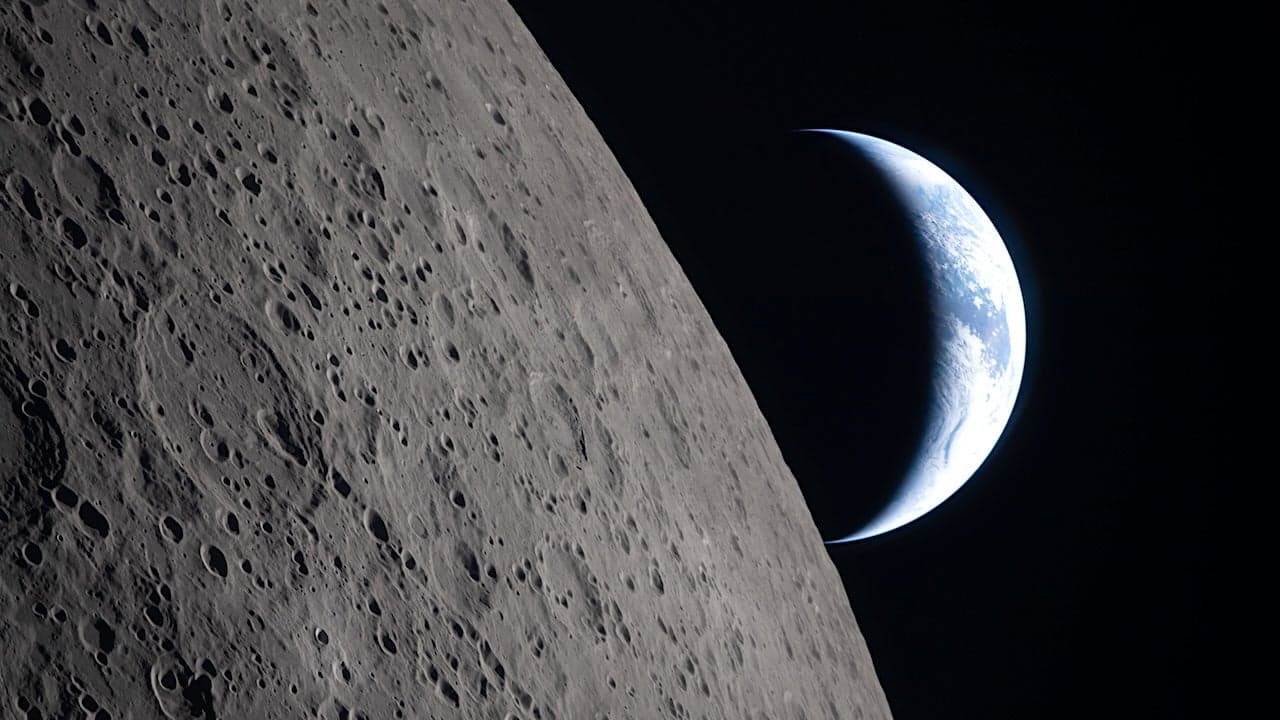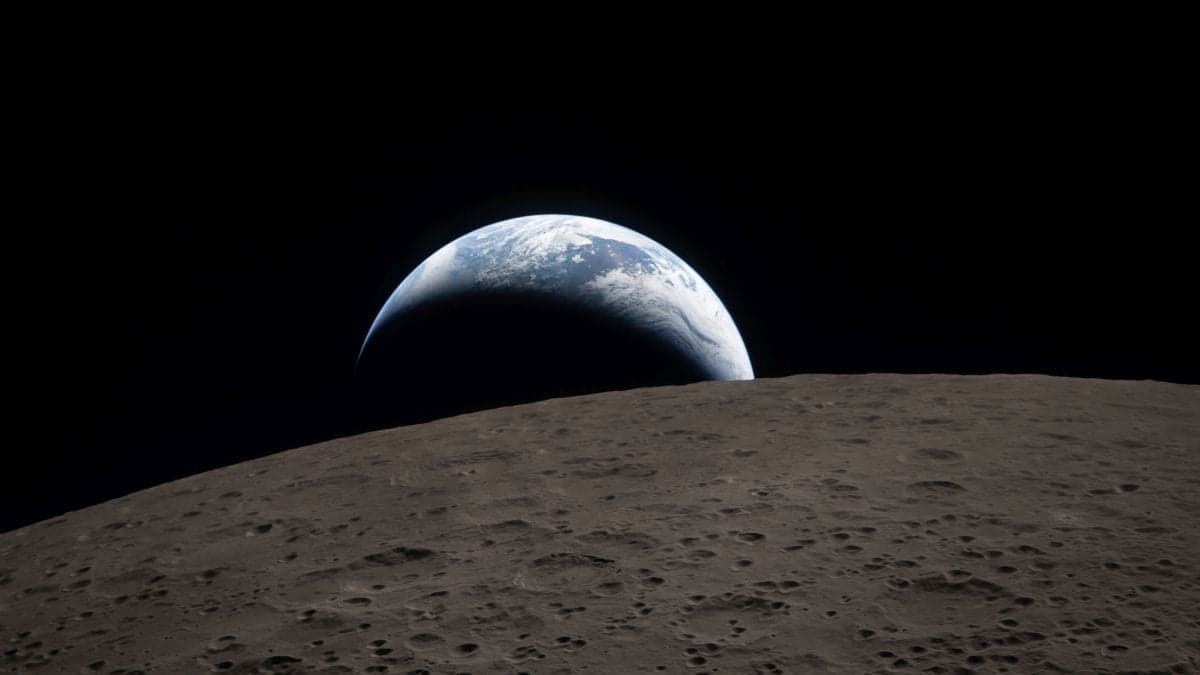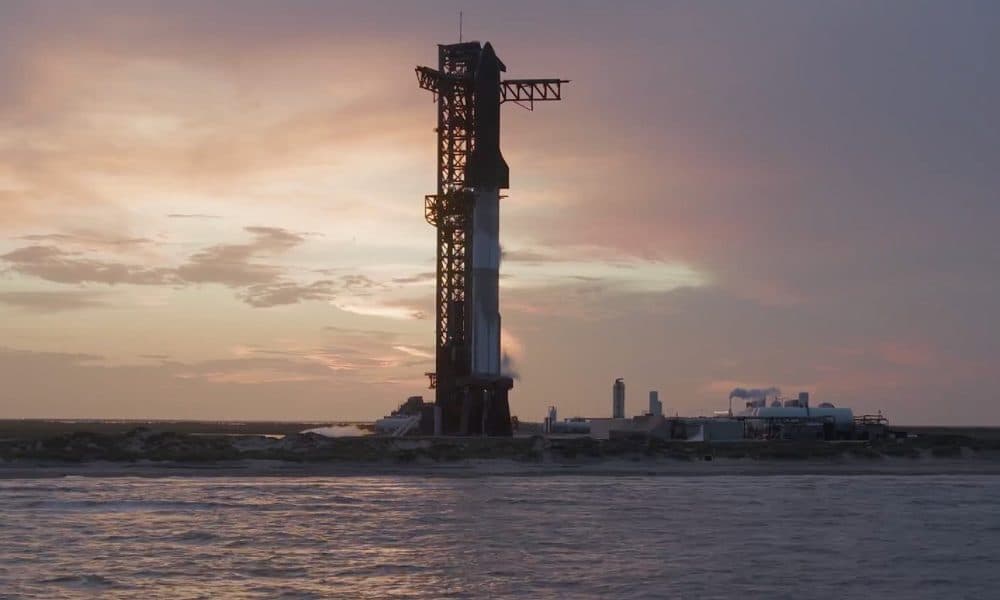
The report noted that several technical milestones still need to be completed before Starship can serve as a crewed lunar lander.
A NASA watchdog report stated that continued development work on SpaceX’s Starship could affect the timeline for the agency’s planned Artemis moon missions. The report noted that several technical milestones still need to be completed before the spacecraft can serve as a crewed lunar lander.
The findings were detailed in a report from NASA’s Office of Inspector General, as noted in a report from Reuters.
NASA selected SpaceX’s Starship in 2021 to serve as the Human Landing System (HLS) for its Artemis lunar program. The vehicle is intended to transport astronauts from lunar orbit to the surface of the Moon and back as part of future Artemis missions.
According to the watchdog report, Starship’s development has experienced roughly two years of schedule delays compared to earlier expectations. Still, NASA is targeting 2028 for the first crewed lunar landing using the Starship lander.
One of the most significant technical milestones for Starship’s lunar missions is in-space refueling.
To support a crewed lunar landing, multiple Starship launches will be required to deliver propellant to orbit. Tanker versions of Starship will transfer fuel to a storage depot spacecraft, which will then refuel the lunar lander.
The report noted that this approach could require more than 10 Starship launches to fully refuel the spacecraft needed for a single lunar landing mission.
NASA officials indicated that demonstrating cryogenic propellant transfer in orbit remains one of the most important technical steps before Starship can be certified for lunar missions.
SpaceX has conducted 11 Starship test flights since 2023 as the company continues developing the fully reusable launch system. A 12th test flight, this time featuring Starship V3, is expected to be held in early April.
Simon is an experienced automotive reporter with a passion for electric cars and clean energy. Fascinated by the world envisioned by Elon Musk, he hopes to make it to Mars (at least as a tourist) someday. For stories or tips--or even to just say a simple hello--send a message to his email, simon@teslarati.com or his handle on X, @ResidentSponge.
Brazil Supreme Court orders Elon Musk and X investigation closed
The decision was issued by Supreme Court Justice Alexandre de Moraes following a recommendation from Brazil’s Prosecutor-General Paulo Gonet.
Gage Skidmore, CC BY-SA 4.0 , via Wikimedia Commons
Brazil’s Supreme Federal Court has ordered the closure of an investigation involving Elon Musk and social media platform X. The inquiry had been pending for about two years and examined whether the platform was used to coordinate attacks against members of the judiciary.
According to a report from Agencia Brasil, the investigation conducted by the Federal Police did not find evidence that X deliberately attempted to attack the judiciary or circumvent court orders.
X NEWS: Yesterday, Brazil's Supreme Federal Court closed the two-year inquiry into Elon Musk and X after an irrevocable recommendation from Prosecutor General Paulo Gonet. No deliberate obstruction. No criminal organization. No fraudulent intent found. Minister Alexandre de… pic.twitter.com/Gk8yl2mnBd— S.E. Robinson, Jr. (@SERobinsonJr) March 11, 2026
No deliberate obstruction. No criminal organization. No fraudulent intent found.
Minister Alexandre de… pic.twitter.com/Gk8yl2mnBd— S.E. Robinson, Jr. (@SERobinsonJr) March 11, 2026
Prosecutor-General Paulo Gonet concluded that the irregularities identified during the probe did not indicate fraudulent intent.
Justice Moraes accepted the prosecutor’s recommendation and ruled that the investigation should be closed. Under the ruling, the case will remain closed unless new evidence emerges.
The inquiry stemmed from concerns that content on X may have enabled online attacks against Supreme Court justices or violated rulings requiring the suspension of certain accounts under investigation.
Justice Moraes had previously taken several enforcement actions related to the platform during the broader dispute involving social media regulation in Brazil.
These included ordering a nationwide block of the platform, freezing Starlink accounts, and imposing fines on X totaling about $5.2 million. Authorities also froze financial assets linked to X and SpaceX through Starlink to collect unpaid penalties and seized roughly $3.3 million from the companies’ accounts.
Moraes also imposed daily fines of up to R$5 million, about $920,000, for alleged evasion of the X ban and established penalties of R$50,000 per day for VPN users who attempted to bypass the restriction.
Brazil remains an important market for X, with roughly 17 million users, making it one of the platform’s larger user bases globally.
The country is also a major market for Starlink, SpaceX’s satellite internet service, which has surpassed one million subscribers in Brazil.
FCC chair criticizes Amazon over opposition to SpaceX satellite plan
Carr made the remarks in a post on social media platform X.
U.S. Federal Communications Commission (FCC) Chairman Brendan Carr criticized Amazon after the company opposed SpaceX’s proposal to launch a large satellite constellation that could function as an orbital data center network.
Amazon recently urged the FCC to reject SpaceX’s application to deploy a constellation of up to 1 million low Earth orbit satellites that could serve as artificial intelligence data centers in space.
The company described the proposal as a “lofty ambition rather than a real plan,” arguing that SpaceX had not provided sufficient details about how the system would operate.
Amazon should focus on the fact that it will fall roughly 1,000 satellites short of meeting its upcoming deployment milestone, rather than spending their time and resources filing petitions against companies that are putting thousands of satellites in orbit. https://t.co/90Vn20Fq1R— Brendan Carr (@BrendanCarrFCC) March 11, 2026
Carr responded by pointing to Amazon’s own satellite deployment progress.
“Amazon should focus on the fact that it will fall roughly 1,000 satellites short of meeting its upcoming deployment milestone, rather than spending their time and resources filing petitions against companies that are putting thousands of satellites in orbit,” Carr wrote on X.
Amazon has declined to comment on the statement.
Amazon has been working to deploy its Project Kuiper satellite network, which is intended to compete with SpaceX’s Starlink service. The company has invested more than $10 billion in the program and has launched more than 200 satellites since April of last year.
Amazon has also asked the FCC for a 24-month extension, until July 2028, to meet a requirement to deploy roughly 1,600 satellites by July 2026, as noted in a CNBC report.
SpaceX’s Starlink network currently has nearly 10,000 satellites in orbit and serves roughly 10 million customers. The FCC has also authorized SpaceX to deploy 7,500 additional satellites as the company continues expanding its global satellite internet network.