Monday, March 2: A pre-eclipse moon and Regulus (after dark)
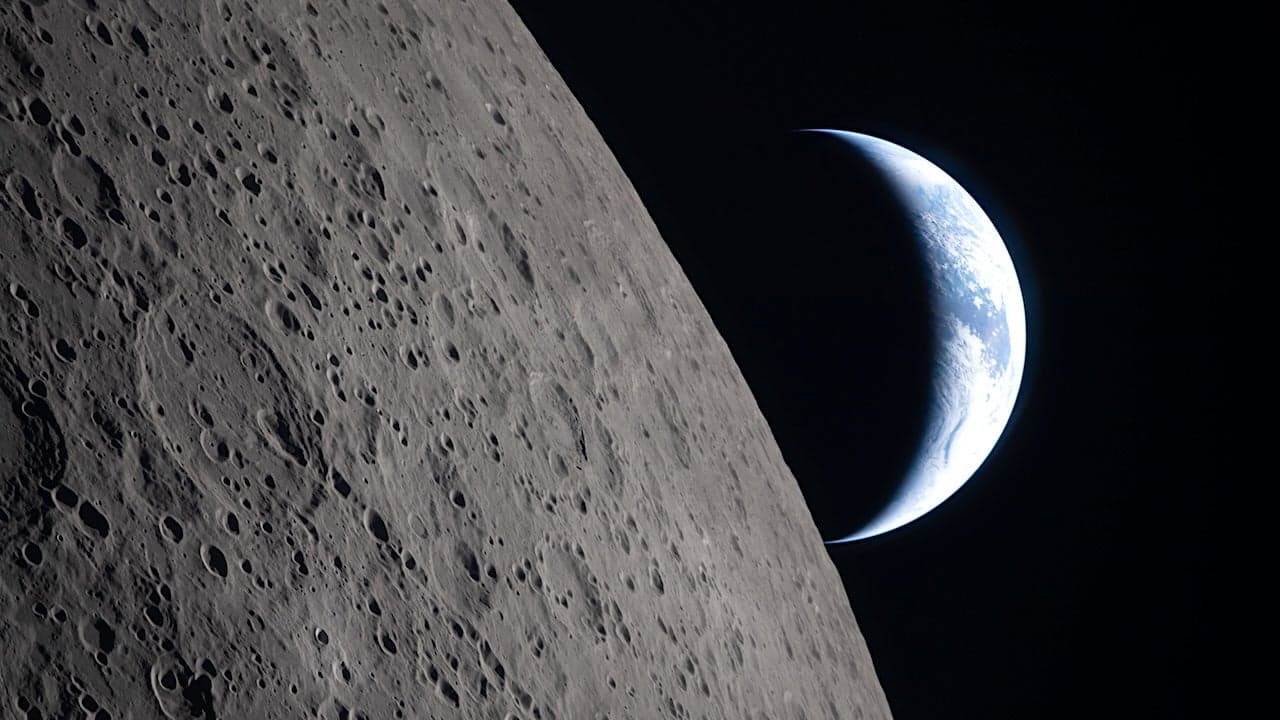
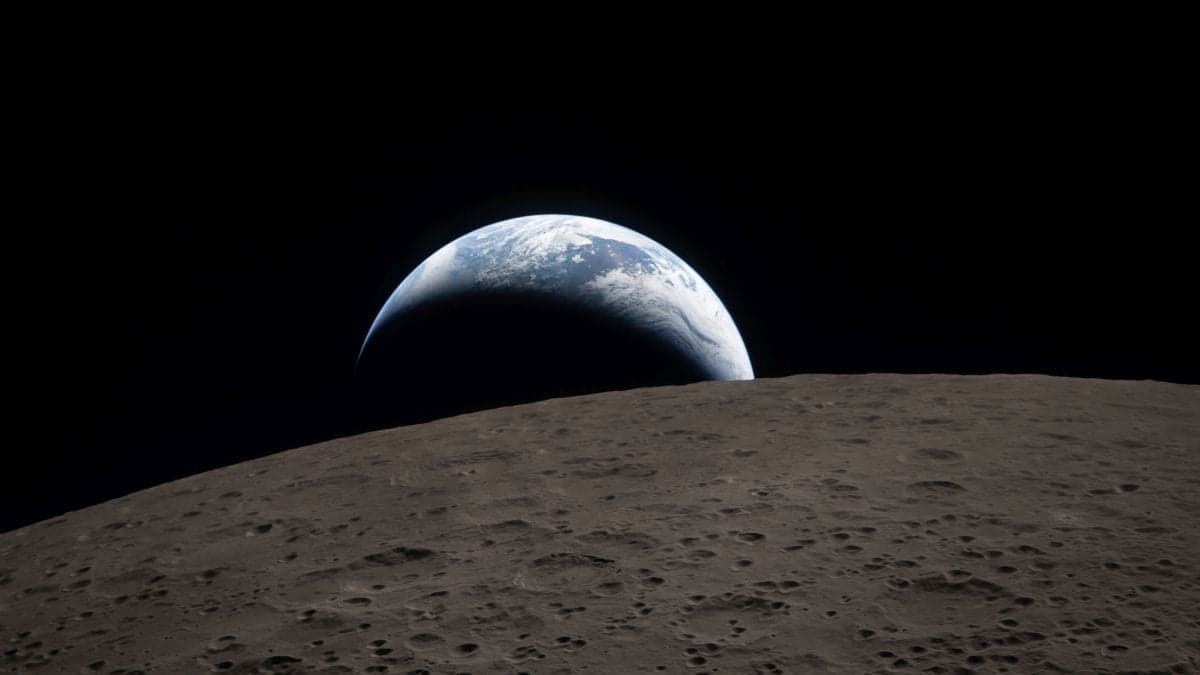
Now 99.8%-illuminated, the waxing gibbous moon is mere hours from being full, around which time it will slip into the deepest part of Earth's shadow, triggering a spectacular total lunar eclipse. As dark sets in after sunset, you'll notice not only that the brightness of the moon increases, but also that a star will brighten above it. That's Regulus, which it passed close to yesterday, while the bright planet Jupiter will also be visible glowing high above in the southeast among the stars of Gemini. It's a perfect rehearsal for tomorrow morning's total lunar eclipse. — Jamie Carter
Tuesday, March 3: A total lunar eclipse (before dawn)
In the early hours before dawn, a total lunar eclipse will turn the full "Worm Moon" into a "blood moon." Europe won't see anything of the event, while only the western half of North America (as well as the Pacific region, Australia, New Zealand and east Asia) will see the entire 5 hours, 38 minutes-long event between 08:44 and 14:22 UTC. The highlight will be a spectacular 58-minute-long totality from 11:04 to 12:02 UTC. That translates to the following local times in North America:
Eastern time: 6:04-7:02 a.m. EST on March 3, 2026 (the moon will set during totality in the Eastern time zone)
Central time: 5:04-6:02 a.m. CST on March 3, 2026
Mountain time: 4:04-5:02 a.m. MST on March 3, 2026
Pacific time: 3:04-4:02 a.m PST on March 3, 2026
Alaska time: 2:04-3:02 a.m. AKST on March 3, 2026
Hawaii time: 1:04-2:02 a.m. HST on March 3, 2026
The moon will be high in the southwest during totality, while farther east it hangs low in the west. No eye protection is needed — just a clear sky, warm clothes and patience as one of skywatching's most glorious events occurs for the last time over North America until June 25, 2029. — Jamie Carter
Stay up to date with the latest eclipse news and images with our total lunar eclipse live blog and discover how to watch the March 3 blood moon eclipse online, for free with these handy livestreams.
Night sky for tonight and the weekend
Friday, Feb. 27: A tail of lights (after dark)
Now 87%-illuminated, the waxing gibbous moon will tonight form a bright trio with Castor and Pollux in Gemini. Together with bright Jupiter nearby, they'll form a pattern of stars akin to the tail of Scorpius, the Scorpion, a summer constellation currently visible just before dawn. As you look at Pollux and Castor, consider what different stars they are to our sun; Pollux is one star with a planet, called Thestias, in orbit, while Castor is actually three large stars all orbiting each other, with each a binary, making it a bizarre six-star system. — Jamie Carter
Saturday, Feb. 28: A final 'planet parade' (after dark)
Look west just after sunset for a trio of planets that's on the verge of breaking up. The most obvious by now will be Venus, blazing away at magnitude -3.9 as it climbs higher to dominate much of 2026's post-sunset night sky. To its right will be Mercury, shining at magnitude 1.95 — 200 times dimmer than Venus and now slinking back into the sun's glare. Above, both will be Saturn, at magnitude 1, about 90 times dimmer than Venus, and also heading for the sun's glare. — Jamie Carter
Sunday, Mar. 1: A pre-eclipse moon and Regulus (after dark)
Tonight, the moon is almost full and poised for a significant event. Easily visible in the hour before sunset, the 97%-illuminated orb will get brighter as twilight gets hold, just as Regulus, Leo's brightest star, emerges below it. From North America this evening, the moon will get closer to Regulus as the night wears on. It's a perfect time to familiarize yourself with the scene — and get yourself a good observing position — because in just a couple of nights, in the early hours of Tuesday, Mar. 3, 2026 (3:44 to 9:22 a.m. EST), the same moon will turn coppery-red during a dramatic total lunar eclipse as the Worm Moon slides through Earth's shadow. — Jamie Carter
Stay up to date with the latest blood moon action with our total lunar eclipse live blog.
Thursday, Feb. 26: A celestial rectangle (after dark)
This evening, Gemini hosts a slow-motion rendezvous. After dark, look high in the southeast to find Jupiter shining brightly in Gemini, with the 72%-illuminated waxing gibbous moon just above. Close by will be Castor and Pollux, the two brightest stars — and "twins" — in Gemini, together forming a loose rectangle shape. Blue-white Castor and yellow-ish Pollux are 51 and 34 light-years from the sun, respectively, making them close neighbours. — Jamie Carter
Wednesday, Feb. 25: Moon in the bull’s horns (after dark)
The waxing gibbous moon travels through the constellation Taurus, the bull, high in the southern sky tonight, posing between the bright stars Elnath (translation: "the butting one") and Zeta Tauri, which mark the tips of the horns of the celestial animal.
It will be roughly halfway between bright planet Jupiter, still blazing away at magnitude -2.4, and the Pleiades star cluster (M45). Look below the line from the Pleiades to the moon for the red star Aldebaran, the eye of the bull, itself set against a loose "V" shape of stars called the Hyades, one of the closest star clusters to the solar system at just 151 light-years. For comparison, the Pleiades is 444 light-years distant. — Jamie Carter
Tuesday, Feb. 24: First-quarter perigee moon (after dark)
The moon reaches its first quarter at 2:28 a.m. EST (0728 GMT) today and by evening it stands high in the southern sky, with its right side fully lit by the sun. Along the terminator — the dividing line between lunar day and night — sunlight casts long shadows from crater rims and mountain ranges, giving the moon's edge a ragged look. Later in the day, the moon also passes perigee, its closest point to Earth this month. That makes it a slightly larger and brighter first-quarter moon than it is typical. — Jamie Carter
Monday, Feb. 23: Moon visits the Pleiades (after dark)
This evening, the nearly first-quarter moon pays a close visit to the Pleiades star cluster (also called M45) in Taurus.
As darkness falls, look high in the south. You'll see the bright half-lit moon with a small, hazy patch of light nearby — that's the Pleiades. As it gets dark in North America, there will be barely more than a degree apart — the width of a thumb held outstretched against the night sky. The moon's glare will wash out the fainter stars, but the main "mini-dipper" pattern of the Pleiades should still be visible. — Jamie Carter
Friday, Feb. 20: Mercury at its evening best (after sunset)
If you've never knowingly seen Mercury, tonight is an excellent opportunity. Around 45-60 minutes after sunset, face west-southwest and look for the moon — a slender crescent now about 14%-illuminated. Now drop your gaze down and slightly right to find Saturn, then Mercury.
The innermost planet reaches its highest altitude in its current evening apparition this weekend, soon after passing the point of greatest elongation east — when the rocky world is at its greatest apparent distance from the sun — on Feb. 19. An unobstructed horizon is key — as are clear air and clear skies — but there's something particularly satisfying about picking out a world that spends most of its life lost in the sun's glare. — Jamie Carter
Saturday, Feb. 21: Winter constellations under a young moon (after dark)
The now 22%-illuminated waxing crescent moon is gone from the night sky about 3 hours after dark, leaving much of the night free of moonlight. Use it to revisit the winter showpieces: Orion riding high in the south, with Sirius and Canis Major below, Procyon to the left and Aldebaran and Taurus to the right. Jupiter still gleams high in Gemini. Once the moon sets, step away from city lights if you can and let your eyes adapt for 20 minutes; under dark conditions, you'll see the Milky Way threading between these constellations as a soft, luminous band. — Jamie Carter
Sunday, Feb. 22: The winter triangle takes flight (after dark)
Shortly after nightfall, the Winter Triangle is perfectly placed. Find Orion in the south, then follow the thre stars of his famous belt down and left to Sirius in Canis Major — the brightest star in the night sky. Now, look up and left to Procyon in Canis Minor, and then up and right to reddish Betelgeuse in Orion's shoulder. Those three stars form a large, almost equilateral triangle. Above Procyon is bright Jupiter, which threatens to make the Winter Triangle more of a Winter Kite shape this year. Tonight, a 32% waxing crescent moon glows in the west, but it sets midway through the evening. — Jamie Carter
Thursday, Feb. 19: Crescent moon and a ‘planet parade’ (after sunset)
Dusk this evening features a subtle planetary tableau. Look above the west-southwestern horizon about 45-90 minutes after sunset. A 10%-illuminated waxing crescent moon hangs in twilight, with Saturn about 3 degrees to its lower left. Below them, Mercury is at greatest eastern elongation from the sun — about 18 degrees, or approximately close to the width of two clenched fists held at arm's length — and near its highest altitude in the evening sky for this apparition. From mid-northern latitudes, it stands roughly 10 degrees above the horizon 45 minutes after sunset, a small but bright point below the moon-Saturn pair. If you're quick, you may also catch Venus below them, close to the horizon. — Jamie Carter