A volcano in southeastern Iran has nudged upward by about 3.5 inches (9 centimeters) in 10 months. This might sound like a small rise but it has big significance.
A new study used satellite data to spot the change and argues that pressure is building near the summit.
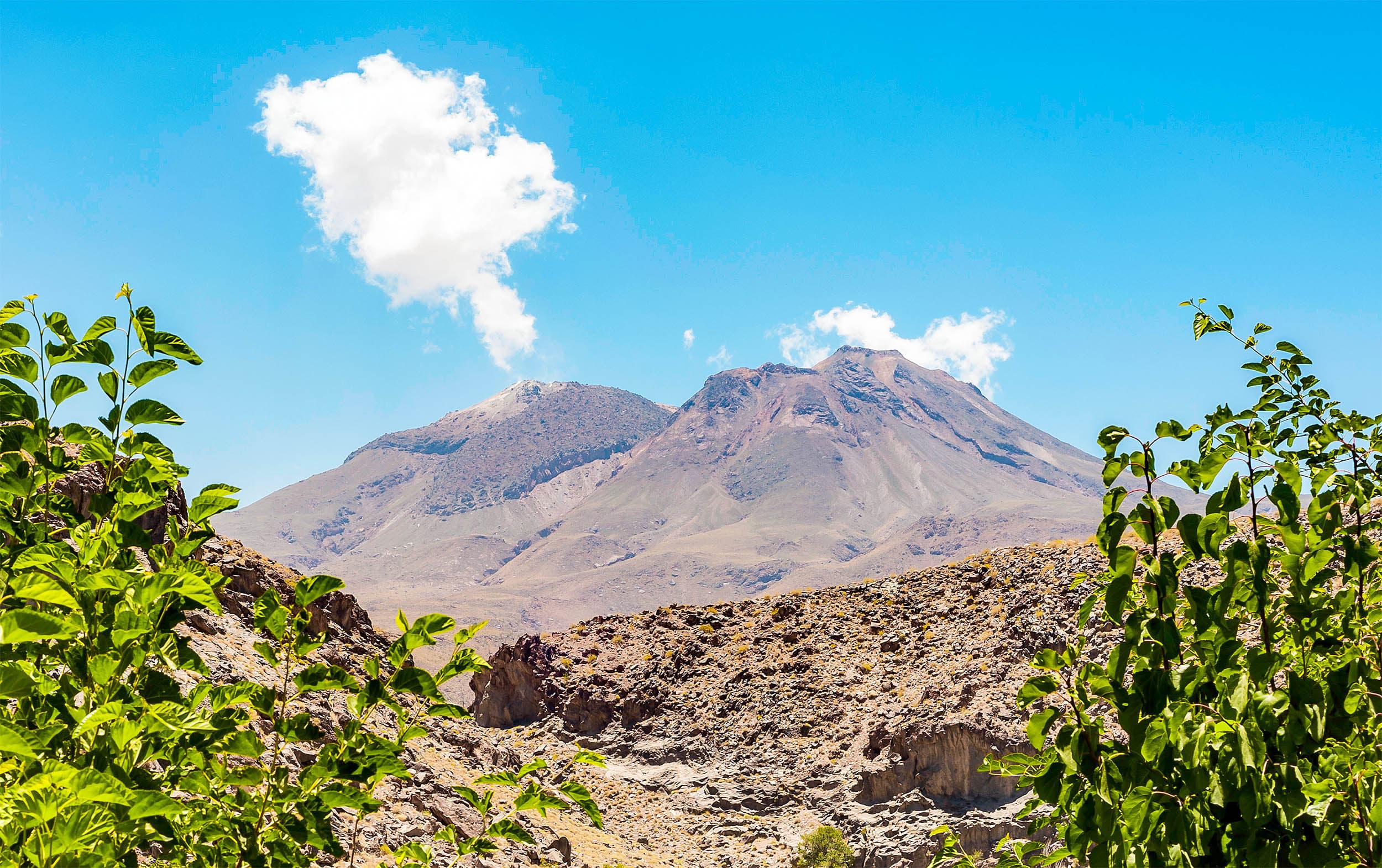
The volcano is Taftan. It has not erupted in human history, but the fresh signal says the system is stirring and needs eyes on it.
Scientists tracked the ground with InSAR, a radar method that measures ground motion from space. They used Sentinel-1 satellites that work day and night and can see through clouds.
The Taftan volcano uplift lasted a little over ten months and was centered near the summit. The rise has not fallen back, which suggests the pressure has not yet bled off.
Pablo J. González from the Institute of Natural Products and Agrobiology’s Spanish National Research Council (IPNA), is the senior author guiding the work.
Taftan is remote and lacks on-the-ground instruments such as continuous GPS receivers. That makes space radar the best way to keep tabs on a mountain that few people visit but many towns still flank.
The team modeled a source only 1,600 to 2,070 feet (490 to 630 meters) below the surface. That shallow level suggests the location of gases that move and collect inside a hydrothermal system where hot water and gas circulate under a volcano.
They tested common culprits and ruled out heavy rain and nearby earthquakes as triggers. The signal rose and slowed without an outside influence, which fits with internal processes acting inside the edifice.
Deeper down inside the Taftan volcano lies the magma reservoir, a large body of molten rock underground.
It sits more than 2 miles (3.2 kilometers) down, so the current push likely comes from gases above it rather than fresh magma reaching the surface.
The pattern looks like a slow squeeze. First the ground rose, then it steadied as new cracks opened and some gas found exit paths.
Extinct volcano labels can mislead
Taftan volcano is a 12,927 foot (3,940 meter) stratovolcano, a steep volcano that is built of layers of lava and ash. It vents through summit fumaroles volcanic vents that emit gas which shows the system still moves.
Eruption records for the past 10,000 years are scant, and that is part of the problem. Silence on paper does not equal a dead system in rock and gas.
Volcanoes can idle for long stretches and then change in months. That is why scientists dont only consider ash plumes as early warning flags. They also pay attention to gas, heat, and ground motion.
Labels help, but measurements matter more. The new deformation is a measurement, not a label.
One likely driver is gas building up in tight rocks and fractures. As gas pressure grows, the rock lifts a little and the summit area responds first.
Another possibility is a small pulse of melt that released volatiles gases that escape from magma into the shallower plumbing deep down. Those gases percolate upward and pump pressure into pores.
Both ideas fit the shallow source and the timing. The data also show that, as gas found pathways, the pace of uplift eased.
None of this demands an eruption. It does demand attention, because pressure needs a route out and the route chosen matters.
The main near-term hazards are not lava flows. They are phreatic blasts steam-driven explosions that can happen when hot fluids flash to vapor near the surface.
Gas bursts can sting eyes, lungs, and crops downwind for a short time. The city of Khash sits about 31 miles (50 kilometers) away, close enough to smell sulfur when the wind lines up.
It has to release somehow in the future, either violently or more quietly. This study doesnt aim to produce panic in the people. Its a wake-up call to the authorities in the region in Iran to designate some resources to look at this, González explained.
Those are plain warnings, not predictions. The message is to prepare now, while the mountain is whispering, not shouting.