In a discovery that upends long-held assumptions about the dawn of complex life, an international team of paleontologists has uncovered a fossil treasure trove in southwest China that rewrites the timeline of animal evolution. The findings, published in the journal Science, reveal that many of Earth’s most advanced animal groups—including ancestors of vertebrates like humans and starfish relatives—had already emerged by the end of the Ediacaran Period, roughly 554 to 539 million years ago. This predates the iconic Cambrian explosion, the rapid diversification of life traditionally considered the starting point of modern animal groups, by at least 4 million years.
- Fossils from China’s Jiangchuan Biota push back the origins of complex animals by 4 million years, before the Cambrian explosion.
- Researchers identified fossils of deuterostomes—the group including vertebrates—dating to the Ediacaran Period for the first time.
- The discovery includes relatives of starfish, acorn worms, and other bilaterian animals with complex anatomical features.
- Exceptional fossil preservation as carbonaceous films reveals details like feeding structures and locomotory organs.
- The findings resolve a decades-old evolutionary puzzle by providing physical evidence for molecular and trace fossil suggestions of earlier diversification.
The Jiangchuan Biota: A Window into Earth’s Pre-Cambrian World
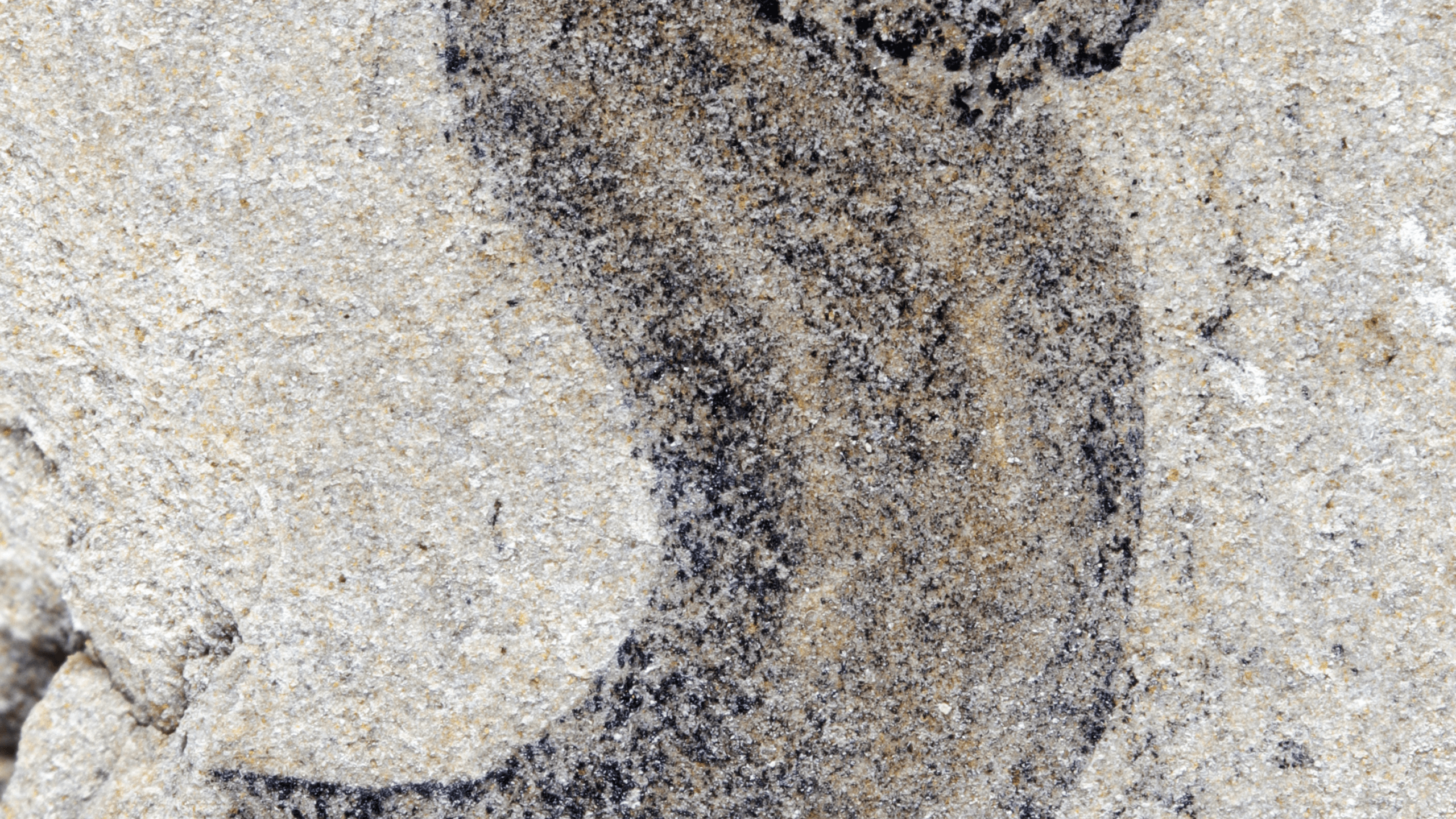
Nestled in the rugged hills of Yunnan Province, southwest China, the Jiangchuan Biota has emerged as one of the most significant fossil sites in the study of early animal life. Unlike the majority of Ediacaran fossil beds—where organisms are typically preserved as faint impressions on sandstone—the Jiangchuan Biota has yielded its secrets in the form of exquisitely detailed carbonaceous films. This mode of preservation, more commonly associated with the famed Burgess Shale in Canada, has allowed scientists to observe anatomical structures such as guts, feeding appendages, and even locomotory organs in unprecedented clarity.
Why Carbonaceous Preservation Matters for Paleontology
Most Ediacaran fossil sites preserve organisms as flattened impressions, often blurring finer anatomical details. The carbonaceous compression found in Jiangchuan, however, captures organic material in a way that retains three-dimensional complexity. This preservation method is rare in rocks of this age—approximately 550 million years old—making the Jiangchuan Biota an anomaly and a scientific goldmine. According to Associate Professor Ross Anderson of Oxford University’s Museum of Natural History, the lack of similar fossils elsewhere may not be due to biological absence, but rather the absence of the right preservation conditions. 'Our results indicate that the apparent absence of these complex animal groups from other Ediacaran sites may reflect differences in preservation rather than true biological absence,' Anderson explained.
Deuterostomes in the Ediacaran: Rewriting the Tree of Life
At the heart of this discovery lies the identification of fossils belonging to the deuterostomes, a major branch of the animal kingdom that includes vertebrates (animals with backbones) and their closest relatives. Until now, the earliest definitive deuterostome fossils dated to the Cambrian Period, around 535 million years ago. The new fossils from Jiangchuan, however, extend this lineage back into the Ediacaran, between 554 and 539 million years ago.
Ancestors of Starfish and Acorn Worms
Among the most striking finds are fossils that represent the oldest known relatives of modern starfish and their closest kin, the acorn worms (Ambulacraria). These ancient creatures exhibited a distinctive U-shaped body plan, anchored to the seafloor by a stalk, with a pair of tentacle-like feeding structures extending from their heads. Their anatomy provides a direct link to living echinoderms (the phylum that includes starfish, sea urchins, and sand dollars) and hemichordates (such as acorn worms), suggesting a shared evolutionary heritage that stretches back over half a billion years.
The Implications for Vertebrate Origins
The presence of deuterostome fossils in the Ediacaran also implies that chordates—the group that includes all animals with a notochord or backbone—must have existed at this time. While no direct vertebrate fossils have been found in Jiangchuan, the discovery of deuterostome ancestors strongly suggests that the genetic and developmental pathways leading to vertebrates were already in place. 'The presence of these ambulacrarians in the Ediacaran period is really exciting,' said Dr. Frankie Dunn of Oxford University. 'We have already found fossils which are distant relatives of starfish and sea cucumbers and are looking for more. The discovery of ambulacrarian fossils in the Jiangchuan biota also means that the chordates—animals with a backbone—must also have existed at this time.'
A Transition Between Eras: The Ediacaran and the Cambrian
The late Ediacaran Period, which spanned from roughly 635 to 541 million years ago, was a time of profound biological experimentation. Most Ediacaran organisms were simple, soft-bodied creatures, and the era lacked the rapid diversification seen in the subsequent Cambrian Period. This transition, known as the Cambrian explosion, has long been considered the starting point for the modern animal phyla we recognize today. However, the Jiangchuan Biota fossils suggest that the groundwork for this explosion was laid much earlier.
From 'Weird' Ediacaran Forms to Recognizable Animal Groups
The fossils uncovered in Jiangchuan present a mix of familiar and completely novel forms. Some resemble modern bilaterian animals—those with bilateral symmetry, such as worms—while others exhibit anatomical features that defy easy classification. One particularly unusual specimen, described by researchers as resembling the sandworm from Frank Herbert’s *Dune*, features a holdfast for anchoring to the seafloor and a retractable feeding structure. 'When we first saw these specimens, it was clear that this was something totally unique and unexpected,' said Associate Professor Luke Parry of Oxford University. 'This discovery is extremely exciting because it reveals a transitional community: the weird world of the Ediacaran giving way to the Cambrian, the following time period where the animals are much easier to place in groups that are alive today.'
Resolving a Decades-Old Paleontological Puzzle
For years, molecular studies and trace fossils (such as burrows and tracks) have hinted that complex animal lineages diversified well before the Cambrian explosion. However, physical evidence—fossils—has been conspicuously absent from the Ediacaran record. The Jiangchuan Biota changes that. The discovery provides the long-sought 'smoking gun' that confirms these earlier inferences. 'The new fossils provide the most compelling evidence for the presence of diverse bilaterian animals at the end of the Ediacaran,' said Professor Feng Tang of the Chinese Academy of Geological Science, whose earlier work on the site inspired the decade-long search that culminated in this breakthrough.
The Decade-Long Hunt for Ediacaran Animal Fossils
The roots of this discovery trace back nearly ten years to the persistent fieldwork of researchers at Yunnan University, led by Professor Peiyun Cong and Associate Professor Fan Wei. Despite the region’s reputation for fossil-bearing rocks, previous excavations had only yielded algae and microbial remains. The breakthrough came when the team identified specific geological conditions in eastern Yunnan that allowed for the exceptional preservation of animal tissues as carbonaceous films. 'After years of fieldwork, we finally found several sites with the right conditions where animal fossils are preserved together with the abundant algae,' Associate Professor Fan explained. This persistence paid off, culminating in the unearthing of more than 700 fossil specimens that are now reshaping our understanding of early animal life.
Key Takeaways: What This Discovery Means for Science
- The Jiangchuan Biota fossils push back the origin of complex animals—including vertebrates and starfish relatives—by at least 4 million years, into the Ediacaran Period (554–539 million years ago).
- Deuterostome fossils discovered in Jiangchuan are the oldest known, indicating that key animal lineages evolved earlier than the Cambrian explosion.
- Exceptional carbonaceous preservation preserved fine anatomical details, revealing complex feeding and locomotory structures not seen in other Ediacaran fossils.
- The discovery resolves a long-standing discrepancy between molecular data (suggesting early diversification) and the fossil record (lacking Ediacaran evidence).
- The findings challenge the traditional view of the Cambrian explosion as the sole origin point of modern animal groups.
The Broader Implications for Evolutionary Biology
Beyond rewriting the timeline of animal evolution, the Jiangchuan Biota discovery has profound implications for our understanding of developmental biology and genetics. The presence of bilaterian animals—those with left-right symmetry—so early in Earth’s history suggests that the genetic toolkit for complex body plans was assembled much earlier than previously thought. This raises new questions about the environmental and ecological triggers that allowed these animals to diversify. Were rising oxygen levels in the oceans a key factor? Did predation pressure drive the evolution of more complex body plans? The fossils themselves cannot answer these questions directly, but they provide a crucial framework for future research.
What’s Next: Exploring the Jiangchuan Biota and Beyond
The discovery of the Jiangchuan Biota is only the beginning. Researchers are now focused on further excavating the site to uncover additional fossils that may bridge the gap between Ediacaran organisms and those of the Cambrian. There is also renewed interest in revisiting other Ediacaran fossil sites around the world, particularly in Namibia, Australia, and Newfoundland, to search for similar carbonaceous preservation conditions. 'We have already found fossils which are distant relatives of starfish and sea cucumbers and are looking for more,' Dr. Dunn noted. The goal is not just to find more specimens, but to reconstruct the ecological communities of the Ediacaran and understand how they set the stage for the Cambrian explosion.
Expert Reactions: A Paradigm Shift in Paleontology
“This is a game-changer. The Jiangchuan Biota doesn’t just fill a gap—it blows the gap wide open. We’re looking at the roots of the entire animal kingdom here, not just a few stray branches.”
“For decades, we’ve been puzzled by the mismatch between molecular clocks and the fossil record. Now we have physical proof that complex animals were evolving long before the Cambrian. This changes everything about how we think about the origin of animals.” — Dr. Gaorong Li, lead author and now at Oxford University’s Museum of Natural History
How These Fossils Compare to Other Major Discoveries
The Jiangchuan Biota joins a select group of fossil sites that have revolutionized our understanding of early life, alongside the Burgess Shale (Canada), Chengjiang Biota (China), and the Sirius Passet (Greenland). However, its unique preservation mode and temporal placement make it particularly significant. While the Burgess Shale and Chengjiang yield Cambrian-era fossils, Jiangchuan provides a snapshot of the transitional period *before* the Cambrian explosion. This makes it a critical piece in the puzzle of how and when modern animal body plans first evolved.
Frequently Asked Questions About the Jiangchuan Biota Fossil Discovery
Frequently Asked Questions
- What is the Cambrian explosion, and why is it important?
- The Cambrian explosion refers to a rapid diversification of life around 535 million years ago, during which most major animal groups first appeared in the fossil record. It marks the transition from simple, soft-bodied organisms to complex, skeletonized animals. This event is foundational to the modern animal kingdom.
- What are deuterostomes, and why are they significant?
- Deuterostomes are a major branch of the animal kingdom that includes vertebrates (like humans and fish) and their closest relatives, such as starfish and acorn worms. Their early appearance in the fossil record helps scientists trace the origins of complex body plans and vertebrate evolution.
- How do these fossils change our understanding of animal evolution?
- These fossils push back the timeline of complex animal life by at least 4 million years, showing that many key animal groups existed before the Cambrian explosion. This challenges the idea that the Cambrian was the sole origin point of modern animal diversity.