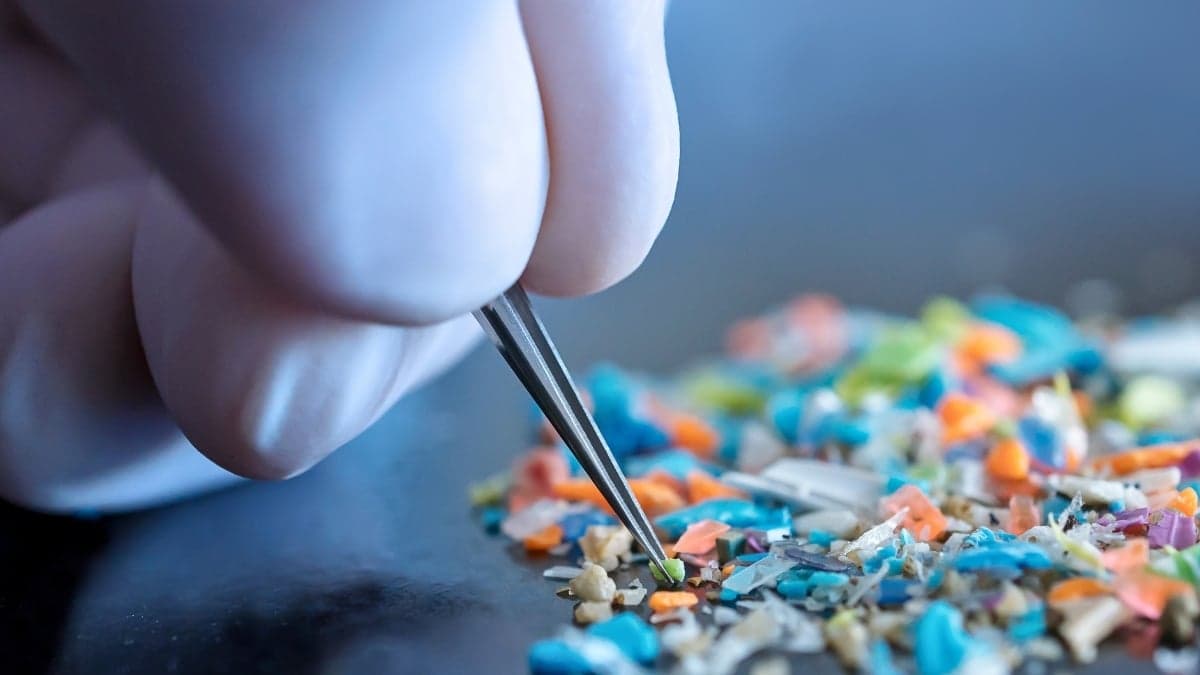
In an unexpected twist that could reshape environmental science, researchers at the University of Michigan have uncovered a pervasive contamination source in microplastic pollution studies: the latex and nitrile gloves worn by scientists in laboratories across the globe. The discovery, published in a landmark 2026 study, reveals that these gloves release microscopic stearate salts that are structurally similar to polyethylene—the most common environmental plastic—and are routinely misidentified as microplastics by standard analytical tools.
The findings, which emerged from a meticulous investigation into atmospheric microplastic levels in Michigan, suggest that previous research may have vastly overestimated microplastic pollution in air, water, and soil. After eliminating every other potential contamination pathway, the team traced an alarming 1,000-fold spike in detected particles to the very gloves they had been using to handle samples. This contamination not only invalidates some earlier data but raises urgent questions about the reliability of widely cited microplastic studies that inform global health and environmental policy.
- Lab gloves release stearate salts that mimic microplastic signatures in analytical tests.
- Researchers overestimated microplastic levels by up to 1,000 times due to glove contamination.
- Contaminating particles are often smaller than 5 micrometers, posing elevated risks to human health.
- Scientists recommend avoiding gloves in microplastic research or using specialized stearate-free alternatives.
- The discovery highlights the need for revised protocols and contaminated dataset recovery methods.
Why Measuring Microplastics Is So Difficult
Microplastics are tiny plastic fragments or fibers less than 5 millimeters in size, yet they are notoriously difficult to detect and analyze. A single microplastic particle can range in size from that of a small ant (about 5 mm) down to sub-micrometer scales—smaller than a human red blood cell. This extreme variability in size, combined with their presence in nearly every environment, makes contamination an inescapable challenge in research. Even the air in a laboratory can carry synthetic fibers from clothing, packaging, or equipment, which may settle onto samples during handling.
The Scale of the Problem
According to a 2023 report by the World Health Organization, microplastics have been detected in drinking water, seafood, salt, and even the human bloodstream. While the health implications remain under study, preliminary evidence suggests that inhaled or ingested microplastics smaller than 10 micrometers may cross into the bloodstream and accumulate in organs, potentially triggering inflammation or oxidative stress. This has prompted regulatory agencies, including the U.S. Environmental Protection Agency (EPA), to prioritize microplastic monitoring as part of broader efforts to address plastic pollution.
How Gloves Became the Silent Culprit in Microplastic Research
The contamination scandal stems from a compound used in the manufacturing of latex and nitrile gloves: stearate salts, specifically zinc stearate. These salts are added to help gloves release cleanly from their molds during production. When researchers handle laboratory equipment—such as filters or collection plates—with gloved hands, microscopic particles of stearate salts are transferred to the sample surface.
Because polyethylene and stearate salts have very similar molecular structures, they interact with infrared light in nearly identical ways. This means that when researchers use vibrational spectroscopy—a standard technique that measures how particles absorb and emit light to generate a chemical fingerprint—stearate particles are routinely misidentified as polyethylene microplastics.
A Breakthrough Discovery Through Failure
The University of Michigan team, led by Professor Anne McNeil and Ph.D. candidate Madeline Clough, initially set out to quantify how many microplastics residents of Michigan inhale daily by analyzing outdoor air samples collected on metal plates. Following all recommended protocols—avoiding plastic in the lab, wearing non-plastic clothing, and using a specialized clean air chamber—the researchers detected particle counts that were astronomically higher than any previously published data. Instead of dismissing the anomaly as a methodological error, they launched a forensic investigation.
After systematically ruling out contamination from lab air, clothing, and equipment, the team turned their attention to the one item they had not considered: their gloves. Using advanced microscopy and spectroscopy, they identified zinc stearate particles on the metal plates. Further testing revealed that even the most reputable glove brands contributed over 7,000 misidentified particles per square millimeter—enough to skew environmental assessments dramatically.
Why This Contamination Is Especially Dangerous
The particles shed by gloves are not microplastics themselves, but their structural similarity to polyethylene means they are counted as such in up to 70% of automated analyses. More critically, these stearate particles often measure less than 5 micrometers in diameter—small enough to penetrate human cells, enter the lungs, and potentially cross the blood-brain barrier. Unlike larger microplastics, which are more likely to be expelled, these ultrafine particles could pose greater long-term health risks, including respiratory irritation and systemic inflammation.
Impact on Human Health Research
The misclassification of stearate salts as microplastics has far-reaching consequences. Studies that inform public health advisories, environmental regulations, and even clinical research may be based on flawed data. For example, a 2024 study published in *Environmental Health Perspectives* estimated that Americans ingest up to 52,000 microplastic particles annually through food, water, and air. If a portion of those particles were actually stearate salts, the actual microplastic burden could be significantly lower—but so too might the perceived urgency of addressing plastic pollution.
How the Scientific Community Is Responding
In response to the findings, the research team has issued urgent recommendations to the scientific community. Their study, published in *Environmental Science & Technology Letters* in March 2026, calls for a complete re-evaluation of microplastic measurement protocols. Among the proposed solutions: eliminate glove use during sample handling, or switch to stearate-free gloves—such as those used in electronics manufacturing, which are designed to prevent static and particle release.
A Call for Standardized Protocols
The discovery has prompted leading environmental journals to update their guidelines for microplastic research. The journal *Microplastics and Nanoplastics* now requires authors to disclose glove types used and, where possible, provide spectral data to distinguish stearate salts from true microplastics. The International Organization for Standardization (ISO) is also reviewing its microplastic detection standards, with a working group expected to release revised protocols by late 2026.
Recovering Contaminated Data and Moving Forward
The Michigan researchers have developed a post-processing algorithm to help differentiate stearate salt particles from actual microplastics in existing datasets. By analyzing the full spectral profile, they can identify and subtract false positives caused by glove contamination. While this method is not foolproof, it offers a pathway to salvage some previously published studies.
The team has also launched a follow-up study in Michigan, this time using stearate-free gloves and minimizing all contact with samples. Preliminary results indicate atmospheric microplastic levels are far lower than initially recorded—aligning with expectations based on global averages. The researchers caution, however, that even reduced microplastic counts still demand attention.
The Broader Implications for Environmental Science
This contamination issue exemplifies a broader challenge in emerging environmental research fields: when studying phenomena at the limits of detection, contamination pathways can be both subtle and insidious. Similar concerns have arisen in studies of airborne nanoparticles, per- and polyfluoroalkyl substances (PFAS), and even airborne pathogens. The Michigan study serves as a cautionary tale about the importance of rigorous contamination control and the iterative nature of scientific discovery.
Science is an iterative process. New areas of research, including environmental microplastics, introduce new challenges to the scientific community. In addressing these new challenges, we will encounter setbacks, such as unforeseen contamination. While we had to discard our initial dataset, we expect the lessons we learned about glove contamination to reach other scientists.
What This Means for Policymakers and the Public
For policymakers, the revelation underscores the need for caution when drafting regulations based on early-stage science. While microplastics are a legitimate environmental and health concern, policies must be grounded in accurate data to avoid misallocating resources or creating unnecessary public alarm. The EPA and the European Chemicals Agency (ECHA) have both signaled that they will integrate the new findings into their ongoing microplastic monitoring programs.
For the public, the news may prompt skepticism toward sensational headlines about microplastic levels. It also highlights the critical role of peer review, transparency, and reproducibility in science. While the contamination issue does not negate the reality of microplastic pollution, it does call for a more measured and scientifically rigorous approach to measuring and addressing it.
Key Takeaways for Researchers and the Public
- Lab gloves are a major—and previously overlooked—source of microplastic measurement contamination.
- Stearate salts in gloves mimic polyethylene microplastics in standard tests, inflating results by up to 1,000 times.
- Ultrafine particles (<5 µm) from gloves are particularly problematic due to their potential biological impact.
- Researchers should adopt glove-free protocols or use stearate-free alternatives to ensure data integrity.
- Existing microplastic datasets may require re-analysis, and new standards are being developed to prevent future contamination.
Frequently Asked Questions
Frequently Asked Questions
- Are all lab gloves contaminated with stearate salts?
- Not all gloves are contaminated, but most standard latex and nitrile gloves contain zinc stearate as a release agent. Some specialty gloves, such as those used in electronics manufacturing, are formulated without stearates.
- Can stearate salts harm human health?
- Stearate salts are generally considered non-toxic in small quantities, but their misidentification as microplastics has raised concerns about overestimating health risks associated with plastic pollution. Long-term exposure studies are ongoing.
- How will this discovery affect future microplastic research?
- The discovery is expected to lead to updated protocols, including glove-free handling and spectral analysis to distinguish stearate salts from true microplastics. Journals and agencies are already revising guidelines based on these findings.