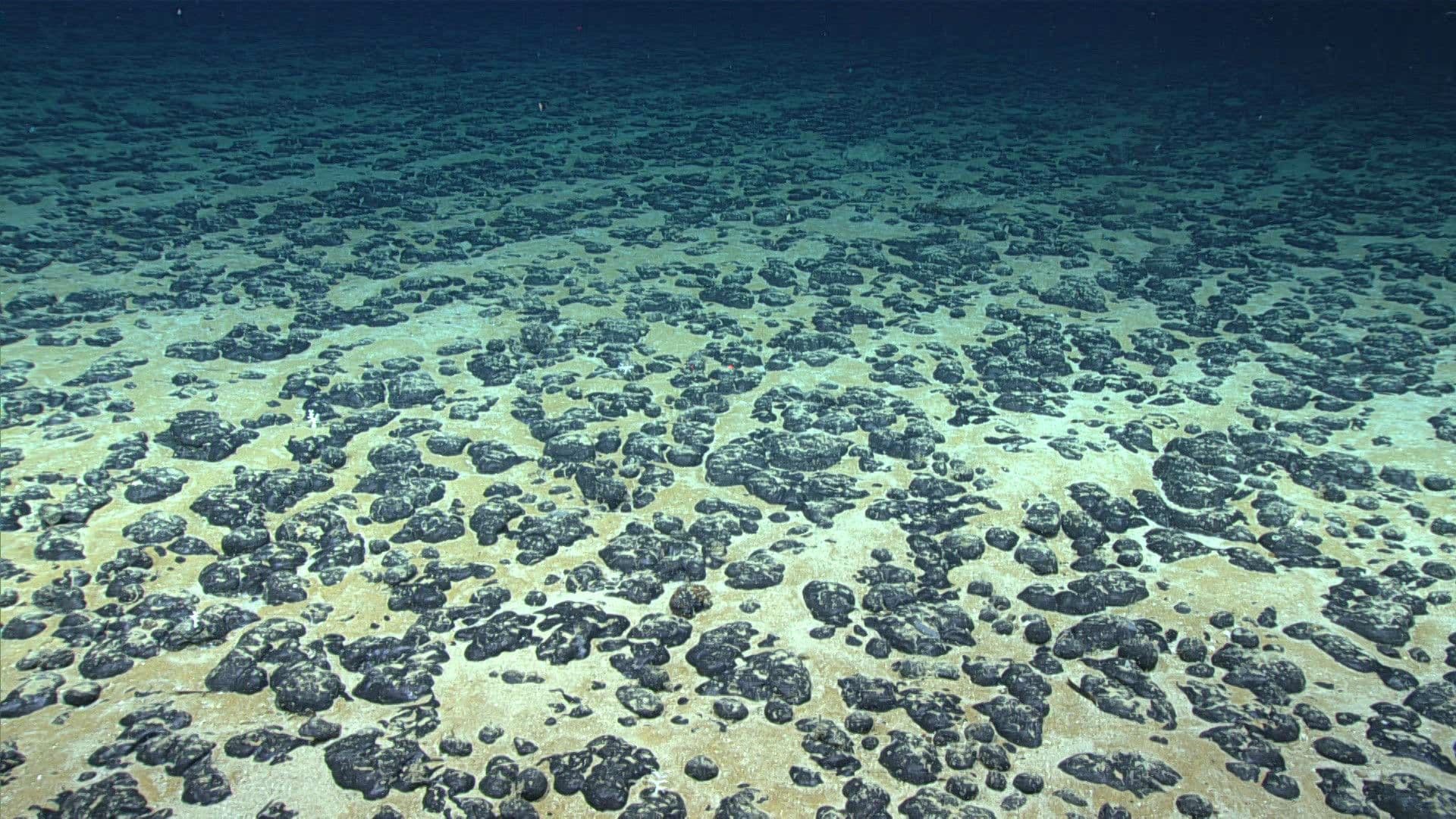
In a dramatic scientific dispute roiling marine research, a 2024 study proposing that metallic nodules on the deep Pacific seafloor generate oxygen in complete darkness—dubbed 'dark oxygen'—is facing intense scrutiny and calls for retraction. The findings, published in the journal Nature Geoscience, suggested that potato-sized polymetallic nodules could split seawater through electrolysis, producing oxygen without sunlight. But a new opinion article published in December 2025 in Frontiers in Marine Science dismantles the research, arguing its methods violated fundamental thermodynamic principles and produced results that cannot be replicated or trusted. As the debate intensifies, the original researchers are preparing to deploy robots to the Clarion-Clipperton Zone between Mexico and Hawaii in May 2025 to re-examine the phenomenon, funded by the Nippon Foundation, even as critics dismiss the claims as scientifically implausible.
- A 2024 Nature Geoscience study claimed deep-sea polymetallic nodules produce oxygen via electrolysis without sunlight, calling it 'dark oxygen,' a finding that could reshape understanding of Earth’s oxygen cycle and early life origins.
- Critics in a December 2025 Frontiers in Marine Science opinion article accuse the study of flawed experimental methods, including improperly ventilated chambers and failure to account for oxygen contamination, rendering its conclusions invalid.
- Electrochemists argue the proposed mechanism violates the laws of thermodynamics, as seawater electrolysis cannot occur spontaneously without an external energy source—a key omission in the original study.
- The study was funded by deep-sea mining companies, including The Metals Company and UK Seabed Resources, raising concerns about conflicts of interest during a pivotal moment in international deep-sea mining regulation debates.
- Nature Geoscience is currently reviewing additional evidence submitted by the original authors, with experts like Per Hall of the University of Gothenburg calling for the paper’s retraction.
How the 2024 'Dark Oxygen' Study Proposed a Radical New Process on the Ocean Floor
The controversial study, led by Andrew Sweetman of the Scottish Association for Marine Science (SAMS), proposed that polymetallic nodules—lumpy, mineral-rich concretions scattered across the abyssal plain—could act as natural electrolysis cells. According to the researchers, the nodules, composed of cobalt, nickel, manganese, and other metals, might generate a charge capable of splitting seawater molecules into hydrogen and oxygen through a process called 'seawater electrolysis.' This would occur without the presence of sunlight, which is traditionally required for oxygen production via photosynthesis in surface waters.
The Clarion-Clipperton Zone (CCZ), where the study was conducted, is a vast stretch of the North Pacific Ocean spanning 4.5 million square kilometers between Mexico and Hawaii, lying at depths of 4,000 to 6,000 meters. The zone is rich in polymetallic nodules, which are increasingly targeted by mining companies due to their high concentrations of critical minerals essential for electric vehicle batteries and renewable energy technologies. Sweetman’s team collected data using benthic landers—robotic chambers deployed to the seafloor to measure gas exchange. They reported detecting steady oxygen emissions from the nodules, even in total darkness, a claim that, if true, would challenge long-held assumptions about deep-sea ecosystems.
The Mechanism Proposed: Can Nodules Really Split Water?
Sweetman and his co-authors hypothesized that the nodules’ metallic composition creates a natural electric potential due to differences in the electrochemical properties of their constituent metals. This potential, they argued, could drive the electrolysis of seawater, producing oxygen and hydrogen gases. The process would be analogous to how a battery generates electricity through redox reactions. However, this explanation immediately raised red flags among electrochemists.
That explanation of how it's formed is simply impossible, because it violates the laws of thermodynamics. Thermodynamics tells you what's possible and what's not possible if the laws of the universe are what we think they are. Until now, there's nobody in four centuries of science that has been able to show that the laws of thermodynamics do not apply.
According to Angel Cuesta Ciscar, a professor of electrochemistry at the University of Aberdeen and co-author of the critical opinion article, the process described by Sweetman’s team would require an energy input that was never identified. Seawater electrolysis is not a spontaneous reaction; it demands a continuous external power source to proceed. The study did not propose or document such a source, leaving a critical gap in the proposed mechanism.
Moreover, electrolysis of water produces hydrogen gas in a 2:1 ratio with oxygen. The absence of hydrogen measurements in the original study further undermined its credibility. 'For each oxygen molecule produced by water electrolysis, two hydrogen molecules also form,' Cuesta Ciscar noted. 'There's just, I would expect, an honest error that has not been recognized.'
Flawed Methods and Contamination: How Critics Poked Holes in the Research
The most damning critique leveled by the opinion article authors centers on the experimental design used by Sweetman’s team. Specifically, they allege that the oxygen measurements were contaminated due to improperly ventilated equipment. When the benthic landers were deployed to the seafloor, trapped oxygen within the chambers—originating from surface waters or air exposure during deployment—was not flushed out before measurements began.
The Chamber Ventilation Problem
In a joint interview, Anders Tengberg, a product manager at Aanderaa-Xylem and co-author of the opinion article, explained that the research team did not follow standard protocols for chamber incubations. These protocols require that chambers be thoroughly ventilated with bottom water—water from the exact depth and location where measurements are taken—before any data collection begins. This ensures that initial gas concentrations inside the chamber match ambient conditions.
You have to start your chamber incubations with bottom water composition equal — identical — to the ambient bottom water outside the chambers. That is a clear sign that they did not do good chamber incubations and that their oxygen fluxes ... cannot be trusted.
Tengberg and Per Hall, a professor emeritus of marine science at the University of Gothenburg and another co-author, pointed out that the initial oxygen readings in Sweetman’s study were consistently higher than typical bottom-water concentrations in the CCZ. This discrepancy strongly suggests residual oxygen contamination rather than genuine emissions from the nodules.
Missing Controls and Inconsistent Data
Another major flaw, according to the critics, was the absence of negative control experiments. These are standard in scientific research and involve running identical incubations without the experimental subject—in this case, without polymetallic nodules—to confirm that any observed oxygen production is attributable to the nodules themselves.
The opinion article reveals that unpublished data from a 2024 preprint on Earth ArXiv, which has not undergone peer review, shows oxygen production even in chambers without nodules. This finding, the critics argue, indicates that the oxygen detected was not produced by the nodules but was an artifact of the experimental setup.
Hall added that the study also failed to measure other critical gases such as argon, methane, or carbon dioxide, which are typically monitored in deep-sea incubation experiments to validate results. This omission left significant gaps in the data, making it difficult to assess the environmental context or the plausibility of the findings.
Thermodynamic Impossibility: Why the Claim Defies Established Science
At the heart of the controversy lies a fundamental principle of physics: the conservation of energy. The first and second laws of thermodynamics state that energy cannot be created or destroyed, only transformed. The proposed mechanism for dark oxygen production would require the nodules to generate energy ex nihilo—out of nothing—which is impossible within the known laws of nature.
Cuesta Ciscar emphasized this point in a statement that echoed across the scientific community: 'We know that the energy in the universe is constant, and it's not being created out of nothing.' The idea that nodules could spontaneously generate the voltage necessary to split water molecules contradicts centuries of physical chemistry.
Moreover, the energy required for seawater electrolysis is substantial. A typical voltage of at least 1.23 volts is needed to drive the reaction, and this must be sustained over time. The study did not identify a plausible energy source within the nodules or their environment that could provide such voltage continuously.
Electrochemists also noted that the nodules, while rich in transition metals, do not form the kind of organized electrochemical cells required for sustained electrolysis. Nodules are heterogeneous aggregates, not structured electrodes with defined anodes and cathodes. Their composition varies widely even within small areas, making it highly unlikely they could consistently generate the uniform electric potential necessary for water splitting.
Funding and Timing: The Deep-Sea Mining Connection
The 2024 study was funded by The Metals Company, a Canadian firm leading deep-sea mining exploration in the CCZ, and UK Seabed Resources, a subsidiary of Lockheed Martin specializing in seabed mineral extraction. This funding raised immediate concerns about potential conflicts of interest, especially given the timing of the research.
The International Seabed Authority (ISA), the UN body overseeing deep-sea mining, is currently finalizing regulations that could open the CCZ to commercial mining. The findings of the dark oxygen study—if validated—would imply that removing polymetallic nodules could disrupt a previously unrecognized source of oxygen on the seafloor, potentially harming deep-sea ecosystems in ways not previously considered.
Critics argue that the study’s sensational claims may have been influenced by the commercial interests of its funders. 'At what the authors of the opinion article called a critical juncture in the development of international regulations for deep-sea mining,' the timing of the publication appears strategic, though the authors deny any bias.
In response to these concerns, Sweetman stated that the funding sources had no involvement in the study’s design, data collection, or analysis. 'The Metals Company was not involved in the design, collection, analysis or interpretation of data,' he said in a written statement. The company has previously expressed support for the research, calling it 'groundbreaking.'
The Authors Respond: What Comes Next in the Investigation
Andrew Sweetman and his team have not yet publicly responded in detail to the criticism, as they await the outcome of a review by Nature Geoscience, where the original paper was published. Nature Geoscience is currently evaluating additional evidence submitted by Sweetman’s team in defense of their findings.
Sweetman acknowledged the need for further investigation: 'If the rebuttal at Nature Geoscience is rejected we will of course submit a response to the Frontiers piece.' In the meantime, his team is preparing for a May 2025 expedition to the CCZ, funded by the Nippon Foundation, a Japanese nonprofit that supports maritime development and humanitarian initiatives. During this trip, they plan to deploy two advanced landers equipped with high-resolution sensors to measure oxygen and other gases directly at the seafloor.
However, the scientific community’s skepticism remains high. Per Hall expressed his doubts plainly: 'We don't believe in this. I hope that Nature Geoscience retracts the paper.' Tengberg concurred, stating that the original study’s data simply does not support its conclusions.
Broader Implications: Why This Debate Matters Beyond the Lab
The controversy over dark oxygen extends far beyond academic disagreement. It touches on two of the most pressing issues in modern science and environmental policy: the origin of oxygen on Earth and the future of deep-sea mining. If polymetallic nodules are indeed producing oxygen in the deep ocean, it would challenge the long-held belief that the deep sea is primarily a sink for oxygen, not a source. This could have profound implications for models of Earth’s oxygen cycle and the evolution of life on our planet.
Moreover, the CCZ is one of the most biodiverse abyssal regions on Earth, home to unique species adapted to extreme pressure and darkness. The nodules themselves serve as substrates for complex ecosystems, including microbes, sponges, and crustaceans. The potential loss of these ecosystems due to mining—combined with the discovery of a hypothetical oxygen source—could drastically alter our understanding of deep-sea ecology.
From a policy perspective, the study’s claims add another layer of complexity to the debate over deep-sea mining. If nodules play a role in oxygen production, their removal could have cascading effects on benthic ecosystems and even global oxygen budgets. This makes the need for rigorous, unbiased science more urgent than ever.
What Happens Now? The Path to Resolution
The next critical milestone will be the decision by Nature Geoscience regarding the status of the 2024 paper. If the journal retracts the study, it would mark a significant moment in scientific accountability, especially given the high stakes. Alternatively, if the journal requests revisions and corrections, the authors may need to revise their methodology and provide robust, reproducible data before the findings can be accepted.
Regardless of the outcome, the dark oxygen debate has already highlighted the importance of transparency and rigor in deep-sea research. As international interest in ocean mining grows, so too does the need for impartial, peer-reviewed science that can guide policymakers and protect marine environments.
For now, the scientific community remains divided. While Sweetman and his team press forward with their expedition, many of their peers view the dark oxygen hypothesis with skepticism. 'There's just, I would expect, an honest error that has not been recognized,' said Cuesta Ciscar. In science, extraordinary claims require extraordinary evidence—and so far, the evidence presented has not met that standard.
Frequently Asked Questions
Frequently Asked Questions
- What is 'dark oxygen' and why is it controversial?
- Dark oxygen refers to the hypothetical production of oxygen on the deep seafloor without sunlight, proposed in a 2024 study involving polymetallic nodules. The claim is controversial because it contradicts thermodynamic laws and has been criticized for flawed experimental methods, including improper chamber ventilation and missing control experiments.
- Who funded the original dark oxygen study?
- The study was funded by The Metals Company and UK Seabed Resources, both involved in deep-sea mining exploration. This funding raised concerns about potential conflicts of interest, especially given the timing amid international negotiations on deep-sea mining regulations.
- What are the broader implications of this discovery if it were true?
- If verified, dark oxygen production would challenge current understanding of Earth’s oxygen cycle, the role of the deep sea as an oxygen sink, and the ecological impacts of deep-sea mining. It could also provide new insights into the origin of life, which may have evolved in oxygen-rich environments near hydrothermal vents or mineral surfaces.