In a discovery that deepens the mystery of life’s cosmic origins, an international team of scientists has detected all five nucleobases—the fundamental building blocks of DNA and RNA—within pristine samples collected from the near-Earth asteroid Ryugu. The findings, published in the prestigious journal Nature Astronomy, provide compelling evidence that the molecular precursors to life may have been delivered to our planet by ancient asteroid impacts, offering a new chapter in humanity’s quest to understand how biology first emerged on Earth. The research not only confirms the presence of adenine, guanine, cytosine, thymine, and uracil in Ryugu’s rocky material but also reveals surprising chemical patterns that could reshape our understanding of prebiotic chemistry in the early solar system. This marks the first time all five nucleobases have been identified together in a single extraterrestrial sample, a milestone that underscores the potential universality of life’s molecular blueprints.
How Ryugu’s Nucleobases Challenge Our Understanding of Life’s Chemical Beginnings
The discovery of all five nucleobases in Ryugu samples—adenine (A), guanine (G), cytosine (C), thymine (T), and uracil (U)—represents a significant leap forward in astrobiology. Nucleobases are the informational units that form the genetic code in DNA (A, T, C, G) and RNA (A, U, C, G), making them indispensable to all known life forms. While scientists have previously detected nucleobases in meteorites like Murchison and fragments from the asteroid Bennu, this is the first instance where all five have been found together in a single extraterrestrial sample. The Ryugu findings suggest that these molecules may have been more common in the early solar system than previously assumed, potentially resolving a long-standing debate about whether Earth’s early chemistry was sufficiently rich to spark life.
A Blueprint for Life Delivered from the Cosmos
To grasp the significance of this discovery, it’s essential to consider the conditions of early Earth. Approximately 4.5 billion years ago, our planet was a hostile environment—rife with volcanic activity, bombarded by asteroids, and bathed in intense radiation. Against this backdrop, the emergence of stable organic molecules that could self-replicate and evolve into life seems almost miraculous. The leading hypothesis, known as panspermia, proposes that life’s essential ingredients, including nucleobases, may have been delivered via comets and asteroids during the late heavy bombardment period (around 4.1 to 3.8 billion years ago). Ryugu’s pristine samples, collected by Japan’s Hayabusa2 mission, provide a rare opportunity to test this theory by studying the chemical composition of a primitive asteroid that has remained largely unchanged since the solar system’s formation.
The Hayabusa2 Mission: A Decade-Long Journey to Unlock Cosmic Secrets
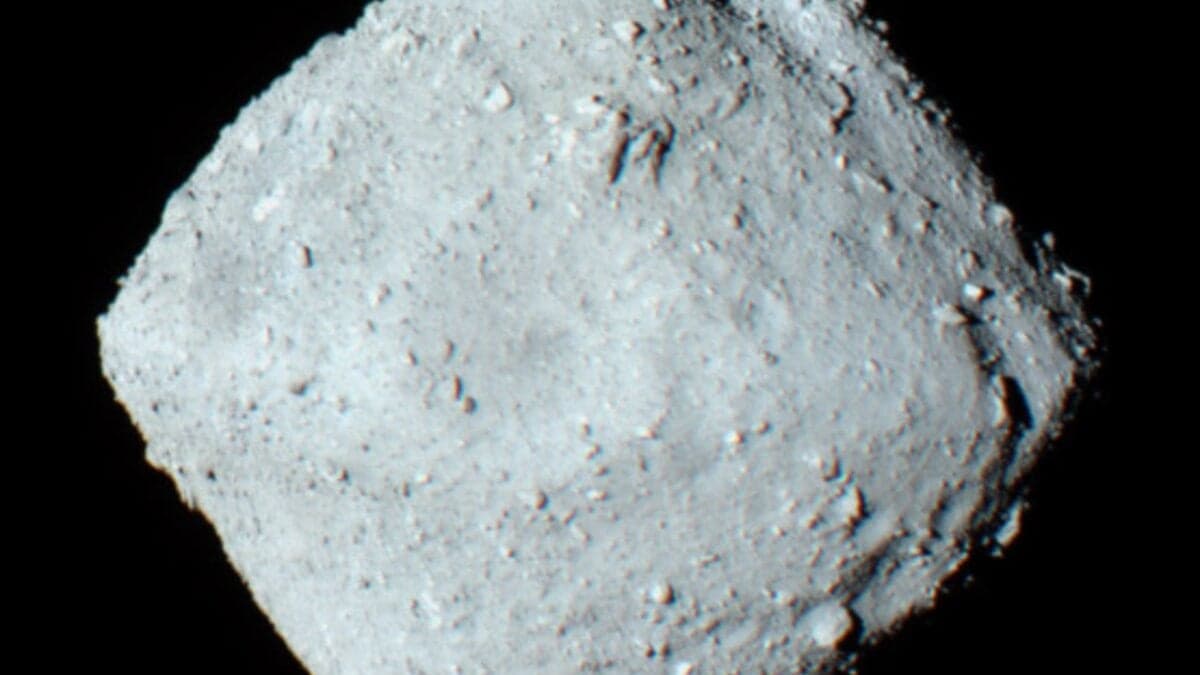
The Japan Aerospace Exploration Agency (JAXA) launched the Hayabusa2 spacecraft on December 3, 2014, embarking on a 300-million-kilometer (186-million-mile) voyage to the carbon-rich asteroid 162173 Ryugu, a near-Earth object approximately 1 kilometer in diameter. Upon arriving in June 2018, Hayabusa2 spent 16 months studying the asteroid’s surface and composition before deploying a small lander and, crucially, firing a tantalum projectile into Ryugu’s surface to kick up debris. The spacecraft’s sampling mechanism, known as the "catcher," collected the ejected material, which was then sealed in a pristine container to prevent contamination during its return journey. In December 2020, Hayabusa2 successfully delivered the samples to Earth, where they were immediately transported to JAXA’s extraterrestrial sample curation facility in Sagamihara for analysis.
Rigorous Protocols to Ensure Uncontaminated Results
Given the historic nature of the Ryugu samples, contamination was a paramount concern. To mitigate this risk, the research team, led by postdoctoral researcher Toshiki Koga of the Japan Agency for Marine-Earth Science and Technology (JAMSTEC), conducted their analyses in a state-of-the-art cleanroom facility. The samples were handled under nitrogen gas to prevent exposure to Earth’s atmosphere, and multiple independent tests were performed to confirm that the nucleobases originated from Ryugu rather than terrestrial sources. The team also cross-referenced their findings with previous studies of meteorites, including the Murchison meteorite (which fell in Australia in 1969) and samples from the asteroid Bennu, collected by NASA’s OSIRIS-REx mission. These comparisons revealed both similarities and striking differences in nucleobase composition, offering clues about the chemical processes that shaped these molecules in space.
“This result further supports the idea that nucleobases could have been present in primitive asteroids and delivered to the early Earth, potentially contributing to the chemical evolution that preceded the origin of life.” — Toshiki Koga, postdoctoral researcher, Japan Agency for Marine-Earth Science and Technology
Unexpected Chemical Patterns Unveiled in Ryugu’s Nucleobases
One of the most surprising aspects of the study is the unique distribution of nucleobases in Ryugu’s samples. Unlike other meteorites, where purine nucleobases (adenine and guanine) dominate, Ryugu contains roughly equal amounts of purines and pyrimidines (cytosine, thymine, and uracil). This balanced ratio is rare in extraterrestrial materials and suggests that the chemical conditions on Ryugu were distinct from those that formed other space rocks. Further analysis revealed a potential link between nucleobase composition and ammonia concentration: samples with higher ammonia levels tended to have a lower ratio of purines to pyrimidines. This correlation points to ammonia’s possible role in shaping the molecular diversity of prebiotic chemistry in the early solar system.
The Role of Ammonia in Prebiotic Chemistry
Ammonia (NH₃) is a simple nitrogen-containing compound that plays a critical role in many biological processes, including the synthesis of amino acids and nucleobases. In the context of Ryugu’s chemistry, ammonia may have facilitated the formation of pyrimidine nucleobases, which are less stable and therefore less common in meteorites. The discovery of this relationship suggests that ammonia-rich environments—possibly influenced by the presence of ice or organic-rich materials on Ryugu—could have fostered the production of a wider variety of nucleobases. This finding challenges existing models of prebiotic chemistry, which have historically struggled to explain the diversity of nucleobases observed in meteorites. As Koga noted, "The relative abundances of purines and pyrimidines provide clues about the chemical conditions under which these molecules formed. The relationship with ammonia may indicate that previously unrecognized chemical pathways contributed to the formation of nucleobases in the early solar system."
Key Takeaways: Why Ryugu’s Discovery Matters
- All five nucleobases essential for DNA and RNA have been detected in Ryugu asteroid samples, marking the first time they’ve been found together in a single extraterrestrial source.
- The balanced ratio of purine and pyrimidine nucleobases in Ryugu differs from other meteorites, suggesting unique chemical processes shaped its composition.
- A correlation between ammonia levels and nucleobase diversity implies ammonia may have played a crucial role in prebiotic chemistry in the early solar system.
- The findings support the panspermia hypothesis, which posits that life’s molecular building blocks may have been delivered to Earth via asteroid impacts.
- This discovery underscores the importance of space missions like Hayabusa2 in unraveling the chemical history of our solar system and the origins of life.
Comparing Ryugu to Other Extraterrestrial Samples: A Chemical Detective Story
To contextualize Ryugu’s nucleobase profile, scientists have compared it to data from other carbon-rich asteroids and meteorites. The Murchison meteorite, which fell to Earth in 1969, is one of the most studied extraterrestrial samples and contains a variety of organic compounds, including nucleobases. However, Murchison is dominated by purines, with fewer pyrimidines. Similarly, NASA’s OSIRIS-REx mission recently returned samples from the asteroid Bennu, where uracil and other pyrimidines were detected but purines were less abundant. The Orgueil meteorite, a carbonaceous chondrite that landed in France in 1864, also shows a pyrimidine-heavy composition. These variations suggest that the chemical environments of different asteroids—potentially influenced by factors like water content, temperature, and exposure to cosmic rays—played a significant role in shaping the nucleobase chemistry of the early solar system.
The Broader Implications: Rewriting the Narrative of Life’s Origins
The detection of all five nucleobases in Ryugu samples adds a new layer of evidence to the panspermia theory, which suggests that life’s molecular precursors may have been widespread in the universe. This idea is not new; it was first proposed in the 19th century by scientists like Svante Arrhenius and later popularized by astrophysicists Fred Hoyle and Chandra Wickramasinghe. However, the Ryugu findings provide some of the most concrete support yet for the idea that nucleobases could have been delivered to Earth by asteroids. This doesn’t necessarily mean life itself originated in space, but it does imply that the chemical foundation for biology was present in the early solar system and may have been delivered to planets like Earth during their formative years. As the study’s authors note, this work "further supports the idea that nucleobases could have been present in primitive asteroids and delivered to the early Earth, potentially contributing to the chemical evolution that preceded the origin of life."
What’s Next? The Future of Astrobiology Research
The Ryugu discovery is just the beginning of a new era in astrobiology. Researchers are now planning to expand their analyses to include a wider range of meteorite samples, as well as laboratory experiments designed to replicate the conditions of primitive asteroids. These experiments could help scientists identify previously unrecognized chemical pathways that led to the formation of nucleobases and other prebiotic molecules. Additionally, future missions—such as JAXA’s upcoming Martian Moons eXploration (MMX) mission and NASA’s planned Mars Sample Return—will bring back even more pristine extraterrestrial materials, offering new opportunities to study the chemistry of the early solar system. For Toshiki Koga and his team, the next step is to investigate the potential connection between ammonia concentration and nucleobase formation in greater detail. "We hope that future research will shed light on this relationship," Koga said, "and help us understand how these molecules might have evolved in the early solar system."
FAQ: Unpacking the Science Behind Ryugu’s Nucleobases
Frequently Asked Questions
- How did scientists confirm that the nucleobases found in Ryugu samples are not from Earth?
- The research team conducted their analyses in a cleanroom under strictly controlled conditions to prevent contamination. They also performed multiple independent tests to verify that the nucleobases originated from Ryugu, including comparing their findings to previous studies of other meteorites and conducting isotopic analyses to distinguish extraterrestrial from terrestrial compounds.
- Why are nucleobases so important for understanding the origin of life?
- Nucleobases are the building blocks of DNA and RNA, the molecules that carry genetic information in all known life forms. Their presence in extraterrestrial samples suggests that the chemical precursors to life may have been delivered to Earth by asteroids, supporting the panspermia hypothesis and offering clues about how life could have emerged on our planet.
- What does the balanced ratio of purines and pyrimidines in Ryugu samples tell us?
- The roughly equal ratio of purines (adenine and guanine) and pyrimidines (cytosine, thymine, and uracil) in Ryugu’s samples is unique compared to other meteorites. This balance suggests that the chemical conditions on Ryugu were distinct, possibly influenced by factors like ammonia concentration, and may indicate the presence of previously unrecognized chemical pathways that shaped prebiotic chemistry in the early solar system.