Water is the most familiar substance on Earth, yet its behavior under extreme conditions continues to baffle scientists. Now, an international team of physicists has uncovered a hidden ‘critical point’ in supercooled water—a state where liquid water remains unfrozen far below its standard freezing temperature. The discovery, published in the journal *Science*, provides direct evidence of a long-theorized phenomenon in which water separates into two distinct liquid phases at ultralow temperatures, offering a breakthrough in understanding one of nature’s most essential yet enigmatic molecules. Using cutting-edge X-ray imaging and laser heating techniques, researchers observed water’s molecular dynamics in unprecedented detail, revealing a critical transition point that reshapes our comprehension of H₂O’s fundamental properties.
- Researchers identified a hidden critical point in supercooled water at approximately -63°C (-81.4°F) and 1,000 atmospheres of pressure, narrowing decades of theoretical debate.
- The study used rapid X-ray pulses and infrared laser heating to observe water’s transition between high-density and low-density liquid states before freezing occurs.
- Findings suggest water’s molecular structure fluctuates near the critical point, resembling dynamics observed in black holes and other complex systems.
- The discovery has implications for fields ranging from climate science to biology, as water’s unusual properties underpin Earth’s ecosystems and planetary processes.
The Mystery of Supercooled Water: Why Liquid H₂O Defies Freezing
Water’s refusal to conform to typical thermodynamic behavior has long puzzled scientists. While most liquids contract and become denser as they cool, water expands and becomes less dense below 4°C, which is why ice floats. This anomaly is critical to life on Earth—lakes freeze from the top down, insulating aquatic ecosystems, and water’s high heat capacity regulates global temperatures. Yet when water is supercooled—cooled below 0°C without freezing—its strangeness intensifies, entering a realm scientists call the "no man’s land" of phase transitions. In this zone, water’s molecular structure behaves erratically, defying classical physics and prompting decades of speculation about whether it exists in two distinct liquid phases.
The Two Faces of Liquid Water: High-Density vs. Low-Density States
Theoretical models dating back to the 1990s proposed that supercooled water could separate into two coexisting liquid phases: a high-density liquid (HDL) and a low-density liquid (LDL). These phases would differ in how their molecules are arranged, with HDL packing more tightly and LDL forming a more open, ice-like structure. The existence of these phases could explain water’s anomalous properties, such as its maximum density at 4°C and its ability to supercool without immediately crystallizing. However, observing these phases directly has proven nearly impossible because they exist in a precarious balance—just moments away from freezing into solid ice. "This is why we call it the 'no man’s land' of water," explains Anders Nilsson, a chemical physicist at Stockholm University and lead author of the study. "The moment you try to measure it, the system freezes, and all you see is ice."
Breaking Barriers: How Advanced Technology Unlocked Water’s Secrets
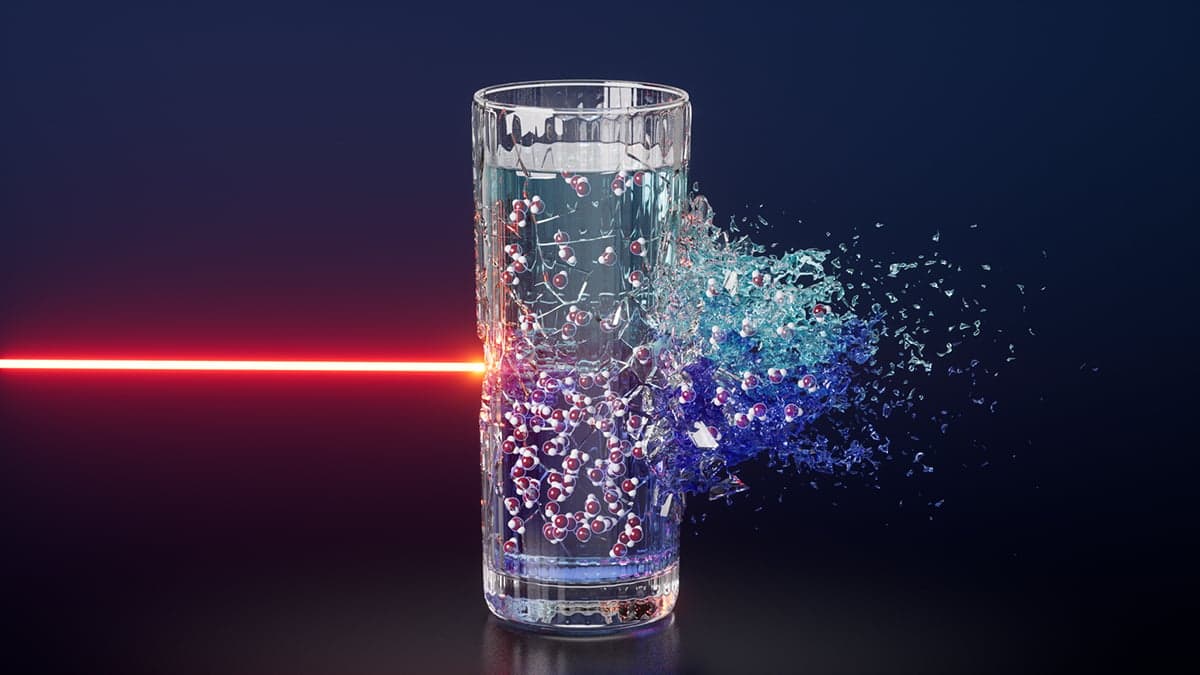
To peer into this elusive realm, the research team deployed two revolutionary techniques: ultrafast X-ray imaging and infrared laser heating. Using the Linac Coherent Light Source (LCLS) at the SLAC National Accelerator Laboratory in California, they fired X-ray pulses lasting just femtoseconds—quadrillionths of a second—to capture snapshots of water’s molecular structure before it could freeze. Meanwhile, infrared lasers rapidly heated micrometer-sized water droplets, cycling them through the supercooled state at rates far exceeding the speed of ice formation. This allowed the team to observe the liquid-liquid transition in real time, documenting how water’s structure morphed from a high-density arrangement to a low-density one as it approached the critical point. "What was special was that we were able to X-ray unimaginably fast before the ice froze and could observe how the liquid-liquid transition vanishes and a new critical state emerges," Nilsson says. The experiments revealed that as water nears the critical point, its molecular dynamics slow dramatically, akin to the gravitational pull near a black hole—a phenomenon known as "critical slowing down."
The Critical Point: A Turning Point in Water’s Molecular Dance
The critical point identified by the researchers sits at approximately -63°C (-81.4°F) and 1,000 atmospheres of pressure—a pressure equivalent to being nearly 10 kilometers underwater in Earth’s deepest trenches. At this threshold, the distinction between the high-density and low-density liquid states blurs, and water’s structure fluctuates chaotically. This instability is what gives the critical point its name: a single, volatile state where water’s molecules are neither fully ordered nor completely random. The discovery of this point resolves a decades-long debate among physicists, who had proposed various theories to explain water’s anomalous behavior. "For decades there has been speculations and different theories to explain these remarkable properties, and one theory has been the existence of a critical point," Nilsson notes. "Now we have found that such a point exists."
Why This Matters: Beyond the Lab into Nature and Beyond
While the findings may seem esoteric, they carry profound implications for fields as diverse as climatology, geology, and astrobiology. Water’s supercooled states are not merely laboratory curiosities—they occur naturally in Earth’s atmosphere, influencing cloud formation and precipitation patterns. Understanding water’s phase behavior could improve climate models, particularly in predicting extreme weather events tied to atmospheric supercooling. Similarly, the behavior of water under high-pressure conditions is crucial to geologists studying Earth’s mantle, where water trapped in minerals plays a role in tectonic activity. Even in the search for extraterrestrial life, water’s unique properties are a focal point. "Researchers studying the physics of water can now settle on the model that water has a critical point in the supercooled regime," Nilsson states. "The next stage is to find the implications of these findings on water’s importance in physical, chemical, biological, geological, and climate-related processes."
Water’s Role in Life: A Cosmic Coincidence or Fundamental Clue?
Water is the solvent of life as we know it, essential to every biological process from DNA replication to photosynthesis. Yet its bizarre properties—including the newly confirmed critical point—raise a tantalizing question: Is water’s odd behavior a mere accident of chemistry, or does it hold deeper significance for the origins of life? "I find it very exciting that water is the only supercritical liquid at ambient conditions where life exists, and we also know there is no life without water," says Fivos Perakis, a co-author of the study and chemical physicist at Stockholm University. "Is this a pure coincidence, or is there some essential knowledge for us to gain in the future?" The research suggests that water’s ability to exist in multiple liquid states at low temperatures might have played a role in prebiotic chemistry, where complex molecules first assembled into the building blocks of life. If true, this could have implications for the search for life on other planets, particularly those with water-rich environments like Mars or the icy moons of Jupiter and Saturn.
The Road Ahead: What’s Next for Water Research?
The discovery of water’s critical point is just the beginning of a new chapter in physical chemistry. Scientists are now racing to refine the exact location of this critical point, which could lie within a narrow range around -63°C and 1,000 atmospheres. Further experiments will employ even more precise instruments, such as the European XFEL in Germany, to probe water’s behavior at even finer scales. Meanwhile, the findings open doors to exploring how water’s supercooled states interact with solutes—like salts or organic molecules—which could reveal insights into biological systems. "The implications are vast," Perakis notes. "From understanding how water behaves in the depths of Earth’s oceans to its role in the formation of ice clouds in the atmosphere, this discovery forces us to rethink how we model water in both natural and engineered systems."
A Deeper Look: Water’s Anomalies and Their Broader Impact
Water’s strange behavior doesn’t end with its critical point. Even in everyday conditions, water exhibits properties that defy intuition. For example, its high surface tension allows insects to walk on water, and its ability to dissolve a vast array of substances makes it indispensable to life. These anomalies stem from water’s unique molecular structure—a bent shape with hydrogen bonds that form and break dynamically. The newly discovered critical point adds another layer to this complexity, suggesting that water’s oddities are not isolated quirks but part of a continuum of behavior that spans from freezing temperatures to the depths of Earth’s crust. As Nilsson puts it, "This is not just about water freezing. This is about understanding the very fabric of how molecules interact in one of the most common substances on our planet."
How This Discovery Could Reshape Scientific Models
The confirmation of a critical point in supercooled water challenges existing thermodynamic models, which have long treated water as a single-phase liquid. Traditional equations, such as those used in engineering and climate science, may need revision to account for water’s dual liquid states. For instance, models predicting the behavior of water in fuel cells, desalination plants, or even the human body could benefit from incorporating these findings. "This study is a game-changer," says Pablo Debenedetti, a professor of chemical and biological engineering at Princeton University, who was not involved in the research. "It provides the missing link in our understanding of water’s phase diagram and forces us to reconsider how we simulate its behavior in critical applications."
Frequently Asked Questions
Frequently Asked Questions
- What is a critical point in water, and why is it significant?
- A critical point in water is a specific temperature and pressure where the distinction between two phases of liquid water—high-density and low-density—disappears, causing the liquid to exist in a single, highly fluctuating state. This discovery is significant because it resolves decades of debate about water’s behavior under extreme conditions and has implications for fields ranging from climate science to biology.
- How did researchers observe water’s critical point without it freezing?
- The team used ultrafast X-ray imaging and infrared laser heating to capture water’s molecular structure in femtoseconds—before it could freeze. By rapidly cycling water droplets through supercooled states at SLAC’s Linac Coherent Light Source, they documented the liquid-liquid transition in real time, even at temperatures as low as -63°C.
- What are the potential real-world applications of this discovery?
- Understanding water’s critical point could improve climate models, enhance industrial processes like desalination, and provide insights into biological systems where water’s unique properties are essential. It may also shed light on the origins of life by revealing how water’s molecular behavior could have facilitated prebiotic chemistry.