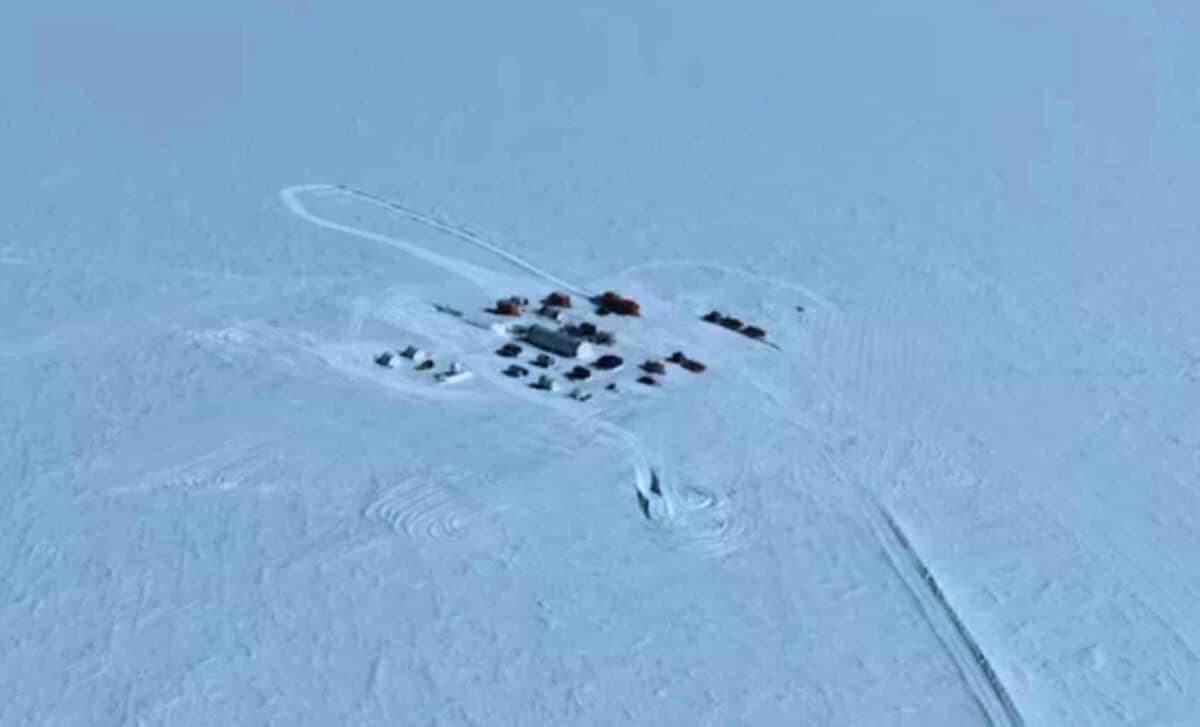
In one of the most inhospitable environments on Earth, a team of 29 scientists, engineers, and drillers braved nearly three months in tent camps on the frozen expanse of West Antarctica to achieve what no human had ever attempted. Their mission: to drill through 523 meters of ice at the Crary Ice Rise, extract a 228-meter column of mud and rock from the bedrock below, and unlock 23 million years of climate history preserved in sediment layers. The breakthrough, achieved in January 2024 by the SWAIS2C project (Sensitivity of the West Antarctic Ice Sheet to 2°C), has sent ripples through the global climate science community. The discovery—not just of depth, but of what the core contains—is forcing researchers to rewrite textbooks on Antarctic ice stability and the planet’s response to sustained warming.
A Groundbreaking Expedition to the Frozen Frontier of Science
The SWAIS2C team’s achievement was no small feat. For nine weeks, they lived in isolation at a field camp located over 700 kilometers from the nearest Antarctic station, McMurdo. Temperatures hovered around -30°C (-22°F), and hurricane-force winds frequently forced them into tents for days at a time. Their objective: to drill deeper than ever before into the bedrock beneath the West Antarctic Ice Sheet, a region considered one of the planet’s most critical tipping points in the climate crisis.
The Drilling Mission: Overcoming Extreme Conditions
Using a custom-built hot-water drill, the team melted a 35-centimeter-wide hole through 523 meters of ice—a process that took 36 hours of continuous operation. They then lowered more than 1,300 meters of drill pipe down the borehole, extracting 228 meters of sediment in a series of three-meter core sections. The operation required precision under conditions where a single miscalculation could mean losing the entire drill string in the abyss below. Their first two attempts in 2022 and 2023 failed due to technical issues, including equipment malfunctions and extreme weather, underscoring the unprecedented nature of this endeavor. Dr. Molly Patterson, co-chief scientist from Binghamton University, described the feat as ‘frontier science’ in a statement to Antarctica New Zealand, emphasizing that prior sediment cores from beneath Antarctic ice sheets had never exceeded 10 meters in length.
A Sediment Core That Defies Expectations: Shells and Mud Where Ice Should Be
When the scientists analyzed the extracted core, they found something extraordinary. The sediment was not uniform glacial debris as expected. Instead, it alternated dramatically between coarse gravel, dropped by grounded ice, and fine mud containing shell fragments and the remains of marine organisms that require sunlight to survive. The presence of such organisms—including diatoms and foraminifera—was particularly alarming. These species cannot exist without open ocean conditions and exposure to sunlight. Their discovery at a site now buried under 523 meters of ice suggests that, within the past 23 million years, the Crary Ice Rise was once free of ice, with open ocean waters lapping against its shores.
“We saw a lot of variability. Some of the sediment was typical of deposits that occur under an ice sheet like we have at Crary Ice Rise today. But we also saw material that’s more typical of an open ocean, an ice shelf floating over ocean, or an ice-shelf margin with icebergs calving off.”
Reconstructing 23 Million Years of Climate History Beneath the Ice
Preliminary field analysis, based on tiny marine fossils called diatoms found in the sediment, indicates the core spans roughly 23 million years. This timeline includes multiple periods when Earth’s average global temperatures were more than 2°C above pre-industrial levels—an inflection point frequently cited by climate scientists as a potential threshold for irreversible ice sheet collapse. The West Antarctic Ice Sheet alone contains enough frozen water to raise global sea levels by 13 to 16 feet (4 to 5 meters) if it were to melt entirely. While satellite data from NASA’s GRACE and GRACE-FO missions (2002–2025) shows Antarctica is currently losing about 135 gigatons of ice per year—primarily from West Antarctica’s Pine Island and Thwaites glaciers—the new core offers a direct geological record from beneath the ice sheet itself, filling a critical gap in climate models.
Why the Crary Ice Rise is the Rosetta Stone of Antarctic Stability
The Crary Ice Rise was not chosen by chance. Unlike other regions of West Antarctica, where warm ocean currents erode ice shelves from below, this site sits directly on bedrock, making it a ‘canary in the coal mine’ for ice sheet stability. When the ice retreats from Crary, it signals a fundamental shift in the broader system. The alternating layers in the core—coarse glacial debris interspersed with fine marine mud—tell a story of advance and retreat. Each layer of open-ocean sediment represents a period when the ice sheet had pulled back sufficiently to allow seawater and sunlight to reach the site. Dr. Huw Horgan, co-chief scientist from Te Herenga Waka, Victoria University of Wellington, and ETH Zurich, emphasized the core’s significance: 'This record will give us critical insights about how the West Antarctic Ice Sheet and Ross Ice Shelf is likely to respond to temperatures above 2°C.'
Ground-Truthing Past Collapses to Predict Future Risks
Until now, climate models relied on geological records from coastal regions or offshore sediments, which only capture indirect signals of ice sheet behavior. The Crary Ice Rise core provides direct evidence of past conditions, allowing scientists to ‘ground-truth’ the presence of open ocean in this region during warmer periods. By analyzing the sediment for clues such as ocean temperatures, ice-rafting patterns, and the timing of past collapses, researchers hope to identify the key drivers of ice sheet retreat. For instance, did rising ocean temperatures or changes in atmospheric circulation play the dominant role? The answers could reshape predictions about how quickly the West Antarctic Ice Sheet might respond to current climate trends.
From the Ice to the Lab: A Global Effort to Decode the Core
The sediment core, now stored at Scott Base in Antarctica, is en route to New Zealand, where it will be divided among 120 scientists from 50 research organizations across 10 countries. These experts will employ a battery of dating techniques—including radiocarbon analysis, cosmogenic nuclide dating, and paleomagnetic stratigraphy—to refine the core’s age and extract environmental data. The project, led by Antarctica New Zealand and funded by a consortium including the National Science Foundation (U.S.), the Alfred Wegener Institute (Germany), and the UK Natural Environment Research Council, represents a landmark in international polar science collaboration.
What This Discovery Means for Coastal Communities and Climate Policy
A Turning Point in Antarctic Science and the Fight Against Climate Change
The extraction of the 228-meter sediment core from beneath the Crary Ice Rise is more than a technical triumph—it is a paradigm shift. For decades, scientists have warned that the West Antarctic Ice Sheet is particularly vulnerable to warming due to its marine-based grounding line, where the ice meets the ocean. The new evidence suggests that even modest temperature increases could trigger significant retreat, with implications for global sea levels. As Dr. Patterson noted, ‘Analysis will help us quantify the environmental factors that drove the ice sheet retreat, such as determining what the ocean temperatures were at that time.’ With the core now in labs worldwide, the coming years will bring unprecedented clarity on the ice sheet’s past—and, critically, its future.
Frequently Asked Questions About the Antarctic Sediment Core Discovery
Frequently Asked Questions
- Why did scientists drill through 523 meters of ice in Antarctica?
- The team drilled to extract a 228-meter sediment core from the bedrock beneath the West Antarctic Ice Sheet at the Crary Ice Rise. This location was chosen because it sits directly on bedrock, making it a sensitive indicator of past ice sheet stability. The core contains a 23-million-year climate record that reveals periods when the region was free of ice.
- What did the scientists find in the sediment core that surprised them?
- The core contained layers of marine mud with shell fragments and remains of organisms that require sunlight—species that cannot survive under thick ice. This suggests the Crary Ice Rise was once an open ocean environment, challenging the assumption that the ice sheet has always been stable in this region.
- How will this discovery affect predictions about future sea level rise?
- The core provides direct geological evidence that the West Antarctic Ice Sheet has retreated significantly during past periods when global temperatures were slightly warmer than today. This will help scientists refine models of ice sheet collapse, potentially leading to more accurate projections of sea level rise that could impact 680 million people in coastal areas.