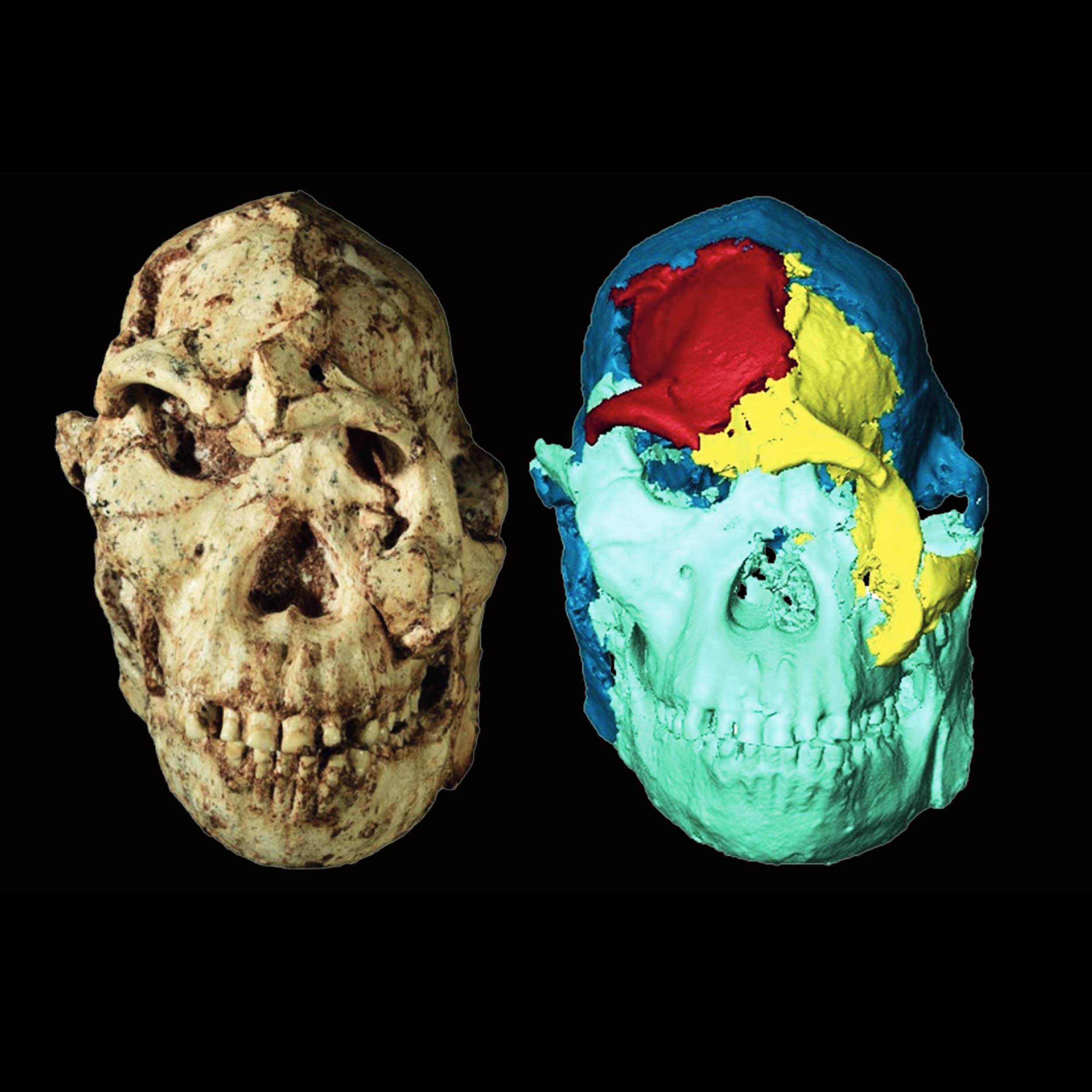
In a groundbreaking study, scientists have digitally reconstructed the face of 'Little Foot,' a 3.67-million-year-old Australopithecus fossil discovered in South Africa, revealing new insights into early human evolution. Using advanced imaging techniques, researchers corrected distortions caused by millions of years underground, producing one of the most complete Australopithecus faces ever assembled. The findings suggest that facial evolution between four and three million years ago was more complex than previously believed, challenging assumptions about regional isolation in early hominin populations.
The Discovery and Challenges of 'Little Foot'
'Little Foot' was discovered in the Sterkfontein Caves, part of the Cradle of Humankind World Heritage Site about 25 miles northwest of Johannesburg. The fossil represents the most complete early hominin skeleton ever found, but its facial bones were severely distorted by geological forces, making traditional physical reconstruction impossible. Over the years, researchers have studied other parts of the skeleton, but the face remained a puzzle until now.
Advanced Techniques Unlock New Insights
The research team used high-resolution synchrotron scanning at the Diamond Light Source in the UK to capture microscopic details without physically manipulating the fragile fossil. They then applied advanced virtual reconstruction methods to digitally reassemble the bones, correcting deformations and aligning broken or shifted parts. This process allowed them to measure and compare the face in ways that were previously impossible.
Unexpected Connections Across Africa
The reconstructed face of 'Little Foot' revealed surprising similarities to East African Australopithecus fossils, rather than the younger South African specimens. The researchers analyzed nine linear facial measurements and used three-dimensional geometric morphometrics to compare the face with living great apes and other Australopithecus fossils. The findings suggest that early hominin populations were more interconnected than previously thought, with facial traits evolving dynamically across the continent.
The Role of the Orbital Region in Evolution
The study also highlighted the orbital region—the bones and structures around the eyes—as a potential hotspot of evolutionary pressure. The researchers suggest that changes in visual capacity and ecological behavior may have driven the evolution of this area more strongly than other facial traits. This finding adds to the broader understanding of how early hominins adapted to their environments.
Broader Implications for Human Evolution
The study supports the idea of Africa as an interconnected evolutionary landscape, where populations adapted to local conditions while remaining linked through shared ancestry and gene flow. This challenges the traditional view of early hominin groups evolving in isolated pockets with clear regional boundaries. The findings also emphasize the importance of facial anatomy in understanding how early hominins interacted with their physical and social environments.
The Future of Fossil Reconstruction
While the face is a significant breakthrough, other parts of 'Little Foot's' skull, particularly the braincase, remain distorted and require similar digital reconstruction. As researchers complete more reconstructions, they hope to gain a clearer picture of how early hominins moved, diversified, and stayed connected across Africa. The study underscores the potential of advanced imaging and virtual reconstruction techniques in paleontology.
'This pattern is unexpected, given the geographic origin of Little Foot and suggests a more dynamic evolutionary history than previously assumed.' — Amélie Beaudet, lead author and researcher at Wits University
- The face of 'Little Foot' was reconstructed using high-resolution synchrotron scanning and virtual reconstruction techniques.
- The study revealed unexpected similarities between 'Little Foot' and East African Australopithecus fossils, challenging traditional views of regional evolution.
- The orbital region of the face may have been under special evolutionary pressure due to changes in visual capacity and ecological behavior.
- The findings support the idea of Africa as an interconnected evolutionary landscape, with populations adapting to local conditions while remaining linked through shared ancestry.
Frequently Asked Questions
Frequently Asked Questions
- What is 'Little Foot' and why is it significant?
- 'Little Foot' is a 3.67-million-year-old Australopithecus fossil discovered in South Africa. It is the most complete early hominin skeleton ever found, providing valuable insights into human evolution. The recent reconstruction of its face has revealed new clues about early hominin populations across Africa.
- How did scientists reconstruct 'Little Foot's' face?
- Researchers used high-resolution synchrotron scanning to capture microscopic details of the fossil without physically manipulating it. They then applied advanced virtual reconstruction methods to digitally reassemble the bones, correcting deformations and aligning broken or shifted parts.
- What does the reconstruction tell us about early human evolution?
- The reconstruction suggests that early hominin populations were more interconnected than previously thought, with facial traits evolving dynamically across the continent. The findings challenge the traditional view of regional isolation and support the idea of Africa as an interconnected evolutionary landscape.