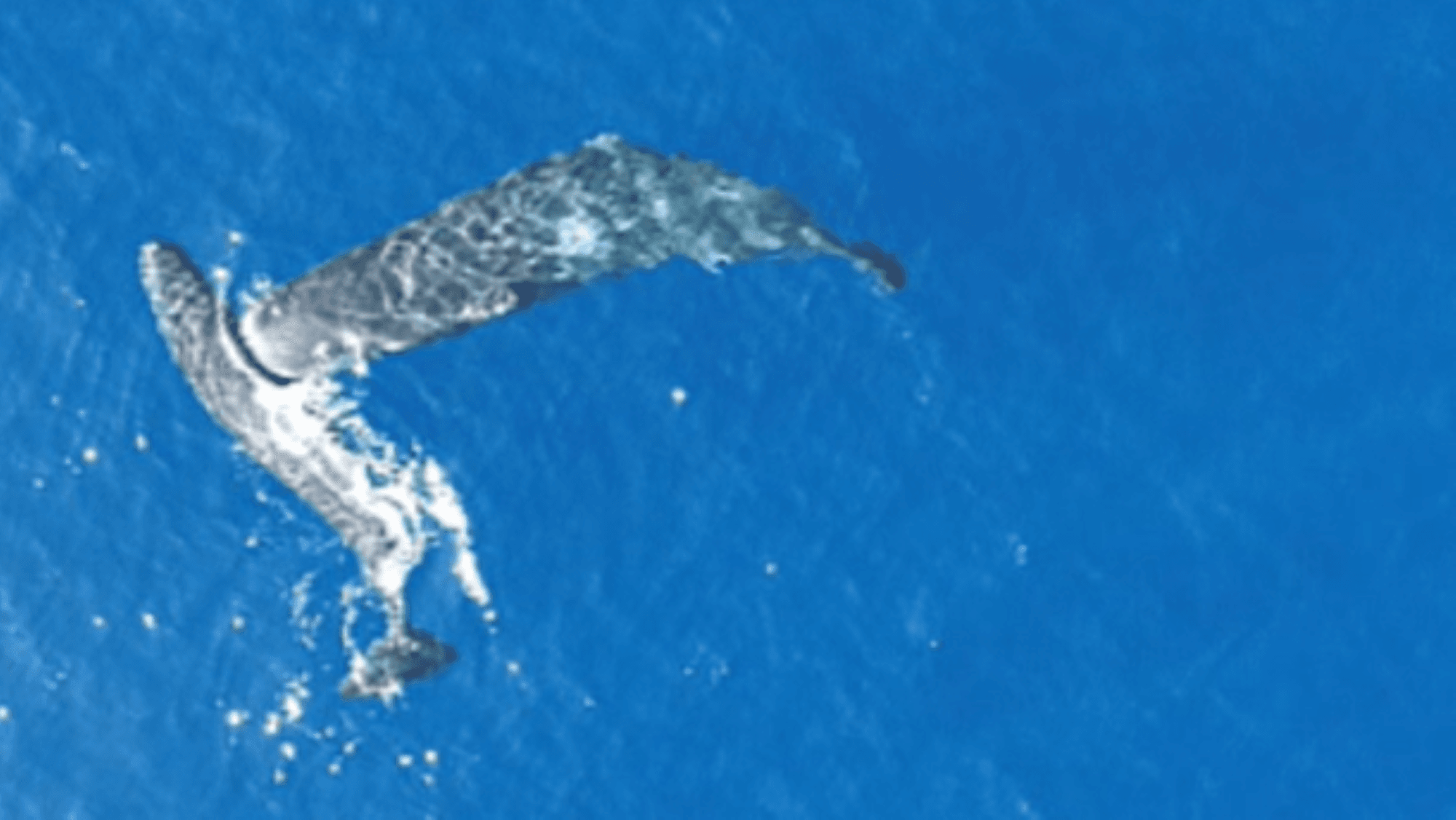
In a groundbreaking discovery, researchers have captured the first visual evidence of sperm whales headbutting each other, a behavior long reported by 18th- and 19th-century mariners and whalers. The footage, filmed off the Azores and Balearic Islands using a drone, adds to a series of three documented cases of the behavior between 2020 and 2022, as reported in a study published in the journal Marine Mammal Science. The finding not only confirms historical accounts but also raises new questions about the evolutionary and social functions of this unusual behavior in sperm whales.
The Unseen Behavior of Sperm Whales
Historical Accounts and Cultural Impact
Sperm whales (Physeter macrocephalus) have long been the subject of maritime lore, with stories of their headbutting behavior dating back to the 18th century. The most famous account comes from 1820, when the whaleboat *Essex* sank after a large male sperm whale headbutted it twice off the Galapagos Islands. This event inspired Herman Melville’s 1851 novel *Moby-Dick*, which fictionalized the tale of a vengeful captain seeking a 'white whale' that had maimed his crew. While the *Essex* story is a work of fiction, it underscores the deep cultural impact of sperm whale behavior on human history.
Modern Scientific Validation
For over two centuries, the headbutting behavior of sperm whales remained a subject of anecdotal reports. The 2026 study, led by Dr. Burslem of the University of St Andrews, used drone technology to document the behavior in real time, providing the first confirmed evidence. The footage shows young males engaging in headbutting, challenging previous assumptions that the behavior was limited to mature males. This discovery suggests that the behavior may have a broader role in social or competitive interactions within whale populations.
The Science Behind the Headbutting
Evolutionary and Physiological Implications
While the exact reason for headbutting remains unclear, researchers propose several theories. One hypothesis is that the behavior is a form of male competition, used to establish dominance or attract mates. However, other experts caution that using the head as a weapon could damage critical brain structures essential for echolocation and social communication. This raises questions about the evolutionary trade-offs of such a behavior, particularly in species with complex social hierarchies like sperm whales.
Technological Advancements in Wildlife Research
The use of drones in this study marks a significant shift in marine biology. Traditional methods of observing deep-sea species are limited by the challenges of underwater environments, but drones provide a non-invasive way to capture surface behaviors. Dr. Burslem notes that the overhead perspective of drone footage is revolutionizing the study of marine life, allowing researchers to document behaviors that were previously invisible. This technology also opens the door for more frequent and widespread observations, potentially revealing new patterns in whale behavior.
The Broader Implications of the Discovery
Conservation and Ecological Insights
Understanding headbutting could have important implications for conservation. Sperm whales are a keystone species in marine ecosystems, and their behavior may reflect broader environmental or social changes. For example, if headbutting is linked to resource competition or social structure, it could indicate shifts in population dynamics. Additionally, the behavior’s role in social communication may help researchers develop better strategies for protecting whale populations in the face of climate change and human activity.
Public Engagement and Scientific Curiosity
The discovery has captured the public’s imagination, much like the *Essex* story did in the 19th century. It highlights the ongoing interplay between human observation and natural history, demonstrating how technology can bridge the gap between ancient accounts and modern science. The researchers are now calling for more contributions from the public, encouraging anyone with similar footage to share it, as this could lead to a deeper understanding of the behavior’s role in whale societies.
The Future of Whale Research and Technology
Innovations in Wildlife Documentation
The 2026 study is part of a growing trend in wildlife research that leverages drone technology. As cameras and sensors become more advanced, researchers are able to document behaviors in real time, from deep-sea creatures to Arctic polar bears. This shift is not just about visual data; it also includes acoustic and biometric tracking, which can provide a more comprehensive picture of animal behavior. The sperm whale headbutting case is a prime example of how these tools are expanding the frontiers of marine science.
The Role of Public and Scientific Collaboration
The study’s success was made possible by a combination of scientific expertise and public engagement. The researchers, including Dr. Burslem, Cerdà, Brotons, Rendell, Silva, and Prieto, used a drone to capture the footage, but the discovery of the behavior was also a result of the public’s historical knowledge. This highlights the importance of preserving and building on traditional records while using modern technology to validate and expand them. The collaboration between past and present underscores the value of interdisciplinary approaches in understanding the natural world.
- Sperm whales headbutting is a behavior long reported by mariners, now confirmed by modern drone footage.
- The behavior may be linked to male competition, but its evolutionary purpose remains a topic of debate.
- Drones are revolutionizing marine research, offering new ways to study deep-sea species and their behaviors.
Frequently Asked Questions
- Why is this headbutting behavior new to science?
- Until now, the behavior was only documented through historical accounts. The 2026 study used drone technology to capture the first real-time footage, revealing that the behavior is more common than previously thought.
- What are the possible functions of headbutting in sperm whales?
- Researchers suggest it may be a form of male competition or social communication, but the exact role is still under investigation. The behavior’s impact on echolocation and social structures is a key area of study.
- How is drone technology changing marine research?
- Drones allow non-invasive observation of deep-sea species, providing new data on behaviors that were previously unknown. This technology is opening new frontiers in understanding marine life and their ecosystems.