WASHINGTON — A Washington-based startup has taken a bold step toward redefining global computing infrastructure, filing a landmark application with the Federal Communications Commission (FCC) to deploy a constellation of up to 88,000 satellites designed as orbital data centers. The March 13 filing by Redmond, Washington-based Starcloud represents one of the most ambitious space-based computing initiatives ever proposed, aiming to harness the vast, untapped potential of low Earth orbit (LEO) to power next-generation artificial intelligence (AI) workloads and cloud services. Unlike traditional ground-based data centers, which face constraints in power, cooling, and land availability, Starcloud’s proposed constellation would operate in carefully selected orbital shells, leveraging continuous solar exposure to offer scalable, cost-effective compute power.
Why Starcloud’s Orbital Data Center Could Disrupt the AI Infrastructure Race
The push for space-based computing comes as AI development accelerates, straining the capacity of terrestrial data centers. Major tech firms, including Microsoft and Google, have already begun exploring specialized AI chips and liquid cooling systems to keep pace with demand. However, these solutions merely extend the lifespan of ground-based infrastructure rather than addressing fundamental limitations. Starcloud contends that by moving compute resources into orbit, its constellation could achieve unparalleled scalability while reducing environmental impact and operational costs. The company’s founders, many of whom have backgrounds in aerospace engineering and AI infrastructure, argue that orbital data centers could become the backbone of the next era of computing—particularly as AI models grow exponentially larger and more energy-intensive.
The AI Compute Bottleneck on Earth
The explosive growth of AI has collided with the physical and economic limits of terrestrial data centers. Training large language models (LLMs) like those powering generative AI tools requires vast amounts of electricity, water for cooling, and real estate. According to the International Energy Agency, data centers consumed about 1% of global electricity in 2022, a figure projected to double by 2030. Meanwhile, the cost of building and maintaining hyperscale data centers has surged, with hyperscale operators spending over $150 billion annually on infrastructure. Starcloud’s proposal directly targets these pain points by relocating compute power to space, where solar energy is abundant, cooling challenges are minimized, and land constraints vanish.
In its FCC filing, Starcloud emphasized the urgency of its approach: “Starcloud is designing its satellite system to accommodate the explosive growth of datacenter demands driven by AI, which is already encountering severe roadblocks to efforts to scale on the ground,” the company wrote. “By avoiding the constraints of terrestrial deployment, space datacenters will be the most cost-effective and scalable way to deliver compute this decade.”
A Constellation of Unprecedented Scale: How Starcloud Compares to Existing Satellite Networks
If approved, Starcloud’s 88,000-satellite constellation would dwarf every existing satellite network in operation today. For comparison, SpaceX’s Starlink—the largest and most well-known LEO broadband constellation—currently has approximately 10,000 operational satellites, with plans to expand to 42,000. Even that scale pales in comparison to Starcloud’s vision. The company’s proposal is still smaller than SpaceX’s own FCC filing in January 2024, which outlined a plan for up to one million orbital data center satellites—a figure that underscores the high-stakes nature of the orbital computing race.
Orbital Mechanics and Technical Specifications
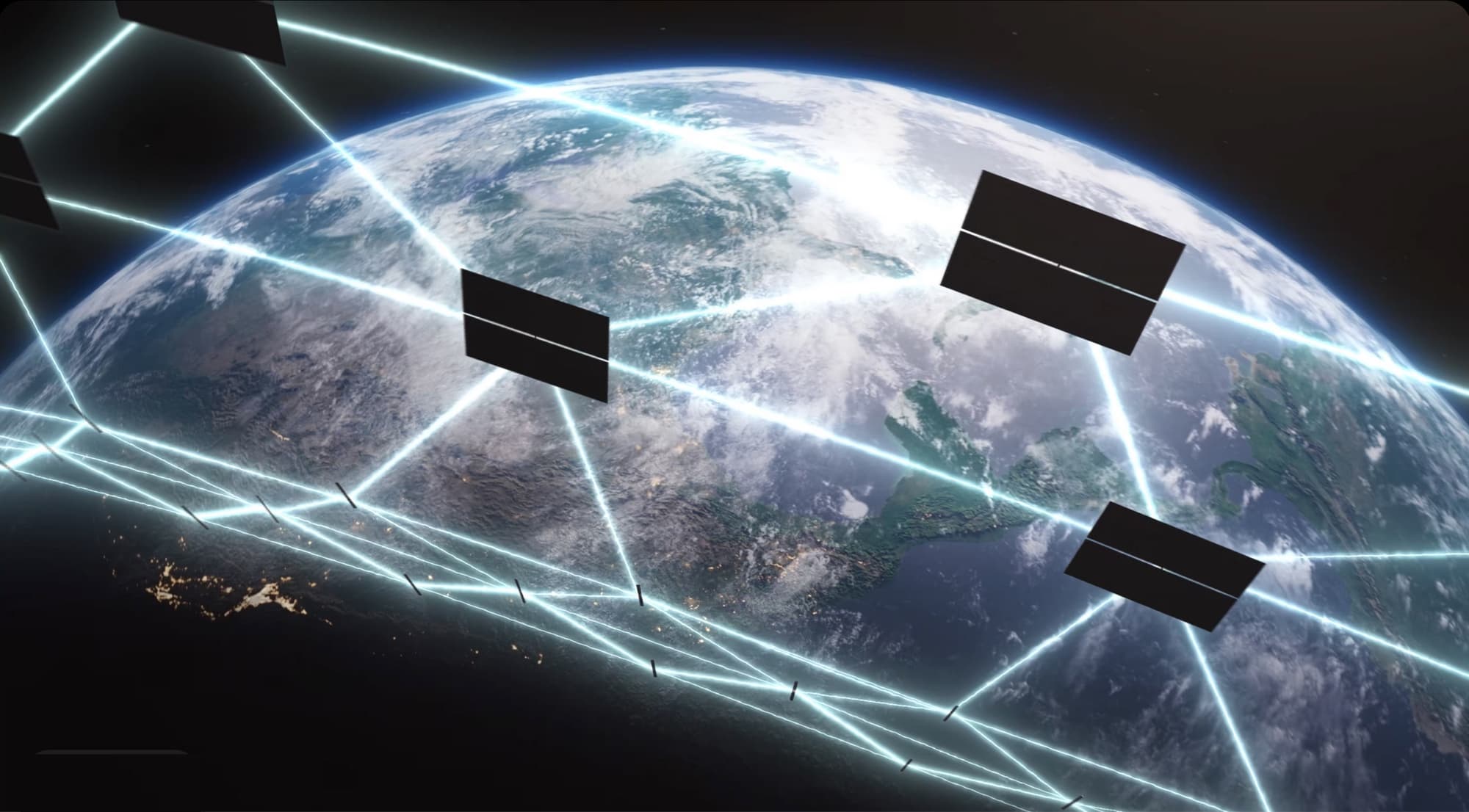
Starcloud’s satellites would operate in narrow orbital shells ranging from 600 to 850 kilometers in altitude, with each shell measuring no more than 50 kilometers thick. These orbits would be sun-synchronous, meaning the satellites would pass over the same points on Earth at the same local solar time each day—a critical feature for maximizing solar power generation. The company has not disclosed detailed specifications for individual satellites, including their size or mass, but has indicated they will rely on optical intersatellite data links for communications. These links would enable high-speed data transfer between satellites and integrate with existing broadband constellations such as Starlink, Amazon’s Project Kuiper, and Blue Origin’s Tera Wave network.
The constellation would also utilize Ka-band spectrum for telemetry, tracking, and control communications, operating on a non-interference basis to avoid disrupting other satellite services. Starcloud has committed to adhering to best practices for safe and sustainable space operations, including conducting initial checkouts in lower orbits before raising satellites to their operational altitudes. This approach is designed to ensure that any malfunctioning spacecraft would quickly reenter Earth’s atmosphere.
Space Safety and Environmental Considerations: Starcloud’s Sustainability Pledge
The rapid expansion of satellite constellations has raised concerns among astronomers, space debris experts, and environmental advocates about the long-term sustainability of LEO. Starcloud acknowledges these challenges and has outlined several measures to mitigate its environmental and operational footprint. The company stated it would ‘work closely with the astronomy community to protect essential observations, including implementing established brightness mitigation measures.’ This could involve using darker coatings on satellite surfaces, adjusting orientation to reduce reflectivity, or coordinating with observatories to minimize interference with astronomical research.
Starcloud has also committed to designing its satellites for ‘full demisability,’ ensuring they would burn up entirely upon reentry with no debris reaching the ground. This aligns with growing international calls for space sustainability, including guidelines from the Inter-Agency Space Debris Coordination Committee (IADC) and the Outer Space Treaty. The company’s approach contrasts with some past practices, where defunct satellites have contributed to the growing problem of space debris. By prioritizing end-of-life disposal, Starcloud aims to position itself as a responsible actor in the increasingly crowded LEO environment.
From Starcloud-1 to Starcloud-4: The Roadmap to a Space-Based Internet of Compute
Starcloud’s journey to an 88,000-satellite constellation began with a single technological proof-of-concept. In November 2023, the company launched Starcloud-1, a 60-kilogram small satellite, aboard a SpaceX rideshare mission. This satellite marked a significant milestone as the first to operate an Nvidia H100 processor in orbit—a high-performance GPU widely used in AI training and inference tasks. Starcloud-1 also ran a version of Google’s Gemini AI model, demonstrating the feasibility of running advanced AI workloads in space.
The Evolution of Starcloud’s Spacecraft Designs
The company’s roadmap includes four distinct phases, each representing a leap in capability. Starcloud-2, scheduled for launch in 2027, is planned as the first commercial spacecraft in the constellation. Unlike its predecessor, Starcloud-2 will feature a cluster of processors integrated with proprietary thermal and power systems, all housed within a smallsat form factor. This satellite is designed to validate the core technologies Starcloud plans to scale across its larger constellation.
Starcloud-3 and Starcloud-4 represent more ambitious iterations. While details about Starcloud-3 remain sparse, Starcloud-4 is envisioned as a massive orbital data center deployed aboard a SpaceX Starship vehicle. The company’s promotional materials depict a Starcloud-4 satellite with arrays spanning four kilometers on a side, capable of supporting a five-gigawatt data center—an unprecedented scale that would dwarf even the largest terrestrial facilities. For context, the world’s most powerful supercomputers currently operate at around 100 megawatts, highlighting the revolutionary potential of Starcloud-4.
Competitive Landscape: Who Else Is Betting on Orbital Computing?
Starcloud is not alone in recognizing the potential of space-based compute. In January 2024, SpaceX filed its own FCC application for a constellation of up to one million orbital data center satellites, signaling the company’s intent to expand far beyond its Starlink broadband business. SpaceX’s proposal, like Starcloud’s, would leverage optical intersatellite links and sun-synchronous orbits. However, the sheer scale of SpaceX’s vision dwarfs Starcloud’s, raising questions about feasibility, funding, and regulatory approval timelines.
Other players are also entering the space-based compute arena. Amazon’s Project Kuiper, while primarily a broadband venture, has hinted at potential compute applications for its 3,236-satellite constellation. Similarly, startup Xplore has explored hybrid orbital data center concepts, though its efforts remain in early stages. The competition underscores a broader trend: as AI and cloud computing demand skyrockets, the space industry is increasingly viewed as a critical enabler of next-generation infrastructure.
Regulatory Hurdles and the FCC’s Role in Shaping Orbital Computing
Starcloud’s FCC filing marks the beginning of a lengthy regulatory process, one that will involve intense scrutiny from multiple federal agencies and international partners. The FCC’s Space Bureau, which oversees satellite communications, will evaluate the proposal based on its technical feasibility, spectrum requirements, and potential interference with existing services. However, the agency’s mandate does not extend to broader issues such as space debris mitigation or environmental impact—areas where Starcloud has offered voluntary commitments.
The approval process could take years, with public comment periods, technical reviews, and potential objections from rival satellite operators. For example, SpaceX may seek to protect its orbital slots and spectrum allocations, while astronomers or environmental groups could challenge the constellation’s brightness mitigation measures. Additionally, the U.S. government has not yet established a comprehensive framework for regulating space-based data centers, leaving Starcloud to navigate uncharted territory.
Economic and Strategic Implications: Why Orbital Data Centers Matter for the U.S. and Beyond
The stakes of the orbital computing race extend far beyond technological innovation. For the United States, leadership in space-based AI infrastructure could provide a strategic advantage in both civilian and defense applications. The Department of Defense has already expressed interest in resilient, distributed computing architectures, particularly in scenarios where ground-based data centers are vulnerable to cyberattacks or physical disruption. Similarly, the commercial sector sees orbital data centers as a way to future-proof AI development, ensuring uninterrupted access to compute power as terrestrial constraints intensify.
Geopolitically, the competition for orbital real estate is becoming increasingly contentious. China, through its Guowang constellation initiative, is also pursuing a massive LEO broadband and compute network, while the European Union has outlined plans for its own sovereign satellite infrastructure. Starcloud’s success—or failure—could influence how other nations prioritize their space-based compute strategies, potentially reshaping global supply chains for AI and cloud services.
- Starcloud filed an FCC application March 13 for a constellation of up to 88,000 orbital data center satellites, aiming to power AI workloads by leveraging sun-synchronous orbits and optical intersatellite links.
- The proposed constellation would dwarf existing satellite networks like Starlink (10,000 satellites) and even SpaceX’s own orbital data center proposal (up to one million satellites), signaling a potential paradigm shift in compute infrastructure.
- Starcloud’s roadmap includes validating core technologies with Starcloud-1 (launched Nov. 2023) and Starcloud-2 (planned for 2027), with future iterations like Starcloud-4 envisioning arrays spanning four kilometers and five-gigawatt data centers.
- The company has committed to sustainability measures, including full demisability of satellites and coordination with astronomers to mitigate brightness interference, addressing growing concerns about space debris and environmental impact.
- Regulatory approval faces significant hurdles, including spectrum allocation, interference concerns, and the lack of a comprehensive U.S. framework for space-based data centers, with the FCC’s review process potentially spanning years.
The Broader Impact: How Orbital Data Centers Could Reshape Technology and Society
Beyond the immediate benefits of scalability and cost efficiency, orbital data centers could democratize access to high-performance compute. By decentralizing infrastructure, Starcloud and its competitors could reduce the dominance of a handful of hyperscale cloud providers, potentially lowering barriers to entry for startups, researchers, and developing nations. This shift could accelerate innovation in AI, climate modeling, and scientific research, where compute power is often the limiting factor.
However, the transition to space-based compute also raises ethical and equity questions. Will orbital data centers exacerbate the digital divide, with only wealthy nations or corporations able to afford access? Could reliance on space infrastructure introduce new vulnerabilities, such as cyberattacks on satellite networks or solar flare disruptions to power generation? These are questions that policymakers, technologists, and society at large will need to grapple with as the orbital computing era takes shape.
What’s Next for Starcloud? Milestones and Potential Roadblocks
For Starcloud, the immediate priority is securing FCC approval for its initial constellation, a process that could take several years. In parallel, the company will need to demonstrate the technical feasibility of its ambitious designs, particularly for Starcloud-4, which pushes the boundaries of what’s possible in a smallsat form factor. Securing funding for such a massive endeavor will also be a critical challenge, as the cost of deploying and maintaining 88,000 satellites could run into tens of billions of dollars.
Starcloud’s leadership team, though not widely publicized, includes experts with backgrounds in aerospace engineering, AI infrastructure, and venture capital. The company has also attracted attention from investors intrigued by its vision of merging space technology with cutting-edge computing. However, the path to commercialization is fraught with uncertainty, including competition from SpaceX, regulatory hurdles, and the inherent risks of operating in the harsh environment of space.
Frequently Asked Questions
- How will Starcloud’s satellites avoid interfering with other satellite networks?
- Starcloud plans to operate its constellation in non-interference mode, using Ka-band spectrum for telemetry and relying on optical intersatellite links that do not overlap with radio frequencies used by broadband constellations like Starlink or Project Kuiper. The company has also committed to coordinating with other operators to minimize collision risks and spectrum conflicts.
- What are the environmental benefits of space-based data centers compared to terrestrial ones?
- Space-based data centers could reduce land use, water consumption for cooling, and local environmental impact. By operating in sun-synchronous orbits, satellites can harness continuous solar power, reducing reliance on fossil fuels. However, the environmental trade-offs include the carbon footprint of rocket launches and the long-term sustainability of space debris.
- When is Starcloud’s FCC application expected to be approved?
- The FCC’s review process for Starcloud’s application could take several years, with no guaranteed timeline. The agency will need to evaluate technical feasibility, spectrum allocation, and potential interference before granting approval. Similar large-scale satellite proposals, such as SpaceX’s Starlink, have faced multi-year reviews.