In a remote underground cave near San Antonio, Texas, two researchers have uncovered a lost ice-age ecosystem preserved in a subterranean stream, revealing fossils of creatures that once roamed the region but were previously unknown to science. Their findings, published in March 2026 in the journal Quaternary Research, include the remains of a lion-size armadillo relative and a giant tortoise—animals that had never before been documented in central Texas during the Late Pleistocene epoch. The discovery not only expands the fossil record of the region but also suggests that the area’s ancient landscape may have been far more diverse and temperate than previously believed, possibly during a warmer interglacial period around 100,000 years ago.
How Bender’s Cave Unlocked a Hidden Ice Age Time Capsule
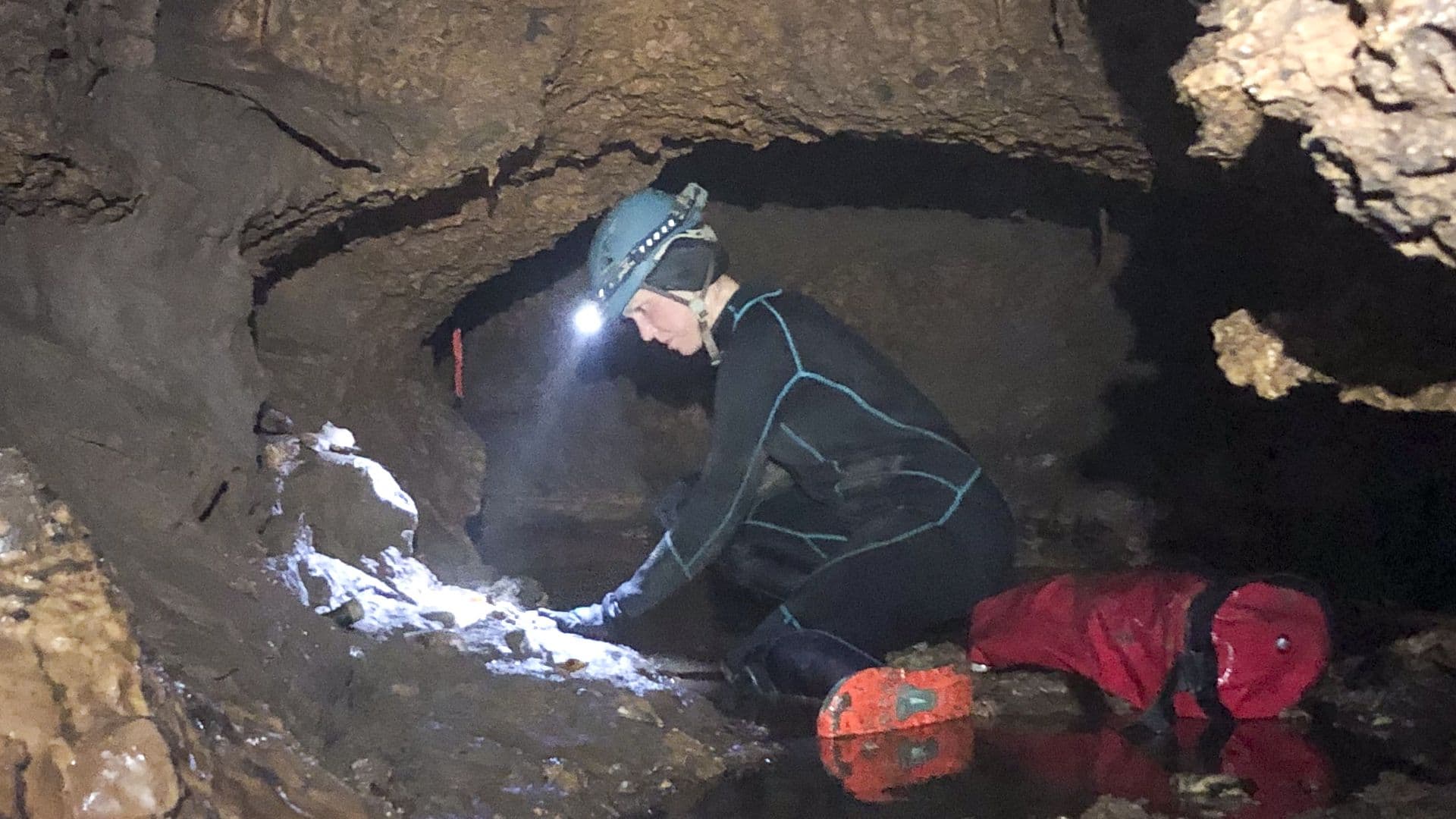
The breakthrough came in 2023, when paleontologist John Moretti and local caver John Young ventured into Bender’s Cave, a largely unexplored cavern on the Edwards Plateau near San Antonio. The cave, difficult to access and bisected by an underground stream, had long been overlooked by paleontologists. However, amateur cavers had occasionally brought fossils from its depths to the surface, hinting at the potential for significant discoveries beneath the surface. Moretti and Young, both members of the Texas Speleological Survey, decided to investigate further, equipped with snorkeling gear to navigate the submerged sections of the cave.
Over the course of six expeditions between 2023 and 2024, the team systematically explored 21 distinct fossil-rich zones within the cave. They collected a trove of remains, including a massive claw from Megalonyx jeffersonii, a giant ground sloth standing nearly 10 feet tall; teeth from extinct camelids (Camelops), the long-limbed ancestors of modern llamas; and molars from mammoths that once wandered the Texas plains. But the most astonishing finds were the partial skeletons of two species never before recorded in central Texas: Holmesina septentrionalis, a pampathere—an armored mammal resembling a lion-size armadillo—and Hesperotestudo, a giant tortoise that likely weighed several hundred pounds.
Why These Fossils Challenge Long-Held Theories About Ice Age Texas
For more than a century, paleontologists studying Texas’ ice-age fossils had reconstructed the region as a dry, open grassland dominated by grazers like bison and mammoths. This environment was thought to be inhospitable to both giant tortoises and pampatheres, which prefer warmer, more humid climates. The presence of these animals in Bender’s Cave suggests a dramatic shift in the ecosystem—one that may have occurred during a warmer interglacial period roughly 100,000 to 80,000 years ago, when global temperatures rose and these species expanded their range northward.
Moretti and Young propose that these animals did not live in the cave itself but were washed into the subterranean system through sinkholes during seasonal floods. The cave’s mineral-rich waters, which eroded collagen proteins in the bones, made precise radiocarbon dating nearly impossible. Instead, the team is now dating the calcite crusts that formed over the fossils after they entered the cave, which will provide a minimum age for their deposition. This method won’t yield exact dates but could confirm whether these fossils belong to the last interglacial period, a time when Texas may have resembled the subtropical climates of modern-day Louisiana or Mississippi.
“We still don’t know everything about the natural world. There’s still a lot to discover out there.” — John Moretti, lead author of the study
The Ice Age Megafauna of Texas: What We Know and What’s Missing
Texas is no stranger to ice-age megafauna discoveries. The state’s fossil record includes iconic species such as the American lion (Panthera atrox), dire wolves, and saber-toothed cats. However, the giant tortoise and pampathere found in Bender’s Cave fill critical gaps in our understanding of the region’s biodiversity during the Late Pleistocene. The pampathere, for example, was previously known primarily from Florida and South America, while the giant tortoise Hesperotestudo had been identified in fossil sites across the southern United States but not in central Texas.
The Role of Climate Shifts in Shaping Ancient Ecosystems
The Late Pleistocene epoch, spanning from 126,000 to 11,700 years ago, was marked by dramatic climatic swings. During colder glacial periods, vast ice sheets covered much of North America, pushing temperate species southward. But interglacial periods—like the one that may have allowed the tortoise and pampathere to thrive in Texas—brought milder conditions, enabling subtropical species to expand their range. This discovery aligns with other evidence from Texas and neighboring states that suggests the region experienced significant environmental variability during the ice age.
For instance, fossilized remains of alligator-like reptiles and tapirs have also been found in Texas, further supporting the idea of a warmer, wetter past. These findings contrast with the traditional view of Ice Age Texas as a windswept steppe, challenging scientists to reconsider how climate change shaped ecosystems long before human activity.
How Scientists Are Overcoming the Challenges of Dating Cave Fossils
Dating fossils in caves is notoriously difficult due to the unique conditions that preserve and alter organic material. In Bender’s Cave, the mineral-rich water not only eroded the collagen in the bones—typically used for radiocarbon dating—but also contaminated the fossils with carbon and other minerals. This contamination can skew dating results, making it appear as though the fossils are younger or older than they actually are. To address this, Moretti and his team turned to a less conventional method: dating the calcite formations, such as stalactites and flowstones, that had encrusted the bones over time. While this approach won’t provide exact dates, it can establish a minimum age for when the fossils were deposited, offering crucial clues about their origin.
The Broader Implications for Paleontology and Climate Science
The discovery in Bender’s Cave underscores the importance of exploring understudied environments, such as cave systems, which can act as natural time capsules for ancient ecosystems. Unlike open-air fossil sites, caves often preserve remains with minimal disturbance, offering pristine snapshots of the past. This finding also highlights how climate change—both in the past and present—can reshape habitats and force species to adapt or migrate. Understanding these historical shifts could provide valuable insights into how modern ecosystems might respond to global warming.
Moreover, the study adds to a growing body of evidence that suggests ice-age megafauna were more widespread and ecologically diverse than previously thought. As researchers continue to uncover new fossil sites, the narrative of the Late Pleistocene is becoming increasingly complex, with regions like Texas emerging as unexpected hotspots for biodiversity.
Key Takeaways: What This Discovery Means for Science and History
- Fossils of a giant tortoise and lion-size armadillo (pampathere) were discovered in Bender’s Cave, Texas, challenging prior assumptions about the region’s ice-age ecosystem.
- The animals likely lived during a warmer interglacial period around 100,000 years ago, when Texas may have had a subtropical climate.
- The cave’s mineral-rich waters made traditional radiocarbon dating impossible, prompting researchers to date calcite crusts instead.
- This discovery expands the fossil record of central Texas and suggests megafauna were more ecologically diverse than once believed.
- The findings highlight the importance of cave systems as untapped archives of ancient biodiversity.
Future Research: What’s Next for the Bender’s Cave Fossil Site?
Moretti and his team plan to continue exploring Bender’s Cave, focusing on refining the timeline of the fossils through additional calcite dating and stable isotope analysis. They also hope to collaborate with geologists to reconstruct the ancient hydrology of the cave system, which could reveal more about how the fossils were transported into the underground environment. Additionally, the researchers are working to engage local cavers and amateur fossil hunters, encouraging them to report new finds from the cave to build a more comprehensive picture of its ice-age inhabitants.
The discovery has also sparked interest among climate scientists, who are eager to compare these findings with other proxy records from the last interglacial period. By integrating paleontological data with climate models, researchers may gain a better understanding of how ecosystems respond to warming trends—a topic of growing relevance in the face of modern climate change.
Frequently Asked Questions About the Bender’s Cave Discovery
Frequently Asked Questions
- What is a pampathere and why is it significant?
- A pampathere is an extinct, armadillo-like mammal that lived during the Pleistocene epoch. Measuring up to 10 feet long and weighing over 600 pounds, it is the largest known armored mammal. Its discovery in Texas expands its previously known range and suggests a warmer climate in the region during the ice age.
- How did the fossils end up in the cave?
- Researchers believe the fossils were washed into the cave through sinkholes during seasonal floods. The cave’s underground stream then deposited the remains on the streambed, where they were preserved in the mineral-rich mud.
- Why is dating these fossils so challenging?
- The mineral-rich water in the cave eroded the collagen proteins in the bones, which are typically used for radiocarbon dating. The fossils are also contaminated with carbon and minerals, which can skew dating results. Scientists are now dating the calcite crusts that formed on the bones instead.