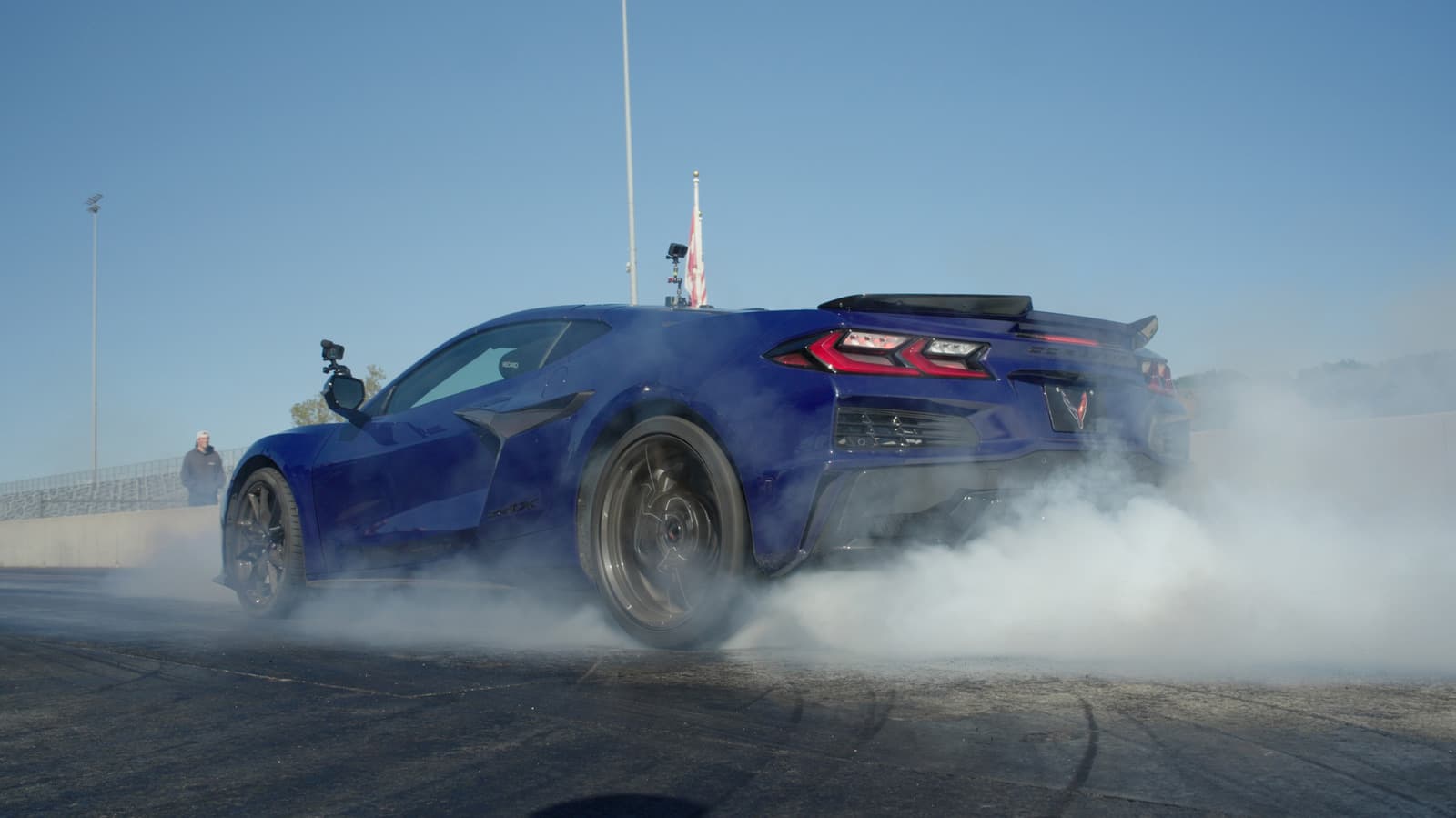
The 2026 supercar landscape has erupted into a torque-fueled arms race, where naturally aspirated V8s, twin-turbo V6s, and plug-in hybrid systems collide to deliver mind-bending acceleration and cornering grip. Automakers like Chevrolet, Ferrari, Lamborghini, and McLaren have pushed their flagship models beyond 500 pound-feet of torque—some even exceeding 800 lb-ft—blurring the line between supercar and hypercar without always crossing the price threshold. With base prices ranging from $212,195 for the Corvette ZR1X to $608,358 for the Lamborghini Revuelto, these aren’t just garage queens; they’re daily-drivable exotics that redefine what performance means in the modern era.
What Makes Supercar Torque So Important?
Torque is the invisible force that catapults supercars from standstill to triple-digit speeds in seconds, transforming engine power into real-world thrust. Unlike horsepower—which measures sustained output over time—torque delivers immediate, explosive acceleration, especially at low RPMs where most supercars spend little time. This is why manufacturers obsess over pound-feet: a high-torque engine enables quicker 0-60 mph times, stronger mid-range pull, and more controllable power delivery on twisty roads or racetracks. In 2026, the trend isn’t just about brute force; it’s about blending high torque with electrification, as seen in models like the Ferrari 849 Testarossa and Lamborghini Revuelto, where electric motors supplement combustion engines to eliminate turbo lag and enhance responsiveness.
The Role of Turbocharging and Hybridization
Turbocharged engines dominate the torque conversation because forced induction compresses air to generate more low-end power without massive displacements. The Chevrolet Corvette ZR1X’s 5.5-liter twin-turbo V8, for instance, produces 828 lb-ft of torque—enough to hurl the car to 60 mph in under 1.9 seconds with the optional ZTK Performance Package. Meanwhile, hybrid systems take torque to another level by supplementing combustion engines with instant electric torque. The Porsche 911 Turbo S’s T-Hybrid setup uses electric motors to spin turbos to 145,000 RPM, virtually eliminating lag and delivering a seamless powerband from 2,300 to 6,000 RPM. This synergy between turbocharging and hybridization explains why 2026’s most torque-rich supercars often feature both technologies.
Key Takeaways: The 2026 Supercar Torque Leaders
- The Chevrolet Corvette ZR1X tops the torque charts with 828 lb-ft from its 5.5L twin-turbo V8, plus 145 lb-ft from its front electric motor, enabling a sub-2-second 0-60 mph sprint.
- Lamborghini’s Revuelto pairs a 6.5L V12 with three electric motors, delivering 1,001 combined horsepower and 535 lb-ft from the engine alone, while retaining the iconic V12 growl.
- Aston Martin’s front-engine Vanquish counters its layout’s limitations with a 738 lb-ft V12, proving that raw torque can overcome weight distribution challenges.
- Ferrari’s 849 Testarossa and 296 Speciale showcase how plug-in hybrid systems can amplify torque without sacrificing drivability, with the latter offering 868 hp and a sub-3-second 0-62 mph time.
- Prices for these torque monsters range from $212,195 (Corvette ZR1X) to $608,358 (Lamborghini Revuelto), making once-unattainable performance accessible to a broader audience.
2026 Supercar Torque Showdown: Models Ranked by Pound-Feet
Chevrolet Corvette ZR1X (828 lb-ft + 145 lb-ft electric)
The Corvette ZR1X isn’t just the most torque-rich supercar of 2026—it’s a hypercar in all but name, with a starting price of $212,195 that undercuts its rivals by hundreds of thousands. Its 5.5-liter twin-turbo V8 churns out 828 lb-ft of torque, while a front-mounted electric motor adds 145 lb-ft and 186 horsepower, creating a combined 1,250 hp system. Chevrolet’s ZTK Performance Package shaves 0-60 mph to an astonishing 1.89 seconds, making it quicker than most hypercars. The ZR1X also boasts Alcon carbon-ceramic brakes and a sophisticated AWD system, though it’s not as focused as the rear-wheel-drive ZR1. With a top speed of 225 mph and a quarter-mile time of 8.99 seconds, the ZR1X redefines value in the supercar segment—proving that you don’t need a seven-figure price tag to experience blistering performance.
Aston Martin Vanquish (738 lb-ft)
Aston Martin’s Vanquish is a front-engine grand tourer that defies conventional wisdom by packing a 5.2-liter twin-turbo V12 producing 738 lb-ft of torque—more than most mid-engine supercars. Mated to an eight-speed ZF automatic on the rear axle for better weight distribution, the Vanquish blitzes to 62 mph in 3.3 seconds and tops out at 214 mph. Despite its front-engine layout, Aston Martin equipped the Vanquish with an electronic limited-slip differential, Bilstein DTX dampers, and carbon-ceramic brakes to tame the V12’s fury. The result is a car that balances brutal acceleration with grand touring comfort, all while wearing a price tag of $436,500 (or $489,700 for the Volante convertible). The Vanquish’s torque figures prove that even unconventional layouts can deliver supercar-worthy performance when paired with the right engineering.
Ferrari 849 Testarossa (621 lb-ft)
Ferrari’s 849 Testarossa is the most controversial entry on this list, thanks to a polarizing design that splits opinions. But there’s no debate about its performance: the 4.0-liter twin-turbo V8 generates 621 lb-ft of torque, while three electric motors—one on the rear axle and two on the front—add 217 horsepower for a combined 1,035 hp. The front motors also provide all-wheel drive, enhancing traction during launch and cornering. Ferrari’s Integrated Vehicle Estimator (FIVE) optimizes the eight-speed dual-clutch gearbox for maximum grip, while active aerodynamics produce 915 pounds of downforce at 155 mph. With a 0-62 mph time of 2.3 seconds and a top speed over 205 mph, the 849 Testarossa is a technological tour de force—even if its design isn’t for everyone. Priced at a relatively accessible $350,000+, it’s Ferrari’s attempt to blend supercar performance with everyday usability.
Lamborghini Revuelto (535 lb-ft + 2x254 lb-ft + 110 lb-ft)
The Lamborghini Revuelto is a plug-in hybrid that retains the soul of its legendary V12 predecessor while embracing the future. The 6.5-liter V12 produces 535 lb-ft of torque and revs to 9,500 RPM, delivering the intoxicating V12 soundtrack that Lamborghini fans crave. Three electric motors—one sandwiched between the engine and transmission (110 lb-ft) and two on the front axle (254 lb-ft each)—combine with the V12 for a total of 1,001 hp. This setup enables torque vectoring for sharper cornering and instant throttle response. With a 0-62 mph time of 2.5 seconds and a top speed over 217 mph, the Revuelto is faster than most hypercars, yet it starts at $608,358—a price that reflects its status as a halo model. Lamborghini’s LDVI 2.0 system and active aerodynamics further enhance its track capabilities, making it a true all-rounder.
Lamborghini Temerario (538 lb-ft + 3x221 lb-ft)
The Temerario is Lamborghini’s answer to Ferrari’s 296 GTB, offering a mid-engine layout, a 4.0-liter twin-turbo V8, and three electric motors for a combined 908 hp. The V8 alone produces 538 lb-ft of torque and revs to 10,000 RPM, while the electric motors—one between the engine and transmission and two on the front axle—add 221 lb-ft each. This setup enables all-wheel drive and torque vectoring, enhancing both straight-line acceleration and cornering precision. With a 0-62 mph time of 2.7 seconds and a top speed of 213 mph, the Temerario is a supercar that punishes weaker rivals on both road and track. Priced at $389,554, it’s also one of the more attainable supercars in Lamborghini’s lineup, offering a blend of performance and daily-drivability that’s rare in this segment.
Ferrari 296 Speciale (557 lb-ft + 232 lb-ft electric)
Ferrari’s 296 Speciale is a track-focused evolution of the 296 GTB, with a price tag that reflects its exclusivity: $475,364. The 3.0-liter twin-turbo V6 produces 557 lb-ft of torque and revs to 8,500 RPM, while a more powerful electric motor adds 232 lb-ft and 178 hp. Combined, the system delivers 868 hp and a 0-62 mph time of 2.8 seconds, despite the car’s rear-wheel-drive layout. Ferrari shaved 132 pounds from the GTB’s weight and upgraded the aerodynamics to produce 20% more downforce, making the Speciale a corner-carving demon. The lowered suspension and revised spring/damper settings further enhance its at-the-limit handling, proving that Ferrari’s obsession with performance extends beyond raw numbers.
Porsche 911 Turbo S (590 lb-ft)
Porsche’s 2026 911 Turbo S is a masterclass in blending old-school power with cutting-edge technology. The 3.7-liter flat-six produces 590 lb-ft of torque from 2,300 to 6,000 RPM, but the real magic lies in its T-Hybrid system. Two electric motors spin the turbos to 145,000 RPM, eliminating lag and delivering instant throttle response. An additional 80 hp/139 lb-ft electric motor in the gearbox further enhances responsiveness, while all-wheel drive ensures maximum traction. The result is a 0-60 mph time of 2.2 seconds and a Nürburgring Nordschleife lap time of 7:03.92—a benchmark for production cars. Weighing 3,803 pounds (175 lbs more than its predecessor), the Turbo S trades some agility for raw speed, but it remains one of the most drivable supercars on the market, with a starting price of $272,650.
Ford Mustang GTD (664 lb-ft)
Ford’s Mustang GTD is a muscle car in name only—this is a supercar in every sense, with a transaxle setup for 50/50 weight distribution, aggressive active aerodynamics, and a semi-active pushrod rear suspension visible through a window. The 5.2-liter supercharged Predator V8 produces 815 hp and 664 lb-ft of torque, enough to hit 202 mph and generate 1,323 pounds of downforce at 155 mph. Paired with an eight-speed dual-clutch and 3D-printed titanium paddle shifters, the GTD is a technological marvel. Ford’s Drag Reduction System and a price tag of $327,690 (likely similar for 2026) make it one of the most exclusive Mustangs ever, blending American muscle with Italian supercar precision.
McLaren 750S (590 lb-ft)
The McLaren 750S is the purest expression of the brand’s philosophy: a naturally aspirated, rear-wheel-drive supercar with no compromises. The 4.0-liter twin-turbo V8 produces 740 hp and 590 lb-ft of torque, enabling a 0-60 mph time of 2.6 seconds and a top speed of 206 mph. With a weight of just 3,029 pounds and McLaren’s advanced aerodynamics, the 750S is a track weapon that feels like a fighter jet on public roads. The downside? A price of $365,100 and a lack of tech features like Android Auto, which McLaren deemed unnecessary for its target audience. But for those who prioritize driving purity over gadgets, the 750S is a benchmark.
The Evolution of Torque: How We Got Here
The obsession with torque in 2026’s supercars isn’t new—it’s a natural evolution of the industry’s shift toward electrification and hybrid powertrains. In the 1990s and early 2000s, supercars like the McLaren F1 and Ferrari F50 relied on naturally aspirated V12s to deliver massive torque at high RPMs, but their power came at a cost: heavy flywheels and narrow powerbands. Turbocharging arrived to solve those issues, but it introduced lag, which plagued cars like the Porsche 959 and Nissan Skyline GT-R. Enter hybridization: by using electric motors to supplement combustion engines, automakers like Porsche (with the 911 Turbo S) and Ferrari (with the 849 Testarossa) have eliminated lag while boosting low-end torque. This trend is only accelerating, with models like the Corvette ZR1X and Lamborghini Revuelto proving that torque isn’t just for drag strips—it’s the key to unlocking supercar performance in the real world.
What’s Next for Supercar Torque?
As automakers push the boundaries of torque, the next frontier is likely to be even more extreme electrification. While the 2026 models on this list use hybrid systems primarily to supplement combustion engines, future supercars may adopt full electric powertrains with torque vectoring motors on all four wheels, as seen in the Tesla Model S Plaid or Rimac Nevera. The challenge will be balancing torque with weight, as batteries add hundreds of pounds to already heavy hypercars. Already, the Corvette ZR1X’s hybrid system adds just 145 lb-ft to its already torque-rich V8, proving that even modest electrification can yield outsized performance gains. Expect to see more automakers experiment with axial flux motors and solid-state batteries, which promise higher power densities and faster charging—critical factors for supercar buyers who demand both performance and usability.
Frequently Asked Questions About 2026 Supercar Torque
Frequently Asked Questions
- Which 2026 supercar has the highest torque?
- The Chevrolet Corvette ZR1X leads the pack with 828 lb-ft from its twin-turbo V8, plus an additional 145 lb-ft from its front electric motor, for a total system torque that isn’t officially disclosed but is unmatched in the segment.
- Are hybrid supercars faster than naturally aspirated ones?
- Hybrid supercars like the Ferrari 849 Testarossa and Lamborghini Revuelto often out-accelerate naturally aspirated rivals due to instant electric torque, but naturally aspirated models like the McLaren 750S and Aston Martin Vanquish offer a purer driving experience with no compromise in engine sound.
- How does torque affect a supercar’s handling?
- High torque can overwhelm a car’s traction if not managed properly, but modern systems like torque vectoring (used in the Lamborghini Revuelto and Temerario) and advanced all-wheel drive (like in the Ferrari 849 Testarossa) distribute power to optimize grip and stability, even under hard acceleration.