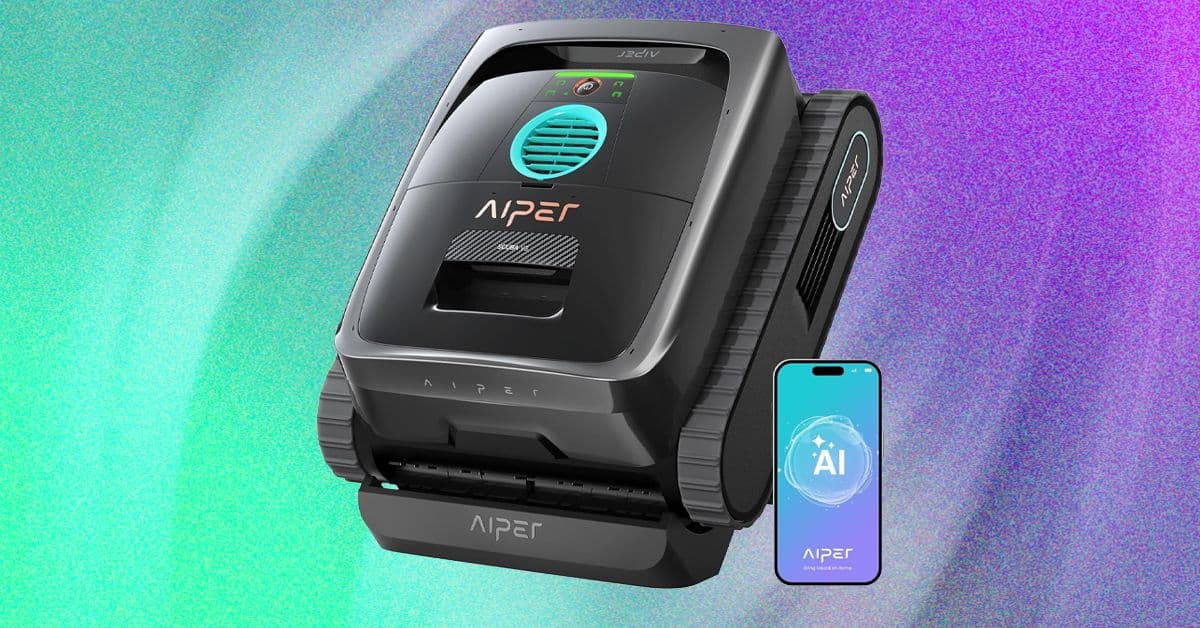
The Aiper Scuba V3, a new generation of AI-powered pool cleaning robots, is designed to revolutionize pool maintenance with its advanced computer vision and scheduling capabilities. This review examines the robot’s performance in real-world conditions, its AI-driven debris detection, and the challenges of its scheduling system. As smart home technology continues to evolve, the Scuba V3 represents a significant step forward in automating pool care, though its effectiveness depends on user configuration and environmental factors.
AI-Powered Debris Detection and Scheduling
How the AI Camera System Works
The Scuba V3’s AI camera system is its most notable feature, allowing it to actively scan the pool for debris. During testing, the robot successfully located and collected small pebbles and organic materials, even when they were placed in the water. The camera uses machine learning to identify patterns, enabling it to prioritize cleaning based on the type and location of debris. This capability is particularly useful for pools with high foot traffic or frequent guest activity, where maintaining a pristine surface is critical.
Scheduled Operational Modes
The app offers two scheduled modes: a calendar-based mode with three frequency levels (90 minutes x 2, 60 minutes x 3, or 45 minutes x 4) and a 'AI Navium' mode that claims to optimize cleaning based on historical data. However, the AI Navium mode has been criticized for its limited functionality. While it uses past cleaning patterns to create a schedule, it often defaults to a full cleaning session, draining the battery and failing to adhere to the user’s intended schedule. This inconsistency highlights a gap between the robot’s advertised capabilities and its practical performance.
Performance in Real-World Testing
Efficiency in Debris Removal
During testing, the Scuba V3 demonstrated impressive efficiency in removing both organic and synthetic debris. It cleared visible detritus from the pool floor in under two hours, with a 96% cleanliness rating for synthetic materials. The robot’s ability to scrub walls and waterlines without manual intervention is a major advantage, particularly for pools with high usage. However, the robot’s performance was limited by its battery life, which required users to plan cleaning sessions carefully to avoid overuse.
Battery Life and Operational Constraints
The Scuba V3’s battery life is a key consideration for users. While the robot can clean up to 1,600 square feet, its operating time is constrained by the scheduled modes. On-demand modes drain the battery quickly, forcing users to manage cleaning sessions within a 175-minute window. This limitation is particularly challenging for users with irregular schedules, as the robot’s timer system requires manual intervention to ensure timely retrieval after each run.
Challenges with the AI Schedule Mode
Inconsistent Scheduling Behavior
The AI Navium mode, despite its name, proved to be a source of frustration during testing. The robot would generate a five-day schedule based on previous usage but often ignored it, instead opting for a full cleaning session that drained the battery. This inconsistency led to missed schedules and random cleaning times, undermining the robot’s intended purpose of reducing user involvement. Users who rely on automated scheduling may find the system unreliable, especially in high-traffic pools.
User Experience and Maintenance
The Scuba V3’s maintenance requirements are a mixed bag. The filter basket design is user-friendly, with a large lid that makes cleaning accessible. However, the interior mesh filter is difficult to clean, often trapping debris between the mesh and the basket. Users are advised to clean it after each run, even if it’s not perfect. This challenge is common in many pool robots, highlighting the trade-off between automation and manual upkeep.
Broader Implications for Pool Maintenance Technology
The Future of Automated Pool Care
The Scuba V3 represents a significant advancement in pool maintenance technology, leveraging AI to improve efficiency and user convenience. As smart home automation continues to grow, devices like the Scuba V3 are likely to become more common in residential and commercial settings. However, the robot’s current limitations in scheduling and maintenance suggest that further refinements are needed to ensure reliability and user satisfaction.
- The Scuba V3’s AI camera system effectively detects and removes both organic and synthetic debris.
- Scheduled modes have limitations, with the AI Navium mode often defaulting to full cleaning sessions.
- Battery life and manual scheduling requirements are critical factors for users.
Frequently Asked Questions
- How does the AI schedule mode work?
- The AI Navium mode uses historical data to create a cleaning schedule, but it often defaults to a full cleaning session, leading to inconsistent results.
- What are the maintenance challenges?
- The interior mesh filter is difficult to clean, trapping debris between the mesh and the basket, requiring regular manual intervention.
- How long does the battery last?
- The battery life is limited by scheduled modes, with on-demand modes draining the battery quickly, requiring careful planning for cleaning sessions.