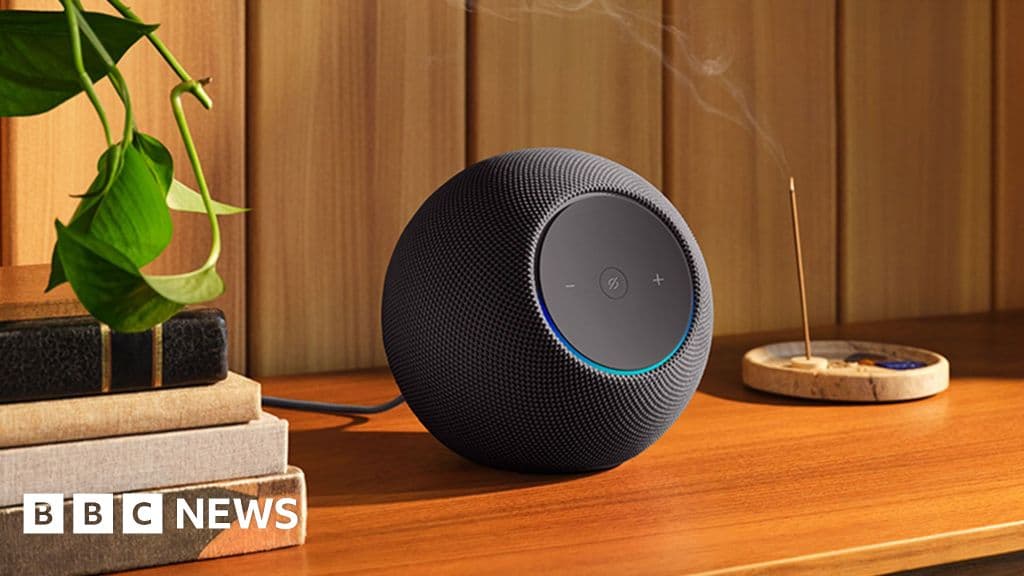
Amazon is rolling out a major AI-driven upgrade for its UK-based Alexa digital assistant, transforming the Echo smart speaker into a more conversational and proactive tool. The new Alexa+ feature, which became available on June 10, 2024, introduces deeper contextual understanding, more natural dialogue, and proactive suggestions—all designed to address longstanding criticism that Alexa has stagnated since its 2016 debut. As competitors like ChatGPT, Google’s Gemini, and Anthropic’s Claude redefine user expectations for AI interactions, Amazon’s move signals a critical pivot to retain its dominant position in the smart speaker market.
What Is Alexa+? How the AI Upgrade Changes Voice Assistant Interactions
Alexa+ represents Amazon’s most significant overhaul of its voice assistant since the Echo’s launch nearly a decade ago. The update leverages advanced large language models (LLMs) to enable Alexa to follow multi-turn conversations, remember context from previous interactions, and provide more detailed, human-like responses. For example, when asked about the weather, the original Alexa might respond with a simple "no rain is expected today," while Alexa+ offers a more conversational reply: "Actually, you can leave the brolly at home—sunny skies and no rain are in the forecast, so you’ll be all set without it."
Key Enhancements in Alexa+ Conversations
- Contextual memory: Alexa+ can recall prior questions in a conversation, such as remembering a user’s preference for tea over coffee when suggesting a recipe.
- Proactive suggestions: The assistant may remind users of upcoming events or recommend actions based on calendar entries or shopping lists.
- More natural phrasing: Responses are less robotic, incorporating conversational fillers like "actually" or "you’ll be all set" to mimic human speech patterns.
- Deeper knowledge integration: Alexa+ can pull from a broader range of sources to provide more accurate answers to complex questions.
Why Amazon Is Pivoting Now: The Rise of AI Chatbots and Smart Speaker Criticism
The urgency behind Alexa+ stems from a growing perception that Amazon’s voice assistant has fallen behind the curve. While platforms like ChatGPT and Google’s Gemini have evolved to handle nuanced, multi-step queries with ease, Alexa’s original design—centered on single-command interactions—has left many users frustrated. Ed Freed, a strategist at marketing agency Rapp UK, once famously dismissed Alexa as "nothing more than expensive kitchen timers" for the majority of its users, highlighting the gap between its capabilities and modern AI expectations. This criticism has only intensified as other tech giants integrate cutting-edge AI into their ecosystems.
The Smart Speaker Market’s Evolution and Amazon’s Struggles
Smart speakers, once hailed as the next frontier of consumer tech, have faced a plateau in innovation. Google’s Nest devices, for instance, are transitioning to Gemini for Home, but their hardware has remained largely unchanged since 2021, according to Android Police. Meanwhile, Apple has leaned into its HomePod Mini’s audio quality, and Samsung’s Galaxy range integrates with Bixby—a far cry from the conversational depth offered by standalone AI chatbots. Amazon’s own data reveals a paradox: despite selling over 52% of UK households having tried an Echo device, the platform has struggled to monetize beyond hardware sales. Since 2023, Alexa has racked up 114 billion interactions in the UK alone—roughly 1,500 per person in the population—but the lack of subscription or advertising revenue has left the project bleeding billions annually.
The Business Case for Alexa+: Subscriptions, Data, and the Future of Smart Homes
Alexa+ is priced at £19.99 per month or free for Amazon Prime members, who pay £95 annually. New Echo devices will include Alexa+ by default, while existing users can upgrade online. For Amazon, the financial upside isn’t just subscription revenue—it’s the potential to unlock deeper user data. More conversational interactions mean richer behavioral insights, which could be leveraged for targeted advertising, personalized recommendations, or even partnerships with third-party services. Historically, Amazon’s ‘Devices and Services’ division has been a loss leader, with reports of billions in losses and multiple rounds of layoffs in 2022 and early 2025 targeting this unit. By enhancing Alexa’s utility, Amazon may finally bridge the gap between hardware sales and recurring revenue.
User Reactions and the Risk of Polarization
It will be interesting to see how users react—we expect this could be polarizing, with some enjoying the more relaxed, familiar interactions while others may find it disconcerting."
Jessica Miller, head of data insights at FDM/CCS Insight, highlights the potential for mixed reactions to Alexa+. While some users may appreciate the more human-like interactions, others could feel unsettled by the assistant’s newfound verbosity or perceived intrusiveness. The shift from transactional commands (e.g., "play music") to open-ended dialogue (e.g., "tell me about today’s news") represents a fundamental change in how people engage with their devices. For long-time Alexa users accustomed to its concise responses, the upgrade might feel jarring—especially if the AI oversteps into unsolicited advice or overly familiar tones.
How Alexa+ Compares to Competitors in the UK Market
Amazon isn’t the only player betting on smarter voice assistants. Google’s Gemini for Home, which integrates the company’s advanced AI model, promises similar conversational depth, though its hardware ecosystem (including the Nest Hub) has seen limited updates since 2021. Apple’s HomePod, with its focus on spatial audio and Siri’s integration, caters to users who prioritize audio quality over AI flexibility. Meanwhile, standalone AI chatbots like ChatGPT and Claude continue to set the standard for natural language processing, often outperforming voice assistants in raw capability. Alexa+ aims to close this gap by borrowing techniques from these platforms while tailoring them to the smart home environment.
Key Takeaways: What This Means for Consumers and Amazon
- Alexa+ introduces more natural, contextual conversations to the UK’s Echo devices, addressing criticism that Alexa has lagged behind modern AI chatbots.
- The update is free for Prime members and costs £19.99/month for others, positioning it as both a value-add and a potential revenue stream for Amazon.
- More conversational interactions could provide Amazon with richer user data, enabling better ad targeting and partnerships.
- The upgrade risks alienating users accustomed to Alexa’s original, transactional style, requiring a delicate balance in design.
- Amazon’s long-term profitability in smart speakers hinges on Alexa’s ability to evolve beyond a simple voice command tool.
The Bigger Picture: Can Smart Speakers Survive the AI Revolution?
The smart speaker market is at a crossroads. Once seen as a revolutionary category, devices like Echo and Google Nest now face existential questions: What role do they play in an era dominated by all-purpose AI assistants? The answer may lie in specialization—either as hubs for smart home control, audio entertainment, or as gateways to Amazon’s sprawling retail ecosystem. Alexa+’s upgrade is a bold attempt to redefine its purpose, but it remains to be seen whether users are ready to abandon the simplicity of "Alexa, play my workout playlist" for a more talkative, opinionated assistant. For Amazon, the stakes are high: without a compelling reason to upgrade beyond hardware, the company risks seeing Alexa become a relic of a bygone tech era.
Frequently Asked Questions About Alexa+ in the UK
Frequently Asked Questions
- Is Alexa+ available for all Echo devices?
- New Echo devices will include Alexa+ by default, while owners of older models can upgrade online. The feature requires an internet connection and may not be compatible with all third-party Alexa-enabled devices.
- How does Alexa+ pricing work for Prime members?
- Amazon Prime members can access Alexa+ for free as part of their £95 annual subscription. Non-Prime users pay £19.99 per month. There is no long-term contract required.
- Will Alexa+ improve smart home automation?
- Yes, Alexa+’s improved contextual understanding allows for more complex smart home routines. For example, it could suggest turning on lights based on weather forecasts or prior user behavior patterns.