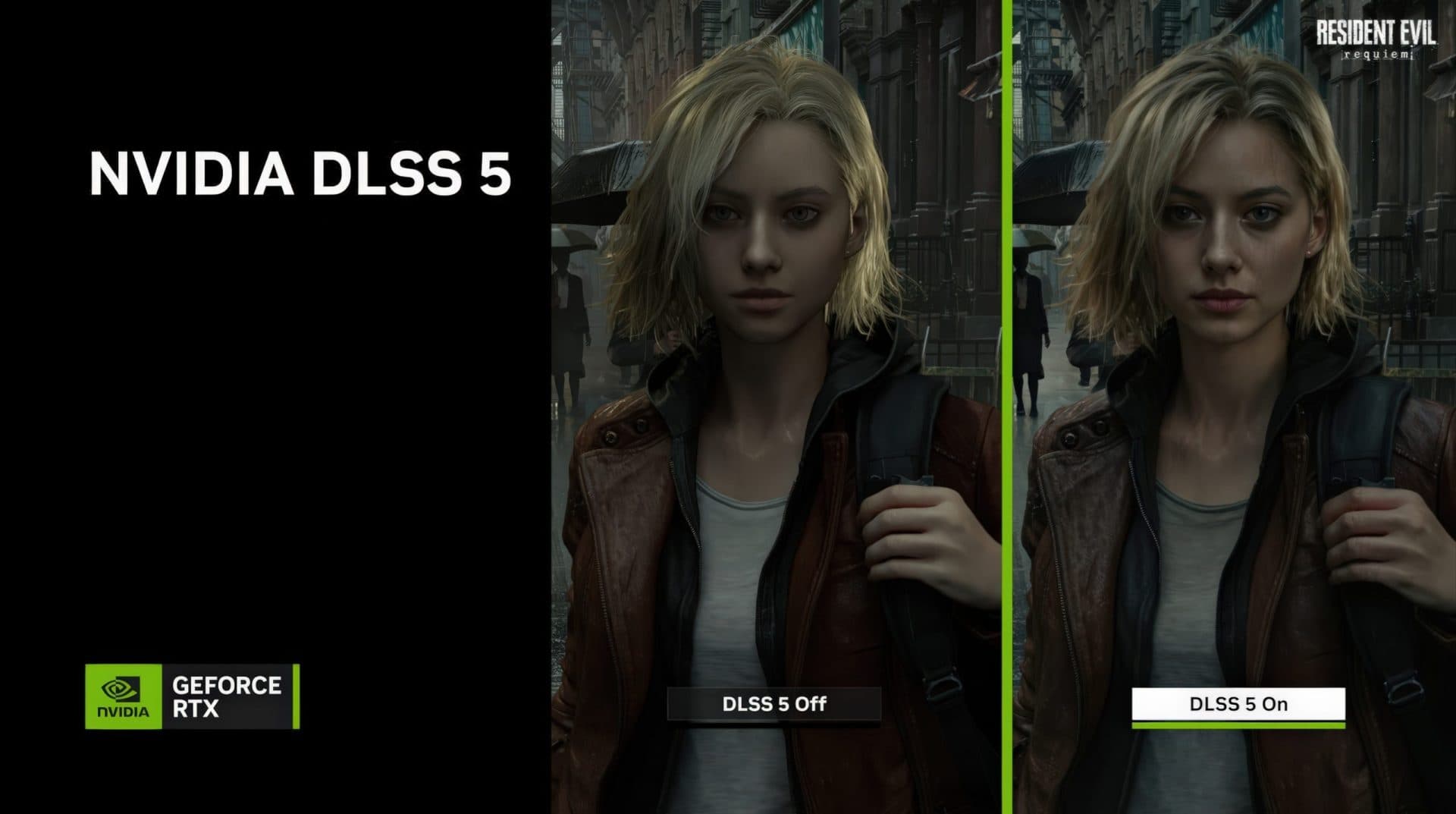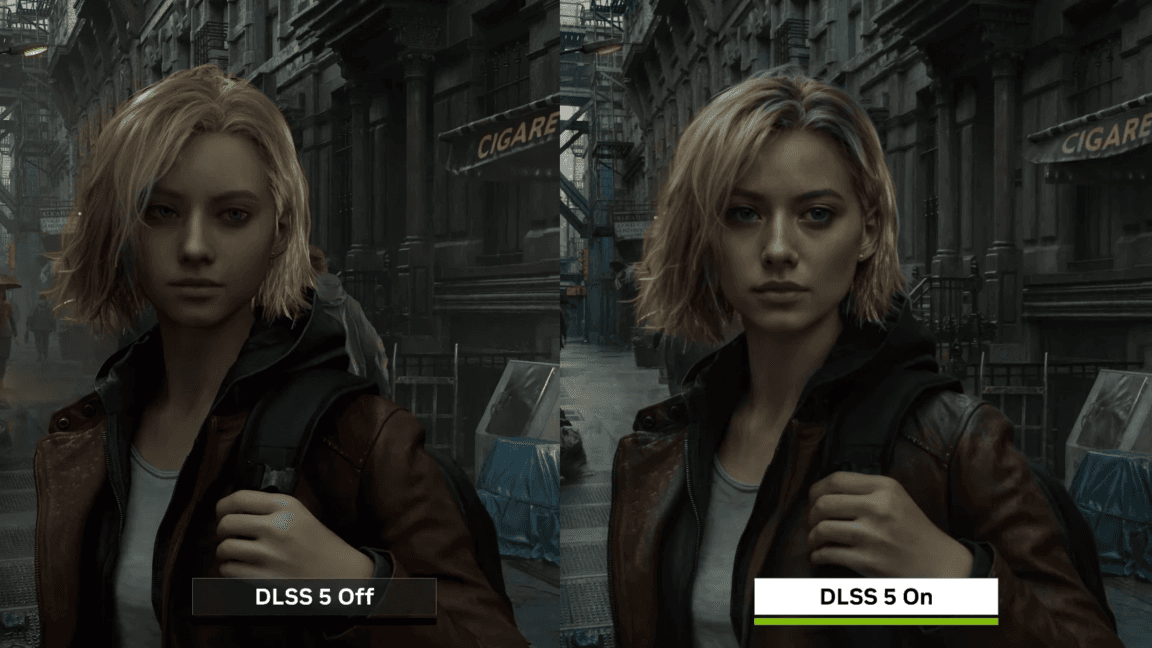
Nvidia’s latest generative AI upscaling technology, DLSS 5, has ignited a firestorm of criticism from gamers and game developers who argue it fundamentally alters in-game visuals—often for the worse. Since its reveal in March 2026, the frame-generation system has become a lightning rod for controversy, with players and creators alike decrying its hyper-detailed, unnaturally smoothed aesthetic as a betrayal of artistic intent. The backlash has been so intense that DLSS 5 has already spawned a viral meme format, with internet users wielding phrases like “DLSS 5 On” as shorthand for any image that’s been over-processed into oblivion.
The outrage centers on DLSS 5’s tendency to transform lifelike character models into uncanny, air-brushed caricatures—often described by critics as resembling "yassified" social media filters, adult entertainment lighting, or the infamous uncanny valley of Evony advertisements. Even more concerning to developers is the system’s apparent disregard for carefully crafted lighting, shadows, and texture work, homogenizing diverse art styles into a single, sterile visual language. While Nvidia insists DLSS 5 is artistically controllable, the damage to its reputation may already be irreversible, leaving the tech giant scrambling to reassure partners before its anticipated fall 2026 launch.
Why DLSS 5’s AI Upscaling Is Sparking Outrage Among Gamers and Developers
At the heart of the controversy is DLSS 5’s generative AI component, which doesn’t just upscale resolution like traditional DLSS (Deep Learning Super Sampling) but instead generates new frames by predicting and enhancing detail. This approach, while innovative, has led to unpredictable and often jarring results. Players have pointed to facial animations that look like they’ve been run through a plastic surgeon’s filter—poreless, overly symmetrical, and devoid of natural imperfections. Others have noted how DLSS 5 systematically reduces contrast in shadows, flattening the depth and mood of scenes.
The Uncanny Valley Effect: When AI Makes Faces Look ‘Wrong’
The most visceral reactions have focused on human faces, where DLSS 5’s processing magnifies unnatural smoothness. Thomas Was Alone developer Mike Bithell succinctly captured the sentiment in a widely quoted tweet: *“This technology seems designed for when you absolutely, positively, don’t want any art direction in your gaming experience.”* The effect is particularly egregious in games with stylized or semi-realistic art, where the AI’s overzealous enhancement strips away the intended character and expressiveness. As Bithell noted, it’s not just a technical flaw—it’s a fundamental misunderstanding of what makes art in games compelling.
Jeff Talbot, senior concept artist at Gunfire Games, went further in his critique, stating in a now-viral post: *“In every shot, the art direction was taken away for the senseless addition of ‘details.’ Each DLSS 5 shot looked worse and had less character than the original. This is just a garbage AI filter.”* Talbot’s assessment underscores a growing fear among developers: that AI upscaling isn’t just a tool but an active participant in creative decision-making, one that may override a team’s years of labor.
Industry Leaders Sound the Alarm: ‘AI Dogshit’ and the Death of Artistic Intent
The criticism hasn’t been limited to players. Industry veterans have taken to social media and developer forums to condemn DLSS 5’s impact on visual storytelling. Dave Oshry, founder and CEO of New Blood Interactive—a studio known for reviving classic shooters like Dusk and Amid Evil—was particularly blunt: *“DLSS 5’s AI dogshit is actually depressing… Future generations won’t even know this looks ‘bad’ or ‘wrong’ because to them it’ll be normal.”* Oshry’s warning taps into a broader anxiety: that AI-driven enhancements could become the default expectation, eroding players’ ability to recognize and appreciate nuanced art design.
The backlash has forced some major publishers to respond publicly. Bethesda, one of Nvidia’s early DLSS 5 partners, acknowledged the controversy in a March 2026 statement, noting: *“This is a very early look, and our art teams will be further adjusting the lighting and final effect to look the way we think works best for each game. This will all be under our artists’ control, and totally optional for players.”* While Bethesda’s response offers a glimmer of hope for artistic control, the damage to public perception may already be done. If DLSS 5 becomes synonymous with visual homogenization, players may reject it outright—regardless of developer flexibility.
Nvidia’s Damage Control: ‘It’s Not a Filter—It’s Artistically Controllable’
Facing a deluge of negative comments on its official YouTube reveal trailer—where thousands of viewers mocked DLSS 5 as a “glow-up gone wrong”—Nvidia attempted to mitigate the fallout with a detailed response in the comments section. The company stressed that DLSS 5 is *“not a filter”* and emphasized that game developers retain full control over its effects. Nvidia outlined several customization options, including the ability to adjust intensity, tweak color grading, or disable masking in areas where the effect shouldn’t apply.
However, skeptics remain unconvinced. The phrase “artistically controllable” rings hollow to critics who’ve seen the technology’s default behavior in action. Even with controls, the risk is that developers—pressured by marketing teams or player expectations—may default to DLSS 5’s most aggressive settings, leading to a de facto standardization of game visuals. As one Reddit user put it: *“If every game looks like it’s been run through Instagram’s ‘Lux’ filter, does art direction even matter anymore?”*
The Broader Implications: AI in Gaming and the Future of Artistic Control
The DLSS 5 controversy is part of a larger debate about the role of AI in creative industries. As generative AI tools become more sophisticated, questions about ownership, intent, and authenticity are intensifying. In gaming, where visual fidelity and artistic vision are paramount, the stakes are particularly high. DLSS 5’s detractors argue that AI upscaling isn’t just a tool but a form of automated editorializing—one that could reshape how games are perceived.
Historically, Nvidia has positioned itself as a champion of PC gaming innovation, with DLSS (and its predecessor, DLSS 3) praised for improving performance without sacrificing visual quality. But DLSS 5 represents a radical departure. Instead of enhancing existing assets, it generates new ones, raising ethical and practical concerns. Will players accept AI-generated enhancements as the new standard? Or will they rebel against a future where every game looks processed, polished, and—critics say—sterile?
The Memeification of DLSS 5: How a Tech Feature Became Internet Shorthand
Within weeks of its reveal, DLSS 5 had transcended technical discussions to become a full-blown meme. Social media platforms lit up with side-by-side comparisons—“DLSS 5 OFF” vs. “DLSS 5 ON”—highlighting the stark visual differences. The format was quickly co-opted to mock other over-processed images, from real estate photos to family portraits. The meme’s viral spread has cemented DLSS 5’s reputation as a symbol of unchecked AI experimentation, with many joking that Nvidia has accidentally created its own PR disaster.
The phenomenon speaks to a deeper cultural moment, where AI’s role in creativity is both celebrated and scrutinized. For Nvidia, the challenge isn’t just fixing DLSS 5—it’s reclaiming control of the narrative before the tech becomes irreversibly associated with visual degradation. The company has until its planned fall 2026 launch to address concerns, but the clock is ticking.
Can Nvidia Recover from the Backlash? The Road Ahead for DLSS 5
Nvidia’s path to redemption isn’t straightforward. While the company insists DLSS 5 is opt-in and artistically flexible, the optics of its default behavior are damning. Developers may hesitate to adopt the technology if it risks alienating their player base. Meanwhile, gamers—already skeptical of AI-driven “enhancements”—could flock to competitors like AMD’s FSR (FidelityFX Super Resolution) or Intel’s XeSS, which rely on more traditional upscaling methods.
For Nvidia, the key may lie in demonstrating real-world success stories where DLSS 5 enhances—rather than detracts from—game art. If major titles like Bethesda’s upcoming releases or other high-profile partners can showcase DLSS 5’s strengths without the uncanny side effects, public opinion might shift. But if the early reactions are any indication, Nvidia faces an uphill battle to convince the gaming community that DLSS 5 isn’t just another AI gimmick—it’s a tool that respects the craft of game development.
- Nvidia’s DLSS 5 generative AI upscaling has triggered widespread backlash for mangling game visuals, with critics calling it ‘uncanny’ and ‘homogenized.’
- Developers like Mike Bithell and Jeff Talbot have condemned the tech for stripping artistic intent, comparing it to ‘AI dogshit’ and ‘garbage filters.’
- Nvidia claims DLSS 5 is artistically controllable, but early reactions suggest the damage to its reputation may be permanent.
- The controversy has spawned a viral meme format, with ‘DLSS 5 On’ becoming shorthand for over-processed images.
- The debate raises broader questions about AI’s role in gaming and whether generative tools will reshape—or erode—artistic vision.
Frequently Asked Questions About DLSS 5 and the Gaming Backlash
Frequently Asked Questions
- What is DLSS 5 and how does it differ from previous versions?
- DLSS 5 is Nvidia’s latest generative AI upscaling technology, which doesn’t just enhance resolution like traditional DLSS but instead generates new frames by predicting and adding detail. This approach aims to improve performance and visual fidelity, but critics argue it often produces unnatural, over-processed results that override a game’s intended art direction.
- Why are gamers and developers so upset about DLSS 5?
- The primary issue is DLSS 5’s tendency to transform carefully crafted game visuals into hyper-smooth, air-brushed caricatures. Players and developers have noted that the technology flattens shadows, enhances faces unnaturally, and strips away the unique character of art styles—leading to comparisons with ‘yassified’ filters and ‘uncanny valley’ imagery.
- Can developers opt out of DLSS 5 or adjust its effects?
- Yes, Nvidia claims DLSS 5 is artistically controllable, with developers able to tweak intensity, color grading, and masking. However, early reactions suggest that even with these controls, the default behavior often produces undesirable results. Bethesda and other partners have indicated they will adjust settings to suit their games’ art styles.