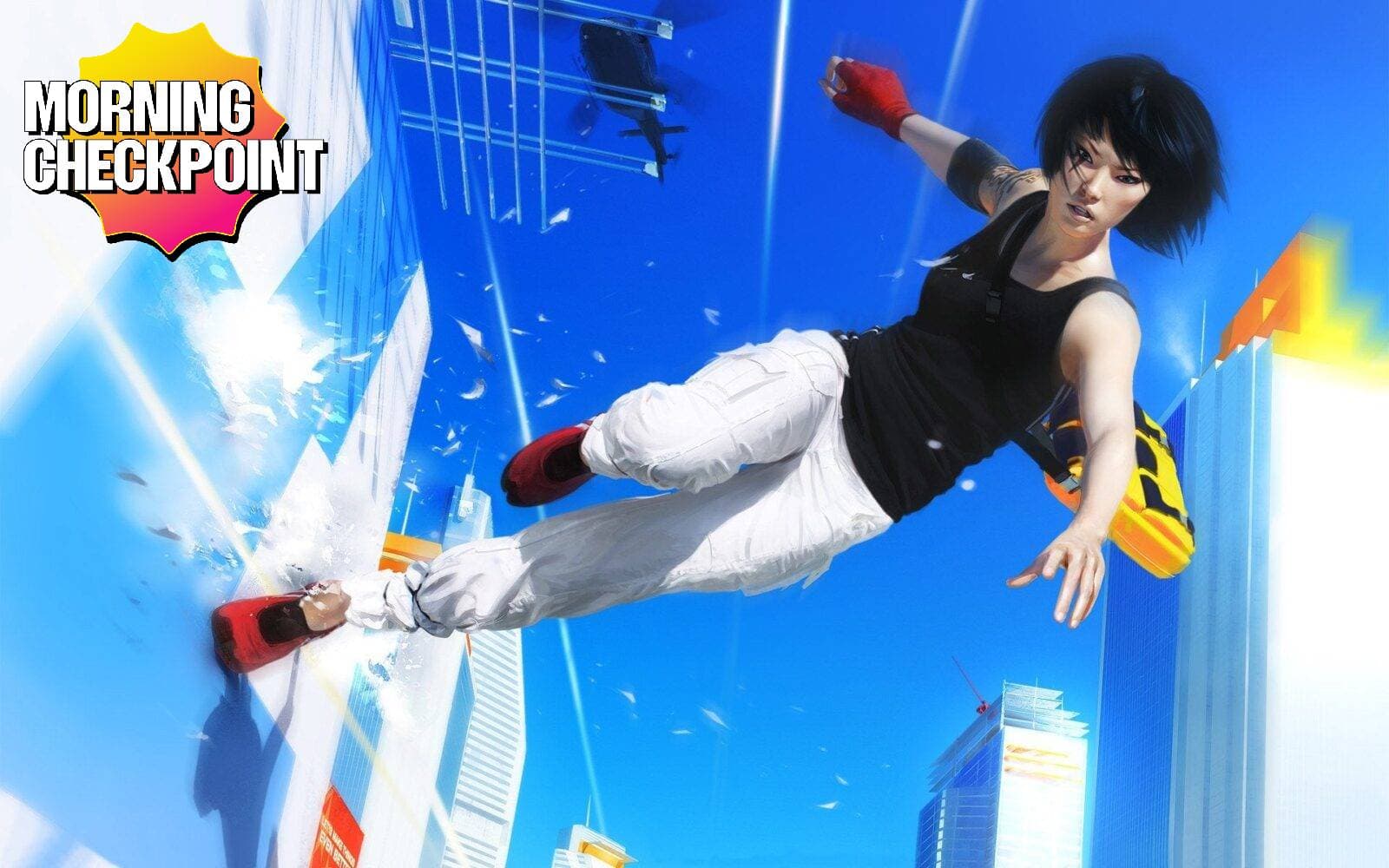
A newly unearthed early build of *Mirror’s Edge*, the 2008 cult classic that redefined parkour-based action games, has surfaced with an unexpected twist: protagonist Faith’s opening narration is far chattier—and significantly cringe-inducing—than gamers remember. The discovery, made possible through painstaking reverse engineering of a pre-release PlayStation 3 version, offers a rare glimpse into the game’s development process while reigniting debates about creative direction in early 2000s gaming. Meanwhile, the broader industry grapples with fresh controversies, from Nvidia’s divisive DLSS 5 technology to Nintendo’s imminent Star Fox announcement and Nickelodeon’s latest foray into party games.
How a Rare Mirror’s Edge Early Build Rewrites Gaming History
On April 8, 2026, a YouTube creator known as Softsoundd dropped a bombshell: after months of reverse engineering, they had restored an early, unplayable build of *Mirror’s Edge*—a game originally released in November 2008—to full functionality. The achievement required fixing 306 corrupted functions, repairing the broken EBOOT fSELF format, and resolving Unreal Engine package bugs, a herculean task that finally made the nine-month-old prototype playable. While the visuals and mechanics are rougher than the final product, the most striking revelation is Faith’s introductory dialogue, which diverges sharply from her iconic, silent confidence in the released game.
Faith’s Awkwardly Earnest Opening Monologue
In the restored build, Faith doesn’t begin her journey with the game’s signature silence. Instead, she delivers a verbose, almost earnest explanation of the game’s dystopian city, mirroring the exposition-heavy tone of 1990s sci-fi films. The line—"In this city of mirrors, the edge is where you still have a choice"—is delivered with a sincerity that borders on unintentional parody, starkly contrasting with the confident, action-oriented Faith players know from the final game. Eurogamer, which covered the discovery, noted that the line feels like it belongs in a forgotten late-'90s space opera rather than a gritty parkour title. The monologue, while tonally jarring, serves as a fascinating artifact of early 2000s game design, where developers often leaned into cinematic storytelling—sometimes at the expense of immersion.
What the Early Build Reveals About Mirror’s Edge’s Development
Beyond Faith’s cringe-inducing intro, the early build includes a hidden storm drain time trial that was cut from the final release, offering a rare look at discarded content. The build also exposes the game’s rough visual fidelity, with lower-resolution textures and less polished animations than the shipped version. These differences underscore the iterative nature of game development in the mid-2000s, when studios like EA DICE were still refining the balance between cinematic storytelling and responsive gameplay. The restored build is a testament to the dedication of modding communities, which often preserve and revive abandoned or unfinished game prototypes.
Nvidia’s DLSS 5 Faces Growing Backlash Among PC Gamers
The same week that *Mirror’s Edge*’s early build surfaced, PC Gamer’s annual reader survey revealed a significant backlash against Nvidia’s DLSS 5, the latest iteration of its AI-powered upscaling technology. Of the 70% of respondents who said they would not use DLSS 5, a third cited ethical concerns, particularly around Nvidia’s "slop face" demo—a controversial promotional video featuring synthetic faces generated by AI. The term "slop face" has since become shorthand for the broader debate over AI’s role in gaming, with critics arguing that Nvidia’s aggressive marketing of unproven technology risks eroding trust in PC gaming’s creative integrity. The survey results reflect a growing skepticism toward AI-driven enhancements in gaming, echoing concerns about data privacy, job displacement in the industry, and the authenticity of player experiences.
Nintendo Teases Major Star Fox Reveal in April
Gaming leaker NateTheHate has reignited speculation about Nintendo’s next major reveal, stating that a Star Fox game announcement is imminent—likely to arrive via Twitter or the Nintendo Today app sometime in April 2026. The news follows years of fan demand for a new entry in the franchise, which has been dormant since *Star Fox Zero* in 2016. Rumors suggest the reveal could coincide with Nintendo’s financial earnings report, a strategy the company has used in the past to generate buzz ahead of E3 or other major events. While details remain scarce, the timing aligns with Nintendo’s pattern of using April for surprise announcements, as seen with the 2021 reveal of *Metroid Dread*.
Nickelodeon’s Extreme Tennis: Next! Targets Nintendo’s Party Game Dominance
In a bold move to compete with Nintendo’s *Mario Kart* and *Mario Tennis* franchises, Nickelodeon has announced *Extreme Tennis: Next!*, a party game featuring SpongeBob SquarePants, the Ninja Turtles, and other iconic characters. Unlike Nintendo’s multiplatform exclusives, Nickelodeon’s title will launch on PS5, Xbox Series X/S, PC, and Switch, signaling a strategic push into the party game market. The game promises chaotic tennis matches with Nickelodeon’s signature humor and chaotic physics, a formula that has worked for the company in past titles like *Nickelodeon All-Star Brawl*. Industry analysts see this as part of a broader trend of media companies leveraging nostalgia and IP to challenge Nintendo’s dominance in family-friendly gaming.
Assassin’s Creed Black Flag Remake Gets Mid-April Reveal
Insider Gaming has reported that a full reveal of the *Assassin’s Creed Black Flag* remake is planned for mid-April 2026, following a cryptic update to *Assassin’s Creed Shadows*. Fans decoded a Title 1.1.10 patch note referencing "Black Flag Resynced," hinting at the remake’s existence. The original *Black Flag*, released in 2013, is widely regarded as one of the best entries in the franchise, praised for its open-world pirate adventure and naval combat. A remake, developed by a team separate from the original’s creators, could modernize the game with updated graphics, mechanics, and possibly new content. The timing aligns with Ubisoft’s strategy of reviving older titles amid its recent financial struggles and layoffs.
Stellar Blade 2 to Remain Under Wraps Until Ready
Shift Up, the South Korean studio behind the hit *Stellar Blade*, has doubled down on its commitment to secrecy for *Stellar Blade 2*, with CEO Kim Hyung-tae explicitly stating that the game will not be shown until it meets the studio’s quality standards. In an interview with 4Gamer (via TheGamer), Kim emphasized that the team is prioritizing "satisfactory quality" over early previews, a philosophy that contrasts with the industry’s recent trend of constant teases and trailers. The decision reflects a broader shift among developers toward controlling the narrative around their games, particularly in an era of social media hype cycles and fan speculation. *Stellar Blade 2* is expected to build on the original’s Souls-like combat and sci-fi aesthetics.
Limited Run Games Distances Itself from Former CEO Amid Controversy
Physical game publisher Limited Run Games has taken a public stance against its former CEO, Josh Fairhurst, in the wake of delays and customer backlash over canceled pre-orders. In an email to customers, the company blamed "overly optimistic and aggressive" delivery estimates under Fairhurst’s administration, framing its current leadership as adopting a "renewed fan-first focus." The move follows a pattern of publishers distancing themselves from past executives amid financial or reputational crises. Limited Run, known for its niche retro and indie game releases, has faced scrutiny in recent years over its business practices, including the cancellation of high-profile projects like *Avalanche’s* canceled Xbox 360-era fantasy game.
- An early build of *Mirror’s Edge* reveals Faith’s cringe-inducing 2007 intro monologue, offering a rare look at the game’s development history.
- Nvidia’s DLSS 5 faces backlash from 70% of PC Gamer readers, with ethical concerns over AI-generated "slop face" demos driving skepticism.
- Nintendo is poised to reveal a new *Star Fox* game in April 2026, renewing fan excitement for the dormant franchise.
- Nickelodeon’s *Extreme Tennis: Next!* challenges Nintendo’s party game dominance with a multiplatform release featuring SpongeBob and the Ninja Turtles.
- Limited Run Games distances itself from former CEO Josh Fairhurst amid delays and customer complaints over canceled pre-orders.
Why Faith’s Original Monologue Still Resonates Today
Faith’s 2007 monologue—"In this city of mirrors, the edge is where you still have a choice"—is more than just a quirky relic of early 2000s gaming. It reflects the era’s fascination with dystopian narratives, where protagonists like Faith were often burdened with expository dialogue to justify their worlds. The line’s earnestness, while jarring by modern standards, underscores a time when game developers were still grappling with how to balance storytelling and gameplay. Today, games like *Mirror’s Edge* are celebrated for their minimalist narratives and emphasis on player agency, making Faith’s original monologue a fascinating counterpoint to the game’s final design philosophy.
The Ethical Dilemma of AI in Gaming: DLSS 5’s Controversial Rise
Nvidia’s DLSS technology has long been a point of contention in the PC gaming community, praised for its performance benefits but criticized for its reliance on AI and proprietary algorithms. DLSS 5, the latest iteration, has drawn particular ire due to Nvidia’s "slop face" demo, which showcased AI-generated human faces with unsettling imperfections. Critics argue that the demo misrepresented the technology’s capabilities while raising ethical questions about the use of synthetic media in games. The backlash among PC Gamer readers—70% of whom reject DLSS 5—highlights a growing divide between gamers who prioritize performance and those concerned about the long-term implications of AI in game development.
What’s Next for Nintendo’s Star Fox Franchise?
The gaming world is abuzz with rumors that Nintendo will finally reveal a new *Star Fox* game in April 2026, ending a decade-long drought for the franchise. The last mainline entry, *Star Fox Zero*, received mixed reviews for its motion controls and divisive level design. Since then, fans have clamored for a return to the series’ roots, with a focus on on-rails shooting and the Arwing spacecraft. A new reveal could introduce gameplay mechanics, a storyline, or even a surprise spin-off, such as the rumored Netflix anime adaptation. Given Nintendo’s history of using April for surprise announcements, this timing feels particularly strategic, especially as the company seeks to capitalize on nostalgia-driven hype.
Frequently Asked Questions
- What is the ‘slop face’ demo mentioned in the article?
- The ‘slop face’ demo refers to a controversial promotional video by Nvidia showcasing AI-generated human faces for DLSS 5. Critics argued the demo misrepresented the technology’s quality and raised ethical concerns about synthetic media in gaming.
- Why was the early Mirror’s Edge build so difficult to restore?
- The early build required fixing 306 corrupted functions, repairing the EBOOT fSELF format, and resolving Unreal Engine package bugs. The game’s pre-release state was so unstable that it took months of reverse engineering to make it playable.
- When is the Assassin’s Creed Black Flag remake expected to be revealed?
- A full reveal of the *Assassin’s Creed Black Flag* remake is planned for mid-April 2026, following cryptic clues in a recent *Assassin’s Creed Shadows* update.