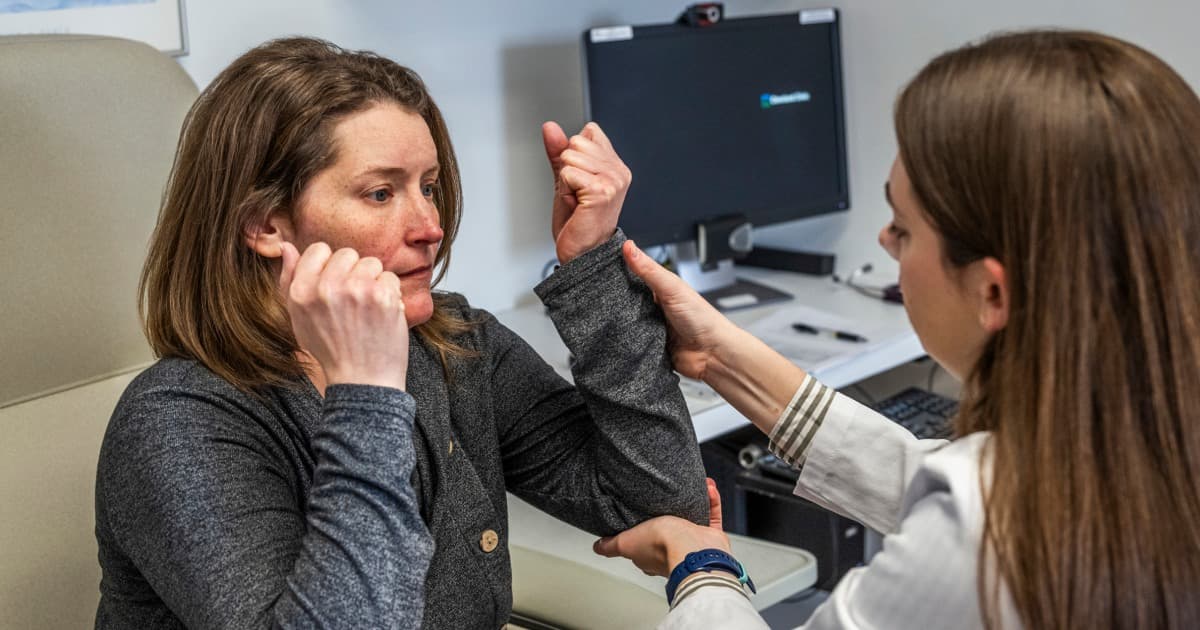
Grace Miller, a 46-year-old mother of two from Fishers, Indiana, was just 24 when she received a life-altering diagnosis: multiple sclerosis (MS). For years, she battled severe fatigue, vertigo, and vision loss, symptoms initially misdiagnosed as narcolepsy. Now, after 15 years of debilitating treatments and reliance on a cane, Miller is among the first patients testing a groundbreaking cancer therapy—CAR-T—that researchers hope could revolutionize MS treatment.
What Is CAR-T Therapy and How Could It Help MS Patients?
CAR-T (chimeric antigen receptor T-cell) therapy has been a game-changer in oncology, particularly for blood cancers like leukemia and lymphoma. The treatment involves extracting a patient’s T cells, reprogramming them to target cancerous cells, and reinfusing them into the body. This approach has shown remarkable success in cancer patients, with some achieving long-term remission.
Now, researchers are exploring whether CAR-T can be repurposed for autoimmune diseases like MS, where rogue B cells attack the myelin sheath protecting nerve fibers. Unlike existing MS drugs, which struggle to penetrate the blood-brain barrier, CAR-T cells may be able to reach and neutralize these harmful B cells in the central nervous system.
The Science Behind CAR-T for MS
In MS, dysregulated B cells trigger inflammation and damage to myelin, leading to symptoms like vision loss, mobility issues, and cognitive decline. Current treatments, such as B cell-depleting antibodies, can slow progression but don’t halt the disease. CAR-T offers a potential advantage by targeting B cells directly in the brain and spinal cord.
"Not only would they kill B cells in the blood, like our already approved antibody therapies do, but also the ones that are hiding in the brain, which we think play an important part in progression." — Dr. Jeffrey Cohen, Cleveland Clinic
Early Trials and Patient Experiences
Miller enrolled in a Phase 1 trial at the Cleveland Clinic, one of several early-stage studies exploring CAR-T for MS. Sponsored by Bristol Myers Squibb, the trial includes patients with both progressive and relapsing MS. After undergoing chemotherapy to prepare her immune system, Miller received her CAR-T infusion in May 2023.
While she still uses a cane, Miller has seen improvements. "My friend brought her 18-month-old to my house this fall, and I picked her up for the first time standing up. I have never done that before," she shared. Researchers caution that long-term results are still unknown, but early signs are encouraging.
Challenges and Skepticism in the Medical Community
Not all experts are convinced CAR-T will outperform existing MS treatments. Dr. Rhonda Voskuhl, director of UCLA’s MS Program, questions whether the therapy can reverse neurological damage in progressive MS, where much of the harm is irreversible. "We need therapies that protect and heal brain cells, not just anti-inflammatory treatments," she said.
Dr. Enrique Alvarez of the Rocky Mountain MS Center agrees, noting that stem cell research may hold more promise for repairing damaged nerves. However, he acknowledges that CAR-T could still offer benefits, particularly if it reduces the need for lifelong MS medications.
Risks and Future Directions
CAR-T therapy is not without risks. Cytokine release syndrome and immune effector cell-associated neurotoxicity syndrome (ICANS) are serious potential side effects. Dr. Cohen emphasizes that while CAR-T has been extensively studied in cancer, its safety and efficacy in MS patients remain unproven.
Despite these challenges, the medical community remains hopeful. CAR-T technology is rapidly evolving, with major pharmaceutical companies investing heavily in research. Even if CAR-T doesn’t become a standard MS treatment, the trials could provide critical insights into the disease’s mechanisms.
- CAR-T therapy, originally developed for cancer, is being tested as a potential treatment for multiple sclerosis.
- Early trials suggest the therapy may target harmful B cells in the brain, offering a new approach to halting MS progression.
- While promising, CAR-T for MS is still in early stages, and long-term safety and efficacy remain uncertain.
Frequently Asked Questions
Frequently Asked Questions
- What is the difference between CAR-T therapy for cancer and MS?
- CAR-T for cancer targets tumor cells, while CAR-T for MS is designed to attack overactive B cells that damage the nervous system. The approach is similar, but the targets and potential risks differ.
- How long does it take to see results from CAR-T therapy in MS trials?
- Early results, like Grace Miller’s improvements, may appear within months, but long-term outcomes could take years to assess. Researchers emphasize that these are exploratory trials.
- Are there other treatments being tested for MS besides CAR-T?
- Yes, stem cell therapies and advanced antibody treatments are also in development. CAR-T is just one of several innovative approaches being explored to better manage MS.