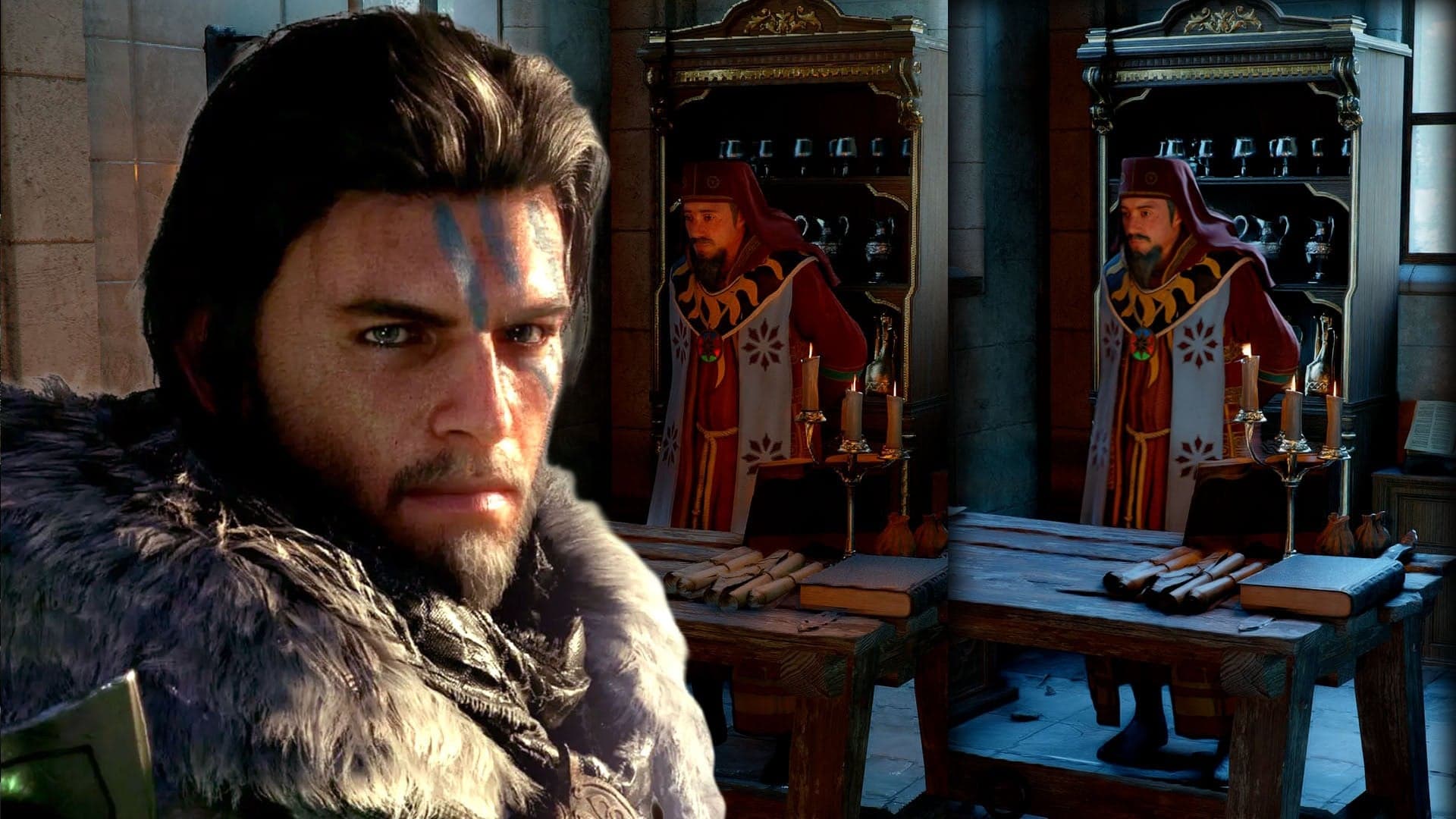
When Pearl Abyss' open-world RPG Crimson Desert launched on PC, it introduced a groundbreaking visual technique: surfel-based ray-traced global illumination (RTGI). But the most transformative upgrade for PC players comes not from traditional ray tracing, but from Nvidia's DLSS ray reconstruction and AMD's FSR Redstone ray regeneration. These machine learning-powered denoisers dramatically enhance lighting quality, making shadows more defined, reflections more stable, and overall scenes more immersive—often with a visual impact comparable to toggling ray tracing on or off.
- Nvidia's ray reconstruction and AMD's ray regeneration deliver near-transformative lighting upgrades in Crimson Desert.
- The ML-based denoisers fix low-ray-count artifacts like ghosting and flat lighting, but at a performance cost.
- Both solutions have minor issues, including upscaling integration (AMD) and displacement map bugs (Nvidia).
Why Crimson Desert's Lighting Breakthrough Matters for Next-Gen Gaming
Crimson Desert's lighting system is built on RTGI, which simulates how light bounces off surfaces in real time. However, to maintain performance across consoles and high-end PCs, the game uses aggressive optimizations—like reducing ray counts to 1/16th per pixel and running reflections at quarter resolution. This trade-off results in flat lighting, ghostly reflections, and unlit grass. The solution? Advanced denoisers that reconstruct missing visual data using AI.
The Role of ML in Modern Ray Tracing
Traditional denoisers smooth out the noise from low-ray-count rendering, but they often lack detail. Nvidia's ray reconstruction and AMD's ray regeneration go further, using machine learning to predict and restore lost visual fidelity. This isn't just a minor tweak—it's a paradigm shift in how lighting is rendered in real-time games.
How Nvidia and AMD's Denoisers Compare in Crimson Desert
Both Nvidia and AMD's solutions address the same core issues—ghosting, flat lighting, and unstable reflections—but with different approaches. Nvidia's ray reconstruction integrates seamlessly with DLSS upscaling, while AMD's ray regeneration works independently, sometimes resulting in a sub-native look. Performance-wise, enabling these features comes at a cost: a 14% frame-rate drop on an RTX 5080 and a 24% drop on an RX 9070 XT when paired with FSR 4.
Performance Trade-Offs and Bugs
While the visual improvements are substantial, they aren't without drawbacks. Nvidia's implementation has minor bugs, such as displacement map inconsistencies and disappearing rain. AMD's solution, while powerful, lacks integrated upscaling, leading to a noticeable loss in sharpness. Pearl Abyss is aware of these issues and may address them in updates.
The Broader Implications for Gaming
Crimson Desert serves as a case study for the future of real-time lighting in games. As ray tracing becomes more common, the need for efficient denoising will only grow. ML-powered solutions like Nvidia's and AMD's could set the standard for how developers balance visual fidelity and performance in next-gen titles.
Frequently Asked Questions
Frequently Asked Questions
- What is ray reconstruction in Nvidia's DLSS?
- Ray reconstruction is an AI-powered denoising technique that predicts and restores missing visual details in ray-traced scenes, improving lighting and reflections without requiring more rays.
- Does enabling ML denoisers affect performance in Crimson Desert?
- Yes, enabling Nvidia's ray reconstruction or AMD's ray regeneration reduces frame rates by 14% (RTX 5080) and 24% (RX 9070 XT), respectively, due to the increased computational load.
- Are there any known bugs with these denoising technologies in Crimson Desert?
- Yes, Nvidia's implementation has issues with displacement maps and disappearing rain, while AMD's solution lacks integrated upscaling, resulting in a softer image.