When Sucker Punch, the acclaimed developer behind the Ghost of Tsushima series, set out to expand its Ghost of Yotei PS5 RPG with a free multiplayer co-op mode titled Legends, the team faced an unexpected challenge: how to prototype a player-versus-player coin-flicking game without writing a single line of code. The solution came from an unlikely source—the Collector’s Edition of Ghost of Yotei itself, which included a set of authentic coins designed for playing the traditional Japanese game Zeni Hajiki. What followed was one of the most efficient and creative prototyping processes in the studio’s history, blending real-world playtesting with digital innovation to deliver a social hub where players could compete in Zeni Hajiki, bamboo chopping, and other mini-games between missions.
Why Sucker Punch Added a Multiplayer Lobby to Ghost of Yotei Legends
The decision to include a multiplayer lobby in Ghost of Yotei: Legends was not an afterthought—it was a direct response to player behavior observed in its predecessor, Ghost of Tsushima: Legends. Darren Bridges, senior staff designer and lead for Legends, explained that the studio had always planned to include a form of online co-op in Yotei, given the success of the Tsushima multiplayer mode. However, the team noticed that players naturally experienced downtime between missions when playing with friends, often waiting in lobbies or adjusting gear.
From Tsushima to Yotei: Expanding the Co-Op Experience
Ghost of Tsushima: Legends launched in 2020 as Sucker Punch’s first foray into online cooperative gameplay, offering players the chance to team up in mythological missions set in a fantastical version of feudal Japan. The mode was widely praised for its accessibility and creative enemy designs, which stood apart from the grounded, single-player campaign. Encouraged by this response, Sucker Punch began early development on a similar multiplayer component for Ghost of Yotei, the studio’s follow-up to Tsushima, while the single-player game was still in production. ‘We started very early in the development of Ghost of Yotei,’ Bridges told Kotaku. ‘Ghost of Tsushima: Legends was our first real online co-op project as a studio, and the fan response was very positive, so we wanted to do it again.’
“We all love the beauty in the grounded world of Yotei, but it’s creatively refreshing for the designers and artists to tackle the Legends locations and characters. The fantastical setting provides a great foundation for building co-op-focused mechanics, and enemies that are worthy challenges for multiple players.”
This dual-track development approach allowed Sucker Punch to leverage its growing expertise in online co-op while maintaining the integrity of the single-player experience. Unlike Tsushima, which focused on samurai lore, Ghost of Yotei drew from Ainu folklore and the folklore of Hokkaido’s Mount Yotei, introducing new mythological creatures and supernatural themes that fit naturally into the Legends setting.
Turning Real Coins Into a Prototyping Powerhouse
One of the most intriguing aspects of Ghost of Yotei: Legends is the inclusion of Zeni Hajiki—a traditional Japanese coin-flicking game—as a competitive PvP mini-game. But how did a game originally designed for single-player become the foundation for a multiplayer social experience? According to Bridges, the idea for PvP Zeni Hajiki emerged from both internal brainstorming and strong fan advocacy after the game’s launch. ‘PvP Zeni Hajiki was always an idea we were interested in,’ he said. ‘But based on the fan response after the game launched, we knew it was a good investment. There was also strong advocacy within the studio.’
Why Real-World Testing Beat Digital Prototyping
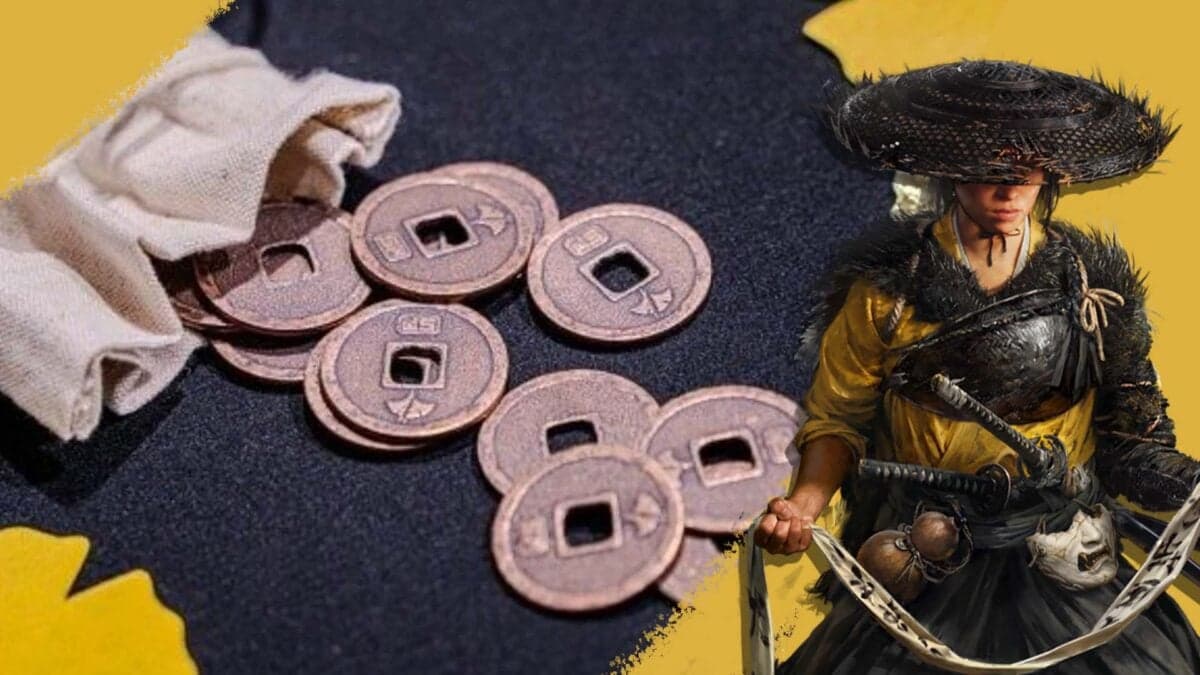
What makes the Zeni Hajiki implementation particularly clever is how Sucker Punch tested the concept. Rather than building a digital prototype—which can be time-consuming and resource-intensive—the team turned to the physical coins included in Ghost of Yotei’s Collector’s Edition. These coins, designed to resemble traditional Japanese *zeni*, provided an instant way to test new rulesets for competitive play. ‘We did our PvP rule playtesting using real coins on a real table!’ Bridges explained. ‘Generally, this means creating simple, unpolished content to test it out in-game, but Zeni Hajiki is one of the few examples where we could try out new rules without writing a single line of code.’
This method of ‘analog prototyping’ allowed the team to iterate rapidly, adjusting rules like scoring, turn order, and penalty systems in real time. The Collector’s Edition bag of coins—originally intended for in-game use—became an invaluable tool, saving weeks of development time and demonstrating how even small details in game design can have outsized creative benefits.
What’s Missing in Ghost of Yotei: Legends—and Could It Return in a Sequel?
While the lobby in Ghost of Yotei: Legends offers a variety of social activities—from Zeni Hajiki to bamboo chopping—it notably lacks one feature that many fans might expect: direct player-versus-player combat. Bridges confirmed that the game’s combat system is ‘specifically for PvE,’ meaning co-op was the only viable option for multiplayer. This design choice reflects Sucker Punch’s focus on cooperative play, where players work together against AI-controlled enemies rather than each other.
Could a Duel Mode Appear in a Future Sucker Punch Game?
For players hoping to settle scores with friends in a one-on-one duel, the current Legends mode won’t suffice—but the door may not be entirely closed. When asked whether a PvP combat mode could appear in a future Sucker Punch title, Bridges remained diplomatic. ‘We always try to find an approach that works with the studio,’ he said. ‘Every game is different.’ While Sony and Sucker Punch declined to comment on potential multiplayer features in upcoming projects, the studio’s history suggests it may revisit such ideas in future updates or sequels. The online mode in Ghost of Tsushima: Legends, for example, launched without a lobby initially but received one later via update. Whether a similar evolution happens for Ghost of Yotei remains an open question.
Lessons from Tsushima’s Multiplayer Evolution
The development of Ghost of Yotei: Legends also reflects broader trends in modern game design, where multiplayer components are increasingly treated as living, evolving experiences rather than static additions. Ghost of Tsushima: Legends began as a post-launch free update but grew into a standalone mode with its own seasonal content and community features. Sucker Punch’s iterative approach—testing ideas in real-world settings, balancing co-op and single-player priorities, and responding to fan feedback—has become a model for how AAA studios can integrate multiplayer without compromising narrative depth or creative vision. ‘Developing Legends allowed us to expand our skillset as a studio,’ Bridges noted, ‘and to offer players a fantastical cooperative experience as a complement to Atsu’s journey in the single-player campaign.’
How Sucker Punch Balanced Single-Player and Multiplayer Development
Creating a multiplayer mode while simultaneously developing a single-player RPG is a complex logistical challenge, but Sucker Punch employed a strategy that minimized disruption: a staggered team model. As designers, artists, and programmers completed their work on the main game, they transitioned to the Legends team, ensuring that both projects benefited from shared resources and institutional knowledge. ‘A smaller core team worked on Legends early on while Yotei was in full development,’ Bridges explained. ‘As team members finished up their work on the main game, they’d shift over to Legends to help get it completed.’
No Microtransactions: Keeping Legends Free for All Players
In an era where many online games monetize through battle passes, cosmetics, or season passes, Sucker Punch took a different route with Ghost of Yotei: Legends. Like its predecessor, the multiplayer mode was released as a free DLC for all Ghost of Yotei owners, with no microtransactions or additional costs. ‘Just like with Ghost of Tsushima, we were happy to offer Legends as a free DLC for all Ghost of Yotei owners, with no microtransactions,’ Bridges confirmed. This decision aligned with the studio’s philosophy of supporting games post-launch without nickel-and-diming players—a stance that has resonated with fans and critics alike.
Fantastical Enemies and Locations Born from Co-Op Design
The shift from Yotei’s grounded, historical setting to the mythological Legends mode also provided creative freedom for Sucker Punch’s team. The studio’s artists and designers, accustomed to crafting realistic environments and historical weapons, found a new outlet in designing fantastical creatures like the Yōtei Six—massive, multi-headed monsters that serve as challenging co-op bosses. ‘The fantastical setting provides a great foundation for building co-op-focused mechanics, and enemies that are worthy challenges for multiple players,’ Bridges said. This interplay between the two modes—one rooted in realism, the other in myth—allowed the studio to explore dual creative identities without sacrificing quality in either.
Key Takeaways: What Ghost of Yotei’s Multiplayer Tells Us About Game Development
- Sucker Punch used real coins from Ghost of Yotei’s Collector’s Edition to prototype PvP Zeni Hajiki rules, proving that analog tools can accelerate digital game design.
- The Legends multiplayer mode was developed in parallel with the single-player campaign, leveraging a staggered team approach to balance both projects.
- Fan feedback and internal advocacy played a crucial role in deciding which co-op features made the final cut, including the lobby mini-games.
- Ghost of Yotei: Legends was released as a free update with no microtransactions, continuing Sucker Punch’s commitment to post-launch support without monetization.
- The studio’s experience with Ghost of Tsushima: Legends informed the design of Yotei’s multiplayer, emphasizing downtime activities to enhance social play.
The Future of Sucker Punch’s Multiplayer Experiments
As the gaming industry continues to evolve, Sucker Punch’s approach to multiplayer design offers a compelling case study in balancing innovation with player expectations. The success of Ghost of Tsushima: Legends demonstrated that even a historically grounded single-player game can benefit from a robust co-op component, and Ghost of Yotei’s Legends builds on that foundation with new mechanics, settings, and social features. While the studio has not announced plans for a Ghost of Yotei sequel or additional multiplayer updates, the door remains open for future experiments—whether in the form of new mini-games, expanded PvP modes, or even a standalone Legends spinoff.
What is clear is that Sucker Punch is committed to refining its multiplayer formula, learning from each project and adapting to player needs. As Bridges put it, ‘We always try to find an approach that works with the studio.’ For fans of the Ghost series, that means more opportunities to team up with friends—and perhaps even settle a few disputes in Zeni Hajiki—in the years to come.
Frequently Asked Questions
Frequently Asked Questions
- Can you play Ghost of Yotei: Legends without owning the base game?
- No. Ghost of Yotei: Legends is a free update available only to owners of the base Ghost of Yotei PS5 game. It is not a standalone title or available via a separate purchase.
- Is there player-versus-player combat in Ghost of Yotei: Legends?
- No. The combat system in Legends is PvE-only, meaning players cooperate against AI-controlled enemies. There are no direct PvP duels in the current mode.
- Will Sucker Punch add more mini-games to Ghost of Yotei: Legends?
- Sucker Punch has not announced any future mini-games or updates for Legends. The studio typically evaluates post-launch content based on player feedback and technical feasibility.