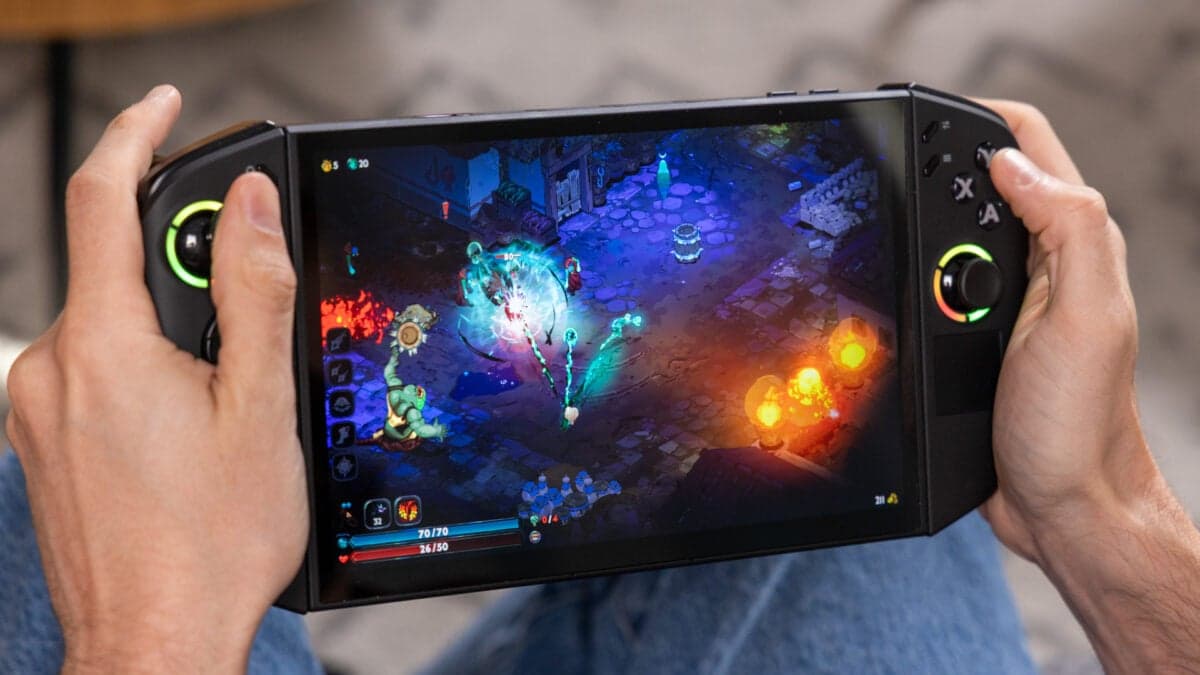
What was once considered an eye-watering $1,099 starting price for Lenovo’s Legion Go 2 now seems like a bargain compared to today’s market. Best Buy’s latest listings reveal the handheld gaming PC’s flagship Ryzen Z2 Extreme model is priced at $1,999—a staggering $650 increase in just six months. The Ryzen Z2 variant now sits at $1,499, up from its original $1,099 launch cost. This price spike isn’t happening in isolation; it’s part of a broader industry crisis dubbed 'RAMageddon,' where soaring memory chip costs are forcing manufacturers to rethink pricing across gaming hardware, from Sony’s PlayStation 5 to Valve’s upcoming Steam Frame.
The Legion Go 2’s Price Crisis: What’s Driving the $650 Surge?
When Lenovo unveiled the Legion Go 2 in January 2024, the top-tier Ryzen Z2 Extreme model carried a $1,349 price tag. Fast-forward to August 2024, and Best Buy’s listings show that same configuration now demands $1,999—a 48% jump in less than half a year. Even the mid-range Ryzen Z2 model has seen a 36% increase, rising from $1,099 to $1,499. This staggering uptick mirrors trends across the gaming hardware sector, where rising RAM and storage costs are forcing manufacturers to pass expenses onto consumers.
Comparing the Legion Go 2 to Competitors: Is It Still Worth It?
At $1,999, the Legion Go 2 Ryzen Z2 Extreme now costs nearly as much as a high-end gaming PC or a full-sized console bundle. To put that into perspective, Microsoft and Asus’s Xbox Ally X, which shares the same AMD Ryzen Z2 Extreme chip, retails for $999—a stark $1,000 difference. Even more powerful alternatives like GPD’s Win 5, featuring the AMD Strix Halo chip, were priced at $2,500 last year but have since seen incremental hikes. Asus’s U.S. representative, Anthony Spence, told *The Verge* that no price increases are planned for the Xbox Ally X in the near term, but industry observers warn that such moves may be inevitable as costs continue to rise.
The Legion Go 2 has other things going for it besides the chip, including detachable controllers and a stellar screen, but $2K? Get outta here.
For now, Lenovo’s flagship handheld retains some competitive edges: its detachable controllers, premium 8-inch 144Hz display, and SteamOS 3.5 compatibility make it a compelling choice for portable gaming. However, the $2,000 price point pushes it into the realm of niche enthusiast devices, far removed from the more accessible Xbox Ally X. Lenovo has not responded to requests for comment on whether further price adjustments are planned.
RAMageddon: How Surging Memory Costs Are Reshaping Gaming Hardware
The gaming industry is grappling with a phenomenon dubbed 'RAMageddon,' a term coined to describe the severe price inflation of RAM (Random Access Memory) and storage components critical to modern gaming devices. This crisis stems from multiple factors: post-pandemic supply chain disruptions, geopolitical tensions disrupting semiconductor manufacturing in key regions like Taiwan and South Korea, and skyrocketing demand for high-memory devices in AI, cloud computing, and, increasingly, gaming hardware. The impact has been swift and brutal.
Sony’s PS5 Price Hike: A Domino Effect in the Console Market
Sony’s decision to raise the price of its PlayStation 5 by $100 to $150 earlier this year marked one of the most visible consequences of RAMageddon. The PS5’s memory configuration—16GB of GDDR6 RAM—has become significantly more expensive to source, forcing Sony to adjust its pricing strategy. While a $100–$150 increase may seem modest compared to the Legion Go 2’s $650 surge, it signals a broader industry shift where even mass-market consoles are not immune to rising component costs. Analysts note that Sony’s move could pressure competitors like Microsoft to follow suit, though no official announcements have been made.
Handheld Gaming Devices: Ayaneo, GPD, and Retroid Feel the Pinch
The handheld gaming market has been particularly hard-hit by RAMageddon. Ayaneo, a Chinese manufacturer known for its high-end handhelds, recently canceled its Next 2 device, citing unsustainable storage and RAM costs. The Next 2 was initially priced at $1,999 and up, but Ayaneo stated that the project became financially unviable due to rising memory prices. Meanwhile, GPD has incrementally increased prices for its Strix Halo-powered Win 5, which now retails for $2,500 with 32GB of RAM and 2TB of storage—a far cry from the $1,500–$1,800 range initially expected. Retroid, another key player, has discontinued its 12GB RAM model of the Pocket 6 due to the same cost pressures.
Valve’s Steam Frame Delay: Pricing Reckoning Looms Large
Valve’s long-anticipated Steam Frame and Steam Machine handhelds have faced repeated delays, in part due to RAMageddon. While Valve has maintained that both devices will launch in 2024, the company has hinted that pricing adjustments may be necessary to offset rising component costs. Industry rumors suggest that the base model of the Steam Frame could see a price increase of $200–$300, bringing it closer to the $1,200–$1,400 range. Valve’s decision to delay the devices—originally slated for a 2023 release—has only added to consumer frustration, particularly as competitors like Lenovo and Asus push forward with their own handhelds.
The Broader Implications: What Does RAMageddon Mean for Gamers?
The cascading effects of RAMageddon extend beyond handhelds and consoles. PC gamers are also feeling the squeeze, with high-end GPUs and motherboards incorporating more RAM facing price hikes. The Nintendo Switch 2, rumored for a 2025 release, and the PlayStation 6, expected in the mid-2020s, could both incorporate higher memory configurations, potentially leading to similar pricing pressures. For consumers, this means that the era of affordable, cutting-edge gaming hardware may be drawing to a close. The days of $500–$600 handhelds or $400 consoles with 16GB of RAM could be numbered as manufacturers prioritize profitability over accessibility.
Key Takeaways: What Gamers Need to Know
- Lenovo’s Legion Go 2 Ryzen Z2 Extreme has surged from $1,349 to $1,999 in six months—a $650 increase driven by 'RAMageddon.'
- The price hike reflects broader industry trends, with Sony’s PS5 ($100–$150 increase), Ayaneo’s canceled Next 2, and Valve’s delayed Steam Frame all impacted by rising memory costs.
- Competitors like Microsoft’s Xbox Ally X ($999) and GPD’s Win 5 ($2,500) highlight the Legion Go 2’s newfound premium positioning.
- Analysts warn that RAMageddon could lead to further price hikes for next-gen consoles (Switch 2, PS6) and PC components.
- Valve’s Steam Frame and Steam Machine may face $200–$300 price increases to offset component costs.
Will Prices Stabilize, or Is This the New Normal?
The million-dollar question for gamers and industry watchers alike is whether RAMageddon is a temporary blip or a permanent shift in hardware economics. Some analysts argue that prices could stabilize by late 2024 as semiconductor supply chains recover and new memory production facilities come online. Others caution that the gaming hardware market has fundamentally changed, with manufacturers increasingly prioritizing high-margin, premium devices over mid-range options. The cancellation of Ayaneo’s Next 2 and the discontinuation of Retroid’s Pocket 6 12GB model suggest a market contraction, where only the most well-funded players can afford to compete.
What’s Next for Lenovo and the Gaming Handheld Market?
Lenovo’s silence on the Legion Go 2’s pricing trajectory leaves questions unanswered. Will the company introduce a lower-cost variant to appeal to budget-conscious gamers, or will it double down on the premium segment? Competitors like ASUS and Microsoft may seize the opportunity to capture market share with more affordable alternatives. Meanwhile, Valve’s Steam Frame—if it launches at a revised price—could redefine the handheld gaming landscape, assuming it delivers on its promise of SteamOS integration and PC-grade performance.
Frequently Asked Questions
Frequently Asked Questions
- Why did Lenovo raise the price of the Legion Go 2 by $650?
- The price hike is primarily due to 'RAMageddon'—a surge in the cost of RAM and storage components driven by supply chain disruptions, geopolitical tensions, and high demand for memory in AI and gaming hardware. Lenovo, like other manufacturers, has passed these increased costs onto consumers.
- How does the Legion Go 2’s price compare to other handheld gaming devices?
- At $1,999, the Legion Go 2 Ryzen Z2 Extreme is nearly twice the price of Microsoft/ASUS’s Xbox Ally X ($999) but comparable to GPD’s Win 5 ($2,500). The device’s detachable controllers and 144Hz screen justify some of its premium, but the price gap is stark.
- Is RAMageddon affecting other gaming hardware besides handhelds?
- Yes. Consoles like Sony’s PS5 have seen $100–$150 price increases, and PC components with higher RAM configurations are also facing hikes. Analysts warn that next-gen consoles (Switch 2, PS6) and high-end GPUs may see similar adjustments.