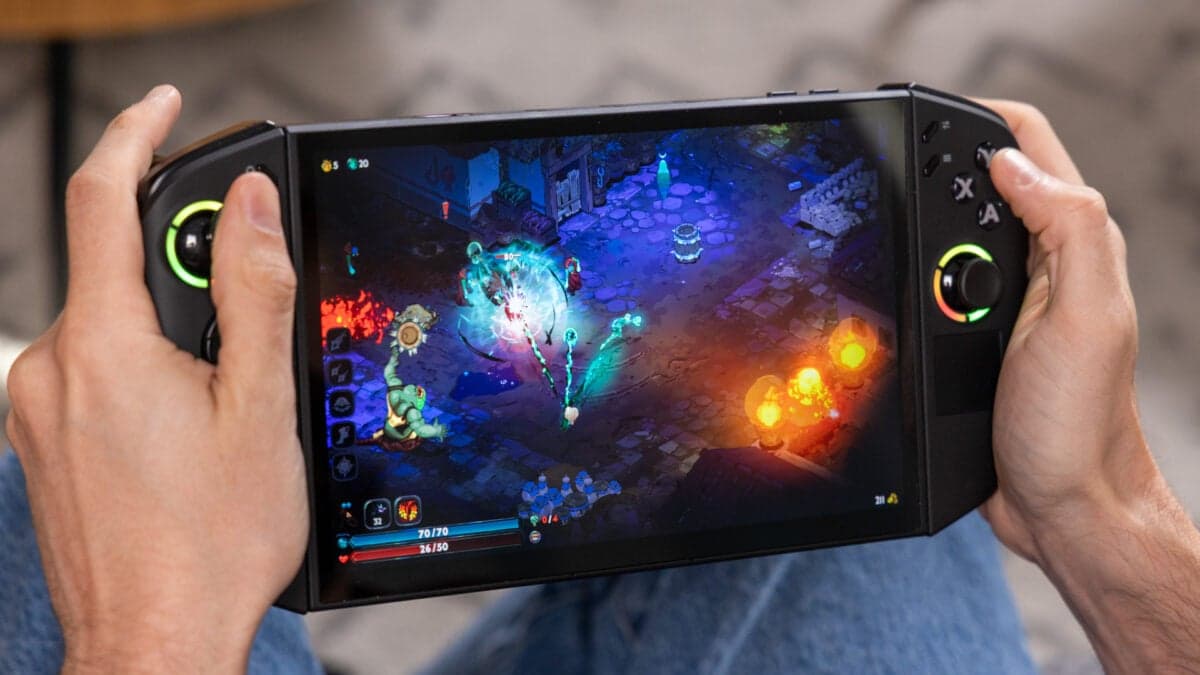
The once-affordable era of portable gaming devices has come to a crashing halt in 2026, as surging RAM and NAND flash memory prices—fueled by insatiable AI data center demand—have pushed manufacturers like Lenovo to hike prices beyond consumer reach. The Lenovo Legion Go 2, a flagship gaming handheld, now retails for $2,000 on Best Buy’s website, more than triple its original price of $1,350 just a year ago. Smaller brands, unable to absorb the costs, are either suspending sales entirely or discontinuing products, leaving gamers with fewer and more expensive options.
How AI Data Centers Drove RAM and NAND Flash Prices to Record Highs
The root of the crisis traces back to the explosive growth of artificial intelligence infrastructure. Data centers powering AI models require massive amounts of high-performance memory to train complex neural networks. In 2025 and early 2026, major semiconductor suppliers such as Samsung, SK Hynix, and Micron shifted their production capacities to prioritize high-bandwidth memory (HBM) for AI applications over consumer-grade DRAM and NAND flash used in gaming devices, smartphones, and PCs.
The Supply Chain Shift Toward AI Memory
Industry analysts report that HBM demand from Nvidia, AMD, and cloud providers like Google and Microsoft has created a bottleneck for traditional DRAM and NAND flash production. Samsung’s latest earnings call in January 2026 revealed that over 60% of its DRAM output in Q4 2025 was allocated to AI and data center clients, up from just 30% a year prior. This drastic reallocation has led to a 50–75% reduction in supply for consumer-grade memory chips used in gaming consoles, handhelds, and laptops.
Short-Term Price Dips Mask Long-Term Volatility
In late March 2026, TrendForce reported a nearly 20% price drop for some DDR5 consumer RAM modules, citing softer consumer demand due to high prices and market reactions to Google’s new TurboQuant compression technology, which reduces AI training memory requirements. However, analysts warn this relief is temporary. TrendForce’s April 2026 forecast predicts a 60% surge in DRAM prices and a 75% spike in NAND flash costs by Q3 2026 as AI demand accelerates and supply remains constrained.
Lenovo’s Gaming Devices: From Premium to Prohibitive
Lenovo, the world’s largest PC manufacturer by shipments, has become a case study in how AI-driven memory inflation is reshaping consumer tech pricing. The company’s high-end Legion Go 2 handheld, launched in mid-2025 at $1,350, now lists for $2,000 on Best Buy—an increase of nearly 50%. Even open-box units are priced at $1,800 or higher, signaling a permanent upward shift in valuation. Lenovo’s upcoming 2025 Legion Go handhelds are listed as “Available Soon,” a phrase that has become synonymous with delayed launches and price uncertainty.
The Collapse of Boutique Gaming Brands: Ayaneo, Retroid, and the Vanishing Handheld Market
While Lenovo struggles to maintain premium pricing, smaller manufacturers are facing existential threats. Ayaneo, known for its Steam Deck-like handhelds, abruptly suspended sales of its flagship Next II device in early April 2026, citing unsustainable NAND flash costs. The company told Indiegogo backers in an email that the price of the Next II had risen beyond consumer tolerance and confirmed plans to raise prices on other models, including the Pocket Fit and Konkr Fit.
We regret to inform you that due to rising NAND storage costs, the price of the Ayaneo Next II has become unsustainable. We will need to increase prices across multiple product lines to reflect current market conditions."
Retroid and Raspberry Pi Join the Exodus from Affordable Gaming
Retroid, another key player in the retro and handheld gaming space, announced in March 2026 that it was discontinuing its Pocket G2 handheld due to “ongoing fluctuations in memory pricing.” The company also raised the price of its Pocket Classic from $114 to $150—a 32% increase—acknowledging that the cost of components had made profitability nearly impossible. Even Raspberry Pi, the iconic British computing brand, has increased prices on its latest models, with the Raspberry Pi 5 now retailing at $80, up from $75 in 2024, citing higher memory and component costs.
Why This Matters: The Death of Consumer Choice in Gaming Technology
The current memory crisis isn’t just a pricing correction—it’s a structural shift that threatens the diversity and accessibility of gaming technology. In 2025, the global gaming handheld market was valued at $2.8 billion, with over 40% of revenue coming from devices priced under $500. But as RAM and NAND costs rise, manufacturers are either exiting the low-end segment or abandoning entire product lines. Sony’s PlayStation Portal, released in late 2025 at $250, has seen multiple price adjustments and is now listed at $300. Even Microsoft’s Xbox Cloud Gaming service has faced internal discussions about raising subscription tiers to offset higher server memory costs.
Can Anything Stop the Price Surge? Potential Market Responses and Policy Interventions
Several factors could mitigate—or worsen—the current crisis. Google’s TurboQuant technology, while not a cure-all, may reduce memory requirements for AI training by up to 30%, easing pressure on HBM demand. Meanwhile, TrendForce suggests that a slowdown in AI data center expansion or a surge in consumer resistance to high prices could stabilize the market. However, industry insiders warn that the window for relief is closing quickly. The Biden administration’s 2026 semiconductor incentives, aimed at boosting domestic DRAM production, are not expected to yield significant output until 2028.
Key Takeaways: What Gamers Need to Know
- RAM prices have surged up to 75% in early 2026 due to AI data center demand, with DRAM and NAND flash costs expected to rise further by mid-2026.
- Lenovo’s Legion Go 2 now costs $2,000—up from $1,350—illustrating how even major brands are being priced out of the consumer market.
- Boutique brands like Ayaneo and Retroid are discontinuing devices or raising prices by 30%+ due to unsustainable memory costs.
- The gaming handheld market, valued at $2.8B in 2025, is at risk of shrinking as affordable options disappear.
- Temporary price dips in late Q1 2026 are likely short-lived, with analysts forecasting another 60–75% spike in memory costs by Q3.
Frequently Asked Questions
Frequently Asked Questions
- Why are RAM prices so high in 2026?
- RAM prices have surged due to massive demand from AI data centers, which require high-bandwidth memory for training models. Major chipmakers have reallocated production away from consumer-grade memory to meet AI needs, creating severe shortages and driving up costs.
- Will RAM prices go down anytime soon?
- Short-term price drops of around 20% occurred in late March 2026 due to soft consumer demand, but TrendForce predicts a 60–75% spike in DRAM and NAND flash prices by Q3 2026 as AI demand accelerates.
- Which gaming devices are most affected by rising RAM prices?
- High-end gaming handhelds like Lenovo’s Legion Go 2, boutique brands such as Ayaneo’s Next II, and retro devices like Retroid’s Pocket G2 are among the hardest hit, with many discontinued or priced out of reach.