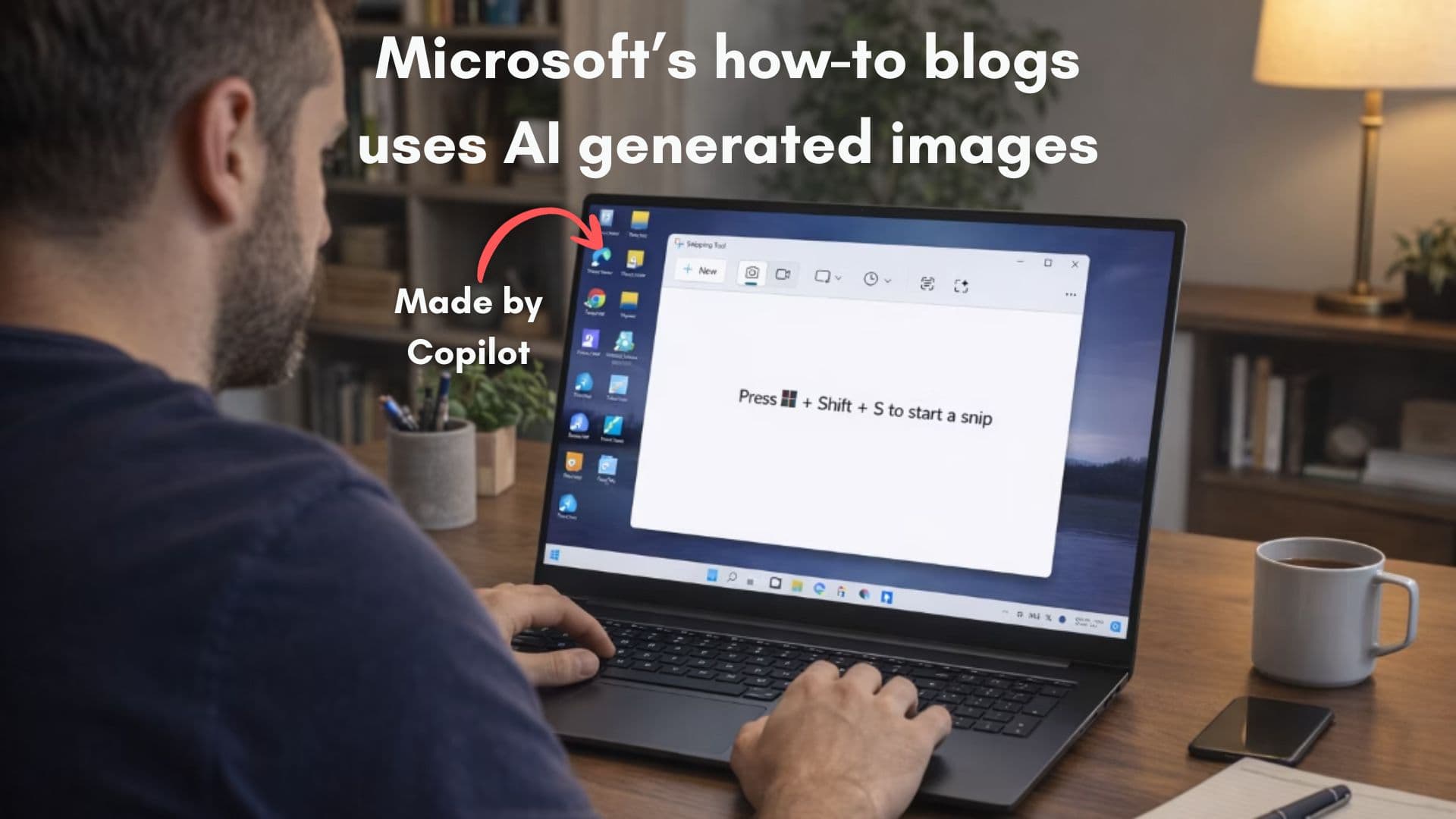
In a move that has drawn sharp criticism from users and tech observers alike, Microsoft is now relying on AI-generated imagery to promote Windows 11 features in its official Learning Center—a decision that underscores the company’s deepening commitment to artificial intelligence, even as consumer trust in its AI tools like Copilot plummets. The software giant, which boasts a market capitalization exceeding $3 trillion, has begun embedding Copilot-created visuals—often labeled as 'AI Art Created via Copilot'—in blog posts that are ostensibly designed to educate users on Windows 11’s functionality. This strategy, critics argue, risks further alienating an already frustrated user base that has grown weary of what many describe as Microsoft’s overzealous AI push, particularly as the operating system continues to face widespread disdain for its intrusive design choices and performance issues.
Why Microsoft’s AI Image Strategy Backfires with Windows 11 Users
Microsoft’s decision to use AI-generated images in the Windows Learning Center—ostensibly to illustrate features like the Widgets board or Notepad—is a calculated but risky gamble. The company, which has long positioned itself as a leader in user education through its support pages, now appears to prioritize AI-generated content over traditional, human-created visuals. This shift is particularly jarring given the growing public skepticism toward AI tools, which are frequently accused of producing subpar, nonsensical, or outright misleading outputs—a phenomenon colloquially referred to as 'AI slop.'
The Rise of AI-Generated Visuals in Microsoft’s Educational Content
The Windows Learning Center, Microsoft’s hub for tutorials and feature explanations, has increasingly incorporated Copilot-generated images since late 2025, when the tool gained image-generation capabilities powered by DALL-E, OpenAI’s proprietary model. By early 2026, the 'AI Art Created via Copilot' tag became a ubiquitous sight beneath embedded images in these posts, signaling a deliberate pivot toward AI-driven content creation. While the header images of these blog posts remain untagged—likely to avoid immediate scrutiny—internal images now routinely depict AI-generated humans using Windows 11 features, a move critics argue undermines the educational purpose of the content.
The Problem with ‘AI Slop’ in Consumer-Facing Content
The term 'AI slop' has entered the tech lexicon to describe the low-quality, often nonsensical outputs produced by generative AI tools when pushed beyond their limits. In the context of Microsoft’s Learning Center, this manifests in images that, while technically functional, lack the realism or coherence expected of professional promotional material. For instance, one widely circulated example shows an AI-generated depiction of the Windows Widgets board—a feature that, in reality, appears as a clean, minimalist sidebar. The AI’s rendition, however, features distorted proportions, unrealistic lighting, and a perplexing arrangement of widgets that bear little resemblance to the actual interface. Such discrepancies risk confusing users who attempt to replicate the visuals on their own devices, thereby defeating the purpose of an educational resource.
Microsoft’s AI Push: A Double-Edged Sword for Windows 11 Adoption
Microsoft’s aggressive integration of AI into Windows 11—embodied by the ever-present Copilot button in apps like Notepad and Paint—has become a lightning rod for criticism. The company’s insistence on embedding AI into every conceivable workflow, from basic text editing to system-level tasks, has led to a wave of user backlash, with many accusing Microsoft of prioritizing hype over usability. This sentiment is particularly pronounced among power users and creators, who argue that the AI features often feel like intrusive, unnecessary additions rather than meaningful enhancements. The company’s own recent acknowledgment of Windows 11’s shortcomings—including performance issues and feature bloat—has only fueled the perception that Microsoft is doubling down on AI as a band-aid solution rather than addressing core user frustrations.
Microsoft’s reputation is at an all-time low, and people are using every chance they get to switch from Windows to macOS or Linux. While Linux is reserved for advanced users, macOS was a distant dream for many because of the 'Apple tax.' Things changed as the MacBook Neo entered the picture, and even as it has been almost two weeks since its launch, social media is filled with people justifying Apple’s decision to ship the Neo with 8GB of RAM.
The Growing Exodus to macOS and Linux
The backlash against Windows 11 and Microsoft’s AI-first approach has coincided with a notable shift in consumer preferences. Apple’s recent launch of the MacBook Neo—a device that, despite its modest 8GB RAM configuration, has been widely praised for its build quality and performance—has further eroded Windows’ dominance in the laptop market. Meanwhile, Linux distributions, though niche, continue to attract users frustrated by Windows’ restrictive policies and bloated software. This exodus is not merely a reflection of dissatisfaction with Windows 11’s design but also a rejection of Microsoft’s broader strategy, which many perceive as prioritizing corporate interests over user experience.
Why Microsoft’s AI Tactics Fail to Resonate with Creators and Casual Users
At the heart of Microsoft’s dilemma is a fundamental disconnect between its product strategy and the needs of its user base. While power users and IT professionals may tolerate—or even embrace—Windows 11’s advanced features, the majority of Windows users are casual consumers who prioritize reliability, simplicity, and creativity over cutting-edge (but often gimmicky) AI integrations. Apple has long understood this dynamic, positioning its macOS as the preferred platform for creators, artists, and developers. Microsoft’s failure to cultivate a similar reputation for creativity—despite its suite of creative tools like Clipchamp—has left it playing catch-up in a market where user goodwill is increasingly scarce.
Clipchamp vs. iMovie: A Study in User Experience
A case in point is Microsoft’s Clipchamp, a video editing tool that, despite being free, is frequently criticized for its limited functionality and convoluted interface. In contrast, Apple’s iMovie—also free—is lauded for its intuitive design and robust feature set, making it a favorite among amateur and professional creators alike. The disparity highlights a broader issue: Microsoft’s tools often feel like afterthoughts, designed to meet corporate quotas rather than deliver genuine user value. Until the company addresses this imbalance, its efforts to woo creators will likely fall flat.
The Broader Implications of AI Overreach in Consumer Technology
Microsoft’s reliance on AI-generated images in its Learning Center is more than just a misstep—it’s a symptom of a larger trend in the tech industry, where companies are rushing to integrate AI into every product, often at the expense of quality and user trust. The fallout from this approach is already visible: users are growing weary of AI’s perceived intrusiveness, and platforms like Reddit and Twitter are rife with complaints about 'AI spam,' 'AI-generated junk,' and tools that feel more like corporate experiments than legitimate software. For Microsoft, the challenge now is to strike a balance between innovation and usability, lest it cede ground to competitors who prioritize human-centric design.
Key Takeaways: What This Means for Windows 11 and Microsoft’s Future
- Microsoft is using Copilot-generated 'AI slop' in Windows 11 Learning Center blogs to showcase features, sparking backlash over the company’s overreliance on AI amid plummeting user trust.
- The AI-generated images, labeled as 'AI Art Created via Copilot,' risk confusing users by depicting unrealistic or distorted versions of Windows 11 features like the Widgets board.
- Windows 11’s aggressive AI integration—including the Copilot button in apps like Notepad and Paint—has fueled widespread disdain, driving users toward alternatives like macOS and Linux.
- Microsoft’s failure to prioritize human-centric design in tools like Clipchamp contrasts sharply with Apple’s iMovie, further alienating creators and casual users.
- Industry experts warn that Microsoft’s AI-first approach could backfire, pushing users away from Windows in favor of platforms that emphasize usability and reliability.
Can Microsoft Recover from Its AI Missteps?
For Microsoft, the path to redemption lies in a strategic pivot away from AI-driven gimmicks and toward a renewed focus on user experience. This would require not only addressing the glaring issues in Windows 11—such as performance lags and intrusive AI prompts—but also investing in high-quality, human-created content and tools that genuinely enhance productivity. Microsoft’s recent promises to improve Windows 11 with performance tweaks and fewer AI features suggest it may be listening to user feedback, but reversing the tide of public opinion will be no small feat. The company must also confront the perception that its AI integrations are more about corporate messaging than actual user benefit.
A Call for Transparency: Why Microsoft Must Own Its AI Choices
Transparency will be critical if Microsoft hopes to regain user trust. Rather than doubling down on AI-generated content in educational materials, the company should clearly distinguish between AI-assisted and human-created visuals, ensuring that users are not misled by unrealistic depictions of its software. Additionally, Microsoft must address the broader concerns about AI hallucinations—where tools like Copilot produce inaccurate or nonsensical outputs—that have eroded confidence in its AI products. Without accountability, Microsoft risks further entrenching the perception that its AI integrations are more about marketing than substance.
The Future of Windows: Will Microsoft Listen to Its Users?
The coming months will be pivotal for Microsoft as it grapples with the fallout from its AI-first approach. If the company doubles down on gimmicks like Copilot-generated images, it risks accelerating the exodus of users to competing platforms. Conversely, if Microsoft listens to feedback and prioritizes usability, performance, and human creativity, it may yet salvage its reputation. For now, however, the signs are not encouraging. With the MacBook Neo gaining traction and Linux distributions attracting frustrated Windows users, Microsoft’s window to course-correct is closing fast.
Frequently Asked Questions
Frequently Asked Questions
- Why is Microsoft using AI-generated images in Windows 11 Learning Center blogs?
- Microsoft is using Copilot-generated images to illustrate Windows 11 features in its educational content, likely as part of its broader push to promote AI tools like Copilot. The company has not provided a formal explanation for this decision, but critics argue it reflects a misplaced priority on AI over traditional, human-created educational materials.
- Are the AI-generated images in the Windows Learning Center accurate representations of Windows 11 features?
- No. The AI-generated images often depict unrealistic or distorted versions of Windows 11 features, such as the Widgets board. This can confuse users who attempt to replicate the visuals on their own devices, undermining the educational purpose of the content.
- How has the public reacted to Microsoft’s AI push in Windows 11?
- The public reaction has been overwhelmingly negative, with many users criticizing Microsoft for prioritizing AI integrations like Copilot over usability and performance. This backlash has contributed to a growing exodus of users toward alternatives like macOS and Linux.