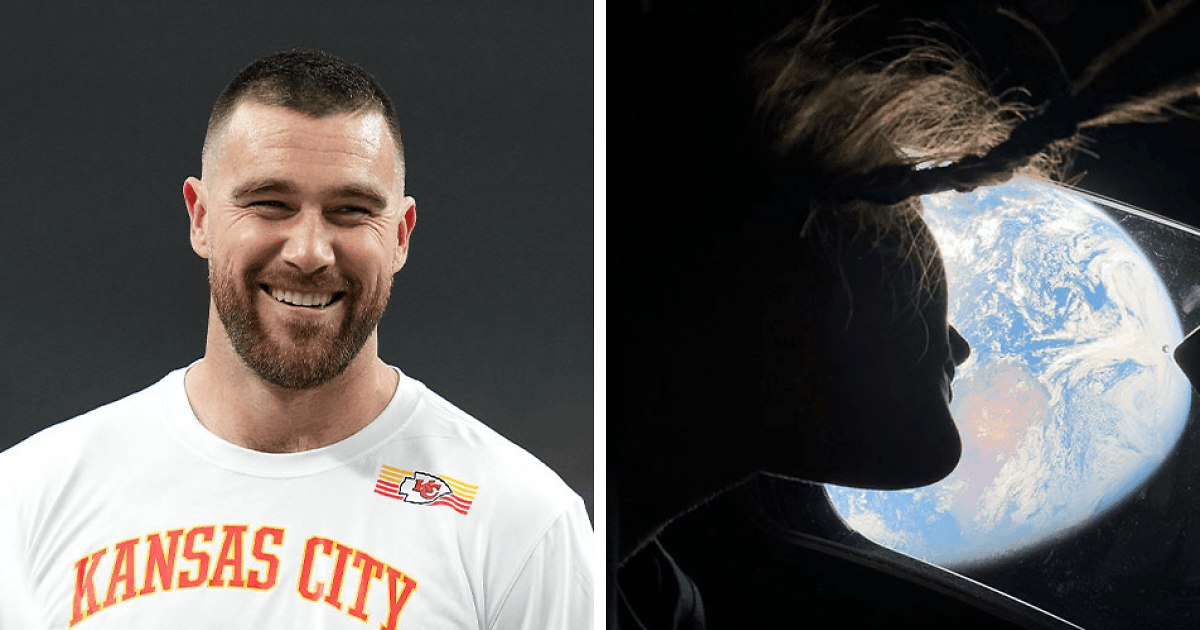
In a moment that blurred the lines between cosmic ambition and internet nostalgia, NASA casually replied to a 14-year-old tweet by Kansas City Chiefs tight end and Taylor Swift’s fiancé, Travis Kelce—transforming a decade-old quip about the Moon’s appearance into a viral sensation. The space agency’s playful response, posted just days after the historic Artemis II mission lifted off, referenced Kelce’s 2010 message about the Moon ‘looking crazy’ and ‘visualizing success,’ while tagging Taylor Swift’s iconic lyric from ‘Blank Space’: ‘It’s been a long time coming…’ The tweet, complete with a full moon emoji, not only delighted social media users but also reignited discussions about space exploration’s cultural reach, the enduring power of memes, and how NASA is leveraging humor to engage younger audiences during a new era of lunar ambition.
How NASA’s Viral Reply to a 2010 Travis Kelce Tweet Became a Space-Age Meme Sensation
On April 5, 2024—just days after the Artemis II mission launched—NASA’s official X account (formerly Twitter) sent a cryptic, three-word reply to a tweet posted by Travis Kelce in August 2010. Kelce, then 20 years old and rising in the NFL, had written: *“The moon looks crazy tonight… Imma chill out here for a little and just visualize my success n vibe to the scenary.”* The space agency’s response—*“It’s been a long time coming…”*—was an unmistakable nod to Taylor Swift’s 2014 hit ‘Blank Space,’ where she sings the same phrase. The clever callback instantly resonated with Swifties, who flooded the thread with jokes, theories, and demands for NASA to play Swift’s music during the Moon mission.
The Original Kelce Tweet That Started It All
Kelce’s 2010 tweet, long forgotten by most, resurfaced in recent years as part of his viral social media persona—a mix of youthful exuberance, spelling errors, and random musings. In June 2010, he tweeted: *“Gosh I don’t want to work today….. i just wanna sleep in my bed and do nothing with my life!!”* A year later, in April 2011, he shared a moment of animal-induced awe: *“I just gave a squirle a peice of bread and it straight smashed all of it!!!! I had no idea they ate bread like that!! Haha #crazy.”* These tweets, alongside his IHOP breakfast confession (*“I love commin here for breakfast! Ummm I think ill have the T-bone steak n Eggs please! Haha with some white toast on the side!”*), have made Kelce a beloved figure for his unfiltered, relatable humor. But it was his cosmic-themed tweet that caught NASA’s attention, leading to a rare moment of cross-generational internet bonding.
Why NASA’s Social Media Team Jumped on the Opportunity
NASA’s reply wasn’t just a whimsical gesture—it was a calculated move to humanize the space agency and connect with a younger, pop-culture-savvy audience. The Artemis program, NASA’s ambitious initiative to return humans to the Moon and eventually reach Mars, has faced criticism over budget concerns and timelines. By engaging with a viral moment tied to a celebrity couple, NASA demonstrated its willingness to meet people where they are: on social media. The agency’s social team has increasingly adopted a playful tone, from memes about moon phases to jokes about astronaut food. In this case, the Travis Kelce tweet provided a perfect opportunity to bridge the gap between space exploration and internet culture.
Swifties Respond with Jokes, Theories, and Cosmic Demands
The response from Taylor Swift’s fanbase, known as Swifties, was immediate and overwhelming. Within hours, NASA’s tweet amassed over 30,000 likes and hundreds of comments, many of which were packed with Swiftie lore. Fans jokingly suggested NASA was run by a Swiftie (*“A Swiftie at NASA isn’t even shocking to me. Of course there’s a swiftie at NASA”*), while others demanded Taylor Swift songs be played for hypothetical aliens (*“Can you confirm Taylor Swift created Earth while you’re up there?”*). One user quipped, *“There’s a blank space joke in here somewhere,”* referencing Swift’s song title, while another mused, *“Suddenly I understand why she calls herself an English teacher in the context of their relationship.”*
Artemis II: The Mission That Made NASA’s Response Timely and Relevant
NASA’s reply gained even more significance because it coincided with the historic Artemis II mission, which launched on April 1, 2024. This 10-day journey marked the first crewed lunar fly-around in over 50 years, since Apollo 17 in 1972. The four astronauts aboard the Orion spacecraft—Reid Wiseman, Victor Glover, Christina Koch, and Jeremy Hansen—are not only testing the spacecraft’s systems but also collecting unprecedented data from deep space. Hours after launch, NASA announced that the crew had already traveled farther from Earth than any humans in history, surpassing the previous record set by Apollo 13 in 1970.
What the Artemis II Crew Is Doing on Their Journey
The Artemis II mission is a critical step toward NASA’s goal of landing the first woman and person of color on the Moon during Artemis III, currently slated for 2026. During their voyage, the crew will conduct a series of tests, including a lunar flyby that will take them 6,400 miles beyond the far side of the Moon. They will also photograph both the near and far sides of the lunar surface, describe their observations, and propose naming a Moon crater after Reid Wiseman’s late wife, Carroll. The astronauts have already shared lighthearted moments, such as Christina Koch playfully tossing a candy to Jeremy Hansen in zero gravity, showcasing the human side of space exploration.
The Broader Implications of NASA’s Social Media Strategy
NASA’s decision to engage with a pop-culture moment reflects a broader shift in how government agencies communicate in the digital age. Social media platforms like X, TikTok, and Instagram have become vital tools for public engagement, especially for agencies facing budget scrutiny and competing for attention in a crowded media landscape. By embracing humor and relatability, NASA is not only humanizing its astronauts and scientists but also inspiring the next generation of space enthusiasts. The Travis Kelce tweet response is a prime example of how even seemingly trivial internet moments can become opportunities for education and outreach.
Key Takeaways: What This Viral Moment Tells Us About Space, Pop Culture, and Engagement
- NASA’s playful reply to Travis Kelce’s 2010 tweet referenced Taylor Swift’s ‘Blank Space,’ sparking a viral wave of Swiftie memes and cosmic jokes.
- The Artemis II mission, launched on April 1, 2024, is the first crewed lunar fly-around in 52 years, testing systems for future Moon landings.
- The space agency’s social media strategy increasingly blends science with pop culture to engage younger audiences and demystify space exploration.
- Swifties flooded NASA’s response with jokes, demands for Taylor Swift songs in space, and theories about lunar Easter eggs.
- The mission’s crew has already traveled farther from Earth than any humans in history, setting a new record during their 10-day voyage.
How NASA Is Using Humor to Reach New Audiences
NASA’s social media presence has evolved from strictly informational updates to include humor, memes, and even celebrity callbacks. The agency’s X account regularly posts jokes about moon phases, astronaut food, and space phenomena, often incorporating trending topics. This approach not only increases engagement but also makes complex scientific concepts more accessible. For example, NASA’s response to Kelce’s tweet came just days after the agency shared a video of astronaut Christina Koch playfully tossing candy to Jeremy Hansen in zero gravity—a clip that quickly went viral for its lightheartedness. Such moments help counteract the perception of NASA as a distant, bureaucratic entity and instead position it as a dynamic, relatable organization.
The Science Behind Artemis II: What’s Next for Human Spaceflight
Artemis II is just the beginning of NASA’s ambitious lunar program. Following this mission, Artemis III aims to land astronauts near the Moon’s south pole, where water ice may be present—a critical resource for sustained lunar exploration. Subsequent missions, like Artemis IV, will focus on building the Lunar Gateway, a small space station orbiting the Moon that will serve as a staging point for deeper space missions. The ultimate goal is to establish a long-term human presence on the Moon and use it as a stepping stone for crewed missions to Mars. The data collected during Artemis II will be invaluable in refining these plans and ensuring the safety and success of future astronauts.
The Role of Public Engagement in Space Exploration
Public engagement has become a cornerstone of modern space exploration. NASA’s Artemis program, for instance, was designed with input from international partners and private companies like SpaceX and Blue Origin, reflecting a collaborative approach to spaceflight. Social media plays a crucial role in this strategy, allowing the agency to share real-time updates, behind-the-scenes content, and interactive experiences with the public. The response to Travis Kelce’s tweet is a testament to how even a small, humorous interaction can generate widespread interest and support for space missions. As NASA continues to push the boundaries of human exploration, its ability to connect with diverse audiences will be just as important as its technological advancements.
Frequently Asked Questions About NASA’s Response to Travis Kelce’s Tweet
Frequently Asked Questions
- Why did NASA reply to Travis Kelce’s 2010 tweet?
- NASA’s social media team often engages with viral moments to humanize the agency and connect with younger audiences. The playful reply to Kelce’s Moon-themed tweet was a strategic way to blend space exploration with internet culture.
- What is the Artemis II mission, and why is it significant?
- Artemis II is the first crewed mission to the Moon since 1972, testing the Orion spacecraft and paving the way for future lunar landings. The crew will conduct a lunar flyby and collect data from deep space.
- How far have the Artemis II astronauts traveled from Earth?
- The Artemis II crew has already traveled farther from Earth than any humans in history, surpassing the previous record set by Apollo 13 in 1970. They continue to break new ground as they journey toward the Moon.