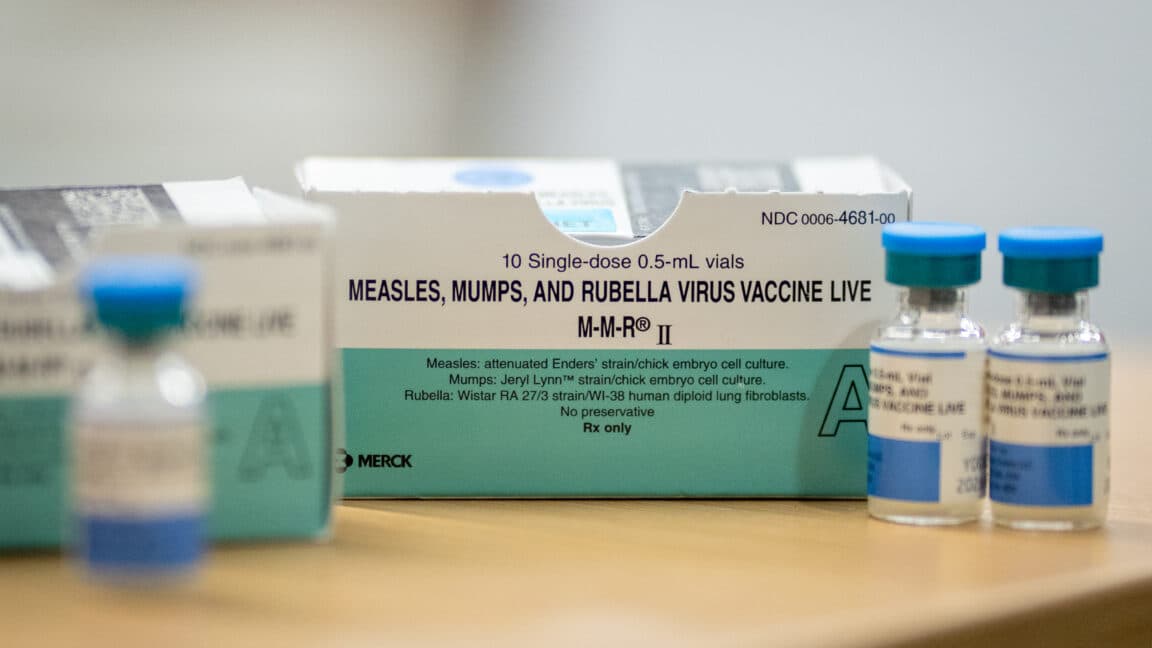
When a measles outbreak emerged on the western edge of Texas in January 2025 and rapidly spread to neighboring New Mexico and other states, it marked a watershed moment for American public health. The outbreak would become the largest measles epidemic the United States has experienced in a quarter-century, since measles was officially declared eliminated from the country in 2000. Yet amid this public health crisis, New Mexico residents responded with a striking embrace of vaccination—a development that offers a counternarrative to persistent anti-vaccine sentiment in parts of the nation. According to a new study published in the Centers for Disease Control and Prevention's Morbidity and Mortality Weekly Report, measles, mumps, and rubella (MMR) vaccinations across New Mexico surged 55 percent from January through September 2025 compared to the same nine-month period in 2024, demonstrating how real-world disease outbreaks can mobilize communities toward protective health measures.
Scale of the 2025 Measles Outbreak and Divergent State Responses
The measles outbreak that began in early 2025 represented an unprecedented public health challenge for multiple states. In Texas, where the outbreak initially erupted, officials documented 762 total cases before declaring the outbreak concluded on August 18, 2025—the largest measles outbreak recorded in that state since 1992. The magnitude of this outbreak underscored how quickly the highly contagious measles virus can spread through populations, particularly in areas where vaccination coverage has declined in recent years. For New Mexico, the situation was equally significant: the state experienced its first measles outbreak since 1996, a gap of nearly three decades without documented community transmission of the disease.
However, the trajectory of measles cases diverged markedly between Texas and New Mexico. While Texas struggled with a prolonged outbreak that ultimately claimed 762 cases, New Mexico's public health response appeared more effective at containing viral spread. New Mexico officials declared their outbreak, which began in February 2025, concluded on September 26, 2025, with a substantially lower total of 99 cases. This significant difference in case counts—nearly an eight-fold reduction compared to Texas—suggests that vaccination response rates played a meaningful role in limiting community transmission and protecting vulnerable populations who could not receive vaccines due to medical contraindications.
Dramatic Surge in MMR Vaccinations Across New Mexico
Overall Vaccination Increase and Timeline
The CDC study revealed that New Mexico's response to the measles outbreak manifested most clearly in vaccination data. From January through September 2025, the state administered MMR vaccine doses at a rate 55 percent higher than during the identical period in 2024. This substantial increase reflects both heightened public awareness of measles risk and a demonstrated willingness among New Mexico residents to pursue vaccination as a protective measure. Critically, health officials noted that the timing of this vaccination surge was directly correlated with outbreak progression. Within just two weeks of the outbreak being officially declared in February 2025, vaccination rates in all regions of New Mexico began to exceed the numbers recorded during the corresponding period in 2024, indicating a rapid and coordinated public response across the state's diverse geographic regions.
Children's Vaccination Rates Rise 18 Percent
When examining vaccination trends by age group, the CDC study documented an 18 percent increase in MMR doses administered to children under age 18 throughout 2025 compared to 2024. Specifically, the number of pediatric doses rose from 27,988 in 2024 to 32,890 in 2025. While this increase among children was meaningful, it was substantially more modest than the vaccination surge observed among adults, suggesting that many New Mexico families with children had already maintained relatively higher baseline vaccination rates prior to the outbreak. This pattern aligns with historical vaccination trends, as childhood immunization programs have generally maintained higher coverage rates than adult vaccination initiatives across the United States.
Adult Vaccinations Skyrocket 291 Percent
The most striking finding from the CDC study concerned adult vaccination rates. Among residents aged 18 and older, MMR vaccine doses increased by an extraordinary 291 percent from 2024 to 2025, rising from 5,748 doses in 2024 to 22,500 doses in 2025. This nearly four-fold increase in adult vaccinations represents one of the most dramatic responses to disease risk documented in recent public health literature. The massive surge in adult vaccination suggests that the measles outbreak served as a powerful motivator for individuals who may have previously delayed or deferred vaccination decisions. Many adults born before the establishment of routine MMR vaccination programs in the 1970s may have sought vaccination for the first time, while others who had received only a single dose in childhood pursued second-dose vaccination to ensure complete immunity.
Regional Variations and Week-to-Week Vaccination Acceleration
The CDC study's analysis extended beyond statewide aggregate figures to examine how vaccination response varied across New Mexico's diverse regions. The data revealed that vaccination surge was not uniformly distributed but rather demonstrated clear temporal patterns tied to local outbreak progression. In specific regions where health officials identified the first confirmed measles case, vaccination rates accelerated dramatically in the following weeks. Some regions experienced week-over-week increases in vaccination rates as high as 78 to 83 percent, demonstrating an immediate and intense public response to the tangible presence of disease in their communities. This pattern suggests that the psychological and behavioral impact of a confirmed local case—rather than abstract warnings about outbreak risk—proved most effective at motivating vaccination decisions among hesitant populations.
Why This Matters: Measles Elimination and Public Health Resilience
The 2025 measles outbreak and New Mexico's vaccination response carry significant implications for American public health policy and practice. Measles, caused by the highly contagious measles virus, is a disease that was nearly eliminated from the United States through sustained vaccination efforts beginning in the 1960s. The virus spreads through respiratory droplets and can infect up to 90 percent of unvaccinated individuals exposed to an infected person, making it among the most transmissible infectious diseases known to medicine. The fact that measles re-emerged in 2025 at outbreak scale reflects declining vaccination coverage in certain communities, often driven by vaccine hesitancy and misinformation campaigns that have gained traction in recent years.
New Mexico's experience offers a counterpoint to narratives suggesting that anti-vaccine sentiment is immovable or that public health messaging cannot effectively shift vaccination behavior. The state's 55 percent surge in MMR vaccinations demonstrates that when faced with tangible disease risk, communities can and do respond by embracing proven preventive measures. This finding carries particular relevance for public health officials designing outbreak response strategies and vaccination promotion campaigns. It suggests that real-world disease outbreaks, while tragic in terms of illness and potential complications, can paradoxically serve as powerful educational moments that shift population-level vaccination behavior in protective directions.
Broader Context: Measles Complications and Vaccination Benefits
Understanding why New Mexico residents responded so dramatically to measles risk requires context about the disease itself and the proven benefits of vaccination. Measles can cause serious complications including pneumonia, encephalitis (brain inflammation), and in rare cases, death. The disease is particularly dangerous for infants too young to receive vaccination, pregnant women, and immunocompromised individuals. The MMR vaccine, which provides protection against measles, mumps, and rubella, has been safely administered to hundreds of millions of people worldwide and is approximately 97 percent effective at preventing measles infection after two doses. When vaccination coverage drops below approximately 95 percent in a community, measles can spread rapidly through susceptible populations, as occurred in the 2025 outbreak.
The contrast between Texas and New Mexico's outbreak experiences suggests that vaccination response rates significantly influenced disease transmission dynamics. New Mexico's more robust vaccination surge may have created sufficient community immunity to limit secondary transmission, protecting not only vaccinated individuals but also vulnerable populations unable to receive vaccines. This phenomenon, known as herd immunity or community immunity, occurs when a sufficiently high proportion of the population is immune to a disease, either through vaccination or previous infection, thereby reducing transmission opportunities for the pathogen.
- New Mexico experienced a 55% surge in MMR vaccinations from January to September 2025 compared to the same period in 2024, during the state's first measles outbreak since 1996
- Adult vaccinations increased dramatically by 291%, rising from 5,748 doses in 2024 to 22,500 doses in 2025, while pediatric vaccinations increased 18%
- The 2025 measles outbreak became the largest in the United States since measles was declared eliminated in 2000, with 762 cases in Texas and 99 cases in New Mexico
- Within two weeks of the outbreak declaration, vaccination rates across all New Mexico regions exceeded prior-year levels, with some regions experiencing week-over-week increases of 78-83%
- New Mexico's stronger vaccination response may explain why the state contained its outbreak to 99 cases compared to Texas's 762 cases, suggesting vaccination coverage influences disease transmission
Key Takeaways
Frequently Asked Questions
- Why did New Mexico's measles outbreak lead to such a large increase in vaccinations?
- The tangible presence of measles cases in New Mexico communities motivated residents to seek vaccination as a protective measure. Within two weeks of the outbreak declaration, vaccination rates exceeded prior-year levels across all state regions, with some areas experiencing 78-83% week-over-week increases after identifying their first local case. This demonstrates that real-world disease risk is a powerful motivator for vaccination decisions, even among previously hesitant populations.
- What is the difference between the measles outbreak response in New Mexico versus Texas?
- Texas experienced 762 measles cases before declaring its outbreak over on August 18, 2025, while New Mexico documented only 99 cases before concluding its outbreak on September 26, 2025. The significant difference in case counts appears correlated with New Mexico's more robust vaccination response, where MMR doses surged 55% statewide and adult vaccinations increased 291%, suggesting higher vaccination coverage limited disease transmission.
- Why is the 2025 measles outbreak significant for public health?
- The 2025 outbreak was the largest measles outbreak in the United States since measles was declared eliminated in 2000, marking a concerning resurgence of a disease that had been nearly eradicated. However, New Mexico's strong vaccination response demonstrates that communities can effectively mobilize protective health measures when facing tangible disease risk, offering insights for future public health crisis response strategies.